Tag: posture

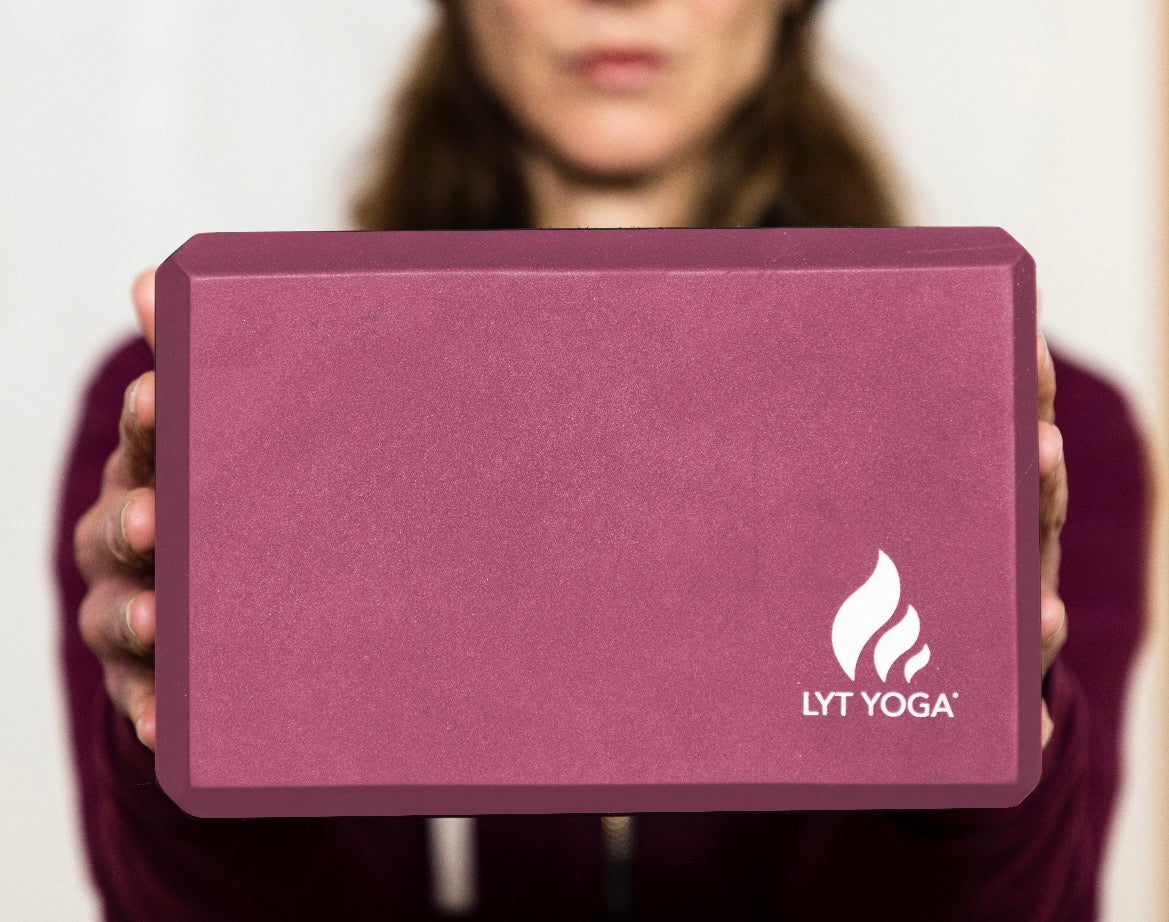
  • The Benefits of Using Yoga Blocks in Your Movement Practice

    The Benefits of Using Yoga Blocks in Your Movement Practice

    The Benefits of Using Blocks and props in Your Movement Practice

    Yoga blocks, often made of foam, cork, or wood, are more than just tools for beginners or those with limited flexibility.


    These versatile props can bring numerous benefits to your movement practice, no matter your level of expertise. We use them in every class in LYT and I can’t imagine a practice without having yoga blocks to enhance the experience!


    Why use blocks?


    For those who are new to yoga/functional training or have limited flexibility, blocks can act as an extension of the arms, making it easier to reach the floor in poses like Down Dog or bent knee standing split/standing L pose. By bridging the gap, blocks help in promoting better alignment, expansive breathing, and postural training. Yoga blocks can be used as a support system, especially in poses that require balance or strength. For instance, placing a block under the hand in Twisted Crescent, Half-Moon, or under the hips in seated twist pose can help stabilize the position, creating more space for the hips and spine, and thereby reducing strain on the joints and surrounding structures while also promoting more core activation. In LYT, we are huge believers in alignment! Alignment is not rigid or “ideal”; it is placing your bones and joints in a more optimal position to set up improved responsiveness in motor firing (how muscles activate to move, stabilize, or lengthen). Proper alignment is crucial in yoga and functional movement to prevent injuries, improve neuromuscular function, and ensure efficiency. Blocks can assist in positioning the body so that the joints and muscles work in greater harmony. 


    Importantly, blocks allow for more individualization. Everyone’s body is different, and sometimes a pose or movement that works for one person might not be comfortable for another. Blocks can be used to adapt poses to fit individual needs, ensuring a comfortable and effective practice. Blocks additionally help with transitions, allowing movement between poses to feel more possible and graceful without losing form.


    But there is more! (that’s how awesome blocks truly are 🙂


    As we experience in our LYT RESET®, blocks create a deeper connection to core! The block can be used to activate pathways into and through the core cylinder such as in bridge with a block, where the light hug of the block stimulates the hip adductors and pelvic floor connection. Utilizing a block in various ways can heighten body awareness, sparking core activity that might have been a bit more dormant without the block. The block becomes a tactile cue, reminding you to engage specific muscles or adjust certain alignments. 


    When I am creating a class where I want to utilize blocks, my innovation is in overdrive! Blocks provide so much variety, challenge, and support; it makes the practice exciting and vibrant, opening the door to enhanced mobility, stability, alignment, and overall progression and FUN!! Whether you are new to a movement practice or looking to upgrade your body-brain connection, yoga blocks can be transformative to your routine. Check out our LYT classes to FEEL for yourself how blocks are indeed a game-changer!
  • 686. Wednesday Q&A: Sciatica, Shoulder Positioning, & Warrior 1

    686. Wednesday Q&A: Sciatica, Shoulder Positioning, & Warrior 1

    In this Wednesday Q&A, we answer your questions about sciatica, shoulder positioning, and warrior 1 back leg. 


    • I’ve been listening to your podcast for a while. After hearing the question from the lady about sciatica, I have joined your platform. I recently had a flare-up of sciatica in my right leg and I started doing the classes that Kristin has online for sciatica mobility, hoping it will ease. I know from previous MRI scans that I have mild disc herniation L4-L5, L5-S1. My pain is like a tight wire down my back of my leg and calf and heel. Sometimes it’s in the front of the shin. I’m struggling with the inconsistency of pain. It’s definitely worse in the evening. I try to be as mobile as possible in the day, but do have a desk job. I’ve also had a prolonged issue with my right knee that has improved, but I know my mobility and right hip is much more limited than on the left side. I wonder if you had any further advice. I think your podcast and online classes are excellent. I’m passionate about functional movement for others and now I need to help myself.
    • She says some people seem to have trouble with lifting their arms and softening their shoulders. It looks like they always pull their shoulders up towards their ears when they go into cactus arms. What is the cause and what can I do to help/fix this?
    • In Warrior One with your back toes turned out about 30-45 degrees. If you pull the hip of the back leg forward, just enough to feel a good stretch in your back calf without feeling your knee being talked or twisted. Is that safe for your knee or does any action of trying to bring the hip of your back leg forward with the back hill down and your foot slightly turned out and angle twist and hurt that knee?


    To learn more, and for the complete show notes, visit: lytyoga.com/blog/category/podcasts/


    Do you have a question?


    Follow the podcast:

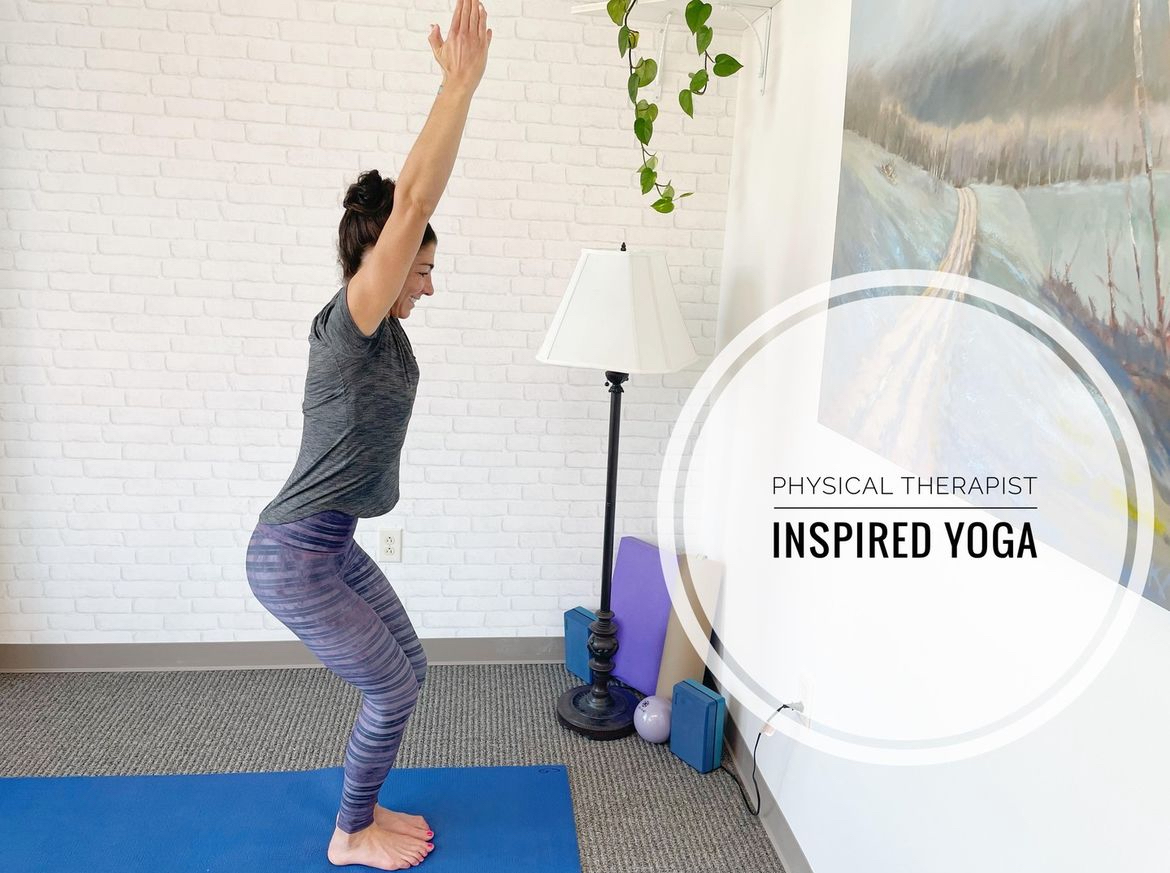
  • Unlocking Joint Mobility: Incorporating Yoga into Physical Therapy Practices

    Unlocking Joint Mobility: Incorporating Yoga into Physical Therapy Practices

    Unlocking Joint Mobility: Incorporating Yoga into Physical Therapy Practices

    by Sarah Apple Kingsley, pt, dpt

    My name is Sarah Apple Kingsley and I have been a practicing physical therapist since I received my Doctorate in 2014.

    During my first 5 years as a therapist, I treated how most therapists do, using standardized exercises and stretches taught in PT school or during our clinical rotations. Physical therapists are taught to apply “cookie-cutter” type exercises if a patient has low back pain, others for hip pain, and for a general geriatric population that just needs strengthening to do these generic exercises. 


    For the most part, if a patient’s case is uncomplicated, oftentimes this approach would be effective. When treating a geriatric population that just needed general strength and balance training due to lack of physical activity, I saw some promising results. However, for many of my patients, I quickly discovered that this method alone was not enough. Why were some of these standard exercises taught to thousands of PT students every year causing some of my patients more pain and dysfunction? Why were some patients simply not getting better?


    Unfortunately, it is far too common for therapists facing patients that are not improving to become discouraged and lose interest. Faced with a lack of progress, many therapists will discharge a patient and send them on their way claiming physical therapy just didn’t work for them. For me, that conclusion was frustrating and unsatisfactory. I personally experienced this scenario when trying these same cookie-cutter type exercises on myself when I was experiencing pain and injury, and found myself not only not improving, BUT GETTING WORSE!


    That is when I THANKFULLY discovered the LYT Method. This amazing method, created by a physical therapist, completely redefined yoga and functional movement. LYT focuses on how each joint is supposed to move and what typical compensatory patterns most people utilize that leads to pain, dysfunction, and a lack of proper muscle activation. Many of the moves are so simple yet so specific in the manner in which they are performed, which is what really makes a lasting change on the body and a major difference in outcomes. I began using this method and exercises on myself and after finding positive results I started to introduce some movements with my patients in the clinic!


    When I began incorporating spinal mobility stretches, hip hinging strategies, self-joint mobilization techniques, and fascia stretches into my exercise routines with patients, the results spoke for themselves! Not only were people starting to feel and notice their bodies in a way they hadn’t been aware of previously, but they were able to use these strategies to move and feel better during their daily activities. 


    A therapist can manually mobilize a joint or release a muscle that is tight or has developed a trigger point, but it is the beneficial repetitive movements that will keep the mobility in place. Conversely, the repeated dysfunctional movement patterns will cause the patient to continue to return with pain and poor joint mobility. Teaching these movements to my patients has facilitated an increase in their mobility on a daily basis, which results in lasting changes and benefits.


    Yoga allows the body to move in a variety of ways, encouraging the patient to get back in touch with their body both in an isolated manner for each part of a system as well as the entire body as a whole. Physical therapists and referring physicians often separate the body into parts due to a specific prescription for shoulder pain, hip pain, or back pain, and thus only focus on that specific area of the body. Through yoga’s full body movements, it becomes clear that a lack of mobility, strength, and/or activation in one area could be responsible for the pain in a completely different area of the body. Yoga also allows the mind to connect to the body in a way most of us are unable to during our daily lives. You can completely change an exercise or movement just by giving a different cue and focusing on a different pull or activation. The same yoga poses can be used for completely different purposes when cued accordingly. This mental and physical focus is a form of meditation in itself. I strongly believe that being able to connect to your body in this manner is a crucial factor for true healing.


    Learn how to truly heal yourself today by taking one of our LYT Daily classes! The benefits from the cues provided in these classes outweigh most all other forms of yoga for treating the body as it is meant to move. Start small and focused, then move larger and faster as the body heats up. You won’t regret giving this method a try!

  • 679. Wednesday Q&A: Perfect Posture, Distal Finger Proprioception, Disc Function, Spinal Alignment, & Bunions

    679. Wednesday Q&A: Perfect Posture, Distal Finger Proprioception, Disc Function, Spinal Alignment, & Bunions

    In this Wednesday Q&A, we answer your questions about can you achieve perfect posture with a broken bone, distal finger proprioception, disc function and spinal alignment, and bunions.


    • Can you achieve perfect posture if you’ve broken an important bone like the collarbone?
    • I have a podcast question about proprioception motor control hypermobility in the distal finger joints. I have known for a while that a sign of EDS, Ehlers-Danlos Syndrome, a hypermobility syndrome, in kids is fine and gross motor skill development, which I had. I recently learned that in addition to being clumsy and running into things, EDS folks tend to drop objects a lot due to proprioceptive issues. My phone currently has a lot of cracks in it. Do you guys have any ideas on how to improve distal finger proprioception?
    • What is a disc and its function? And what are your thoughts about chiropractic adjustment or muscle strengthening for better spinal alignment?
    • I’ve never had a problem with bunions until recently, although I’ve noticed the bony bump on the joint at the base of my big toe when I bought a new pair of trainers comfortable with wide enough toe space, they were rubbing a little bit on that bone. It didn’t really hurt, but I could feel it after a couple of weeks, it started to become really painful and inflamed. I’d like to think that I’m doing the correct things by wearing correct toes. There’s the toes, spacers, exercising, massaging my feet, walking, barefoot, posture, etc. I also got myself a bunion cushion for when I’m wearing shoes that that does not seem to help. My question is whether that can be caused by an inflammatory disease such as rheumatism. I had a blood test a while ago and it turned out that one of the markers was elevated. It would be great if you could discuss bunions and how to treat them on the podcast. 


    To learn more, and for the complete show notes, visit: lytyoga.com/blog/category/podcasts/


    Do you have a question?


    Sponsors:

    • Shop my favorite 100% Science-Backed Amino Acid Supplements. Enter code “LYT” to save 30%. aminoco.com/LYT
    • Check out and sign up for LYT Daily and The LYT Studio, including our 1-week FREE trial of each here:
      https://lytyoga.uscreen.io/


    Follow the podcast:

  • 648. Wednesday Q&A: Moving Better With Age, Yoga for Disc Herniation, & the Best Time to Workout

    648. Wednesday Q&A: Moving Better With Age, Yoga for Disc Herniation, & the Best Time to Workout


    In this Wednesday Q&A, we answer your questions about moving better as we age, LYT yoga for cervical disc herniation, and the best time of day to workout. 


    • From the Wednesday Q&A podcast regarding cervical disc herniation, if a client has a slipped disk at the cervical spine and was advised by her chiro to do soft yoga or gentle, needing to avoid down dog, is it okay if she continues our LYT yoga practice? At some point, I kind of know the answer, because that’s what we highlight in a lot of classes, that neutral spine position and definitely working with the cervical neck flexors to strengthen. But I would like to hear more insights from you both. 
    • Many people believe that aging comes with a decline in physical ability, but research and experience show that this does not have to be the case. Do you think that we can get better as we age? Learn our thoughts.
    • Is it better to workout in the morning or later in the day?


    To learn more, and for the complete show notes, visit our show page here.

    Do you have a question?


    Become a LYT Teacher:

  • 644. Non-Surgical Approach to Healing Back Pain with Dr. Greg Lutz

    644. Non-Surgical Approach to Healing Back Pain with Dr. Greg Lutz

    Non-Surgical Approach to Healing Back Pain with Dr. Greg Lutz

    Join Lara for a conversation with Dr. Greg Lutz about how regenerative orthopedic medicine can be used to effectively treat degenerative disc disease.


    Dr. Greg Lutz is the founder of the Regenerative SportsCare Institute, Physiatrist-in-Chief Emeritus at Hospital for Special Surgery, and a professor of clinical rehabilitation medicine at Weill Medical College of Cornell University. 


    In this episode, you’ll learn about:

    • Dr. Lutz’s newly released book Heal Your Disc, End Your Pain: How Regenerative Medicine Can Save Your Spine.
    • the difference between surgical and regenerative orthopedic medicine.
    • what PRP is and how it could help heal your spine. 
    • the difference between a slipped and herniated disc.
    • tips to help keep your spine healthy.


    Guest Resources


    Connect with Lara Heimann, The Redefining Yoga Podcast, and LYT Yoga


    Sponsor

  • 545. Wednesday Q&A: Teres Major Area Pain, Shoulder Blade Balance, Mom Shoulder & Cupping

    Welcome to Wednesday Q&A, where you ask questions and we answer them!

    In this Wednesday Q&A, we answer your questions about teres major area pain, feeling an imbalance in your shoulder blades, “mom shoulder,” and our opinion on cupping.


    Your questions:

    • I have pain somewhere between teres major and the armpit. Help!
    • I noticed a significant difference in my ability to engage the muscles around my right shoulder blade and the armpit, like delayed firing. What would you suggest to rebalance my shoulders?
    • Can you speak about “mom shoulder?” How can I get it to feel better?
    • Cupping: When, why, and where?


    To learn more, and for the complete show notes, visit: lytyoga.com/blog/category/podcasts/


    Do you have a question?


    Sponsors:


    Redefining Yoga is produced and published by Crate Media.

  • 543. Wednesday Q&A: Hip Trouble, Flexibility vs. Mobility & Finding a Good PT

    Welcome to Wednesday Q&A, where you ask questions and we answer them!

    In this Wednesday Q&A, we answer your questions about finding the source of hip trouble, the difference between mobility and flexibility, and how to find a good PT.


    Your questions:

    • I have a student who has trouble crossing his legs and other hip-related yoga poses. Do you have any advice on figuring out where the problem might be?
    • Flexibility vs. mobility: what’s the difference?
    • I’ve heard you talk about good PT (looking at the body globally) vs. bad PT (looking at a problem in isolation). Do you have any recommendations on finding a PT that falls into the good category?


    Do you have a question?


    Sponsor:


    Redefining Yoga is produced and published by Crate Media.