Tag: posture

  • Well…THAT Happened by Julie Glick

    Well…THAT Happened by Julie Glick

    I’ve seen some really funny “Well… THAT happened” memes. There are many instances in my life when I could have or actually did utter that very same phrase.


    It’s 1998 and I am still sicker than sick with Lyme Disease. It’s been four years of feeling like I have the flu every day, carrying around a head that feels like a pain-filled bowling ball. And don’t get me started on the brain fog (i.e. car keys in the freezer…). I have done Homeopathy, Naturopathy, Chinese Medicine, hyperbaric oxygen treatments, SO much more and especially food as medicine. I had to work my very full time job (which I did not love) doing my best despite feeling like an achy, tired space cadet. 


    So it’s no wonder I woke up one Sunday morning upset and fed up with the Universe. I had lived long enough to know that when things really suck there is usually a gift wrapped in the pain. Or at the very least, a message or a lesson to grow my soul. So I started praying out loud saying, “Please send me messages. Please send me messages. Please send me messages…” I was not going to stop until I got a message, a burning bush, something! 


    My two adorable cats named PacoBean and Cosmosis are milling around, meowing for breakfast. But I am intent, I will not be deterred. “Please send me messages. Please send me messages.” Cosmo is biting my hair, Paco just stepped on my belly. “Please send me messages!” I don’t know how much time passed but at some point I heard a big, booming male voice say, “NO NEW MESSAGES!” I sat bolt upright looking for God in my bedroom. Then I heard a meow so I turned around to find Cosmo — who had just stepped on my answering machine. There were like 12 buttons on that answering machine and Cosmo steps on that one?


    After I stopped laughing hysterically and hugging my cats, I realized that I most definitely had received a message. No New Messages! Maybe I didn’t need to learn anything new about myself. Maybe I will be happiest AND healthiest when I just remember what I came in knowing. Thank you, Lymies. Thank you, Cosmosis. Thank you, Universe. I got the message…


    My body has been my teacher in more ways than I can count. Most recently my greatest teacher has been this spine of mine. Suffice it to say, my spine ain’t what it used to be. Some vertebrae decided to take a hike and stray from optimal alignment. Some are smushed. Some decided to get arthritic, narrow the spinal canal and put pressure on my poor spinal cord. So all of THAT happened…


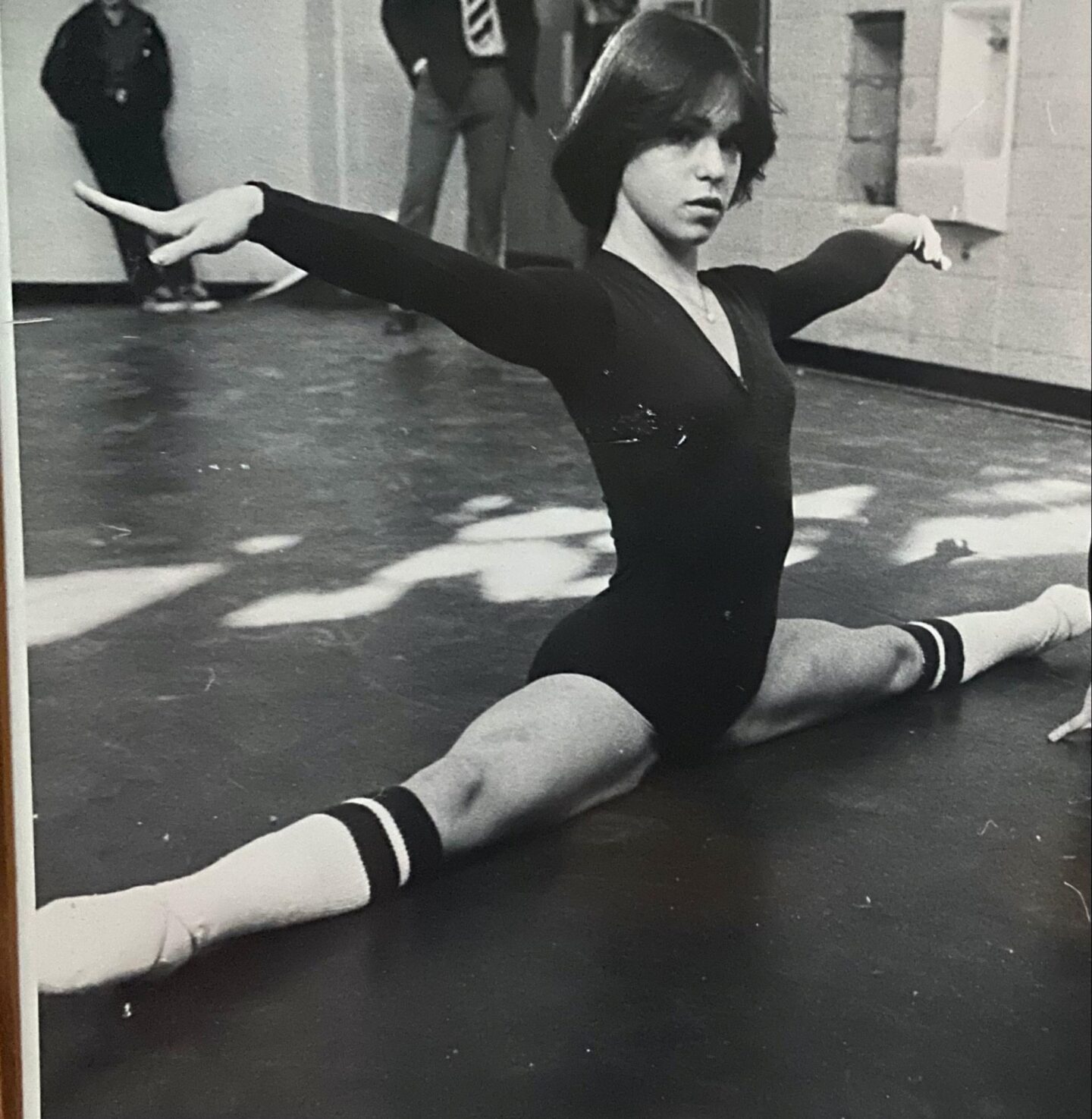
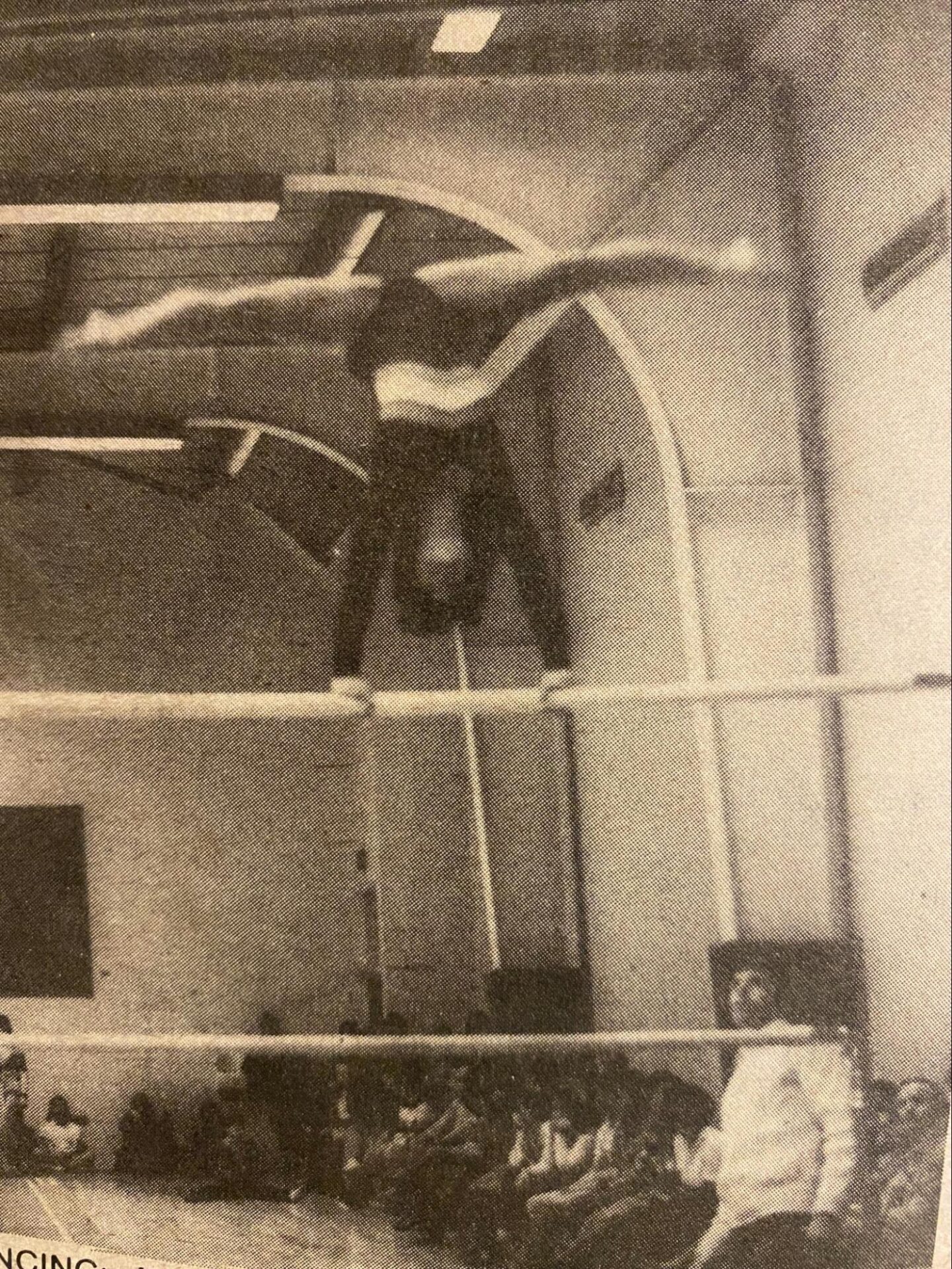
    I was a competitive gymnast throughout high school and college so you guessed it! My pelvis got all too comfortable living in anterior tilt. I positively lived for gymnastics and spent at least 15 hours a week in the gym. Back in the day I had to tumble on a wrestling mat. I may have been in a hollow body position during my layout full twist, but I still I had to land on a 1 ½” thick mat. Now gymnasts compete on a spring floor not only to be able to tumble higher, but also to absorb the shock when they land after flipping and twisting from waaaay up high. I had no such spring and no such shock absorption so my body, especially my spine, had to deal with those landing forces.
    Julie-Glick-1

    But I stopped competing about four decades ago so I can’t blame it all on gymnastics. I kept walking around with a tilted pelvis long after I stopped sticking the landings. I carried this out-of-alignment-ness with me everywhere from marathons to yoga class.
    Julie-Glick-2

    Anything left untreated gets worse and unfortunately, I didn’t know what I didn’t know. I had the best of intentions to be fit and strong. I weight trained, ran, cycled, power walked and practiced yoga – all out of alignment. Intellectually I knew what neutral pelvis was. But mine loved to tilt forward and that felt “right.”  Factor in hyper-mobility plus a whole lotta stress and it’s no wonder my back pain got worse and worse year after year.


    I had an MRI about a year ago. When I received the very long and scary report, I went straight to freak-out mode. The more I read the more I wondered how I was even vertical. I went to a couple of well-intentioned but fear-inducing doctors who told me to expect a life of limited mobility and activity. Thank goodness I had been practicing and learning to teach LYT Yoga at this time! Both Lara Heimann and Kristin Williams talked me off of my temporary freak-out ledge. They reminded me that MRI’s do not tell the whole story and that anything is possible, especially and including healing my spine. How could I have forgotten? 


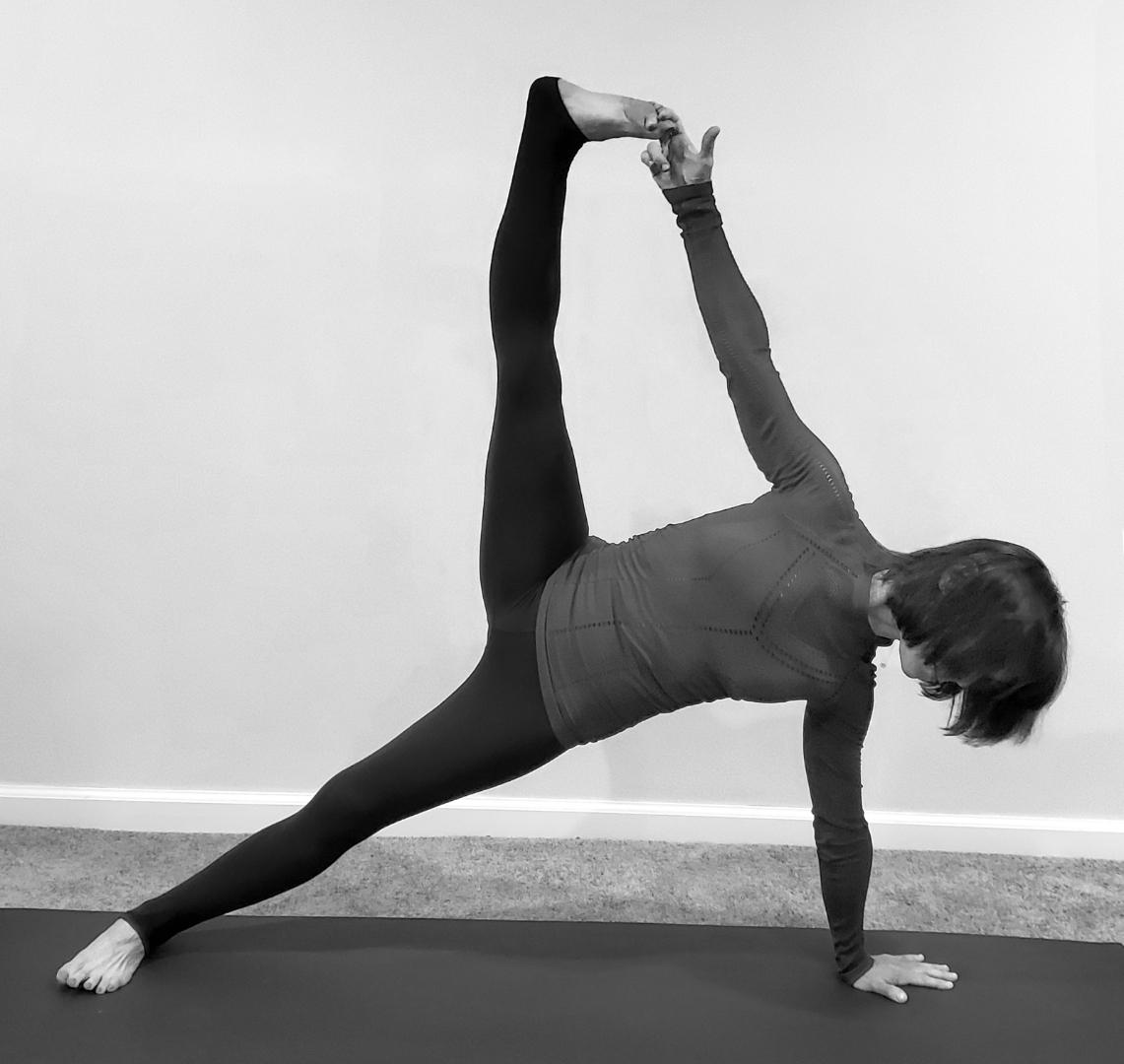
    So here are the blessings literally wrapped in the pain. LYT Yoga is ALL about optimal postural alignment. I should get a t-shirt that says “Triple S It Up!” because I Triple S It Up on and off the mat. I am in love with my transverse abdominis and I no longer have snoozy glutes, thank God! I feel so much better and practice yoga like a different Julie. LYT Yoga is a fun, functional and sustainable practice. I say, “Age-schmage!” I may have made 61 trips around the sun, but I feel more aligned, powerful and LYT up each day.
    Julie-Glick-3

    Most importantly, I am on a mission to teach the principles of LYT Yoga to every student I meet both on and off the mat. I love sequencing classes together called, “No Tipping Please!” and “Psoas to Move Well.” I even teach LYT Yoga in some of the Ophthalmology offices I call on for my day job. I hear the staff saying to one another, “Zip up that low belly and turn on your glutes!” and “You have text neck – find your Triple S!” I visit my 95 year old Dad and lovingly poke him in the butt to remind him to engage his glutes. 


    So this spine of mine led me to LYT Yoga. I honestly would not have it any other way. The Lymies (which may or may not still live in me) reminded me that food is medicine. Plant-based and loving it! All of the above and more make me so genuinely thankful for every movement, every heart beat, every breath… I got the message. All of this had to happen for me to live my mission.
  • Practicing During Your Period

    Practicing During Your Period

    A question that comes up a lot both on the Redefining Yoga Q & A Podcast and in our LYT Yoga Teacher Training is should a person practice yoga during their period? There are those who would say a woman should never practice during menstruation. Eye roll. Then there are those who say you shouldn’t do inversions during menstruation. They claim that inverted poses (such as handstand or forearm balance) reverse the prana, or energy flow, which is normally from the naval down to the pelvic floor. They claim this reversal of energy flow can disturb the menstrual process and lead to reproductive issues later on. This is simply not true. Neither the position of the body nor the gravitational pull of the earth has any effect on menstrual flow. Female astronauts spending months in space report having completely normal menses despite being in zero gravity the entire time. People may also claim that inversions place undue strain on the broad ligaments of the uterus and cause a partial collapse of the veins, allowing the arteries to pump blood into the abdomen. These claims have been also shown to be baseless, with no scientific proof behind them. 


    What the science has shown is that exercise is an optimal treatment method for pain during your period. More than 50% of women have painful periods and 10% of them are so severe that they disrupt 1-3 days of their lives each month. Cramps, medically known as primary dysmenorrhea, occur when the uterus contracts due to reduced blood supply. It’s believed to be caused by the release of prostaglandins and other inflammatory proteins in the uterus, which is mediated by the sympathetic nervous system. Exercise has been shown to decrease stress, which decreases the activity of the sympathetic nervous system, thereby decreasing menstrual pain. Physical activity also decreases vasoconstriction and increases estrogen and progesterone, which can decrease symptoms. Exercise during menstrual pain can also lead to faster transfer of wastes and prostaglandins from the uterus. 


    The research is unclear regarding what type of exercise is best for managing menstrual symptoms. Most studies agree that the type of exercise should be of moderate intensity and aerobic, to encourage the release of endorphins for pain and stress relief. Studies have also shown a greater decrease in pain from longer periods of exercise (8-weeks as compared to 4-weeks). From a personal perspective, I know that during the first two days of my period, my pelvic joints are a little less stable and are more prone to pain with prolonged standing or high impact activities. So I modify my LYT Yoga® practice accordingly. I may choose to do an intermediate level class with less plyometrics or modify a higher level class to minimize pressure through the joints. I may opt for a run-walk as opposed to a run, or in some cases, I’ll choose yoga over running on those days. It’s important to listen to your body. But know with confidence that science has shown exercise to be beneficial in treating menstrual symptoms. There is no evidence behind inversions affecting menstrual flow or reproduction. We have heard countless stories from LYT Yoga® practitioners that connecting to the core with this method of yoga has vastly improved their menstrual pain. How great is that?! On that note, you know where you can always find me, any time of the month…on the mat!


    Xoxo,

    Kristin  

  • The Triple S

    The Triple S

    You’ve heard us say it– and you may have even purchased our shirts in the LYT store. Posture F*cking Matters.  Now I’m not sure how you could be a LYT lover and not have heard of the Triple S, but just in case, I’m going to break it down for you. 🙂


    Triple S is a termed Lara coined a few years ago as a simple way to remember how to achieve the optimal posture. There are three bony landmarks to remember:


    1. SKULL – more specifically, the back of the head
    2. SCAPULA – also known as the shoulder blade, a flat triangular bone that lies upon the rib cage and is part of the shoulder girdle
    3. SACRUM – the fused bottom portion of the spine, which is sandwiched between the ilia of the pelvis.


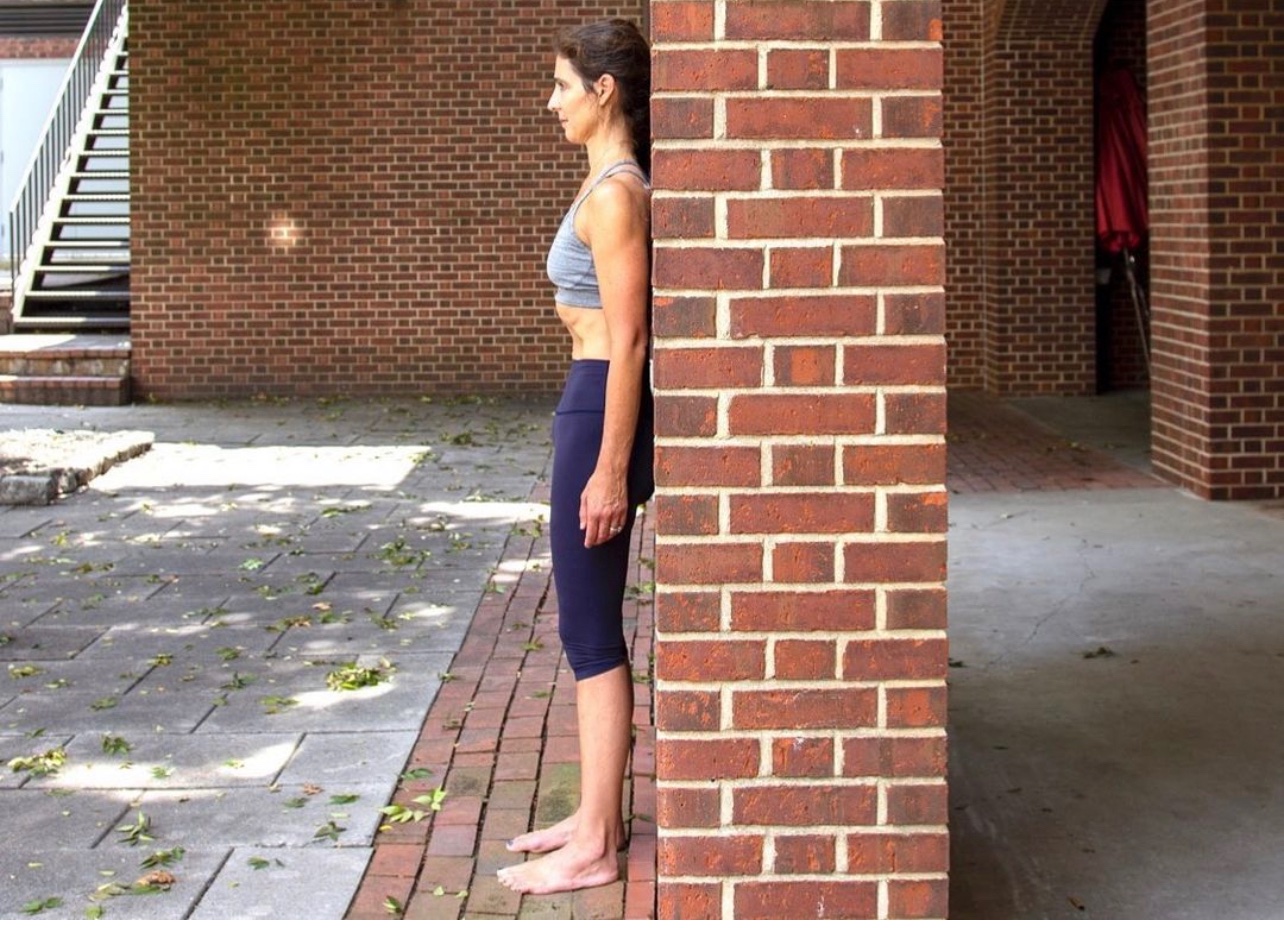
    In order to obtain an optimal postural alignment, the skull, scapula, and sacrum should be in line with one another. For example, if you were to stand up against the wall, the back of the skull, scapula and sacrum should all come in contact with the wall. The Triple S recreates the natural curves of the spine and stacks the head atop the vertebral column. So why is this important?

    Lara-Triple-S

    As Lara likes to say, the forward head and rounded shoulders posture is a pandemic of its own. Just to give you an idea how much the slightest shift forward of the head impacts the neck, consider this: A normal human head weighs roughly 10-12 lbs. If we were to shift the head forward 15 degrees at a time, the weight through the cervical spine increases as follows:


    • 0 degrees = 10-12 lbs
    • 15 degrees = 27 lbs 
    • 30 degrees = 40 lbs
    • 45 degrees = 49 lbs
    • 60 degrees = 60 lbs


    That’s pretty staggering when we consider that most people probably hold their head in 45 degrees of cervical flexion while texting or playing on their phones…roughly five times the amount of strain through the cervical spine. But that’s not the only issue at hand. Coupling the forward head with the rounded shoulders and upper back results in something we call “Upper Crossed Syndrome”.


    In Upper Crossed Syndrome, we develop tight muscles in the posterior neck and shoulders and anterior chest and weak/inhibited muscles in the anterior neck and posterior shoulders. If we visual this as a large X drawn on a body facing left, with the center running right through the base of the neck, it would look like this:

    Upper-Crossed-Syndrome

    Hence the name, Upper Crossed Syndrome. This imbalance is due to losing your Triple S both in standing and sitting. The number of secondary issues that arise from the aforementioned imbalance in the body is all but endless. It includes (but far from limited to): tension headaches, jaw pain, neck pain, shoulder pain and dysfunction, low back pain, rib pain and dysfunction, thoracic outlet syndrome, carpal tunnel, etc etc.


    So take a moment and find your Triple S. You can start on the floor, where gravity can assist. Progress to the wall and then to sit and stand independently. Your future self will thank you! 


    Xoxo,

    Kristin

  • Finding Balance Through Better Posture

    Finding Balance Through Better Posture

    People often ask me for tips on how to find more balance in their lives. While many factors contribute to that feeling of physical and mental equilibrium that can be considered balance, I often tell people to start by examining how they carry themselves. Posture is an indicator of both external and internal stability. And, in my opinion, posture is an essential gateway to discovering more balance in your body, mind and energy.


    So, how does one find the most optimal posture? Just like almost everything in life, there is no “perfect”. But, there exists a spectrum of balance in which we are able to hold ourselves upright with more ease and efficiency; and with more optimal posture, we move in a variety of positions with less effort and a decreased chance of injury. It makes sense that we will therefore have more energy if we expend less effort like we do when we are misaligned. Compensations in the muscular firing cost us energy. So, let’s look at how we can improve our posture to hold on to more of our life fuel.


    Start by examining your standing posture. When you are standing, your head should be centered over the neck, resulting in an imaginary line where your ears bisect your shoulders. In this modern day of technology, far too many people carry their heads off-center where their ears are way in front of the shoulders. This forward head position indicates that the head is not balanced over the cervical spine, the neck. The neck will then not be evenly balanced over the torso (as it should be in more optimal posture, with the shoulders centered over the pelvis). The pelvis is often pitched forward which could either be because of the neck or because of the increased time we spend sitting or both.


    To get a sense of this in your own brain mapping, stand against a wall with the back of your skull, scapulae (shoulder blades), and sacrum (the lowest part of your back) touching the wall. In the more optimal standing posture, all the natural curvatures in the spine will be in place, with the cervical and lumbar spine not touching the wall. Notice what part of those three areas -skull, scapulae and sacrum – have a harder time connecting to the wall. This sensory feedback will let you know where your are not balanced. For example, I have seen people struggle to get the back of the skull to touch the wall, indicating that the neck muscles in the back are restricted and the anterior/front muscles of the neck and torso are probably weaker. If the sacrum has a hard time connecting with the wall, the muscles in the front hip could be tight and tipping the pelvis forward. Even though many factors can contribute to the overall imbalance of posture, learning to “find” a more optimal position with the feedback of the wall can help the underlying issues.


    Your posture won’t change overnight, but you can work on it with the feedback of the wall, reorienting that upright position and getting a sense of what muscles will need to strengthen or lengthen to help with standing tall. This search and work for physical balance will not only help you stand taller, it will also help you identify areas of misalignment in your body that can be improved by first becoming aware that they exist. Awareness is the first step to changing the way we stand and move to lead us to more balance in our energy and in our movement.


    Drea-Sauter

  • 14 | Anatomy of Movement: Pelvis, Glutes, Feet, & More | John Frank, PT

    14 | Anatomy of Movement: Pelvis, Glutes, Feet, & More | John Frank, PT

    Today I welcome my brother, John Frank, back on the podcast. John is a physical therapist and movement specialist. (If you haven’t already, listen to John’s first episode!) I wanted to have John back on to answer questions that were sent in by you, and to further discuss movement and anatomy.

    What are some recommendations you’d make for runners?

    Start easy, start small, and let your body adapt to the new stresses.

    Paying attention to your balance and the form of your pelvis, as well as where your knees are going, is extremely important. By practicing a single leg stance, you can better prepare your body for the stress of running.

    What do you recommend for foot pain? What are the biggest causes of foot pain?

    Not wearing proper shoes, or having them available to you, is a main reason people have foot pain. Your body weight goes into your big toe the most, and it really needs to be in alignment with the rest of the arch and inner foot. When it’s pushed inward, your kneecaps become useless because your body weight isn’t being properly placed. A lot of the time, the pain can be alleviated by simple practices, such as recognizing postures and movements.

    What are things that are great for the lower back in yoga, and maybe not so great?

    “People with low back pain tend to have weak and/or stiff hips.”

    Maintaining a more stable low back, while opening up your hips, and keeping a neutral spine while in the transitions is very important in yoga. Women tend to hyperextend, and push their pelvis forward, so this is something to pay special attention to, especially if you are experiencing back pain.

    Resources:


  • 10 | Neutral Pelvis: The Secret to a Strong Yoga Practice & Life

    10 | Neutral Pelvis: The Secret to a Strong Yoga Practice & Life

    A neutral pelvis is so important for our movement patterns and for our energy level, and that’s why today’s episode is all about creating and maintaining a neutral pelvis.

    What does “pelvis” mean? Where is the pelvis?

    In Latin, pelvis translates to “acetabulum” meaning, basin.

    The pelvis is where your lower limbs come up and meet at the hip joint. The illium, the pubic bone, the sacrum, and the tailbone all meet to create the pelvis. The tailbone actually serves as an attachment point for the lower muscular system.

    What is a neutral pelvis?

    The pelvis provides the foundation for the spine. When thinking about energy exchange and how we hold onto energy within the body, a neutral pelvis is fundamental for that. If you go against a wall and find your sacrum, pushing that against the wall will help you see where your pelvis aligns. If you find that it’s difficult, this probably means the front of your hip is tight and you have an anterior tilt.

    Why is it important?

    A neutral pelvis is important in supporting the spine, this way no excessive strain is placed on your spinal cord. It is also important for proper joint movement, and fundamental for taking big, deep breaths.

    Neutral Acronym:

    • N: Neck in line
    • E: Elongate
    • U: Un-clench your jaw
    • T: Tailbone down
    • R: Ribs broaden
    • A: Abdominals drawn together
    • L: Line between the pubic bone and tailbone


  • 5. The Truth About Text Neck

    5. The Truth About Text Neck


    Have you heard of Text Neck?

    It’s a 21st century ailment that’s spreading globally and rapidly, and it’s something that I’m asked about daily!

    I also see Text Neck daily and, honestly, it makes my heart hurt.

    If you’re not familiar, Text Neck is a condition in which your posture is stuck in the position that you assume when you’re looking down at a cell phone, tablet, or other wireless device.

    This happens to people when – you guessed it – they look down at a device too frequently or for too long.

    I’ve been working in physical therapy for decades, and we didn’t have these kinds of devices when I started. People would have neck pain, of course, but not nearly as many people – and not nearly as many young people, in particular.

    This is a real issue when you’re younger because your body will try to adapt, leading to early onset arthritis and connective tissue dysfunction. Your connective tissue will literally get and feel thicker, and if you feel this happening then you need to start changing your habits now before it’s irreversible.

    So how can we treat and/or prevent Text Neck?

    • Keep your cell phone, laptop screen, and other devices at eye level as much as possible.
    • Don’t be on your device so much! Trust me, I get it and I am using my phone a lot for my business and personal life too. But you don’t need it 24/7, so turn it off sometimes and take a break!
    • Be mindful of your posture. Put a note somewhere you will see it to remind you and use a wall for tactile feedback while you try to elongate your cervical spine.
    • Spend some time strengthening your core, because if you’re stronger in your core then you’ll naturally give your neck more support.
    • If you already feel a lot of tightness and thickening, you probably need to go get some manual therapy. Specifically look for someone who offers myofascial work, like someone who has studied Rolfing or John Barnes.

    To learn more, and for the complete show notes, visit: lytyoga.com/blog/category/podcasts/

    Connect with LYT Yoga and Lara Heimann:

    Instagram Lara Heimann – https://www.instagram.com/lara.heimann/

    Facebook Lara Heimann – https://www.facebook.com/lara.f.heimann

    Instagram LYT Yoga – https://www.instagram.com/lytyogamethod/

    Facebook LYT Yoga – https://www.facebook.com/lytyogamethod


  • 3. Evolution of a Yoga Practice with John Frank, PT

    3. Evolution of a Yoga Practice with John Frank, PT

    I want to introduce all of you to an exceptional physical therapist, a movement specialist (yoga), and a biomechanical, anatomical wonder: my brother John Frank (who is just one of my brothers because we’re triplets)!

    Physical therapy is a satisfying vocation because they get to spend a lot of time with the people we help and their main function is to educate – which also means they have to be constantly educating themselves.

    And if there’s one person I’ve learned the most from, it’s definitely John!

    Since people often send me questions about yoga, today I ask John these questions so we can get a physical therapist’s perspective on various aspects of yoga and movement. And if you have any questions, feel free to send me a DM on Instagram (@lara.heimann).

    What’s up with deep forward folds?

    John says, “It’s a mechanism for herniating your disc.”

    I don’t teach them in my practice and I suggest you avoid them, especially while sitting. Plus, they’re boring! If you think it feels good, that’s because you’re stretching out other stuff, like your fascia, and there are healthier ways to do that. As John says, “A temporary feel good doesn’t necessarily mean good for you.”

    How do you get more improved body awareness, other than yoga?

    “It’s very tricky,” John says. Your posture adapts to how you move (or don’t) and it starts to feel normal. But for the most part, external cues are better than internal cues. “If you overthink what’s happening in your body … your body is not good at getting those cues.”

    So if you’re running, for instance, don’t focus on what you want your body to be doing. Instead, let your nervous system do most of the work and, if you have to focus on something, listen for a noise when your foot hits the ground and adjust until it’s not a loud thud.

    It can even be as easy as putting a sticky note at your desk reminding you to straighten your posture. The goal is to just bring awareness without overthinking things!

    Besides running, what movements does John enjoy? What would he suggest for himself or other people?

    “A variety of movement is good, but everyone should be doing their equivalent of a deep squat … because everyone squats, whether you know it or not!”

    There’s also walking – “an underrated activity.” We were born to walk, plus it’s just a pleasant thing to do!

    And it’s a little bit of a cop-out, but he’s my brother so I’ll allow it: incorporate a variety of movement. Have fun, play games, whatever. Just do different activities!


    To learn more, and for the complete show notes, visit: lytyoga.com/blog/category/podcasts/


    Connect with LYT Yoga and Lara Heimann:

    Instagram Lara Heimann – https://www.instagram.com/lara.heimann/

    Facebook Lara Heimann – https://www.facebook.com/lara.f.heimann

    Instagram LYT Yoga – https://www.instagram.com/lytyogamethod/

    Facebook LYT Yoga – https://www.facebook.com/lytyogamethod