Tag: physical therapy

  • Regaining Balance: Utilizing Yoga To Enhance Proprioception in Physical Therapy

    Regaining Balance: Utilizing Yoga To Enhance Proprioception in Physical Therapy

    by Sarah Apple Kingsley, pt, dpt


    I have worked as a physical therapist for over 10 years, with the majority of my career having been with a geriatric population. Over that time I have worked in a variety of settings and levels of care including inpatient skilled nursing facilities, assisted living facilities, independent living facilities, and general outpatient independent home settings. Regardless of the level of care or a particular patient’s independence, for the geriatric population the most important factor is always BALANCE. During an assessment or evaluation a physical therapist will almost always test for balance in some way and is typically required to record their findings as indicators of fall risk. Goals are set to improve balance using functional scales as a measure of improving safety, independence, function, and quality of life.


    So what makes up balance?! Balance consists of 3 major centers of the body. Our visual system utilizes our eyes to see what we are standing or stepping on. Have you ever tried standing on one leg and then closing your eyes? Harder right? This is vision’s role in balance. Second, our vestibular system is in our inner ear, using tiny hair follicles as a way for our body to know where we are in space especially when turning the head and changing focus of the eyes. This system helps our body know we are not actually moving when we are sitting in a car watching our surroundings go by. When it is malfunctioning, vertigo symptoms become apparent. Try walking in a straight line and turning your head left and right. Can you keep a straight line, without falling over or getting dizzy? If so, then your vestibular system is functioning well.


    The final and in my opinion most important component of balance is PROPRIOCEPTION! The tiny little somatosensory receptors on our feet send signals to our brain and the rest of our body, joints and muscles about where we are in space. It is responsible for keeping our balance on a variety of different surfaces, narrowing our base of support, or changing where our limbs are in space. This is the one system that I believe we have the greatest ability to control and improve upon with physical therapy. Typical forms of physical therapy use a variety of tools and exercises to work on this system such as standing on a pillow or foam airex, a wobble board or half foam roller, single leg or tandem stance positions, and my personal old and new favorites the BOSU and a vibration plate. While each of these methods have their advantages, it wasn’t until I started using yoga techniques in my practice that I started seeing completely different results.


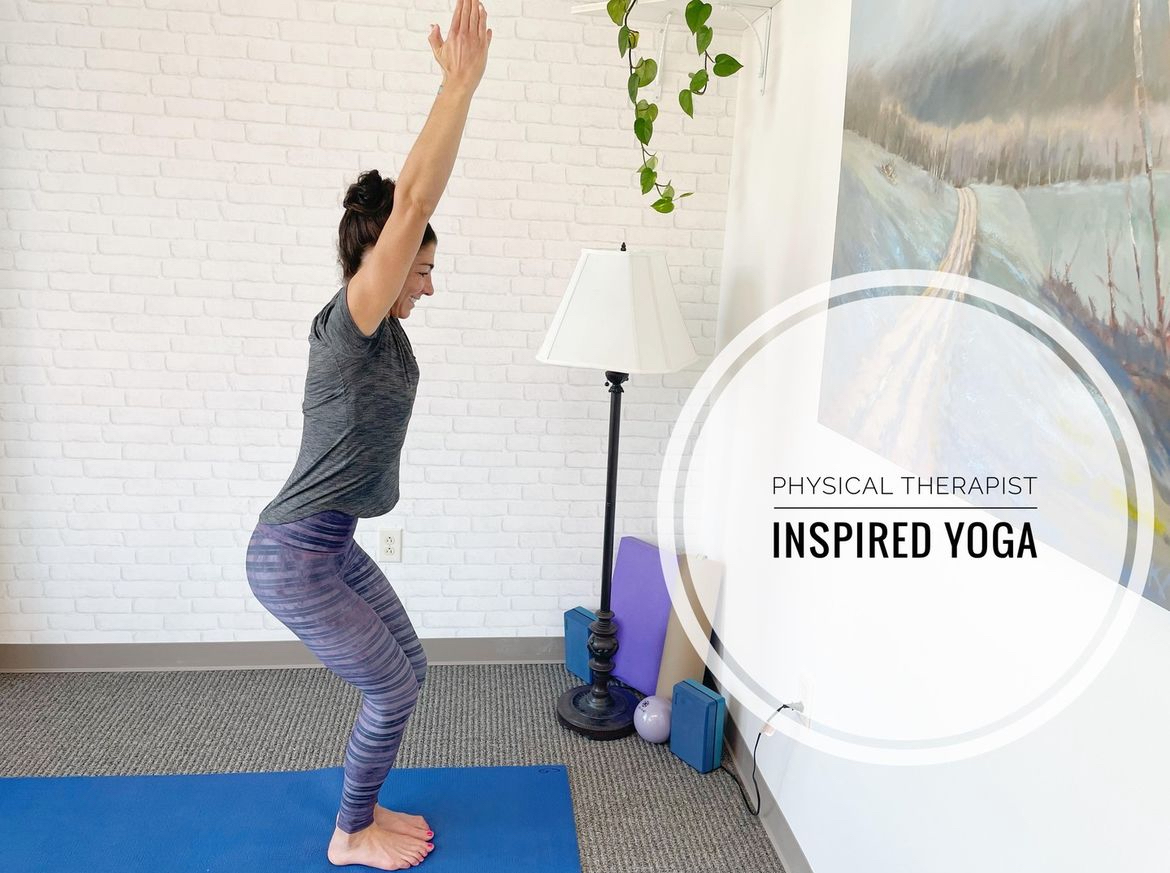
    The LYT yoga method explains in detail which parts of the body are meant to move and which are meant to stabilize, which helps target smaller muscle activation strategies that are important for functional movement patterns. Fun poses like airplane, single leg bridging and half moon, as well as transitions such as high crescent lunge into knee to chest all require the ability to stabilize on one limb. One legged stability is a huge balance challenge that works to improve your center, which most forms of common exercise do not. I have learned that you can’t simply tell someone to practice standing on one leg repetitively while expecting them to improve their single leg balance times. A variety of different movements are needed with targeted activation of different muscle groups that aid in supporting the body when in a single leg standing position, all of which need to be working in coordination. The LYT yoga method helps yogis gain these activation strategies as we build upon each move, starting small and working our way up. Progressing this way gets the body ready to support single limb standing positions as opposed to trying to go right into it and risk a fall or injury. By “training” or practicing in this manner, we can prepare the body to be more ready on a daily basis to support a load or react to a potential fall situation.


    Speaking of fall risk, being more rigid in the body (such as my patients with Parkinson’s Disease) puts you at a much greater risk for experiencing a fall. Yoga helps to open up the muscles, increase joint mobility and expand on ranges of motion to collectively experience movement in a more fluid way. Patients with this diagnosis may initially find yoga to be foreign and very difficult. When new ranges of motion become available and the body is able to move more fluidly, walking patterns improve, walking speed improves, and fall risk drastically decreases! 


    All of this to say, my practice as a therapist has been changed for the better since I implemented strategies, poses and movements that I have learned in my LYT yoga training. Whether you have Parkinson’s Disease or another diagnosis, this method can change your body for the better!
  • The Benefits of Using Yoga Blocks in Your Movement Practice

    The Benefits of Using Yoga Blocks in Your Movement Practice

    The Benefits of Using Blocks and props in Your Movement Practice

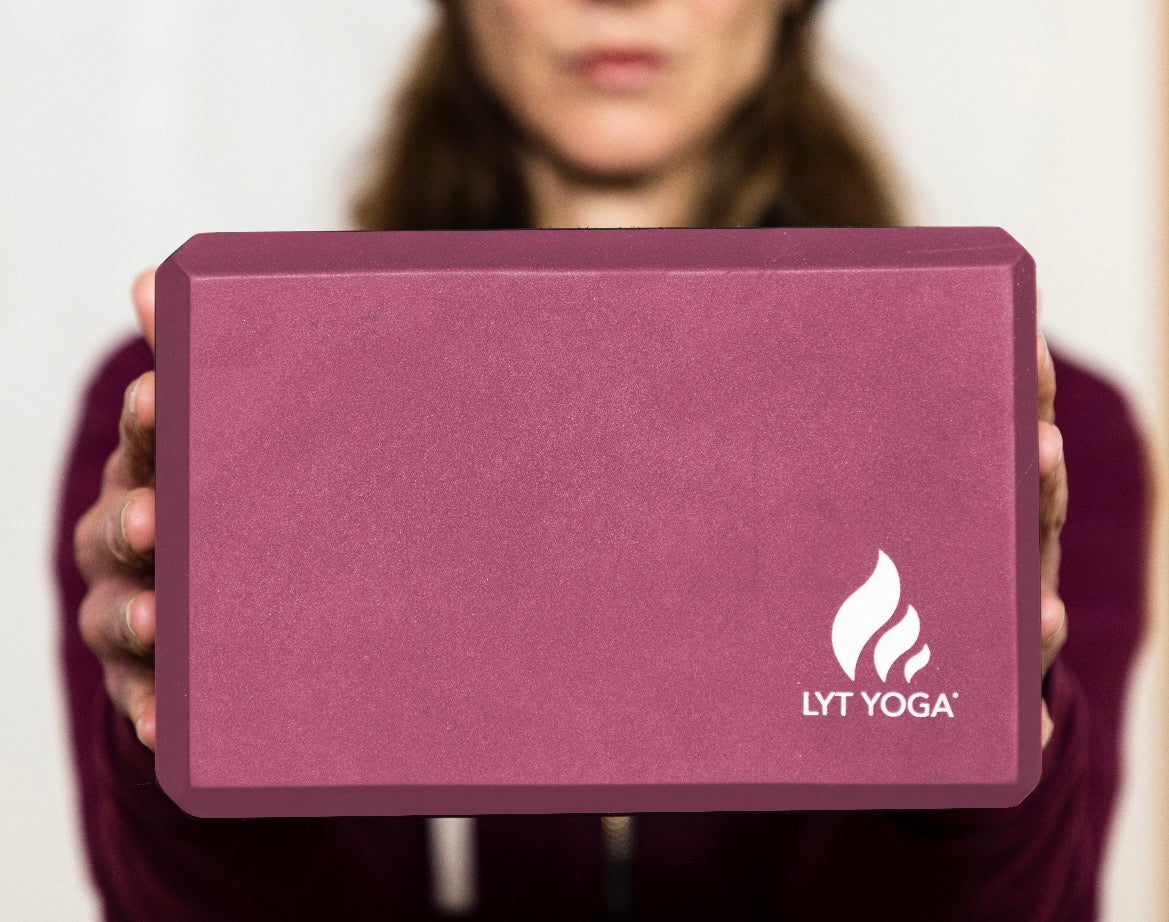
    Yoga blocks, often made of foam, cork, or wood, are more than just tools for beginners or those with limited flexibility.


    These versatile props can bring numerous benefits to your movement practice, no matter your level of expertise. We use them in every class in LYT and I can’t imagine a practice without having yoga blocks to enhance the experience!


    Why use blocks?


    For those who are new to yoga/functional training or have limited flexibility, blocks can act as an extension of the arms, making it easier to reach the floor in poses like Down Dog or bent knee standing split/standing L pose. By bridging the gap, blocks help in promoting better alignment, expansive breathing, and postural training. Yoga blocks can be used as a support system, especially in poses that require balance or strength. For instance, placing a block under the hand in Twisted Crescent, Half-Moon, or under the hips in seated twist pose can help stabilize the position, creating more space for the hips and spine, and thereby reducing strain on the joints and surrounding structures while also promoting more core activation. In LYT, we are huge believers in alignment! Alignment is not rigid or “ideal”; it is placing your bones and joints in a more optimal position to set up improved responsiveness in motor firing (how muscles activate to move, stabilize, or lengthen). Proper alignment is crucial in yoga and functional movement to prevent injuries, improve neuromuscular function, and ensure efficiency. Blocks can assist in positioning the body so that the joints and muscles work in greater harmony. 


    Importantly, blocks allow for more individualization. Everyone’s body is different, and sometimes a pose or movement that works for one person might not be comfortable for another. Blocks can be used to adapt poses to fit individual needs, ensuring a comfortable and effective practice. Blocks additionally help with transitions, allowing movement between poses to feel more possible and graceful without losing form.


    But there is more! (that’s how awesome blocks truly are 🙂


    As we experience in our LYT RESET®, blocks create a deeper connection to core! The block can be used to activate pathways into and through the core cylinder such as in bridge with a block, where the light hug of the block stimulates the hip adductors and pelvic floor connection. Utilizing a block in various ways can heighten body awareness, sparking core activity that might have been a bit more dormant without the block. The block becomes a tactile cue, reminding you to engage specific muscles or adjust certain alignments. 


    When I am creating a class where I want to utilize blocks, my innovation is in overdrive! Blocks provide so much variety, challenge, and support; it makes the practice exciting and vibrant, opening the door to enhanced mobility, stability, alignment, and overall progression and FUN!! Whether you are new to a movement practice or looking to upgrade your body-brain connection, yoga blocks can be transformative to your routine. Check out our LYT classes to FEEL for yourself how blocks are indeed a game-changer!

  • 686. Wednesday Q&A: Sciatica, Shoulder Positioning, & Warrior 1

    686. Wednesday Q&A: Sciatica, Shoulder Positioning, & Warrior 1

    In this Wednesday Q&A, we answer your questions about sciatica, shoulder positioning, and warrior 1 back leg. 


    • I’ve been listening to your podcast for a while. After hearing the question from the lady about sciatica, I have joined your platform. I recently had a flare-up of sciatica in my right leg and I started doing the classes that Kristin has online for sciatica mobility, hoping it will ease. I know from previous MRI scans that I have mild disc herniation L4-L5, L5-S1. My pain is like a tight wire down my back of my leg and calf and heel. Sometimes it’s in the front of the shin. I’m struggling with the inconsistency of pain. It’s definitely worse in the evening. I try to be as mobile as possible in the day, but do have a desk job. I’ve also had a prolonged issue with my right knee that has improved, but I know my mobility and right hip is much more limited than on the left side. I wonder if you had any further advice. I think your podcast and online classes are excellent. I’m passionate about functional movement for others and now I need to help myself.
    • She says some people seem to have trouble with lifting their arms and softening their shoulders. It looks like they always pull their shoulders up towards their ears when they go into cactus arms. What is the cause and what can I do to help/fix this?
    • In Warrior One with your back toes turned out about 30-45 degrees. If you pull the hip of the back leg forward, just enough to feel a good stretch in your back calf without feeling your knee being talked or twisted. Is that safe for your knee or does any action of trying to bring the hip of your back leg forward with the back hill down and your foot slightly turned out and angle twist and hurt that knee?


    To learn more, and for the complete show notes, visit: lytyoga.com/blog/category/podcasts/


    Do you have a question?


    Follow the podcast:

  • 685. Exploring Rehab Science with Tom Walters

    685. Exploring Rehab Science with Tom Walters

    Join Lara for a conversation about rehab science with Dr. Tom Walters, DPT, OCS.

    Dr. Walters is a board-certified orthopedic physical therapist that specializes in the treatment of pain and movement disorders. He is the founder of Rehab Science and dedicates his time to teaching people about human movement, pain, and how to most effectively recover from injury. Besides running his clinical practice, Tom served as a full-time undergraduate kinesiology professor for eight years where he taught human biomechanics, therapeutic exercise, and pain science.


    In this episode we chat about:

    • How to self-manage your pain.
    • What is pathokinesiology?
    • How important is biomechanics?
    • How to unpack people’s perceptions of pain.
    • Tips to help you improve your awareness of your body and your energy.
    • How movement snacks can be a key to your success. 


    To learn more, and for the complete show notes, visit: lytyoga.com/blog/category/podcasts/


    Guest Resources:


    Connect with Lara Heimann, the Redefining Movement Podcast, and the LYT Method:


    Want to become a LYT Teacher?:


    Follow the podcast:

  • Harmony in the Mind-Body Connection for Inner Peace

    Harmony in the Mind-Body Connection for Inner Peace

    Harmony in the Mind-Body Connection for Inner Peace

    by Thalia Wynne, PT, DPT, AT, RYT

    You’ve heard people talk about the mind-body connection before and how important it is to inner peace but what is it actually and why is it important? How can we optimize the mind-body connection to live freer, truer, happier lives? 

    I recently taught a LYT Method class to a group of fitness specialists who had never done a LYT class before. One comment I got repeatedly was “I couldn’t think of anything else. I had to be so dialed in.” 


    This comment describes one of my favorite things about the LYT Method. Through this style of movement, we are moving in such a way that requires specific concentration. What this has done in my own life is because of how much concentration and effort I am putting into my movement on the mat, the rest of the world melts away. I reach a state of flow. Time stops. The mat transports me to a whole new world. My inner world. And not only does my body feel good, but my whole energetic system shifts into a more expanded form. 


    My experience of reaching flow during my own personal practice was reflected back to me when I got the comment from the fitness specialists taking my class. Through the movement of the body, we are able to affect the mind. She was concentrating on her form, the body cues I gave, following directions to flow from pose, to pose, and the result was that there was no room left in her mind for distraction, to doubt herself. She was in the here and now, naturally. 


    Applying practice to enhance a balanced mind-body connection has several benefits including: 


    • The sensation of being in body vs. dissociated or out-of-body 
    • Enhanced memory and focus 
    • Boost in creativity and mood 
    • More energy 


    The connection between mind and body is both physical and not physical. Physically – it is connected via the central nervous system. 


    The central nervous system comprises the brain and the spinal cord. Several nerves sprout from the spinal cord like tree branches and create the peripheral nervous system. It is through the peripheral system that we are able to sense and move. 


    The peripheral nervous system sends signals to the brain and the brain sends signals to the peripheral nervous system in a constant energy and information exchange. 


    So physically speaking – our mind and body are literally connected through our inner circuitry. 


    As you know, we are not just meat suits. We have thoughts, feelings, intuition, and deep parts in us that I would describe as our soul. And our souls are connected to the physical and non-physical world around us via our energy. Electromagnetic fields and light waves that our sensitive systems can feel, even if we cannot see them. 


    Let me describe it in a way that I learned from the work of Dr. David Hawkins – the arm does not experience its own armness. The peripheral nervous system is sending the sensations of your arm up into your brain and your brain is interpreting the sensation of the arm. So it is the brain that is experiencing the arm. But the brain cannot experience its own thoughts. The thoughts and feelings being generated from the brain are experienced from your awareness. And our awareness is plugged into the greater consciousness that is Universal Love. 


    Everything is connected. And they all are affected by each other in this experience we call life. They can be in harmony or in disarray. In a negative energy field or a positive energy field. 


    I don’t know about you, but I choose harmony and positive energy any day of the week. I choose Love. So by raising your awareness in several different ways – whether it’s through moving your body in a specific way – syncing breath and body – taking pauses in your day to breathe – training the mind to find love and gratitude and feel it in your heart – creating flow states – find the way that suits your unique design to find harmony in the mind-body connection and discover the peace that is possible in your life.

  • 684. Wednesday Q&A: Handstands, Intermittent Back Pain, & Bell’s Palsy

    684. Wednesday Q&A: Handstands, Intermittent Back Pain, & Bell’s Palsy


    In this Wednesday Q&A, we answer your questions about handstands, intermittent back pain, and Bell’s palsy. 


    Listen in as we answer Your questions:
    • I have a handstand question for the podcast. I am following the idea to pull the femur up and I’m quite stable in my handstand hop until I have to inhale again. Then all falls apart and I sink down. Do you guys have any tips?
    • How do I know if my intermittent back pain is a disc or a muscle?
    • One of my dearest friends’ husband has Bell’s palsy. He was bitten by a tick about two weeks ago, and shortly after he woke up looking like he had a stroke. They ruled out the stroke, thank goodness. But one side of his face is drooping and he can’t close one eye. Drinking is not easy. Whistling is out of the question had been told by his neurologist that it could be at least three months before any possibility of improvement occurs and that 80% of people will improve, hopefully returning to normal facial structure and nerve activity. I do not blame him for not wanting to wait and see. He is seeing an acupuncturist and after one session he felt a little better but no change. What experience do you have in treating Bell’s palsy, if any, and what are the suggestions that you have for me to pass on to them? He’s also on doxycycline for Lyme disease, but he has no symptoms other than half of his face being all kinds of droopy. He did start practicing gentle yoga online, which can only help. Of course, I believe that LYT yoga can be helped so much of what ails us humans. I wonder if the neuro programming can somehow help his face. I know it will help the rest of him and his mood too. And you never know. I really feel for him. And my friend too. Thank you.


    To learn more, and for the complete show notes, visit: lytyoga.com/blog/category/podcasts/


    Do you have a question?


    Sponsor:


    Follow the podcast:

  • Unlocking Joint Mobility: Incorporating Yoga into Physical Therapy Practices

    Unlocking Joint Mobility: Incorporating Yoga into Physical Therapy Practices

    Unlocking Joint Mobility: Incorporating Yoga into Physical Therapy Practices

    by Sarah Apple Kingsley, pt, dpt

    My name is Sarah Apple Kingsley and I have been a practicing physical therapist since I received my Doctorate in 2014.

    During my first 5 years as a therapist, I treated how most therapists do, using standardized exercises and stretches taught in PT school or during our clinical rotations. Physical therapists are taught to apply “cookie-cutter” type exercises if a patient has low back pain, others for hip pain, and for a general geriatric population that just needs strengthening to do these generic exercises. 


    For the most part, if a patient’s case is uncomplicated, oftentimes this approach would be effective. When treating a geriatric population that just needed general strength and balance training due to lack of physical activity, I saw some promising results. However, for many of my patients, I quickly discovered that this method alone was not enough. Why were some of these standard exercises taught to thousands of PT students every year causing some of my patients more pain and dysfunction? Why were some patients simply not getting better?


    Unfortunately, it is far too common for therapists facing patients that are not improving to become discouraged and lose interest. Faced with a lack of progress, many therapists will discharge a patient and send them on their way claiming physical therapy just didn’t work for them. For me, that conclusion was frustrating and unsatisfactory. I personally experienced this scenario when trying these same cookie-cutter type exercises on myself when I was experiencing pain and injury, and found myself not only not improving, BUT GETTING WORSE!


    That is when I THANKFULLY discovered the LYT Method. This amazing method, created by a physical therapist, completely redefined yoga and functional movement. LYT focuses on how each joint is supposed to move and what typical compensatory patterns most people utilize that leads to pain, dysfunction, and a lack of proper muscle activation. Many of the moves are so simple yet so specific in the manner in which they are performed, which is what really makes a lasting change on the body and a major difference in outcomes. I began using this method and exercises on myself and after finding positive results I started to introduce some movements with my patients in the clinic!


    When I began incorporating spinal mobility stretches, hip hinging strategies, self-joint mobilization techniques, and fascia stretches into my exercise routines with patients, the results spoke for themselves! Not only were people starting to feel and notice their bodies in a way they hadn’t been aware of previously, but they were able to use these strategies to move and feel better during their daily activities. 


    A therapist can manually mobilize a joint or release a muscle that is tight or has developed a trigger point, but it is the beneficial repetitive movements that will keep the mobility in place. Conversely, the repeated dysfunctional movement patterns will cause the patient to continue to return with pain and poor joint mobility. Teaching these movements to my patients has facilitated an increase in their mobility on a daily basis, which results in lasting changes and benefits.


    Yoga allows the body to move in a variety of ways, encouraging the patient to get back in touch with their body both in an isolated manner for each part of a system as well as the entire body as a whole. Physical therapists and referring physicians often separate the body into parts due to a specific prescription for shoulder pain, hip pain, or back pain, and thus only focus on that specific area of the body. Through yoga’s full body movements, it becomes clear that a lack of mobility, strength, and/or activation in one area could be responsible for the pain in a completely different area of the body. Yoga also allows the mind to connect to the body in a way most of us are unable to during our daily lives. You can completely change an exercise or movement just by giving a different cue and focusing on a different pull or activation. The same yoga poses can be used for completely different purposes when cued accordingly. This mental and physical focus is a form of meditation in itself. I strongly believe that being able to connect to your body in this manner is a crucial factor for true healing.


    Learn how to truly heal yourself today by taking one of our LYT Daily classes! The benefits from the cues provided in these classes outweigh most all other forms of yoga for treating the body as it is meant to move. Start small and focused, then move larger and faster as the body heats up. You won’t regret giving this method a try!

  • Eating Disorders and the Pelvic Floor

    Eating Disorders and the Pelvic Floor

    Eating Disorders and the Pelvic Floor

    by Ashley Newton, PT, DPT

    When it comes to disordered eating and body image, the experience is physical as well as emotional.

    In treatment, one explores and works to change one’s relationship with food, self, others, and beyond. Treatments often utilize a team approach and can include a psychologist, social worker, dietician and nutritionist, and medical doctors. What may not be known, however, is the relationship between eating disorders and pelvic floor dysfunction and how a pelvic floor physical therapist can help.


    We know that trauma is stored in the physical body and that the way we move and interact with the physical world hinges on how we feel. Our nervous system tells us whether we are safe or in danger and the body acts accordingly. But what happens when the danger is emotional? What happens when the danger and distress is our own internal dialogue? The body responds to this too. We get small. We hunch over and curl in a ball. On a subconscious level, our jaw grips, the belly tightens, and the pelvic floor contracts. Our body is preparing for impact, preparing to protect our most vital parts by bracing itself. Unfortunately, we easily get stuck in this loop and the body remains in protection mode even when painful thoughts and dialogue aren’t actively happening. The result: our digestion suffers, we experience pain, we start to have trouble using those deep muscles responsible for stabilizing us. If those muscles are in protection mode, they are not able to as readily move with and stabilize us in day-to-day life. However, we often don’t recognize this until there is a problem such as pelvic pain, urinary leakage, constipation, bloating, etc.


    Pelvic floor issues are not specific to any one diagnosis and I would argue that they have the potential to show up in any diagnosis associated with one’s relationship to eating and body image. Binging, purging, restrictive eating, and corseting/binding/body modification all have the potential to cause issues such as leakage, prolapse, and weakness given the influence of these diagnoses on the nervous and gastrointestinal symptoms. 


    Digestion begins at the level of the glottis and ends at the level of the pelvic floor musculature. Any disruption on this path follows the butterfly effect where one small change can have large consequences. To illustrate this, let’s think about the role of body image. If a person does not feel comfortable in their body, they may wear baggy clothes, make themselves small, or on the flip side, wear size-altering garments and limit their food consumption in hopes of achieving an idealized image. In both cases, the nervous system is on edge and the abdomen and pelvic floor are likely gripping to brace oneself or trying to ‘suck in’ to change one’s appearance. That sucking in will eventually create restriction in the connective tissue and limit movement. Anything from joint movement to muscle and organ movement can be affected. As a result, we can start to see changes in the GI system and even issues involving bladder and sexual health. 


    Pelvic physical therapy should be a regular part of intervention planning in the treatment of eating disorders. Health is collaborative. No one practitioner knows everything and that knowledge is ever-evolving – that is why it is called a practice. Be an advocate for your own body and do not be afraid to ask for help. We are here for you. <3


    ~Ash