Tag: physical therapy

  • Golfer’s Elbow

    Golfer’s Elbow

    Golfer’s Elbow


    The weather is getting nice and people are already hitting the green and getting back into the swing of things, literally.


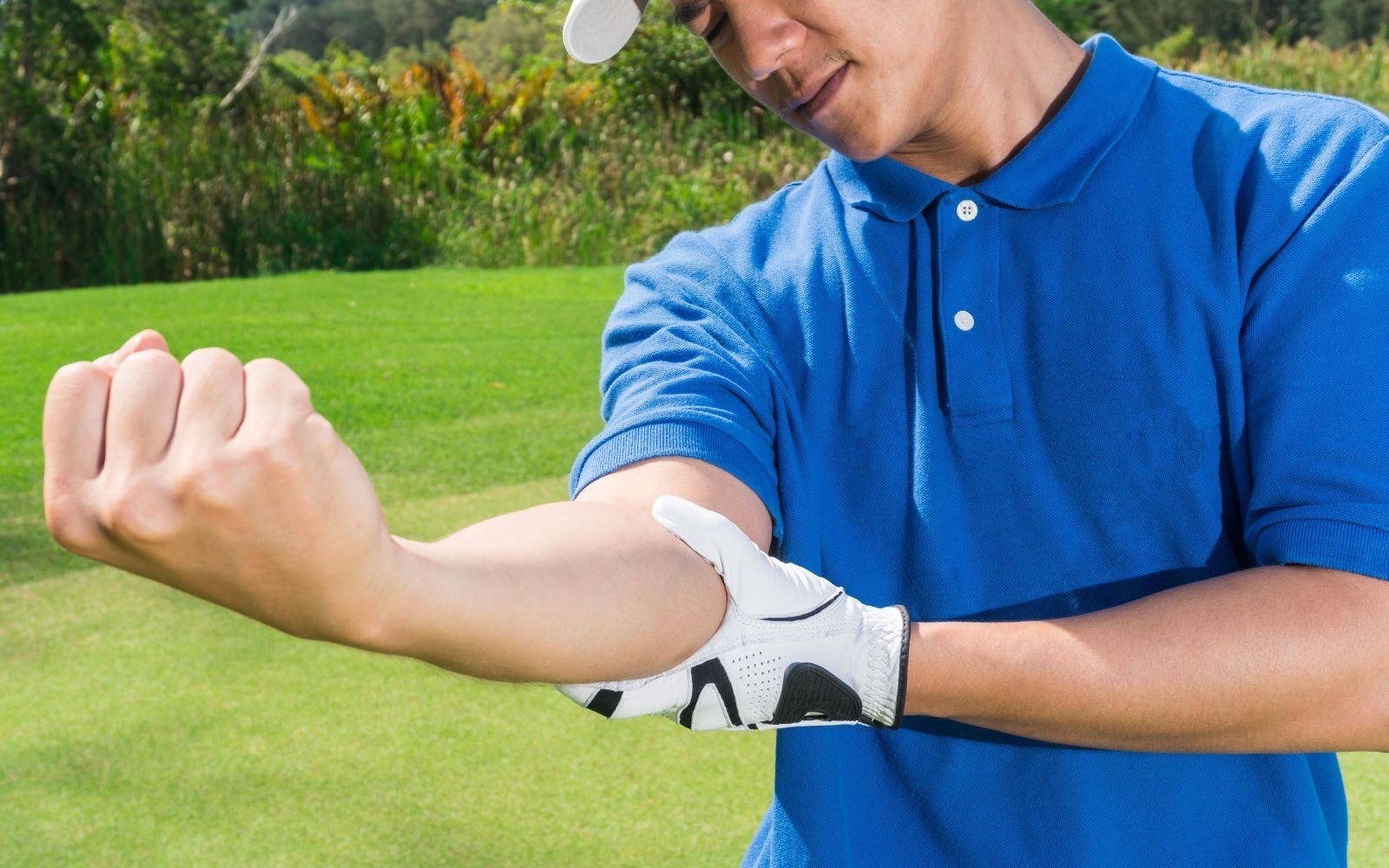
    One injury we see in golfers is called medial epicondylitis, or golfer’s elbow.


    In athletics, it is also seen in throwers, rock climbers, bowlers, and weightlifters. Golfer’s Elbow (GE) is primarily caused by repetitive eccentric loading of the wrist flexors and/or forearm pronators, coupled with valgus overload at the elbow. A valgus force is one where the lower arm moves away from the body while the upper arm stays in close (so imagine “knock knees”, but in the arms).


    With golf, the intense valgus force at the elbow occurs during the late phase of the golf swing just before and during contact with the ball. This same valgus force occurs during the late cocking phase of throwing, which is why this is also called thrower’s elbow. Simultaneous wrist flexion and/or forearm pronation during ball release may produce even greater stress on the tendon, which is why technique matters. Medial epicondylitis is also seen in the general population in careers requiring repetitive upper extremity use, such as carpenters, massage therapists, utility workers, and butchers.


    Golfer’s elbow is a chronic tendinosis of the flexor-pronator muscle group, right where it inserts on the medial epicondyle of the humerus. The flexor-pronator muscle group is composed of the pronator teres (which pronates or turns the forearm down) and common flexors of the wrist and hand, including flexor carpi radialis, flexor carpi ulnaris, flexor digitorum superficialis, and palmaris longus. With GE, the tendons of the flexor carpi radialis and pronator teres are the most commonly involved. The inside ligament of the elbow, called the ulnar collateral ligament (UCL), also attaches to the medial epicondyle. Together, the UCL and the common flexor tendon provide stability against flexion and valgus forces at the elbow.


    Just like lateral epicondylitis or tennis elbow, medial epicondylitis or GE is considered a chronic tendinosis as opposed to an acutely inflamed tendinitis. There are four proposed stages of epicondylar tendinosis:

    1. Generalized inflammation – friction causing inflammation of tendon
    2. Angiofibroblastic degeneration – weakening of the tendon
    3. Structural failure – microtearing of tendon
    4. Fibrosis/calcification – failed reparation process which yields scar tissue


    People with GE usually present with pain at the medial aspect or inside of the elbow. It is worse with activities, especially gripping, flexing the wrist, pronating the forearm, and throwing. Pain usually comes on gradually, but can be sudden if caused by trauma. Occasionally the pain radiates into the forearm and wrist. Some people may complain of associated numbness in the lateral wrist and last two fingers secondary to impingement of the ulnar nerve at the elbow. Often, there is tenderness to touch roughly 0.5-1 cm below or distal to the medial epicondyle. Symptoms are normally relieved by rest. Pain is aggravated by resisted wrist flexion and pronation.


    Treatment of Golfer’s Elbow begins with rest. People should refrain from activities that exacerbate the symptoms, particularly repetitive wrist flexion, forearm pronation, and valgus stress at the elbow.


    Kinesiotape is useful to limit the maximum contractile force generated by the flexor-pronator muscle group. Once acute symptoms are alleviated, the focus turns to stretching and strengthening. Each phase of rehab requires targeted exercises with increasing repetition and speed. Initially, motion of the wrist and elbow is emphasized with non-weight bearing exercises and self-directed stretching. Once pain-free range of motion is achieved, tendon rebuilding and strengthening begins. Concentric open and closed chain exercises are used, increasing in weight and repetitions as tolerated. Finally, eccentric strengthening is implemented.


    A popular exercise that has been shown to treat chronic GE is the Reverse Tyler Twist. A rubber bar is held at one end near the chest with the involved hand, palm facing the body and wrist fully flexed. The other end of the bar is grasped by the uninvolved hand, at the other end of the bar, from above with the palm facing out. The rubber bar is then twisted by bringing the uninvolved elbow down so both palms are facing in. The arms are then brought in front of the body by straightening the elbows, while maintaining the twist in the rubber bar by maintaining full flexion of the involved wrist and extending the uninvolved wrist. The bar is slowly untwisted by moving only the involved wrist and hand back towards neutral. This slow, controlled motion provides an eccentric strengthening and lengthening component to the flexor-pronator group and its common tendon.


    For golfers, equipment and technique should be addressed to reduce undue stress at the elbow. When selecting golf clubs, the length, shaft weight, club head weight, and club head strike zone must be considered.


    Golfer’s elbow is often found in the trail arm. Stress on the pronator teres of the trail arm is more often seen in amateur golfers than in pros, who use the lead arm in a protective manner to obtain optimum swing speed and power without excessive stress. Strengthening of the shoulder girdle and scapular stabilizers is key. Core and lower body strengthening may also aid in golfing mechanics, to relieve stress at the elbow when return to sport is allowed. Please be sure to check out Lara’s Golf Series on LYT Daily, where you can be sure to find the best prescription for your body! The Series is also available for purchase if you aren’t a LYT Daily subscriber! Happy golfing everyone!

    Xoxo,

    Kristin

  • 644. Non-Surgical Approach to Healing Back Pain with Dr. Greg Lutz

    644. Non-Surgical Approach to Healing Back Pain with Dr. Greg Lutz

    Non-Surgical Approach to Healing Back Pain with Dr. Greg Lutz

    Join Lara for a conversation with Dr. Greg Lutz about how regenerative orthopedic medicine can be used to effectively treat degenerative disc disease.


    Dr. Greg Lutz is the founder of the Regenerative SportsCare Institute, Physiatrist-in-Chief Emeritus at Hospital for Special Surgery, and a professor of clinical rehabilitation medicine at Weill Medical College of Cornell University. 


    In this episode, you’ll learn about:

    • Dr. Lutz’s newly released book Heal Your Disc, End Your Pain: How Regenerative Medicine Can Save Your Spine.
    • the difference between surgical and regenerative orthopedic medicine.
    • what PRP is and how it could help heal your spine. 
    • the difference between a slipped and herniated disc.
    • tips to help keep your spine healthy.


    Guest Resources


    Connect with Lara Heimann, The Redefining Yoga Podcast, and LYT Yoga


    Sponsor

  • Eccentric Exercise for Tissue Repair

    Eccentric Exercise for Tissue Repair

    by Sarah Apple Kingsley, pt, dpt


    If you are familiar with LYT and our yoga classes, you know by now that we LOVE eccentric exercise! If you are not, I will share with you why eccentric exercise is so beneficial in tissue repair and recovery. 


    What does eccentric mean? Muscles contract in 3 different ways. The least stressful and straining is an isometric contraction in which the muscle activates without moving at all. Think of your bicep which controls elbow flexion. If you hold the arm at 90 degrees with a weight in your hand without letting the arm move, your bicep has to contract isometrically to withstand the load. Concentric contraction is when the muscle works in its shortening phase. So for the bicep, its action is elbow flexion. When you actively bend your elbow holding that dumbbell, now you are concentrically working the bicep. Eccentrics describe when you work a muscle in its lengthening phase. In this case, begin by holding that weight with your elbow bent and trying to slowly control the lowering into full elbow extension (straightening). This motion causes the bicep to work to control the elbow extension in its lengthening phase.


    Eccentric contractions are much more challenging as you are asking the muscle to work at a greater angle. For this reason, you get more effective exercises with just a few reps/contractions of eccentric motions as opposed to doing those dumbbell curls all day long. Eccentric contractions help build muscle faster and more efficiently and also require less oxygen. This means eccentric muscle training puts less stress on the heart and is less likely to cause spikes in blood pressure. Moreover, eccentric contractions are shown to aid in breaking down adhesions throughout the muscle tissue in order to stimulate new cell regeneration and repair. This has shown to be especially effective when treating the rotator cuff with online yoga classes.


    The shoulder joint is one of the more common reasons why people seek PT treatment in clinics. There is frequently a loss of range of motion in the shoulder internal and/or external rotation due to rotator cuff dysfunction. There could be scarring, a tear (minor or major), impingement, etc. The adhesions built up in the muscle due to impingement and repetitive microtrauma to the area cause restrictions, pain, and deficits in ROM, active or passive, due to muscle guarding and therefore decreased muscle length. Continuously overstretching or attempting to passively mobilize the tissues and joints are frequently very painful and oftentimes unsuccessful.


    By performing eccentric exercises, the body will work actively against the resistance in a lengthening manner, so that you feel somewhat in control of the motion creating decreased muscle guarding. With slow releases, working on lengthening against resistance breaks down adhesions. This is promoting more length in the muscle with each contraction. These exercises can be performed against manual resistance from a therapist or with the use of a theraband. Eccentrics are especially great for improving internal and external shoulder rotation and can be beneficial for shoulder flexion as well. 


    The main consideration is the correct exercise frequency. An adequate load must be applied to make sure these exercises are effective. An over or underuse of load can further deteriorate the tendon structure. More studies need to be done on the proper application, which is why these exercises are best performed manually by a therapist. This will help to properly grade the amount of resistance being applied and to track the level of fatigue in order to gauge repetitions. I have found the ability to add a distraction moment to the glenohumeral joint at the same time makes the exercise more tolerable for the shoulder joint complex. This can make it even more effective than self-exercise with a theraband. 


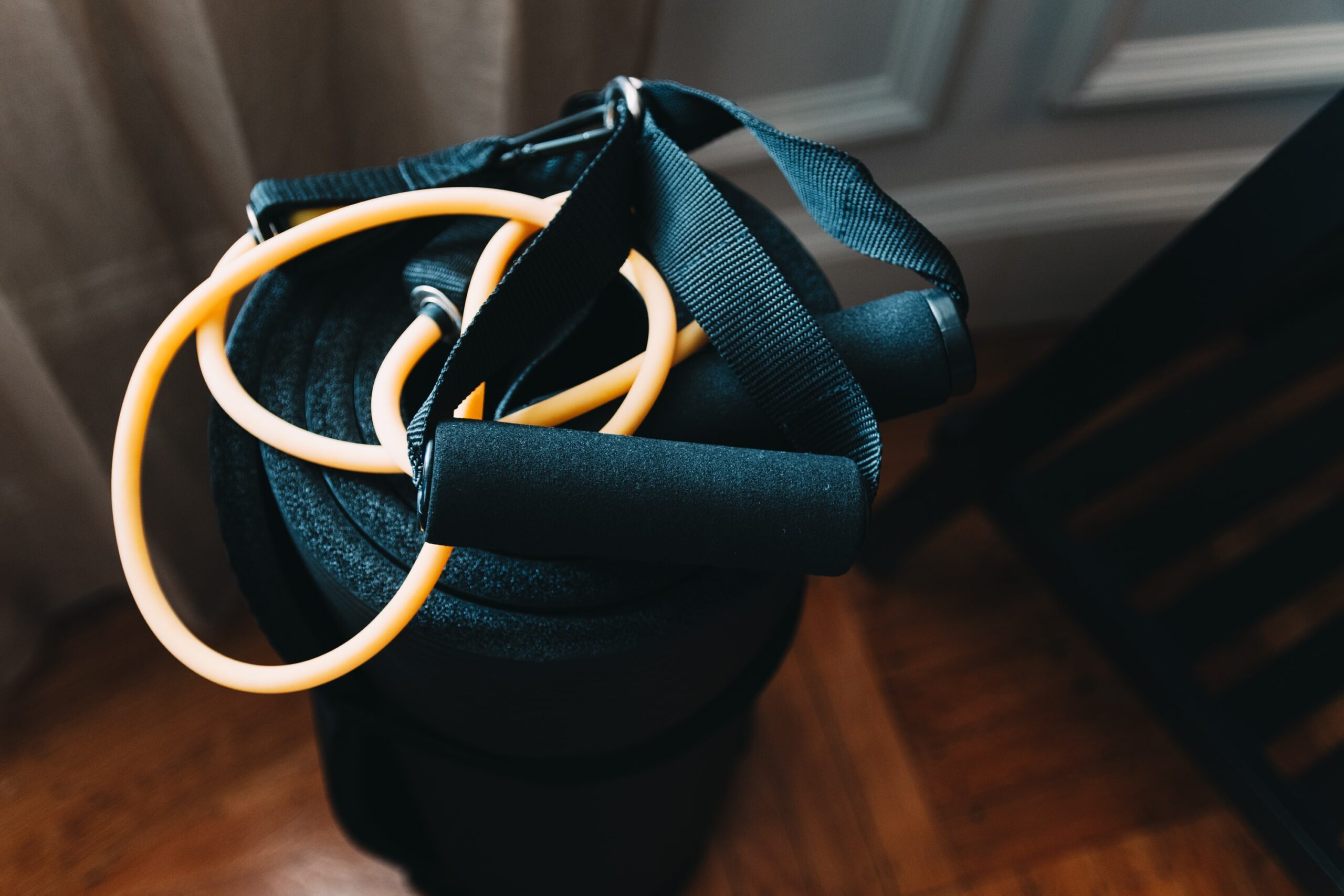
    To try the exercise, start with a light resistance band, holding one side in each hand with your elbows bent at 90 degrees and in by your sides. Make sure the heads of your arm bones are positioned well in the socket. If they tend to roll forwards, shrug your shoulders up, back, and down before beginning. Pull the band apart with both hands coming into shoulder external rotation (the elbows stay in by your sides as the fists go out with your thumbs pointing up). Then, as slowly as possible, allow the fists to return to starting position or even slightly further towards your belly for shoulder internal rotation. Perform repetitions until you are fatigued, but not in pain. 


    We LOVE eccentrics of all forms in our LYT yoga practice so check out some classes on LYT daily yoga for more eccentric exercise tips!


    References:

    https://www.ncbi.nlm.nih.gov/pmc/articles/PMC4133471/

  • 545. Wednesday Q&A: Teres Major Area Pain, Shoulder Blade Balance, Mom Shoulder & Cupping

    Welcome to Wednesday Q&A, where you ask questions and we answer them!

    In this Wednesday Q&A, we answer your questions about teres major area pain, feeling an imbalance in your shoulder blades, “mom shoulder,” and our opinion on cupping.


    Your questions:

    • I have pain somewhere between teres major and the armpit. Help!
    • I noticed a significant difference in my ability to engage the muscles around my right shoulder blade and the armpit, like delayed firing. What would you suggest to rebalance my shoulders?
    • Can you speak about “mom shoulder?” How can I get it to feel better?
    • Cupping: When, why, and where?


    To learn more, and for the complete show notes, visit: lytyoga.com/blog/category/podcasts/


    Do you have a question?


    Sponsors:


    Redefining Yoga is produced and published by Crate Media.

  • 543. Wednesday Q&A: Hip Trouble, Flexibility vs. Mobility & Finding a Good PT

    Welcome to Wednesday Q&A, where you ask questions and we answer them!

    In this Wednesday Q&A, we answer your questions about finding the source of hip trouble, the difference between mobility and flexibility, and how to find a good PT.


    Your questions:

    • I have a student who has trouble crossing his legs and other hip-related yoga poses. Do you have any advice on figuring out where the problem might be?
    • Flexibility vs. mobility: what’s the difference?
    • I’ve heard you talk about good PT (looking at the body globally) vs. bad PT (looking at a problem in isolation). Do you have any recommendations on finding a PT that falls into the good category?


    Do you have a question?


    Sponsor:


    Redefining Yoga is produced and published by Crate Media.

  • 541. Wednesday Q&A: Tingling Palms, Clunky Movement & Connecting with Your Glutes

    Welcome to Wednesday Q&A, where you ask questions and we answer them!

    In this Wednesday Q&A, we answer your questions about palm tingling, back pain for mothers, feeling clunky, and connecting with your glutes.


    Your questions:

    • I’m experiencing tingling in the palm of my hand on occasion. What could that be and what should I do?
    • I have a client who has back pain. She’s also a mother of three and is currently breastfeeding. Any tips?
    • You both move with such ease. How do you recommend others move who feel more clunky in their bodies?
    • I feel like I have no connection with my glutes. Any recommendations?


    To learn more, and for the complete show notes, visit: lytyoga.com/blog/category/podcasts/


    Do you have a question?


    Sponsor:


    Redefining Yoga is produced and published by Crate Media.

  • 539. Wednesday Q&A: Arm Straightening, Tight Piriformis & Bound Hip Flexors

    Welcome to Wednesday Q&A, where you ask questions and we answer them!

    In this Wednesday Q&A, we answer your questions about lack of shoulder flexion, releasing the piriformis, moves for bound hip flexors, and our thoughts on massage guns.


    Your questions:

    • I have a client that struggles to get the arms straight when lifting them overhead. The elbows tend to bend outwards. I’m not sure how or where to focus to improve this. Any thoughts?
    • How do you release the piriformis? They burn after an active day of work or household chores.
    • What are some moves that can help with bound hip flexors?
    • Thoughts about massage guns?


    To learn more, and for the complete show notes, visit: lytyoga.com/blog/category/podcasts/


    Do you have a question?


    Sponsor:


    Redefining Yoga is produced and published by Crate Media.

  • 536. Wednesday Q&A: SI Joint Pain, Multifidus Muscle & Hypermobility Issues

    Welcome to Wednesday Q&A, where you ask questions and we answer them!


    In this Wednesday Q&A, we answer your questions about SI joint pain, multifidus muscle tightness, and hypermobility issues.


    Your questions:

    • I’ve had left SI joint pain since last June. LYT seems to aggravate it so I stopped for a while. I’m trying to get back at it but still can’t do the high-intensity classes. What can I do?
    • My physio says my multifidus muscle is asleep so I’ve been working on it. How can I cue this muscle when I work out?
    • How do you know when or how to stretch your muscles if you generally feel tight but are hypermobile?


    To learn more, and for the complete show notes, visit: lytyoga.com/blog/category/podcasts/


    Do you have a question?


    Sponsors:


    Redefining Yoga is produced and published by Crate Media.