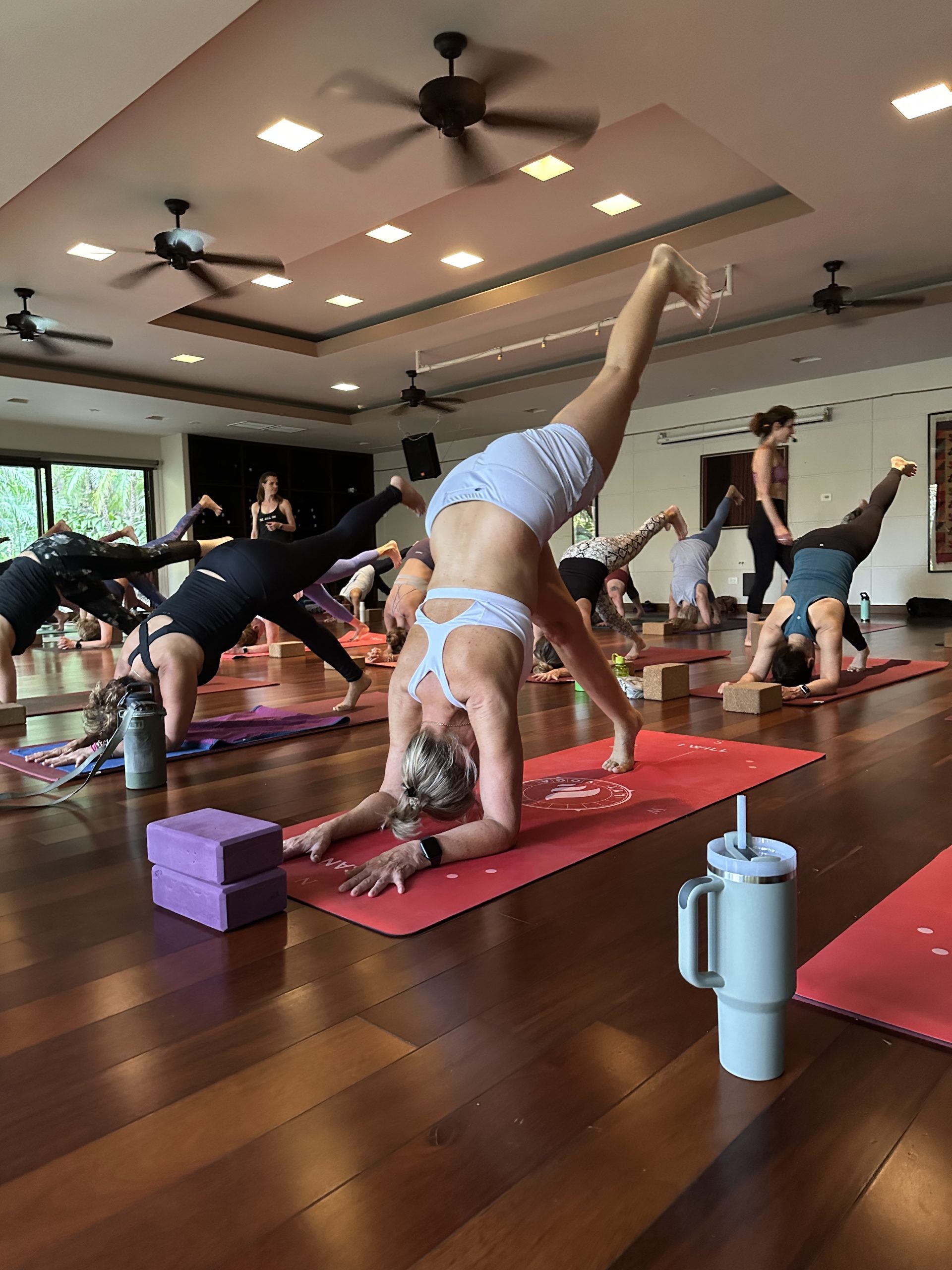
Category: PT Corner with Friends

  • Pelvic Posture and Its Relation to Shoulder Strength and Function

    Pelvic Posture and Its Relation to Shoulder Strength and Function

    by Sarah Apple Kingsley, pt, dpt


    When most people think of shoulder pain, weakness, and dysfunction, their next thought is rarely if ever, “well what about pelvic posture?” In most health care and physical therapy settings, the scope of treatment is very narrowly focussed on the primary issue or problem at hand. An orthopedist or medical doctor may choose to inject a cortisone shot to the area or request an MRI to diagnose a rotator cuff tear or issue. A typical physical therapist in this scenario would likely prescribe some shoulder stretches and multiple shoulder strengthening exercises. If they are a good therapist, these exercises will hopefully include those to help strengthen the scapular stabilizing muscles.


    Unfortunately, even in this “best case PT” scenario, it is still possible to miss the broader picture. Studies and evidence have shown that many of the standard treatment exercises, when performed in isolation, can be ineffective in resolving or even improving shoulder pain, weakness, and dysfunction. So why is that? A GREAT PT needs to look at the whole body and how each segment relates, connects, integrates, and participates with each other for true working order. At the center of this multifaceted working vessel is…..THE PELVIS!


    Spinal posture plays a large role in the strength and function of the shoulder. Consider, for example, a patient with weak shoulder strength and limited mobility. When the patient’s pelvis is anteriorly tilted, or tipped forwards, this creates an increase in lumbar lordosis. We are supposed to have a natural small arch in our low back, but the excessive curve or “swayback” as it is commonly termed is due to an anteriorly tilted pelvis. This increase in lumbar LORDOSIS directly relates to an increase in thoracic KYPHOSIS. An increase in thoracic kyphosis or rounding/humpback of the upper back contributes to an anteriorly tilted and internally rotated scapula, which causes the rounded shoulder posture. EMG studies have shown that this forward shoulder posture limits the activation of the scapular upward rotators such as your upper and lower trapezius as well as significantly reducing the firing of the serratus anterior muscle, our major scapular stabilizer. Less activation = less strength = less function!


    With typical shoulder dysfunction, we tend to see an OVERactivation of the upper trapezius muscle. This leads to excessive shoulder hiking, causing pain and strain in the neck and shoulders due to a compression of the nerves, muscles, and ligaments in the subacromial space and often leads to rotator cuff tears or thoracic outlet syndrome. Conversely, a well-working shoulder primarily uses what is referred to as the “forced couple” of each the upper and lower trapezius as well as the serratus anterior to aid in the initial upward rotation of the shoulder to work effectively and prevent strain, compression, and injury when reaching up overhead. A forced couple is when two muscles with opposing actions work together with equal forces in order to create one action simultaneously, in this case, upward rotation of the scapula.


    EMG assessments can specifically show that an increased anterior pelvic tilt increases the activation of the upper trapezius and decreases the work of the lower trapezius and serratus anterior. When pelvic tilt was reduced, the results showed a significant INCREASE in the activation of both the lower trapezius and serratus anterior, while just slightly decreasing the activity of the upper trapezius. When just the upper trapezius is active or overactive, this typically leads to more pain and dysfunction and less range of motion. With more equal activation of all 3 supporting muscles, the joint can function more optimally, with more strength, more range of motion, and less pain and injury!


    So how can we promote better activation, strength, AND function of the shoulder complex??!! Neutralize the pelvis! Reducing the anterior pelvic tilt posture can have dramatic changes on the working order of the shoulder girdle. How do we do this? Our LYT yoga classes are amazing at retraining the body how to properly stack the girdles of the shoulders over the pelvis and hips. This not only provides the best stability but also the best functional strength and adaptability for powerful and reactive movement through a variety of planes of motion.


    If you are anteriorly tipped in the pelvis it is likely that your hip flexors (the muscles in the front of your hips) are tight and also possibly weak, but even more likely that your gluteals and hamstrings (the opposing muscles) are very weak. Working the strength of these posterior chain muscles by biasing a POSTERIOR pelvic tilt or slight tucking of your tailbone can help reduce this excessive arching of the low back. We also stretch the hip flexors in each of our LYT yoga classes by coming into a 90/90 low lunge position. It is important to focus on keeping the back knee directly underneath the hip, wrapping the back glute under, and lifting up in the abdominals to create an active stretch into the front hip muscles, as opposed to leaning forwards which creates additional compression into the hip joint structures and also likely further biases an already anteriorly tilted pelvis position. 


    References:
    https://www.ncbi.nlm.nih.gov/pmc/articles/PMC7082681/

  • Neutral Pelvis – Why Does It Matter?

    Neutral Pelvis – Why Does It Matter?

    BY ASHLEY NEWTON, PT, DPT


    Neutral pelvis is the state when the pubic bone and the sacrum are parallel to the floor. The pelvis is not tipped forward nor backward and the heads of the femurs are centered in their sockets. When our hips and pelvis are at neutral, we are distributing forces evenly across our pelvis. Meaning, we are not excessively loading in the back and sacrum and the muscles of the core and hips are balanced to keep us upright. To truly be in neutral, however, means that the head is stacked over the ribs and pelvis so that if we were to draw a line straight down the side of the body, that line would intersect the earlobe, the acromion of the shoulder, and greater trochanter of the femur. Now that’s all well and good, but why does being neutral matter? 


    If our pelvis and trunk are neutral, it means that our body is able to evenly distribute loads across the trunk. Load refers to how our bodies stabilize against gravity as well as how we interact with our environment – everything from how we pick up our toothbrush to pushing a lawnmower. The muscles of our trunk that stabilize the spine have anticipatory stability – meaning that they contract prior to a pre-planned movement to stabilize us in space. However, when we are not at neutral, these muscle fibers are not in their optimal position – they are either shortened or over-lengthened and thus have difficulty generating force to stabilize us. As a result, the body compensates. It finds other ways to stabilize us that may work in the moment but turn out to be harmful long term. Think about a time when you sat to take an exam or write an essay in school. Over time, we get more slumped over in the chair and wind up holding up our head with our hand. When we eventually stand up, our back is stiff and we have neck pain. Our body has adapted to stiffen other muscles to keep us stable as we resorted to a more and more slumped posture. This is an example of muscles getting overloaded to compensate for the core! 


    Now, does this mean that we have to walk around constantly correcting our posture? Yes and no. I do not think it is helpful for folks to be constantly walking around drawing their belly buttons toward their spines and tucking their tail bones. These habits abnormally pressurize the muscles of the pelvic floor which can lead to problems such as urinary leakage and prolapse. Rather, I think folks should work from the ground up when it comes to being in neutral. So, stand up and try this exercise below to see if you can connect with your body and find neutral.


    1. Ground down through the four corners of the feet. Can you feel the big toe, pinky, inner heel and outer heel all make contact with the earth.
    2. Shift the weight forward and back on the feet. Can you end in a place where your weight is through the middle of your feet.
    3. Place one hand on the sacrum and the other on the pubic bone. You should be able to draw a straight line between your two hands that is parallel to the floor
    4. Take your hands and make an upside down “V” where your ribs meet in the middle. Is this angle 90 degrees?
      •  If less than 90 degrees, soften your belly and think about making space between the top of the hip and rib. 
      •  If greater than 90 degrees, draw the ribs backward and make space between the bottom of the rib and the hip
    5. Drop the shoulders away from the ears
    6. Interlace the hands at the base of the skull and draw your head back into your hands as you get tall.
    7. Think about growing through the crown of the head as you ground down through your feet. 
  • Should I perform inversions while on my period?

    Should I perform inversions while on my period?

    by Thalia Wynne, PT, DPT, AT, RYT


    If you remember back to your first-ever yoga class, you may remember being told to avoid inversions if you were actively on your period. I can still recall the first time hearing those words when on my period and feeling so confused…yet I still followed the instructions because the instructor must be saying this for a reason and hey, I’m new at this. So I just listened to what she said and skipped my shoulderstand that day (back when I still did shoulderstands). After that first class, in rebellious fashion, I refused to follow that advice again – it didn’t make sense to me. After all, gymnasts were still allowed to compete when bleeding, so why did I have to listen to this rule in yoga? The next time I was on my period, I bravely went upside down to experiment. Was I going to get extra cramps? Was the blood going to leak into my guts and disturb my precious microbiome? I wasn’t sure but I had to find out. So upside down I went. And… Nothing. Happened. Ta-da! Myth busted! 


    Why then do yoga instructors continue to give the advice to avoid inversions while menstruating? Where did this idea come from and is there any truth to it? 


    Let’s look at some yoga history. Apana – the downward flowing energy that is responsible for elimination and menstruation was thought to be disrupted when inverting the body. So in several yogic and ayurvedic texts, it was suggested for women avoid going upside down during her period. However, the safety of a woman’s body was not the only reason for keeping women out of yoga classes. Throughout our history, culture has not been kind to menstruating women. 


    Women were viewed as impure and dirty and were excluded from participation in society during their time of bleeding. In fact, in ancient India during the Vedic time period, it was declared that “guilt, of killing a brahmana-murder, appears every month as menstrual flow as women had taken upon themselves a part of Indra’s guilt.” 


    The perpetuation of women being “unfit” while bleeding didn’t stop in ancient India. During the race to space there was much debate within NASA about whether to send a woman to space or not because of her mood instability during “that time of the month”. Researchers at NASA stated: “that putting a temperamental psychophysiologic human (i.e., a hormonal woman) together with a complicated machine was a bad idea.” They  were also terrified of what would happen to a woman’s period in space without gravity to pull the menstrual blood down. 


    Just as yogis were concerned about disrupted apana, scientists were concerned about retrograde menstruation and its potential harm as it was believed that this event was linked with endometriosis. It has since been researched that over 90% of women experience retrograde menstruation and it is not the cause of endometriosis. 


    Back to NASA… a big thank you to Sally Ride, the first evidential proof that women can thrive in space – even when on their period. She proved that gravity was not necessary for menstruation to occur regularly – which totally makes sense seeing that one can still bleed even when lying down. 


    It turns out that menstrual bleeding can occur perfectly well whether one is lying flat, upside down, or floating in the absence of gravity altogether. So my friends, let it be known that women can indeed perform inversions on their period without repercussions. Do you, girl, and hit as many handstands as you want. 


    Happy upside-down menstruating ladies 😉 


    Thalia Wynne, PT, DPT, AT, RYT

    IG: @thalialovee (https://www.instagram.com/thalialovee/)  


    Sources: 


    https://yogainternational.com/article/view/is-it-safe-to-practice-inversions-during-menstruation1/  


    https://www.npr.org/sections/health-shots/2015/09/17/441160250/what-happens-when-you-get-your-period-in-space

    https://www.ncbi.nlm.nih.gov/pmc/articles/PMC4408698/ 

  • The Pelvic Floor And Menopause

    The Pelvic Floor And Menopause

    by Ashley Newton, PT, DPT


    The average age of onset of menopause is 51 years old. Perimenopause begins in the 40s and continues into the late 50s. Menopause occurs when the menstrual cycle ends permanently due to the decrease in ovarian oocytes as a natural result of the aging process. Given that the pelvic floor tissues are extremely androgen receptive and are a part of the reproductive system, a change in hormonal levels undoubtedly has an effect on these tissues. With menopause, the labia minora shrinks, the vaginal tissues thin, and the vagina becomes more acidic. A more acidic vaginal pH can make one more prone to yeast infections, urinary tract infections, vaginal dryness, and urinary urgency and frequency. Tissue thinness combined with dryness and an acidic pH is a recipe for pelvic pain with gynecologic exams and sexual activity. But this does not have to be your new normal! Start with my top 5 checklist below to get started in improving your vaginal health in the menopausal era:


    1. GYNECOLOGIC CARE: Establish care with a gynecologist if you have not already. A gynecologist will be able to discuss with you any adjuvant procedures, such as topical estrogen, that can be helpful in reducing painful pelvic floor symptoms.
    2. UNDERSTAND HRT: In 2002, there was an infamous study on hormone replacement therapy (HRT) in women ages 50-79 years of age. The results were reported and inaccurately interpreted by the public which resulted in decreased use of HRT. In that time frame, women’s mortality rate, osteoporosis, and fracture risk increased. In 2017, the North American Menopause Society issued an updated statement regarding indications for HRT. When discussing hormonal changes with your physician, ask if they are up to date on the use of HRT and indications in menopausal populations. See the statement in the references below.
    3. START EXPLORING! Vulvar balms and CBD formulated for vaginal use can be helpful in alleviating pelvic floor dryness and pain. Daily vulvar balms can add moisture to tissues to prevent irritation during the day. CBD increases blood flow, eases muscle tension, and can be helpful to decrease tissue irritation.
    4. LUBE, LUBE FOR EVERYONE! I cannot say this one enough. I believe all folks should be using supplemental lubricant with sexual activity (self and partnered) throughout the lifespan. Have it next to your bedside table and make sure the lubricant is the following: glycerin-free, paraben-free, and fragrance-free. You do not want to put anything in the vagina that will further irritate the tissues. CBD lubricants can be helpful but note they are often oil-based and thus not condom compatible.
    5. PELVIC PT FOR THE WIN: Talk to your local pelvic PT. We know that pelvic PT is essential when it comes to the evaluation of pelvic floor muscles to determine how best to optimize your core health, but they can also be an invaluable resource when it comes to understanding changes in tissue health and how best to support yourself while aging with a healthy pelvic floor! 


    Xoxo Ash 

    IG: @ashleynewton_dpt


    References:


    The NAMS 2017 Hormone Therapy Position Statement Advisory Panel. The 2017 hormone therapy position statement of The North American Menopause Society. Menopause. 2017 Jul;24(7):728-753. doi: 10.1097/GME.0000000000000921. PMID: 28650869.

  • Shoulder Health for the Yogi

    Shoulder Health for the Yogi

    by Thalia Wynne, PT, DPT, AT, RYT


    Yogi’s have a special relationship with their shoulders. How many times do you actively remind yourself “I’m fine” after the 12th chaturanga or holding your arms in warrior 2 for what feels like an eternity. 


    We definitely know what it means to feel the burn when it comes to training our shoulders! And if you’ve ever had shoulder pain, you know how difficult a yoga practice can be on your shoulders sometimes. 


    In this article, I will teach you the three things you need for shoulder health, how to analyze your own shoulder function, and what to train to help those boulder shoulders keep functioning well into the 13th chaturanga. 


    But first, a little anatomy lesson. What are the shoulders? 


    Shoulder Anatomy 

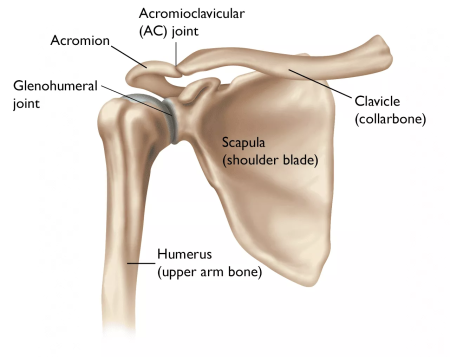
    It’s more than just the arm bone. The shoulder girdle consists of three bones articulating together – the humerus, the clavicle, and (one of my favorite bones) the scapula. There are 17 muscles that attach to the scapula alone. It’s an important bone! (rhyme intended hehe.) 


    The scapulohumeral and scapulothoracic regions are highly undertrained in most individuals and tend to significantly impact shoulder health if functioning sub-optimally. For example, if there is delayed scapular movement while lifting the arm overhead, it tends to cause impingement in the rotator cuff interval and lead to rotator cuff and/or bicep tendon breakdown from excessive shearing. 


    How do we keep the shoulder girdle functioning at 10/10 capacity? What do you need for healthy sustainable shoulders? Just like any other structure in the musculoskeletal and neuromuscular system, the shoulder girdle requires three simple things: mobility, stability, and adaptability to function optimally. Let’s look at these three categories and see how you can quickly analyze your shoulder function. 


    Analyze Your Shoulder Function


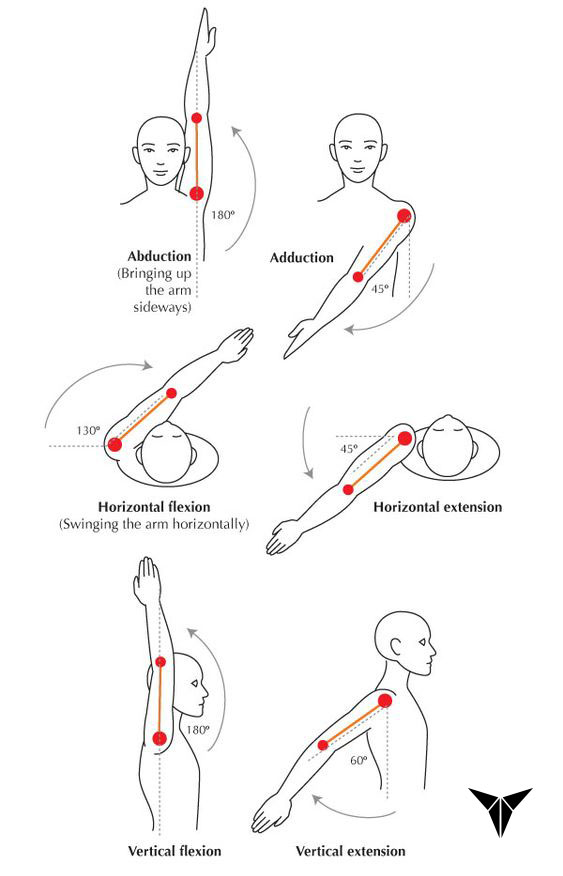
    Shoulder Range of Motion

    Check your shoulder mobility by going through the ranges of motion below and ask yourself the following questions: 


    1. Is shoulder motion equal side-to-side? 
    2. Can you perform the motion without pain?
    3. Does it look to be full range of motion? 


    If you notice a range of motion deficit or pain, consider this an area to work on in your training plan. 


    Shoulder Stability/Strength 

    There are many ways to check for shoulder stability and strength including manual muscle tests and functional strength tests. Simple ways to test your own strength at home include the following exercises: 


    1. Push-Up 
    2. Plank for time (goal to hold for at least 60 seconds) 
    3. Side plank for time (goal to hold for at least 30 seconds) 
    4. Prone Superman lift 
    5. Prone I, T, Y raise 
    6. Lateral shoulder raise with weight
    7. Overhead shoulder press with weight 


    Ask yourself these questions when performing each movement: 

    1. Can you perform the movement without pain? 
    2. Does strength feel equal side to side and can you perform in the full range of motion? 


    If you notice a strength deficit or pain, consider this an area to work on in your training plan. 


    Shoulder Adaptability

    Finally, You want to assess shoulder adaptability by asking yourself the following questions: 


    1. Can you perform your normal day-to-day tasks without shoulder pain during or after the activity? 
    2. Do you experience shoulder pain during or after your yoga practice? 
    3. Does your shoulder feel unsteady and/or weak with certain movement patterns? 
    4. Do you avoid using your shoulder for specific tasks? 


    If the answers indicate pain and/or shoulder dysfunction, it’s showing you the shoulder is not adapting well to your normal lifestyle. If you’ve reached this point, I highly recommend seeing a professional such as your local physical therapist for a more in-depth analysis of your overall function and to assist you in your shoulder health journey. 


    Once you’ve done your assessment, now it’s time to go to work! 


    Train Your Shoulders 


    Use your home assessment to discover any weak points and make that your primary area of focus. When creating a home exercise plan, consider covering your basis with an exercise in each of the following categories: 


      Category   Examples
      Push   Yogi push-ups, down dog push-ups, down dog on the wall
      Pull    Scapula squeezes in goddess, cobra, rows 
      Rotator Cuff Strengthening    Vasisthasana variations, down dog on the wall, banded 90-90 external rotation and internal rotation
      Shoulder raises    Front and side raises 
      Other Scapular Stabilizers   Prone I, T, Y, W 
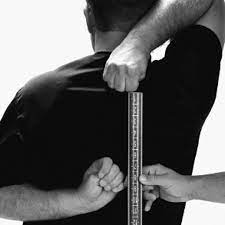
      Mobility    Child’s pose, open books, cat-cow, cow-facing arms (modified) 


    Remember that shoulder pain could be coming from places other than the shoulder! Common areas that refer to the shoulder include the neck and the thoracic spine. It’s always a good idea to train the body holistically. LYT Yoga is amazing to do just that. If you are experiencing an active shoulder issue, don’t wait it out or feel like you have to figure it out on your own. The musculoskeletal and neuromuscular systems are intricately complicated. There are many people out there just like me who can’t wait to help you! But in the meantime, while you’re out there searching for the provider that is right for you, I hope this article helps.


    Check out the shoulder section (https://lytyoga.uscreen.io/categories/category-shoulders) of the LYTDaily platform for yoga classes that target shoulder health. 


    I’ll see you on the mat! 


    Thalia Wynne, PT, DPT, AT, RYT

    IG: @thalialovee (https://www.instagram.com/thalialovee/) 


    Picture sources: 

    1: Picture 1 https://aosmlv.com/. Available at: https://cdn-alkjn.nitrocdn.com/frcYdTXDhmUfxRRByQWQPKPCHPldUaLn/assets/images/optimized/rev-f0e72a2/wp-content/uploads/2022/08/aosmlv_shoulder.png. Accessed March 14, 2023.


    2: Picture 2 McKay, D. (2022) Myotherapy, Remedial Massage & Sports Massage in Essendon: Upside Health & Movement: Available at https://www.upsidehealth.com.au/blog/pain-profile-snapping-scapula (Accessed: March 14, 2023). 


    3: Picture 3 Posturepro. Available at: https://education.posturepro.co/?fbclid=IwAR3lKVWNG9ipuelOgWutUcJlQBE7UIrJucTNTn5xHsebCqf1CK6UUVBYuIU (Accessed: March 14, 2023). 


    4: Picture 4 Cook, G. “FUNCTIONAL MOVEMENT SCREENING: THE USE OF FUNDAMENTAL MOVEMENTS AS AN ASSESSMENT OF FUNCTION,” IJSPT [Preprint]. Accessed March 14, 2023. 

  • The Role of Physical Therapy After A Stroke

    The Role of Physical Therapy After A Stroke

    by Sarah Apple Kingsley, pt, dpt


    You might be familiar with the term “Stroke” from a relative, friend, or perhaps someone famous on TV experiencing this broad spectrum of medical events. The World Health Organization (WHO), defines a stroke as “rapidly developing clinical symptoms and/or signs of focal, and at times global, loss of cerebral function, with symptoms lasting more than 24 hours or leading to death, with no apparent cause other than that of vascular origin.” A stroke is a term that is also known as a CVA or Cerebrovascular Attack, and also encompasses a milder form entitled a TIA or Transient Ischemic Attack. All are related to some sort of loss of blood supply to the brain, whether temporarily or longer term. A CVA is typically caused by a blood clot or thrombosis. The clot can remain stationary or more dangerously travel from one area of the body to another such as the lungs becoming a life-threatening pulmonary embolism. 


    When experiencing a stroke, symptoms can range quite a bit. Depending on the areas of the brain that were affected and the size and time of the loss of blood flow, patients may exhibit changes in cognition, speech and swallowing, strength, motor control, changes in activities of daily living such as eating, washing, dressing, toileting and bathing, walking, balance, stability, and coordination. It is also common for a stroke to affect the complete motor (movement) function as well as the sensation of an entire side of the body such as the left arm, tru,nk and leg termed hemiparesis. While it is possible for some of these symptoms to resolve on their own over time, without the proper stimulus and rehabilitation, it is likely that these disabilities will remain long-term, having major implications on health and quality of life. 


    There are typically 4 phases of rehabilitation following a stroke: the acute phase (0-24 hrs), the early phase (24 hrs to 3 months post), the late phase (3-6 months post), and finally the additional chronic phase (>6 months post). The greatest and most significant changes are often seen and facilitated in the first 3 phases correlating with the biggest improvements in mental and physical function and quality of life. HOWEVER, significant and meaningful changes CAN still be made even in the chronic phase, GIVEN THE RIGHT STIMULUS! This is where really good PHYSICAL THERAPY comes into play!


    Physical therapy interventions following a stroke are VAST and a study examining the benefits and effects of various modalities included: early mobilization (getting out of bed), sitting balance training, sit to stand training, standing balance training each with and without biofeedback, balance training during functional activities, body weight supported treadmill training, electromechanical stimulated gait training each with and without functional electrostimulation (using electrodes to facilitate muscle and motor unit contractions), speed dependent treadmill training without body weight support, overground walking, rhythmic gait cueing, community walking, virtual reality simulated training, circuit class training, caregiver mediated exercises, orthosis (or brace) for walking, water based exercises, interventions for somatosensory functions of the paralyzed limb (use of various textures and vibrations for sensory stimulus), electrical stimulation of the paralyzed limb, neuromuscular stimulation with and without EMG, and electromyographic biofeedback of the paralyzed limb. These are JUST the interventions specific to the lower limb, with the upper limb having similar and even more specific interventions for facilitating return of function. As far as overall physical fitness, interventions included: strength exercises for each the upper and lower limb, cardiorespiratory exercises such as cycling, treadmill or ergometer, and a mix of strength and cardiorespiratory exercise. 


    The final intervention analyzed AND MY PERSONAL FAVORITE was NDT or Neuro Developmental Treatment, as well as this technique performed at a higher intensity and in conjunction with other interventions. This specific treatment technique is what the LYT Yoga Method that I practice and teach was designed and based on. Lara Heimann, the physical therapist who created LYT, was highly trained in NDT while working in rehabilitation with stroke patients. She used the exercises, and principles of cross-motor pattern facilitation, intensity and repetition parameters in designing these classes in order to create meaningful changes to our physical bodies as well as neuromotor and mind-body connections. 


    We all have developed learned “non-use” of certain areas of the body, whether from a neurological or cerebrovascular event such as a stroke, or simply from habits and repetitive postures. Our bodies are trained to get the job done, by whatever means, typically utilizing the stronger, more skilled side repeatedly, leaving the less-trained side much weaker and ineffective. The movements in these classes incorporate forced reintegration ensuring both sides get used effectively and equally as well as stimulating cross-body motor patterns (making your left brain work with your right brain). That is why these yoga classes ARE SO MUCH MORE THAN JUST YOGA!


    In general, the findings from the effects of physical therapy intervention on stroke recovery were extremely positive, and even more so when multiple interventions were combined. Most importantly, the frequency and intensity of training made the greatest difference indicating that an additional 17 hours of therapy over 10 weeks is necessary to find positive effects at the body level and participation level. It is recommended for the greatest benefit, as long as it is medically safe and able, for patients to exercise 45 minutes daily, and high repetition of functional task practice is extremely important in creating new neuronal connections. Without the expertise, equipment, hands-on facilitation, physical, mental, and verbal encouragement and feedback, it is difficult for patients to see effective functional changes and return to a prior level of function on their own.


    Even if you or your loved one may have experienced a mild stroke or TIA, noticing just some residual numbness or lack of motor function of a limb or portion of a body part, DO NOT LET THIS GO UNRESOLVED. Even in the chronic stage significant changes can be made, when the right stimulus is provided. Seeking help from a trained Physical Therapist is key in developing your own individualized treatment plan. And if you just want to prevent the effects of loss of function, or continue to stimulate your brain and body in new ways, LYT Yoga Method classes are for you!


    Click here to book a session with me for individualized Physical Therapy training with me, or find a practitioner in your area: https://ivyintegrative.janeapp.com/locations/ivy-integrative/book#/staff_member/18/treatment/155


    References: https://journals.plos.org/plosone/article?id=10.1371/journal.pone.0087987

  • What is male pelvic health and how do people know if their pelvic floor is healthy?

    What is male pelvic health and how do people know if their pelvic floor is healthy?

    by Ashley Newton, PT, DPT


    Immediate disclaimer: when I am referring to “male pelvic health”, I am specifically referring to the health of those folks who have a penis and biologically male anatomy. Folks that do not identify as male can and do have male anatomy and need this info too! 


    So, the male anatomy has a pelvic floor? 

    Yes! If you have a pelvis, you have a pelvic floor which means that there is opportunity for that pelvic floor to be dysfunctional. The male pelvic floor has two fewer muscles than the female pelvic floor and the prostate. But otherwise, the muscular anatomy is largely the same. Believe it or not, male and female anatomy has the same amount of erectile tissue! 


    So, why don’t we as a culture talk about it? 

    Honestly, this is multi-factorial, but put simply I don’t think our culture focuses on male pelvic health in a way that is holistic and informed. Make pelvic health is often only focused on through the lens of sexual functioning and the treatment that is most widely known is medical. It is rare, in my experience, that males have knowledge of the sexual health cycle and the intersection of pelvic floor and the central nervous system in sexual functioning. This is not to mention that the other functions of the male pelvic floor are largely ignored or misunderstood. 


    What do people with male anatomy need to know about the pelvic floor? 

    First and foremost they need to know that they have one and where it is! Next, folks need to be able to identify when their pelvic floor may have an issue. Common diagnoses associated with male anatomy that can indicate pelvic floor dysfunction include, but are not limited to, the following:


    • Erectile dysfunction
    • Spraying with urination 
    • Constipation
    • Dribbling ejaculate
    • Hernia
    • Abdominal separation/diastasis recti
    • Tailbone pain
    • Rectal pain/burning
    • Hemorrhoids 
    • Pain with orgasm/difficulty achieving orgasm
    • Groin pain 
    • Testicular pain
    • Penile pain 


    How can people with male anatomy help their pelvic floor? 


    1. Stop holding your breath when you lift! True, when the breath is held and Valsava maneuver performed, this does generate more pressure in the abdomen and allows one to generate more force to lift, but it is so unsafe for the heart and pelvic floor! Holding the breath puts excess pressure down onto the pelvic floor and pressure on the heart and abdomen. Over time, this could predispose someone to abdominal separation, hernia, and other pelvic problems. So always, always, always EXHALE if you are going to lift something heavy.
    2. Stop straining to poop! This puts one at risk of hemorrhoids and anal fissures which can be very painful! Instead, exhale and make the belly big and hard to push out the stubborn poop! This allows you to use the lengthening of the abdominals and pelvic floor to safely propel the stool. Also, use that Squatty Potty as long as you don’t have orthopedic precautions that prevent you from having your hips at 110 degrees!
    3. Don’t believe everything you read! If you are having problems with sexual functioning, you are not alone and it is not normal. It is not a normal consequence of aging and it is not something you need to “just deal with”. Sexual functioning is multifaceted and requires the health of the nervous, cardiovascular, and musculoskeletal systems especially. Your health is in your hands and if you have any of the problems listed above, the pelvic floor could be partially to blame!
    4. Make sure you are breathing into your rib cage. Breathing with the shoulders can create abnormal tension in the front of the body and pelvic floor. Poor rib movement means the thoracic diaphragm and pelvic floor aren’t moving well together. Thusly, they will not function as well. The pelvic floor is responsible for sexual functioning, stability, support of abdominal contents, pumping of blood and lymph fluid, and sphincteric function at the level of the rectum and urethra. Poor breathing mechanics translates directly to poor core health and the potential for pelvic floor dysfunction.
    5. Make sure your hip strength is balanced. On leg day, do you just work the hip flexor? Do you even have a leg day? Make sure that you are incorporating stabilization exercises in all hip planes – adduction, abduction, internal rotation, external rotation, extension, and flexion. A well-balanced hip means good mobility and good load transference of the leg to the pelvis. This prevents tightness and overloading of tissues and healthy core functioning.


    If you suspect you may have pelvic floor dysfunction, pelvic floor physical therapists are here to help! And if you are in the Princeton area, come visit me at Activcore Pelvic Health Center!

  • THE POSTURE DEBATE

    THE POSTURE DEBATE

    Posture Doesn’t Matter: What are they actually trying to say and what’s missing from this conversation


    by Thalia Wynne, PT, DPT, AT, RYT-200


    We’ve all heard it before: Posture doesn’t matter. And here at LYT we advocate that posture DOES indeed matter. If you have gone through LYT teacher training, then you understand why we advocate for posture. If you’ve taken a LYT class, you know first-hand how great you feel after a LYT teacher guides you to optimize your postural habits. It may seem incredulous that people don’t believe in the benefits of improving their posture. So, when people say posture doesn’t matter have you ever wondered why? Where is this coming from, and what are they actually saying? And how is this debate being misconstrued?  


    We are stewards of knowledge. This means it is important to investigate both sides of a debate. Firstly, the truth lies somewhere in the middle, and we often get so attached to our belief system that we become blind to that middle ground. Secondly, on either side of this posture conversation – when people misunderstand or oversimplify it, they perpetuate further miseducation. I encourage you to read this blog post with an open mind so that you too can embrace your status as a steward of knowledge. (I’m totally picturing us as maesters at the Citadel – shout out to any GoT fans reading this!) The next time this conversation topic comes up, you can truly educate others from a place of understanding, your own experiences, and areas of expertise.


    Okay, let’s break this down. A colleague of mine recently presented a journal club all about what he called The Posture Narrative. He presented article after article of studies investigating and disproving “perfect posture”. The article I’ve cited below is what I will be using to explain what this literature is trying to say. Further, I will explain why I think the general statement of “posture doesn’t matter” is perpetuating a false narrative and is NOT aligning with what they are actually saying.


    Here are the points they are suggesting are untrue/outdated knowledge:

    • Avoiding spinal flexion is the safest way to sit and bend
    • You must have a straight back or slight bend of the back during lifting tasks
    • There is one single ideal standing position
    • It is unhelpful/incorrect to say, “Sit Up Straight” “Sitting is bad for you” and “your pain is caused by your swayback posture”


    The article cites literature that has shown:

    • No strong evidence that avoiding incorrect posture prevents low back pain or that any single spinal curvature is strongly associated with pain
    • People with low back pain bend their spines less and show more trunk muscle activity when forwarding bending and lifting


    The authors also suggest that the narrative of “perfect posture” creates and reinforces stereotypes that your posture is a direct reflection of respect, attractiveness, and morality. That fear is being created. That overemphasizing perfect posture creates a belief that slouching and bending one’s back will lead to harm and that spines are fragile which creates fear-avoidance behavior. They then remind the reader to remember that just 40 years ago, the medical community thought that bed rest was the way to treat low back pain and this idea has been disproved by the literature and accepted by medical personnel as more harmful than helpful. They are implying that the idea of “perfect posture” as a treatment approach is the new “bed rest”.


    Here are my thoughts on this. The bottom line is that there is no such thing as perfect posture. We should be able to move in and out of any posture or position. Aka Posture = adaptability. I think we can all agree on this. The triple ‘S’ concept is not about creating a perfect posture that we must sustain at all times. It is about aligning your unique anatomy in a way that allows you to optimize the way your joints move, muscle firing potential, and to maintain a peaceful length-tension relationship with your fascial slings. When have we ever given the advice that you have to sit up straight and REMAIN IN THAT POSITION? Never. Postural alignment has always been about optimization of movement patterns.


    I do agree that we cannot put a causation stamp on posture. Did “bad” posture cause the back pain? Or did the back pain cause the bad posture? We don’t know. And while there are correlations between poor movement and pain, the literature is clear that there is no causal relationship here. This is a valid point. Does this mean we should not address posture and movement patterns? No. And the authors agree on this point stating “We strongly encourage building a relationship with patients to explore why they adopt certain postures.”  


    The main point of this debate is this: “Advice given by clinicians can lead to fear and encourage hypervigilance”. As movement instructors, we should never aim to create fear in our clients. Lara, the founder of LYT yoga, has always been clear on this. The goal is to empower our clients by showing them what they are capable of. To remind them that they are strong. To illuminate the ways they have been neglecting to move and restore total motion if movement abilities have been lost.


    Remember the concept of ‘use it or lose it’. If we never get into a ‘triple S’ posture, we may over time lose the ability to find it. I believe that for optimization of the biomechanics of our musculoskeletal system, one should be able to get into a triple ‘S’ or “neutral” spine position, in whatever way that means for that specific person. For someone with a kyphotic thoracic spine, that might mean that their head is slightly forward compared to someone with a less kyphotic thoracic spine whose ‘Triple S’ may look more like what is perceived as “perfect posture”. Both versions of this are still a ‘Triple S’. ‘Triple S’ is flexible.


    Static posture is one place we look when going through a physical assessment. It only tells part of the story. “Sitting up straight” will not necessarily keep someone from ever experiencing pain as the article suggests. Matter of fact, if you sat that way for a long time, your muscles would start to ache, shouting at you to move, please. The goal of postural education is not to limit someone’s movement pattern to strict neutral spine only movement type as the author suggests it does. That is doing a disservice to what posture advocates like myself and the LYT team are educating about. The only goal of postural education is to develop our clients’ understanding of movement patterns to increase longevity of movement abilities. This means maintaining all movement capacity, including being able to perform a forward fold and flex the spine. Posture education is just the first stepping stone to movement restoration.


    Of course, if you stop at static postural “perfection” then you have only given your client the first chapter of the healthy movement book. I believe that in actuality, the posture doesn’t matter article is just trying to remind movement experts to remember to read our client’s the whole book.


    I hope that you enjoyed reading my thoughts on this debate. I encourage you to formulate your own opinion, even if it disagrees with mine. Let us all remember that our goals are the same. The “posture nay-sayers”, if we want to call them that, want to help their clients get better just as much as we do. Let’s find the common ground that posture does matter and there is no singular “perfect posture”. There are a range of positions that can be considered optimal posture. And it is just one piece of the puzzle. As always, pain and dysfunction are multi-factorial and rarely have one single cause.


    If you liked this article, forward it along to a friend! Let’s keep the conversation going in a loving way.


    XO,


    Dr. Thalia Wynne, PT, DPT, AT, RYT

    IG: @thalialovee


    Reference: Slater D, Korakakis V, O’Sullivan P, Nolan D, O’Sullivan K. “Sit up straight”: Time to re-evaluate. Journal of Orthopaedic & Sports Physical Therapy. 2019;49(8):562-564. doi:10.2519/jospt.2019.0610