Category: PT Corner with Friends

  • The Problem With the Term “Core”

    The Problem With the Term “Core”

    The Problem With the Term “Core”

    by Ashley Newton, PT, DPT


    I hear it from clients, in the gym, in the coffee shop: “I just want to strengthen my core”. As of late, my PT brain has gotten so tired of this term.


    Reason why: most folks have an idea of what the core is but it’s devolved over time. We saw the same thing happen to Kegels which have now been villainized on social media: it’s a game of telephone where the original message of what the core is has just become a vague idea of what we need to work on to stay fit and healthy. So I am spilling the tea, maybe throwing out a controversial opinion. But hey, I am a pelvic physical therapist, it’s in my character to be a disrupter and questioner in the movement for social justice. So let’s get into it.


    When we hear “core”, our mind goes to flat stomachs, six-pack abs, and being able to hold a plank for longer than is comfortable. But the core is so so SO much more than that. The core is everything but our limbs. It is the rotator cuff musculature, the deep muscles of the head and the neck that stabilize our skull, the pelvic floor, respiratory muscles, and the deep abdominal and low back muscles. That’s a lot of stuff packed into this term “the core”. It can be overwhelming to think about all these muscles and how we can optimize their function. But truly, it all comes back to a well-balanced exercise practice. 


    In the realm of yoga, I see it all the time, folks will hold that chaturanga, desperate to hold it for as long as possible to get a “strong core”. But meanwhile, their lower neck is extending and their hips are dropping. Their abdominals and traps are trying to hold on for dear life because the muscles of the trunk can’t exert enough force to stabilize us. The result: we get more prone to neck pain, abdominal separation, and low back pain. 


    So what do you do?? Be on the lookout for compensations in your practice and tune into your body. Do you feel the muscles under your underarms working to support you? Are you gripping your jaw and holding your breath? This is the mindfulness part of yoga – connecting to the body and breath so as to be aware of your body’s movements and where it may need more support. So from me to you, give yourself a break and stop obsessing over a “strong core”. You are strong, and frankly bad***. Make sure you aren’t neglecting parts of your body because they are hard to work on. It’s those things that are going to build your body’s resilience and keep your trunk stable and strong.

  • Building Core Strength through Yoga to Bolster Functional Movement

    Building Core Strength through Yoga to Bolster Functional Movement

    Have you ever wondered why yogis can balance on their arms or hold handstands seemingly forever while simultaneously making it look easy? 


    I certainly get entranced when I watch a yogi in the flow start to move gracefully – like dancing. Here’s the secret – graceful yogis have amazing core strength. How do I know? 


    Anatomy and biomechanics tells me so. And I’ve personally watched my body and movement abilities change for the better since beginning my yoga journey. I was always athletic, but I never had the type of connection to my core strength that I developed when I started my yoga practice. 

    It’s made life easier. Everything from less overall body fatigue to more definition in my abs (if you care about that sort of thing). But most importantly, I elevate the people around me. I stand taller, and naturally, others mimic that and stand taller too. I have more energy because I’m a more efficient mover, which means I’m kinder to the people I love. 

    And in my career as a physical therapist, wellness coach, and yoga instructor, I have the pleasure of teaching others how to build their core strength through yoga to bolster functional movement, too.  

    Think of the core as this 360 container or tree trunk that is the energetic and physical hub of your body. It’s operational headquarters. Meanwhile, corporate headquarters and the CEO lives up in the brain. The brain sends signals down through the nervous system when you decide to move so that you can dress yourself, drive a car, and clean your home. But what happens when the operational headquarters isn’t optimized? 

    Energy is lost therefore requiring more of your body’s precious resources to move from point A to point B. Optimizing core strength is the key to improving all movement, increasing energy efficiency, and therefore making life easier, more fun, and less tiring. 

    Here are 3 simple yoga moves you can do right now to bolster functional movement

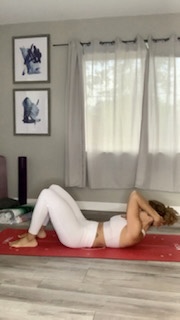
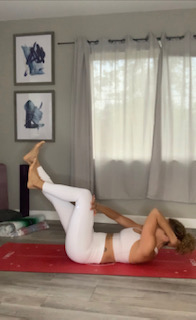
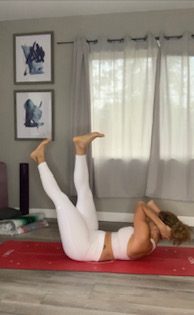
    1. Curl up variations  
    • stabilizer abs 

    Building Core Strength through Yoga

    • 90-90 abs with resisted hip flexion

    Building Core Strength through Yoga

    • juicer abs 

    Building Core Strength through Yoga

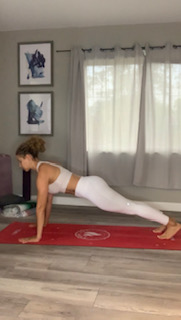
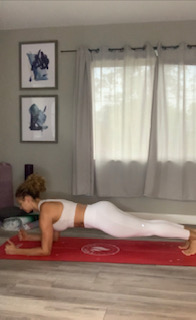
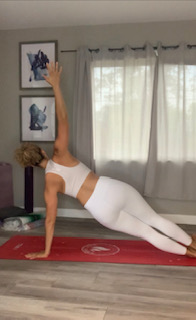
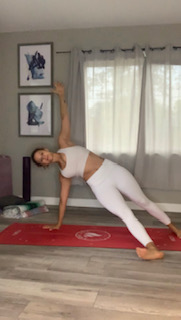
    1. Kumbbhakasana (plank) variations 
    • plank

    plank lyt yoga online classes physical therapy

    • forearm plank

    forearm plank lyt yoga online classes physical therapy

    • side plank

    side plank lyt yoga method online classes physical therapy

    • fallen triangle 

    fallen triangle lyt yoga method online classes physical therapy

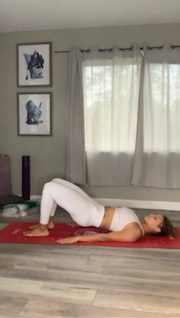
    1. Setu Bandha Sarvangasana (Bridge) variations
    • bridge

    bridge lyt yoga method online classes physical therapy

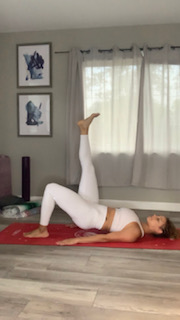
    • SL bridge

    single leg bridge lyt yoga method online classes physical therapy

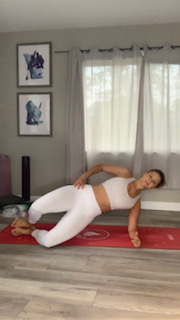
    • side bridge 

    side bridge online classes lyt yoga method physical therapy

    Allow me to let you in on the real secret to more energy and grace….a strong and functional core while moving through poses aka core strength in transitions. 

    Once you have the basics down, you can uplevel by learning how to properly brace your core while moving between poses. And this is where you truly become magical – grow taller, feel lighter, increase endurance.

    This is truly what creates functional movement. Here are two functional examples of core strength at work: 

    1. Airplane <> ½ moon
    2. Twisted crescent <> eagle 

    Practicing moves like these with max core efficiency within a yoga asana practice will build a more efficient energy system. Your body, your mind, and your loved ones will thank you for it when they see the change in how you hold yourself and the brighter demeanor you adopt with your newfound energy. 

    Try the moves above and make sure to post it on instagram and tag @lytyogamethod and @thalialovee so we can celebrate you and encourage you! 

    If you aren’t already a subscriber, make sure to check out LYTdaily for core-centric yoga classes to joyfully bolster your functional movement. 

    I’ll see you on the mat, be well. 

    Your Wellness Guideempowering you to take up space, 

    Dr. Thalia Dorsten 

    PT, DPT, AT, RYT-200 

    IG: @thalialovee

    Liked this article? 

    DM me! I’d love to hear from you ♥️

  • Hamstring Stretching, Is This REALLY Necessary???

    Hamstring Stretching, Is This REALLY Necessary???

    by Sarah Apple Kingsley, pt, dpt


    If you have ever experienced low back pain, had a coach/trainer and/or ever gone to physical therapy, I am willing to bet you were told (or felt the need) to STRETCH your hamstrings. You probably felt a cramping and tightness sensation in the back of your legs and thought, “if I could just stretch these further, deeper and more often, the pain will go away.” Despite continuing to stretch, whether regularly or infrequently, these symptoms often do not improve. For some people they may have even gotten worse!


    When most people experience a sensation of pain or tightness down the back of their leg/thigh, they immediately assume it is the hamstring muscle. And one would think, if the muscle is tight, then you should stretch it. Well, the first thing I will tell you is that if a muscle is TIGHT, it is more often than not also very WEAK. If you only stretch a tight muscle, you are continuing to do a disservice as you are further WEAKENING that muscle, as opposed to creating an optimal length-tension relationship that is required for a muscle to fire and function properly. The goal should be to STRENGTHEN the hamstring by activating the posterior chain through exercises such as bridging or squatting with good hip hinge activation. Activating the hamstring muscle sends motor-firing signals to the muscle to help stabilize and support the spine, hips, and knees, and will actually cause less pain. It might even LENGTHEN the muscle, just by activating it. To ensure you are lengthening the muscle while strengthening, ECCENTRIC muscle contractions work best. Eccentric means activating a muscle in its lengthening phase. For the hamstring specifically, its main action or shortening phase is with hip extension and knee flexion. Therefore, its Eccentric or LENGTHENING phase would be hip flexion and knee extension. 


    An example of this is my personal favorite, the “runners stretch”, which we do in our LYT yoga classes. We are hinged forward, flexed at the hips, with the hands on the floor or elevated on blocks as you sit back and straighten your front knee, pulling the toes up towards you. This straightening is ACTIVE to prevent injury and also promotes that eccentric work. Another example we sometimes use in LYT yoga classes is the standing L. Similar to the runner’s stretch, we are hinged forwards and flexed at the hips with the hands on the floor or blocks. The back leg in this case is behind you at hip height in an L position. To eccentrically work your hamstrings in this position, begin by ACTIVELY bending and straightening your bottom knee. Other non yoga and more open chain exercises include a reverse hamstring curl: sitting upright with a thick resistance band around your ankle, use your opposite leg to help you more passively bend the knee of the ankle that is in the band, then actively and slowly as possible begin to straighten the knee, resisting the band that is already pulling you straighter.


    Going back to the runner’s stretch mentioned above, my second question is are you ACTUALLY stretching the hamstrings, or are you just irritating your sciatic nerve? Again, most people think this sensation in the back of their legs is a muscle, but more often than not it is related to an irritated nerve or fascial line that affects what is called the entire posterior chain or back body. When we excessively stretch the hamstring, especially using a strap and lying on the back, we often tend to over-pull the pelvis, thus the low back is also being pulled and compressed in the process. The sciatic nerve runs from the lumbar spine down the back of the leg all the way to the bottom of the foot and big toe. Nerves, unlike muscles, DO NOT like to be stretched! The compression of the low back, or OVERSTRETCHING of the nerve creates irritation on the nerve, thus triggering more TIGHTNESS of the muscles and skin regions it innervates, such as the hamstrings!


    The runner’s stretch is so much more than a hamstring stretch, because it opens up the entire posterior chain and back fascial line. When the nerve is irritated we need to create space and openness in the areas that are creating the compression. Opening in the back body with a nice long spine and using active force of muscle contractions as opposed to passive use of straps that can make it easy to overstretch beyond your limits makes spinal nerves much happier, and thus happier hamstrings as well!


    Try out our LYT Yoga classes for yourself and feel the benefits of safely opening the hamstrings and low back fascia, while activating the appropriate supporting muscles to leave your back, hamstrings and whole body feeling fabulous!

  • Yoga-Based Physical Therapy for Core Strengthening and Recovery Postpartum

    Yoga-Based Physical Therapy for Core Strengthening and Recovery Postpartum

    by Ashley Newton, PT, DPT


    Let’s get into it – as a pelvic health physical therapist, I do not believe in the concept of ‘bouncing back’ from pregnancy. I think this term creates unrealistic expectations for folks about their mental and physical well-being that only fuels our inner critic. After 9+ months of physical, hormonal, and lifestyle changes, our bodies have adapted to an ever-changing new normal that with delivery, changes yet again. That time is chaotic with change and it can feel like there isn’t time to take care of yourself and that it would just be easier to resume the things that you did before pregnancy. It is then that pelvic floor dysfunction comes into the limelight of our lives and we can experience any or all of the following post-partum: 

    • pain with sexual activity
    • pelvic floor heaviness
    • urinary leakage
    • fecal/gas leakage
    • vaginal farting 
    • low back/SI/pelvic pain
    • upper back pain


    The pelvic floor and deep core muscles need rehab post-baby. The dysfunctions listed above are usually due to an issue in the coordination of these muscles that the body needs to relearn. Just like any new skill, these muscles need time and instruction to learn how to stabilize us in space. Pelvic health physical therapy is an immense resource for education on how to relearn to move in our bodies and support the tissues as they go through this transition postpartum. In muscle re-education, yoga-based physical therapy challenges the body to move and stabilize in a variety of movements while retraining the connection to the breath and the pelvic floor. 


    Pranayama or breathwork is inherent to the practice of yoga and becomes a source of retraining and strengthening for folks when re-establishing connection to our deep core musculature. In that vein, yoga is a movement system and I believe the variety of movement in addition to the focus on breathing, when taught by a physical therapist, is an efficient, accessible way to facilitate the body’s recovery postpartum. 


    In the era of on-demand information, people are always asking me my top 3 exercises postpartum. The top 3 exercises I choose for each client are different, but they all have the same themes: 1) establish coordination of breathing, 2) find and maintain upright posture in neutral, and 3) be able to maintain neutral moving through space. 


    As a LYT-certified yoga instructor as well as a Doctor of Physical Therapy, I weave these concepts into my yoga flows and treatments in order to optimize tissue health and facilitate motor relearning. Understanding that time is finite, I have also created LYT yoga classes on LYT Daily so folks can get started with their postpartum recovery from home!


    Heal The Pelvic Floor Series

    https://lytyoga.uscreen.io/programs/collection-pelvic-floor


    Pelvic Foundation Series

    https://lytyoga.uscreen.io/programs/collection-pelvicfoundation

  • Importance of Diet, Nutrition, and Exercise for Alzheimer’s Disease

    Importance of Diet, Nutrition, and Exercise for Alzheimer’s Disease

    by Sarah Apple Kingsley, pt, dpt


    Alzheimer’s Disease is a form of Dementia that is more specifically diagnosed by the presence of beta amyloid plaques within the brain. They especially like to target the Hippocampus, which is where we store our memories. This contributes to short and long term memory loss in individuals diagnosed. 


    Recent and more in-depth research has concluded that Alzheimer’s especially, as well as other forms of Dementia presenting in a similar manner are indeed vascular in nature. This means that a dysfunction or disease in the blood vessels of the body is strongly correlated with the presence of symptoms and diagnosis. More specifically, findings have concluded that the specific amyloid protein “Medin” might be the major cause and source of vascular pathology.


    Medin Promotes Blood Vessel Disease!


    Dr. Neher’s team analyzed mouse models with Alzheimer’s and discovered that medin accumulates even more greatly in the brain’s blood vessels if amyloid beta deposits are also present. This was further confirmed in people when they reviewed brain tissue from organ donors with Alzheimer’s disease.


    In this study, when mice were genetically modified to block medin formation, drastically fewer amyloid beta deposits developed, and therefore, LESS BLOOD VESSEL DAMAGE!


    This team’s extensive research concluded that medin actually promotes vascular pathology in Alzheimer’s participants and therefore indicates it is one of the CAUSES of Alzheimer’s disease. This is promising for future therapeutic interventions that might aim to target medin in order to address the cognitive decline and preserve brain functioning in aging and Alzheimer’s disease.


    Unfortunately, the discussed research is still in the very early stages and will take time to reveal natural strategies to prevent the build-up of medin in the brain. However, a multitude of studies have already confirmed that we ARE able to stop the accumulation of harmful proteins such as tau and amyloid through DIET, LIFESTYLE, and NUTRITIONAL SUPPLEMENTS!


    Omega-3 fatty acids found in fish and fish oil, such as DHA, can help reduce amyloid beta plaques and prevent the development of Alzheimer’s disease. One nutrient you might be less aware of is coffee berry extract. This small red berry is potent in powerful antioxidant polyphenols that increase levels of brain-derived neurotrophic factor (BDNF), a memory-enhancing protein, throughout the brain. 


    In general, it is crucial to eat a variety of antioxidant flavonoids which can be found in green leafy vegetables and brightly colored fruits and vegetables. Steering clear of highly processed, sugar-packed foods and beverages is also best practice.


    Some studies have also shown that caffeine may actually reduce amyloid beta deposits in the brain. Coffee as well as certain teas, such as green tea, contain both caffeine and those memory-boosting antioxidant flavonoids. 


    Lastly, and most importantly, get your body moving with exercise! Research shows that those who are regular exercisers and maintain a healthy weight are less likely to experience many diseases associated with aging, including Alzheimer’s disease.


    While aerobic exercise has already been shown to boost BDNF in the brain, recent studies have specifically highlighted the dramatic effects of high-intensity interval training (HIIT). Short, but intense bursts of physical activity were shown to have an amazing impact on the brain, increasing the production of brain-derived neurotrophic factors (BDNF), associated with better overall cognition and memory function.


    Other research has also shown that intermittent fasting boosts BDNF and increases hippocampal neurogenesis. (Creation of new brain cells in the area of the brain that controls our memory).


    A New Zealand study aimed to analyze the highest BDNF-producing modality when comparing each high intensity 6-minute exercise bursts vs 90-minute low-intensity exercise, vs fasting for 20 hours, as well as mixing fasting and exercise together.


    The team discovered that by far, high-intensity exercise was the best way to increase BDNF in the brain, with results showing 4-5 times the amount when compared to low-intensity cycling!


    I personally am not a huge fan of the prolonged 20-hour fasts described in this study, but I am definitely a high proponent of intermittent fasting (short, regular fasts), and physical activity of all types for brain health. Spice up your next indoor workout on the stationary bike or treadmill by changing your settings to short intense bouts, followed by a period of rest. I also like to incorporate this principle when walking outside. I will walk for 2 minutes at a normal pace, followed by 30 seconds of sprinting or walking at my fastest tolerated pace. Fun fact, this is not only great for the brain but also for your adrenal glands! High-Intensity Interval Training (HIIT) classes are also becoming more popular in studio settings or at your local gym. Regardless of which type you choose, your brain LOVES exercise so get out there and get moving to prevent Alzheimer’s today!


    References:

    https://www.pnas.org/doi/10.1073/pnas.2011133117

    https://www.dzne.de/en/news/press-releases/press/new-target-for-alzheimers-therapies-found/

    https://www.ncbi.nlm.nih.gov/pmc/articles/PMC9712113/

    https://www.intechopen.com/books/amyloidosis/-amyloid-historical-aspects

    https://www.intechopen.com/books/amyloid-diseases/the-role-of-inflammation-in-amyloid-diseases

    https://www.ncbi.nlm.nih.gov/pmc/articles/PMC6164555/

    https://journals.plos.org/plosone/article?id=10.1371/journal.pone.0172402

    https://www.sciencedirect.com/science/article/abs/pii/S0304394009011185?via%3Dihub

    https://link.springer.com/article/10.1007/s00392-012-0463-z

    https://link.springer.com/article/10.1007/s00335-016-9647-6

    https://physoc.onlinelibrary.wiley.com/doi/10.1113/JP283582

    https://onlinelibrary.wiley.com/doi/10.1002/brb3.1444

    https://www.eurekalert.org/news-releases/976126
  • Effects of Yoga on Asthma and Allergies

    Effects of Yoga on Asthma and Allergies

    by Sarah Kingsley, DPT


    Asthma is termed as a chronic inflammatory condition affecting the airways. It is characterized by hypersensitivity to stimuli and widespread intermittent and episodic airway obstruction. Symptoms associated include coughing, wheezing, tightness in the chest, and difficulty breathing. Incidences are more common amongst young boys, however in adult women as opposed to men. 


    Many people with asthma have chosen yoga as a form of safe exercise, as it often incorporates attention to breathwork, posture, and a connection between mind, body and spirit. Many studies have shown that yoga can help reduce the frequency and severity of asthma attacks. However, until recently the exact safety and effects of yoga on quality of life, asthma control, symptoms and pulmonary function had not been formally assessed. In 2014 a complete meta-analysis of these exact parameters was completed. The results showed positive effects of yoga on quality of life and pulmonary function when compared to other usual and psychological care methods. The benefits were specific to yoga practices that implemented breath retraining.


    For example, a 2012 study found that pranayama yoga breathing and practicing stretching postures over the course of 2 months increased respiratory stamina, relaxed the chest muscles, expanded the lungs, improved energy levels, and helped calm the body. If you are struggling with asthma, you will want to avoid especially Bikram or “hot yoga” due to the high humidity and temperature that negatively affects your breathing. Traditional Ashtanga forms of yoga that are intensely physical are also not recommended for those suffering with asthma, as you want to strive for more relaxation in the body to improve your immune system function. If you are congested nasally, avoiding forceful inhalation through the nose is also best, instead aim for a short inhalation with a slow and long exhalation to further stimulate the parasympathetic nervous system and relaxing state. 


    Specific poses that incorporate a standing position with various movements of the spine into each flexion, extension, and especially rotation that help massage your spine, mobilize your thoracic rib cage and help condition your lungs will have a positive impact on your immune system. The following are some examples of beneficial poses for Asthma and Allergy sufferers:


    Warrior 1 – This pose utilizes gravity to allow mucus to drain out of the nose and lungs by opening the chest.


    To perform: Begin standing with feet shoulder-width apart. Take a large step back with your right foot, opening your hip into external rotation and allowing the toe to turn out to the side at whatever degree is available to you, pressing the heel down into the floor. Your feet should be on two separate lines with your front foot facing forward. Your front knee will bend, and aim to keep your pelvis positioned facing forwards and as neutral as possible. Breathe in as you reach both arms up towards the ceiling, in line with your ears, with your palms facing each other. Exhale slowly and hold this pose for 3-10 breaths. Step back to start with your right foot, and repeat stepping back with your left foot.


    High Crescent Lunge – Similar to warrior 1 and allowing for the same benefits. 


    You will perform in the same manner as Warrior 1, however when stepping back with the right leg, the toes and hip will continue facing forwards. Keep your back heel lifted and a soft bend in your right knee in order to keep your pelvis neutral as your front knee bends. Again, inhale as you reach your arms up towards the ceiling, palms facing each other. Exhale slowly and hold this pose for 3-10 breaths. Step back to start with your right foot, and repeat stepping back with your left foot.


    Half Moon – This pose helps in clearing your head from hay fever, alleviating symptoms such as wheezing, runny nose, and watery eyes by opening up the rib cage and lungs. 


    To perform: Stand with your feet hips-width apart. Bring your left hand to your left hip. Think about energetically dialing your right foot out to the right/pinky toe to aid in externally rotating your hip as you reach the right arm down towards the floor OR a block. The left leg will lift back behind you parallel to the floor with the toe pointing perpendicular to your mat. Pull your left toe up towards you and reach back through your left heel to keep the back leg active. If you are able, reach your left arm straight up towards the ceiling so both arms are wide. You may keep your gaze and neck aiming straight down to the floor which will put less strain on your neck and drain the sinuses in a downward direction out of the nasal canal, OR you can turn your head up towards the ceiling which will drain the sinuses more down towards the cervical lymph nodes. Hold for 3-5 breaths, then return your left leg to the starting position and repeat on the other side.


    Goddess Squat with Arms Wide and Rib Cage Mobilizations – This move is not one you might find in traditional yoga practices, but a fan favorite in our LYT Yoga method. This is an upright posture that aims specifically to mobilize the rib cage, allowing for good breath expansion and release of any inflammation or fascial restriction limiting breath or contributing to asthmatic symptoms.


    To perform: Turn sideways on your mat and bring your feet wider than shoulder width. Turn your toes out to whatever degree of hip external rotation is available to you. No need to force the turnout. Bend your knees, trying to keep your pelvis neutral (not tipping forwards or backwards) sitting down into whatever squat position is comfortably available to you. Bring your arms wide with open palms facing either straight in front of you or down towards the floor. Begin to shimmy your upper torso ONLY from side to side, feeling the mobility come from your rib cage, while attempting to maintain a stable and neutral pelvis below. Continue shifting left to right/side to side about 10 times while breathing. Alternatively, you can count the breaths performing for 5 breaths.


    If you want to improve your asthma and allergy symptoms, try yoga today by signing up for our online on-demand platform, LYT Daily: https://lytyoga.uscreen.io/


    References: 

    https://www.sciencedirect.com/science/article/abs/pii/S1081120614001987

    https://www.prevention.com/fitness/g20480173/4-best-yoga-poses-if-you-have-allergies-or-asthma/

  • Coccydynia: The Enemy of Sitting

    Coccydynia: The Enemy of Sitting

    By Ashley Newton, PT, DPT


    Pain in the butt? That could be your tailbone talking to ya! The coccyx, aka tailbone, is a small bone at the base of your sacrum. Believe it or not, it’s a joint! The tailbone can flex forward and extend backward. It moves in coordination with your breathing and its position is influenced by your pelvic floor and hip musculature. Depending on its position, when we sit, we may feel pain in this tiny bone. So, why does this happen and what can we do to reduce tailbone pain to make those long drives, meetings, and flights more tolerable? 


    The pelvic floor and the ligaments at the back of your hip stabilize the tailbone. If that support system is compromised, whether it be the pelvic floor is overactive and pulling abnormally on the tailbone or underactive and not providing support to this tiny bone, when we sit, the pressure of sitting can cause pain. 


    But posture may overwhelmingly be to blame. If we are slumped, overly arched, cross-legged in seated, we are ultimately putting excess pressure down on the pelvic floor and tailbone. Thus, working on our endurance in upright posture in seated, and working on neck and shoulder girdle stability, can help relieve pressure and pain at the tailbone!


    Now, if working on posture and stability doesn’t cut it and you still have pain, a pelvic floor evaluation, and treatment may be the next step in figuring out symptoms. Pelvic floor physical therapists assess and treat the muscles of the pelvic floor and teach clients techniques as well as stretches and exercises to provide relief to the tiny tailbone! 


    Pillows and taping techniques (kinesiotape) are also useful to provide support to the tailbone while the root cause it being uncovered. The pillows are designed with cutouts to relieve pressure on the tailbone. These can be used in meetings, at home, you name it! The taping techniques can provide stretch to tissues as well as compression and support that can also alleviate that nagging pain in the butt.


    Long story short, don’t just live with your tailbone pain! There are plenty of resources, exercises, and modifications to be able to support that tiny bone! Get started with my top three exercises for tailbone pain below!


    1. Supported squat stretch: hold onto a counter or other stable surface and sit the buttocks down into a low squat. Initiate deep breathing into the rib cage, focusing on making space between the SIT bones as you inhale. Perform for 5-8 breaths
    2. Frog stretch: In hands and knees, bring the knees wider than the hips and kick the feet out to the side (mimicking frog legs). Rock the hips backward as you take a big inhale in through the nose. Remain in the frog position for 5-8 breaths, again focusing on reaching the inhale phase of your breathing down to the tailbone and SIT bones 
    3. Open books: open that mid back! Lay on the side and straighten the bottom leg and bend the top knee so that it is supported on the ground. Bring the hands together in front of your chest with the elbows extended. Rotate through the upper back to bring the top hand to the other side. In that position, take a deep breath into your side waist and return to start. Try 10x on each side.


    Hope this helps!


    Xoxo Ash

  • A Case of Tight Hips

    A Case of Tight Hips

    How HIP MOBILITY AFFECTS THE LUMBAR SPINE

    by Thalia Wynne, PT, DPT, AT, RYT


    Have you ever gone to a PT for back pain and wondered why they start checking out your hips? What do your hips have to do with your back? 


    That’s a wonderful question! Let me introduce you to a patient of mine to help illustrate this for you. Meet Jan, a kind 40-year-old corporate manager with pain in her back that would not go away despite everything she tried. When I asked her about her lifestyle, she told me she mostly works at her desk all day but loves to take a daily walk – often getting over 10,000 steps a day. I examined her and here’s what I found. 


    Jan had strong legs but was lacking core strength. She couldn’t extend her hip without arching her low back. Aha! I think we’re on to something. Let’s take a look at what functional anatomy might be contributing to her back pain problem. 


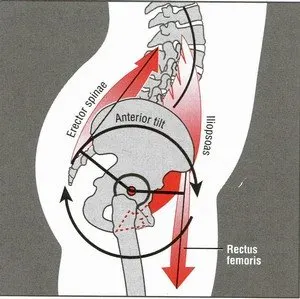
    anterior pelvic tilt pelvis physical therapy pt corner lyt yoga online classes


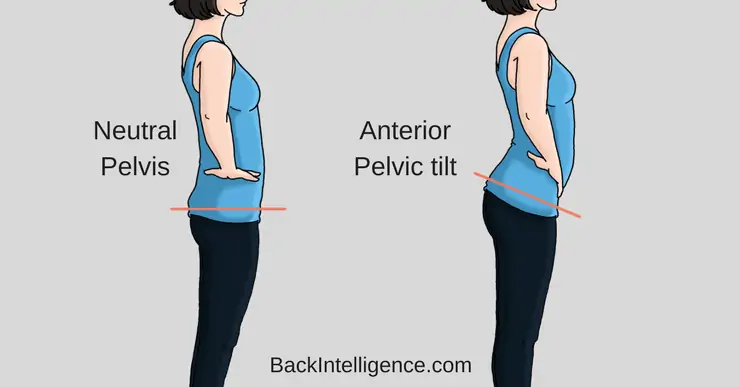
    neutral pelvis anterior tilt low back pain physical therapy pt corner lyt yoga online classes


    This pelvis position is called an anterior pelvic tilt. What this position does is encourage a shortening/tightness of the low back muscles and the hip flexors and quads. Because the hip flexors and quads are so tight – it limits Jan’s ability to extend her hip and instead, she uses the anterior pelvic tilt technique to get her leg behind her, compressing her low back. 


    Think about the amount of steps Jan takes in a day. That’s 10,000 hip extension moments that are actually low back compression moments. No wonder she’s having pain here. 


    All Jan needs to fix her low back pain are strategies to adopt a neutral pelvis, especially as she walks to give her back optimal space to function as it is anatomically meant to. 


    Here is what I gave Jan: 

    1. Posture retraining. Jan has the head knowledge of what a neutral pelvis is, but she is missing the body knowledge. The first step is to train her neuromuscular system to learn this new posture. 
    2. Hip mobility. Jan’s tight hip flexors are making it difficult for her to get full hip extension when she walks. But hip mobility is more than just stretching. Jan needs glute, core, and hip flexor strength to be able to control the hip movements required for walking while holding a neutral pelvis. So truly, hip mobility is achieved through hip strengthening while moving through available ranges of motion. If she decided just to start stretching her hip flexors, she’ll still be missing the muscle strength required to actually hold her pelvis in a neutral position and she will likely still fall into anterior pelvic tilt, compressing her spine. This is why I define mobility as strength through motion. 


    Jan applied these two tools and over time she now has mobile, strong hips, maintains neutral pelvis on her walks and at her desk, and she no longer has back pain. Way to go Jan! 


    This is something you can do too. LYT Daily is full of classes to train neutral pelvis and build hip mobility (strength through motion). Check them out with our 2-week free trial or try this free sample class for harmonious hips on the LYT YouTube channel! https://www.youtube.com/watch?v=yRe1zFMhg0s 


    Happy hip training! 


    Thalia Wynne, DPT, PT, AT, RYT 

    IG: @thalialovee 


    Picture sources: 

    Pic 1: https://caloriebee.com/workout-routines/Fix-Anterior-Pelvic-Tilt 

    Pic 2: https://backintelligence.com/anterior-pelvic-tilt-fix/