Tag: yoga

  • 681. Wednesday Q&A: Wrist, Lower Thoracic, & Thumb Pain, & Yoga in the Sand

    681. Wednesday Q&A: Wrist, Lower Thoracic, & Thumb Pain, & Yoga in the Sand


    In this Wednesday Q&A, we answer your questions about wrist pain, yoga in the sand, lower thoracic pain, and thumb pain.


    • My active cyclist, sixty-year-old student has been practicing LYT with me for more than a year. We celebrated the relief from chronic neck discomfort last winter. Remarkable improvement in his left hip mobility, where it was always painful for him. But the one thing that is not improving at all is his left wrist pain. He even feels discomfort when he is cycling. He can’t weight bear on it. I believe it is coming from his left shoulder, the more immobile side for him. Can you please advise what I can do further to help him?
    • What are your thoughts on practicing yoga in the sand? Is the ground, as in grass-covered soil, the best surface for yoga or are different surfaces good for different goals?
    • I have a desk job, I’m becoming very creative in moving and supporting myself when at work. If you could, I want to hear more of why the spasm and pain are only showing at areas T8 through 12. 
    • What would you advise best for discomfort from the thumb from typing or holding the mouth? Do we focus more on mobility and stretching or do we want to strengthen it?


    To learn more, and for the complete show notes, visit: lytyoga.com/blog/category/podcasts/


    Do you have a question?


    Sponsor:


    Follow the podcast:

  • Building Core Strength through Yoga to Bolster Functional Movement

    Building Core Strength through Yoga to Bolster Functional Movement

    Have you ever wondered why yogis can balance on their arms or hold handstands seemingly forever while simultaneously making it look easy? 


    I certainly get entranced when I watch a yogi in the flow start to move gracefully – like dancing. Here’s the secret – graceful yogis have amazing core strength. How do I know? 


    Anatomy and biomechanics tells me so. And I’ve personally watched my body and movement abilities change for the better since beginning my yoga journey. I was always athletic, but I never had the type of connection to my core strength that I developed when I started my yoga practice. 

    It’s made life easier. Everything from less overall body fatigue to more definition in my abs (if you care about that sort of thing). But most importantly, I elevate the people around me. I stand taller, and naturally, others mimic that and stand taller too. I have more energy because I’m a more efficient mover, which means I’m kinder to the people I love. 

    And in my career as a physical therapist, wellness coach, and yoga instructor, I have the pleasure of teaching others how to build their core strength through yoga to bolster functional movement, too.  

    Think of the core as this 360 container or tree trunk that is the energetic and physical hub of your body. It’s operational headquarters. Meanwhile, corporate headquarters and the CEO lives up in the brain. The brain sends signals down through the nervous system when you decide to move so that you can dress yourself, drive a car, and clean your home. But what happens when the operational headquarters isn’t optimized? 

    Energy is lost therefore requiring more of your body’s precious resources to move from point A to point B. Optimizing core strength is the key to improving all movement, increasing energy efficiency, and therefore making life easier, more fun, and less tiring. 

    Here are 3 simple yoga moves you can do right now to bolster functional movement

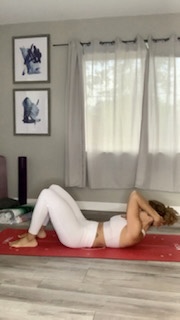
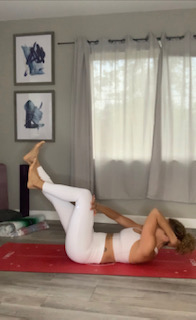
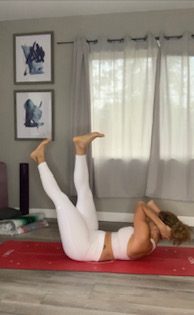
    1. Curl up variations  
    • stabilizer abs 

    Building Core Strength through Yoga

    • 90-90 abs with resisted hip flexion

    Building Core Strength through Yoga

    • juicer abs 

    Building Core Strength through Yoga

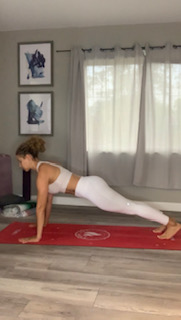
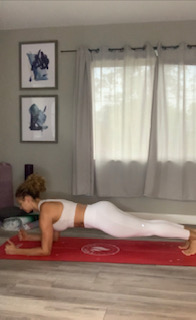
    1. Kumbbhakasana (plank) variations 
    • plank

    plank lyt yoga online classes physical therapy

    • forearm plank

    forearm plank lyt yoga online classes physical therapy

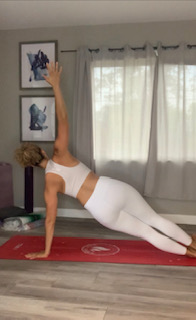
    • side plank

    side plank lyt yoga method online classes physical therapy

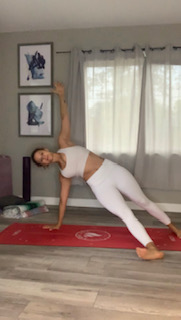
    • fallen triangle 

    fallen triangle lyt yoga method online classes physical therapy

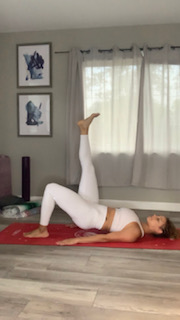
    1. Setu Bandha Sarvangasana (Bridge) variations
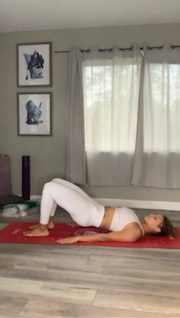
    • bridge

    bridge lyt yoga method online classes physical therapy

    • SL bridge

    single leg bridge lyt yoga method online classes physical therapy

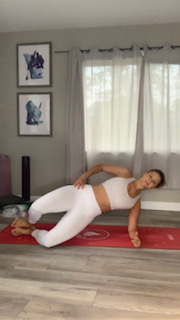
    • side bridge 

    side bridge online classes lyt yoga method physical therapy

    Allow me to let you in on the real secret to more energy and grace….a strong and functional core while moving through poses aka core strength in transitions. 

    Once you have the basics down, you can uplevel by learning how to properly brace your core while moving between poses. And this is where you truly become magical – grow taller, feel lighter, increase endurance.

    This is truly what creates functional movement. Here are two functional examples of core strength at work: 

    1. Airplane <> ½ moon
    2. Twisted crescent <> eagle 

    Practicing moves like these with max core efficiency within a yoga asana practice will build a more efficient energy system. Your body, your mind, and your loved ones will thank you for it when they see the change in how you hold yourself and the brighter demeanor you adopt with your newfound energy. 

    Try the moves above and make sure to post it on instagram and tag @lytyogamethod and @thalialovee so we can celebrate you and encourage you! 

    If you aren’t already a subscriber, make sure to check out LYTdaily for core-centric yoga classes to joyfully bolster your functional movement. 

    I’ll see you on the mat, be well. 

    Your Wellness Guideempowering you to take up space, 

    Dr. Thalia Dorsten 

    PT, DPT, AT, RYT-200 

    IG: @thalialovee

    Liked this article? 

    DM me! I’d love to hear from you ♥️
  • 679. Wednesday Q&A: Perfect Posture, Distal Finger Proprioception, Disc Function, Spinal Alignment, & Bunions

    679. Wednesday Q&A: Perfect Posture, Distal Finger Proprioception, Disc Function, Spinal Alignment, & Bunions

    In this Wednesday Q&A, we answer your questions about can you achieve perfect posture with a broken bone, distal finger proprioception, disc function and spinal alignment, and bunions.


    • Can you achieve perfect posture if you’ve broken an important bone like the collarbone?
    • I have a podcast question about proprioception motor control hypermobility in the distal finger joints. I have known for a while that a sign of EDS, Ehlers-Danlos Syndrome, a hypermobility syndrome, in kids is fine and gross motor skill development, which I had. I recently learned that in addition to being clumsy and running into things, EDS folks tend to drop objects a lot due to proprioceptive issues. My phone currently has a lot of cracks in it. Do you guys have any ideas on how to improve distal finger proprioception?
    • What is a disc and its function? And what are your thoughts about chiropractic adjustment or muscle strengthening for better spinal alignment?
    • I’ve never had a problem with bunions until recently, although I’ve noticed the bony bump on the joint at the base of my big toe when I bought a new pair of trainers comfortable with wide enough toe space, they were rubbing a little bit on that bone. It didn’t really hurt, but I could feel it after a couple of weeks, it started to become really painful and inflamed. I’d like to think that I’m doing the correct things by wearing correct toes. There’s the toes, spacers, exercising, massaging my feet, walking, barefoot, posture, etc. I also got myself a bunion cushion for when I’m wearing shoes that that does not seem to help. My question is whether that can be caused by an inflammatory disease such as rheumatism. I had a blood test a while ago and it turned out that one of the markers was elevated. It would be great if you could discuss bunions and how to treat them on the podcast. 


    To learn more, and for the complete show notes, visit: lytyoga.com/blog/category/podcasts/


    Do you have a question?


    Sponsors:

    • Shop my favorite 100% Science-Backed Amino Acid Supplements. Enter code “LYT” to save 30%. aminoco.com/LYT
    • Check out and sign up for LYT Daily and The LYT Studio, including our 1-week FREE trial of each here:
      https://lytyoga.uscreen.io/


    Follow the podcast:

  • 650. Wednesday Q&A: Carrying Angles, Calcified Ligaments, Advice on a Student, & How LYT Helps You Breathe

    650. Wednesday Q&A: Carrying Angles, Calcified Ligaments, Advice on a Student, & How LYT Helps You Breathe


    In this Wednesday Q&A, we answer your questions about carrying angles, calcified ligaments, advice on handling a difficult student, and how LYT helps you breathe better. 


    • I’ve practiced other forms of yoga for many years with specific pranayama. But I find for the first time that my breath is bigger, since starting LYT. I feel lighter and I’m more connected. Why is that, when I’ve been practicing pranayama for many years?
    • Lara, you posted on Mark’s carrying angle. What is that and when to be concerned?
    • How often do ligaments calcify?
    • How to kindly respond to the objection of a student who persistently complains that the class is difficult, even though it’s described as the most advanced class in the yoga center. The student refuses the proposal to attend less challenging classes because it’s too difficult for her. The student breathes hard and loud in class, but still always chooses the most challenging transitions and positions. With her dissatisfaction to fulfill some of her expectations that she couldn’t achieve, she spreads negative energy that others notice and even bothers them. 


    To learn more, and for the complete show notes, visit: lytyoga.com/blog/category/podcasts/


    Do you have a question? Reach out – we love connecting with you! 


    Please Support Our Sponsor:

    Visit almondcow.co/shop and use code LARA for a discount off your purchase!

  • 644. Non-Surgical Approach to Healing Back Pain with Dr. Greg Lutz

    644. Non-Surgical Approach to Healing Back Pain with Dr. Greg Lutz

    Non-Surgical Approach to Healing Back Pain with Dr. Greg Lutz

    Join Lara for a conversation with Dr. Greg Lutz about how regenerative orthopedic medicine can be used to effectively treat degenerative disc disease.


    Dr. Greg Lutz is the founder of the Regenerative SportsCare Institute, Physiatrist-in-Chief Emeritus at Hospital for Special Surgery, and a professor of clinical rehabilitation medicine at Weill Medical College of Cornell University. 


    In this episode, you’ll learn about:

    • Dr. Lutz’s newly released book Heal Your Disc, End Your Pain: How Regenerative Medicine Can Save Your Spine.
    • the difference between surgical and regenerative orthopedic medicine.
    • what PRP is and how it could help heal your spine. 
    • the difference between a slipped and herniated disc.
    • tips to help keep your spine healthy.


    Guest Resources


    Connect with Lara Heimann, The Redefining Yoga Podcast, and LYT Yoga


    Sponsor

  • 589. Yoga, Sex, & Death with Susan Marrufo

    589. Yoga, Sex, & Death with Susan Marrufo


    Join Lara for a conversation with Susan Marrufo, co-founder of Samarasa Center in Los Angeles, yoga and meditation teacher, retreat leader, and energy healer. Hear about Susan’s journey from her job in advertising in her 20s to her current role as a yoga entrepreneur. How she broke through societal expectations to explore who she truly is and what she has to offer the world. 


    In this episode, you’ll learn about…

    • the process of learning to trust yourself
    • how to break away from living a life of simply checking the boxes to a one that is truly yours
    • how to use yoga and tantric philosophy to explore your deep emotions and become more yourself


    To learn more, and for the complete show notes, visit: lytyoga.com/blog/category/podcasts/


    Resources:

  • Easing Into A Running Program

    Easing Into A Running Program

    Many people hate running. I used to be one of those people too, believe it or not. Back when I was in PT school, I was having a hard time getting into a routine with exercise and felt like all I was doing was studying and working. That’s when I decided to train for my first marathon. The best thing about running is you can do it anywhere, at almost any time, and with minimal equipment. However, there are right and wrong ways to go about getting started running safely. In the spirit of October, which one could argue is the start of marathon season, let’s talk about how to ease into a running routine. 


    The best place to start is to determine your “why” and go from there. For me, it was simply wanting to get in shape with the littlest cost and time, so running fit the bill perfectly. Determining why running is important to your overall health goal can help you stay on track when you might feel like quitting. Keep it in the back of your mind as you go through your running journey. You’re going to have good days and bad days, so having this “why” may be the very thing that keeps you on track.


    The next step is to set a realistic goal within a realistic timeframe. Upwards of 65% of all people who begin an exercise program end up dropping out in three to six months. If your goal is to run a marathon, there are plenty of 4-6 month programs out there. But if you’re new to running, this timeframe is highly unrealistic. I gave myself a year of training before my first marathon, as the furthest I’d ever run was three miles at that point. So start with smaller and more attainable short-term goals, such as a 5K. Once you’ve set your goals, create a plan to reach them. 


    Having a formal training schedule to follow is a great way to help stick with the plan. The internet is full of training programs. I’ve found that running 3-4 times per week works best for my body. I run every Monday, Wednesday, and Friday morning, even when I’m not training for a race. Were I to run another marathon, I would add Sunday into the mix. Look at your schedule, determine the most ideal time for you to hit the road, and then make it a recurring appointment. Always have a plan B for when life or weather gets in the way. If you belong to a gym, running on a treadmill is a great substitute in a pinch. If and when setbacks happen, and they will, don’t just throw in the towel. Be compassionate with yourself and get back in the game when you’re able. 


    Remember to start slow. Progressive overload is a commonly utilized training method with weight training and involves gradually increasing the weight, frequency, or repetitions in a routine. It can be applied to running programs as well. Exercise is a science and should be approached as such. Your weekly routine should also include cross-training. Starting with anywhere from 10-15 minutes of running and slowly building in intensity, duration, and frequency. A general rule of thumb is to increase by no more than 10% per week. Also, choosing a run/walk method is a great way to avoid injury. On my shorter runs, I run 9 minutes and walk 1 minute throughout. On my longer runs, I run 4 minutes and walk 1 minute. It allows me to enjoy the entire run and gives my muscles and lungs a little break from start to finish. 


    Getting the right equipment is important too. Go to a reputable running store where they will let you try on and run in multiple different pairs of shoes. Finding the right pair for you is key. Clothes that wick the moisture away from your skin are paramount. Cotton is NOT your friend when it comes to running! Wearing layers works best for me in the fall and winter months. Having a thin windbreaker on the outside keeps you from getting chilled when sweating. If you’re going for a long run, having a belt to carry water and refueling nutrition is an absolute must. Lastly, if you know it will be dark when you run, reflective gear and headlamps can be found cheap and are important for your safety. 


    Finally, accountability is huge. I used to pick a fun destination for my marathons, so once I bought that plane ticket and paid the entry fee, there was no turning back! Finding a social network to run with is a game changer too. Your running partners will begin to feel like family. People will look forward to seeing each other and sweating together, even in the wee hours of the morning! 


    So lace up those shoes and hit the road! I just filmed a wonderful LYT Yoga class you can do on your off days called “Runner’s Recovery”, which will help you loosen up any tight areas and recover quicker after a long run. LYT Yoga is a wonderful cross-training option for running. I have a Runner’s Series of classes on LYT Daily as well. Click the links for the class or the series! 


    Xoxo,

    Kristin

  • 545. Wednesday Q&A: Teres Major Area Pain, Shoulder Blade Balance, Mom Shoulder & Cupping

    Welcome to Wednesday Q&A, where you ask questions and we answer them!

    In this Wednesday Q&A, we answer your questions about teres major area pain, feeling an imbalance in your shoulder blades, “mom shoulder,” and our opinion on cupping.


    Your questions:

    • I have pain somewhere between teres major and the armpit. Help!
    • I noticed a significant difference in my ability to engage the muscles around my right shoulder blade and the armpit, like delayed firing. What would you suggest to rebalance my shoulders?
    • Can you speak about “mom shoulder?” How can I get it to feel better?
    • Cupping: When, why, and where?


    To learn more, and for the complete show notes, visit: lytyoga.com/blog/category/podcasts/


    Do you have a question?


    Sponsors:


    Redefining Yoga is produced and published by Crate Media.