Tag: yoga

  • 19 | Our Journey, Humane Education, & A Silent Retreat | My Husband, Mark Heimann

    19 | Our Journey, Humane Education, & A Silent Retreat | My Husband, Mark Heimann

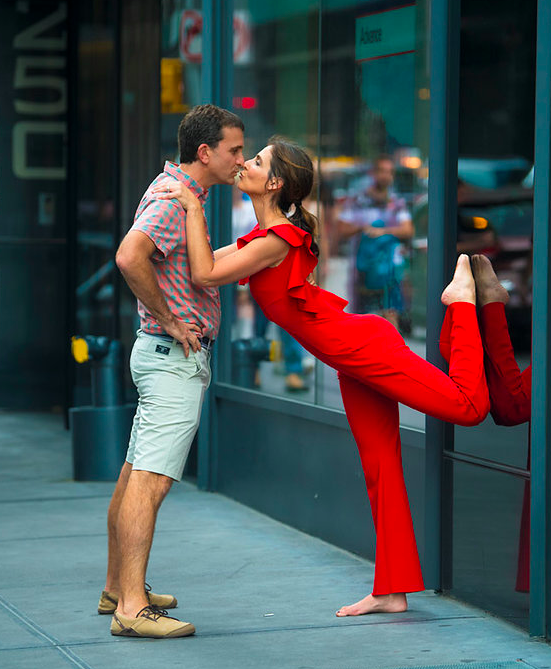
    Today I have a very special guest joining me on the podcast! He is an actor, activist, educator, parent, and an amazing partner: my husband, Mark Heimann. I’m thrilled to have Mark on the podcast, and have him answer questions that you all sent in.

    What is it like to be married to a yoga teacher?

    “Disclaimer: I am not a yogi.”

    Being married to a yoga instructor doesn’t mean he’s taking yoga classes, but when he does, he take Lara’s and happens to truly enjoy his time there!

    How did we grow together in our conscious yoga practice?

    When they met, he had no idea what even vegetarianism was! But, Mark wanted to honor Lara’s values while they biked across the country together. After the trip, the two read Animal Liberation, and started to further explore being vegetarian, and once married, we attended a conference that really gave us the want to fully commit to veganism.

    Mark was so moved by the conference at Farm Sanctuary, that he decided to study for his Master’s in Humane Education, this way he could learn more about the farming and agricultural system, and help teach others.

    Our journey into our eco-friendly home:

    Mark did a lot of research on how to make their home a reflection of their core beliefs, and found a way to create an eco-friendly home. They also wanted their new home to be a sort of model so people could view and walk through an eco-friendly home, therefore seeing that it was a tangible option for them as well.

    Any relationship advice?

    “Trust your instincts.”

    Your heart knows, and the main reasons we tend to go wrong is when we aren’t listening to our inner voice. Also remember that communication is key.

    Resources:


  • 18 | Questions for Lara

    18 | Questions for Lara

    I reached out on my social media platforms and asked all of you what you’d like to hear, and the response was great! So many of you had questions for me, so in today’s episode, I’m going to answer them. I want to help as many people as I can, so I’m honored to be able to answer what I can with the best of my knowledge.

    How do you best move through stress, fatigue, or exhaustion?

    The best way to move through it, is to move. I try to cultivate a day of “blob” in my week, but it is difficult since I’m so used to moving throughout the week. The lymph system actually depends on movement, so I do recommend some form of movement in your day. Schedule something like a date with a friend, taking your dog on a walk, or something small like that.

    Does text-neck affect jaw-clenching at night?

    There is fascial tissue that connects both the jaw and the neck, so yes, they both can affect one another. Try breathing and / or relaxation techniques prior to going to bed.

    When I open my shoulders, I can’t stay in a neutral pelvis position. How can I help this?

    The area between the shoulder blades does have a tendency to become blocked. I recommend bringing your hands straight out in front of you, interlacing the fingers into a fist, now push this farther away so the shoulder blades begin to pull apart. Now punch your chest back, almost like a cat position. Do this a few times to feel a release of that tight feeling.

    How do you deal with people who are not aware of their own emotional issues and blame other people?

    You can only change your response to people. Ask them questions that acknowledge what they are talking about; “What happened?” let them feel heard.

    How do I lead and create an atmosphere in a class?

    Let’s apply this to any leadership position. I’m a big believer in being yourself. People want to be led, therefore you need to come prepared. Be clear and have a perspective for the class / time ahead that you are leading.

    How do you queue the body into alignment without confusion?

    Talk clearly and don’t worry about getting flourishy. Never make assumptions with your class, always teach as though everyone has no knowledge of what you are teaching.

    What does your vegan holiday food look like? Any traditions?

    For Hanukkah we make latkes with egg and sour cream replacements. For Christmas we don’t really have a tradition, we just eat whatever we want! For winter time, I love making vegan soups. The corn chowder is my favorite.

    • You’ll need: frozen organic corn, two stalks of chopped celery, chopped red bell pepper. Saute the celery and red pepper, then add the corn, salt, and a bay leaf. Cover with vegetable broth. Blend about 80% of the corn with a cup of vegan milk, then add back in.

    What’s the best sleeping position? How do I position my neck when I’m sleeping?

    You don’t want a mattress that’s too soft, or too hard because you’ll have little support or just not enough. Try to get a pillow that is thin enough to hook under your skull, but so your chin can still drop down. If you are a side-sleeper, keep your neck in the same plane.

  • 17 | Working the Wrists & Why Weight-Bearing Can Help Heal Them

    17 | Working the Wrists & Why Weight-Bearing Can Help Heal Them

    Today’s topic is all about the wrists. I tend to hear a lot of complaints about the wrist in yoga, though I’m sure it’s across the board. Wrists are actually in the top 5 of complaints and injuries in yoga practice! We are using our hands in repetitive motions (think: cell phones) a lot more than we have in the past, so I thought it would be a great subject to talk about with you today. In this episode, you will hear why I teach a more weight-bearing class, and tips and exercises so that you too can create stronger, more adaptable wrists.

    What?

    When you look at the wrist joint, it may seem small, but it’s a relatively complicated joint. If you look at your arm, you’ll see two parallel bones. These bones meet up at your wrist, and where they meet up is what allows for the different movements the wrist is capable of.

    Why?

    The benefits of working the wrist and forearms are numerous. Practicing warm-up exercises can actually help prevent injury, and can strengthen your wrist, allowing more flexibility for you. If you want stronger shoulders, you need optimize your strength in your hands, wrists, and forearms. There is an energy exchange within your body as well, and having strong wrists will only charge that energetic current more to reach other parts of your body.

    How?

    In a seated position, rest your hands on your lap, palms up. Take your right hand and grand your left arm, right below the elbow. Begin to gently squeeze the forearm, from the elbow down to the wrist and back. This will help identify areas of tightness.

    Now grab the two sides of the bones at the crease of your wrist. Move the bones just a little to see if you can stabilize the bones, then move the forearm around. Squeeze and roll at the same time.

    Take your hand and make a first, and then open up the hand as wide as you can. Continue this for sixty seconds. Notice how this feels. Are your fingers getting tired? Hold your hands open, bend your elbows, and turn your palms upward as if you are holding a tray. Use your right hand to grab your left fingers, and gently pull them downward. Repeat on the opposite side, then straighten your elbow and repeat.

    When?

    You should be doing this daily in order to strengthen your wrists.

  • 16 | Manual Therapy & Myofascial Release

    16 | Manual Therapy & Myofascial Release

    Movement is not necessarily always the end all be all, and that means that we need to apply more to movement in order to feel our best. That is where today’s episode topic comes in: manual therapy! We are going to talk about just what manual therapy is, and why it’s great if you have different issues within the body that movement patterns aren’t fully addressing.

    What is manual therapy?

    Manual therapy is when someone manually comes in and helps you with the way you move, and address and release any of the restrictions that might be in your underlying tissues.

    What is fascia?

    Around your muscles, you have fascia. Fascia is a connective tissue that runs around the muscle and through the different muscle connections. Once you get a feeling of your tension, you can start to learn how to help the area soften.

    How do you do manual therapy?

    Begin by feeling where you get senses of tautness on your body. What I teach my students helps them feel the mobility of the tissue. This can help people relax and increase their range of motion.

    What is your comfort on being touched?

    Human touch is so needed. Touch is so healing! As a yoga teacher, I provide adjustments, but I do not provide adjustments to go deeper into a pose. Rather, I suggest learning how to provide light pressure into a tissue.

    Resources:


  • 15 | How to Practice Gratitude

    15 | How to Practice Gratitude

    Today’s episode is all about gratitude! This time of year can be challenging with the holidays and travel, making this idea of gratitude can be hard to grasp. I’m here to talk about how it really is important to each one of us to practice gratitude.

    Grateful Acronym:

    • G: Great; What are great at?
    • R: Ready; What are you ready for?
    • A: Abundance; What aspects of your life are abundant?
    • T: Time; What are you doing to carve out time for yourself?
    • E: Extra; Are you finding what your extra quality is?
    • F: Food; Can we start looking at food as a friend and fuel?
    • U: Underline; What are you underlining in your life and statements of gratitude?
    • L: Life; Can you be grateful for each day you are alive?


  • 14 | Anatomy of Movement: Pelvis, Glutes, Feet, & More | John Frank, PT

    14 | Anatomy of Movement: Pelvis, Glutes, Feet, & More | John Frank, PT

    Today I welcome my brother, John Frank, back on the podcast. John is a physical therapist and movement specialist. (If you haven’t already, listen to John’s first episode!) I wanted to have John back on to answer questions that were sent in by you, and to further discuss movement and anatomy.

    What are some recommendations you’d make for runners?

    Start easy, start small, and let your body adapt to the new stresses.

    Paying attention to your balance and the form of your pelvis, as well as where your knees are going, is extremely important. By practicing a single leg stance, you can better prepare your body for the stress of running.

    What do you recommend for foot pain? What are the biggest causes of foot pain?

    Not wearing proper shoes, or having them available to you, is a main reason people have foot pain. Your body weight goes into your big toe the most, and it really needs to be in alignment with the rest of the arch and inner foot. When it’s pushed inward, your kneecaps become useless because your body weight isn’t being properly placed. A lot of the time, the pain can be alleviated by simple practices, such as recognizing postures and movements.

    What are things that are great for the lower back in yoga, and maybe not so great?

    “People with low back pain tend to have weak and/or stiff hips.”

    Maintaining a more stable low back, while opening up your hips, and keeping a neutral spine while in the transitions is very important in yoga. Women tend to hyperextend, and push their pelvis forward, so this is something to pay special attention to, especially if you are experiencing back pain.

    Resources:


  • 13 | More Core

    13 | More Core

    Today we are going to be talking about one of my favorite phrases: more core. What does it mean, why is it so important, especially right now in this holiday season? The core is important for controlling, harnessing, and moving energy within the body, and the holiday season is one of the most important times to maintain your inner energy.

    What is the core?

    While most assume it’s just the abdominals, the core is truly a channel and conduit of renewable energy. It is the area of our body which houses our life. The core is important for controlling, harnessing, and moving energy within the body.

    Why is the core important?

    The core will allow you to move and breathe with ease and depth of breath, and without recognizing this, we do a disservice to most all functional and fitness practices. A stronger core also helps keep your stress levels lower–think about it, when you pay more attention to your breath, your cortisol levels are more controlled.

    What do you do?

    If possible, lie on your back with your knees bent and feet flat on the floor. Feel the imprint you are making on the floor. Take a few breathes in, and place your hands on the tops of your pelvis, with your fingers angling toward the pubic bone, and your thumbs near your navel. Pull all of this together as you exhale. When you have no breath left, pull that feeling down towards your back. Can you feel that sense of energy spreading?

    Deepen by pushing into your feet and pulling your body up into a low bend.

    Try this:

    Put your hands on your hips and imagine you are holding a basin filled with water. Tip your pelvis forward, and notice what is happening in your back body and your front. Repeat and tip your pelvis backwards. When you tip forward, your abdominals should become softer while your back muscles tighten, and the opposite should happen when you tip your basin back.

    This is to give you an idea of the relationship between your lower back and abdominals. Neither should be chronically tight or weak.

    Resources:


  • 12 | How to Reset During the Holidays

    12 | How to Reset During the Holidays

    With it being the day after Thanksgiving, we are talking about doing a post-Thanksgiving reset. Reset is an idea that we have these buttons within ourselves that we can press in order to start with a fresh plate.

    By having the option to press this nonexistent button, we don’t have to go through the processes of repatterning. Oftentimes, the holiday season tends to give us the “blues” which is caused by pressure, high expectations, and overindulgence.

    Reset Acronym:

    • R: Release
    • E: Exercise
    • S: Service
    • E: Evaluate
    • T: Thanks