Tag: motivation

  • 697. Wednesday Q&A: Hip Labrum, Thriving in Cold Seasons, & Cycling Injuries

    697. Wednesday Q&A: Hip Labrum, Thriving in Cold Seasons, & Cycling Injuries


    Welcome to Wednesday Q&A, where you ask questions and we answer them!

    In this Wednesday Q&A, we answer your questions about torn hip labrums, thriving in colder seasons, and avoiding injuries as a cyclist.


    • What should I do if I’ve been told I have a torn hip labrum? What will help in my practice?
    • Any tips for how to thrive through months of the year when daylight is in short supply?
    • How can cyclists avoid injuries? 


    Connect with Lara Heimann, The Redefining Movement Podcast, and LYT Daily:


    Today’s podcast sponsor:

    Almond Cow – Use code LARA for extra savings

    Amino Co – Use code LYT to save 30% 


    Follow the podcast:

  • 696. Monthly Motivation: Pulling Into Center

    696. Monthly Motivation: Pulling Into Center


    Join Lara for a discussion on the value of pulling into center. You’ll discover that it isn’t about gripping or holding, but instead drawing yourself inward, finding your center and balance to resonate with others and withstand adversity.

    In this episode, you will learn the following:

    • Pulling into center doesn’t just affect you but the people around you, too.
    • Changes stop being anxiety-ridden threats and turn into opportunities for building resiliency.
    • Ultimately, pulling into center is about total self awareness.

    Connect with Lara Heimann, The Redefining Movement Podcast, and LYT Daily:

    Today’s podcast sponsor:

    LYT Daily/Prime

    Check out and sign up for LYT Daily and LYT Prime, including our 2-week and 1-week FREE trials, respectively, here: https://lytyoga.uscreen.io/

    Follow the podcast:

  • Core Strengthening Yoga Practices in Physical Therapy for Faster Recovery

    Core Strengthening Yoga Practices in Physical Therapy for Faster Recovery

    by Thalia Wynne, PT, DPT, AT, RYT

    We talk about the CORE STRENGTH A LOT in physical therapy.

    In PT school, clinicians learn all about the anatomy of the core including all the muscles, where they attach, their function, what nerves innervate them, how the muscles work during functional movement, the mechanics of breath, and so on. 

    So as you can see, the training is deep. And yet, it wasn’t until after I did my LYT Method teacher training that I finally felt confident teaching core strength exercises to my patients. 

    Through the practice of yoga, I finally understood how powerful appropriate cueing can be and that it takes more than just 3×10 of a deadbug exercise to create a fully integrated core. 

    So what’s the secret? How do yogis look so graceful when they move? So much so that you can tell who’s a yogi just by the way they walk. What is it about a yoga practice that can train the core so well? And how can you use some of the asanas (poses) in physical therapy to gain similar benefits? And whether you are an athlete needing an active recovery tool to reset after hard games and practices or a busy business woman needing help to recover faster from an injury to get back to the meaningful work you put out into the world, why is yoga important to help you recover faster? 


    Yoga core strength translates into more graceful movement off the mat, reducing risk of injury in the first place. 


    It’s simple. The practiced yogi has great body awareness and postural habits. With LYT in particular, the focus is on proprioceptive awareness to optimize posture within typical daily movement patterns and works to flow through a variety of movements so that every joint ROM becomes normalized and stabilized. Off the mat, what this translates to is a look of standing tall and floating across the floor because of how light the body can move when it’s been trained to move optimally. And with optimal movement, you decrease the strain on your body and require less energy to move. Not to mention, your body becomes more adaptable. Meaning, you’ve got the body coordination, strength, and mobility to quickly get up and go when duty calls, or juke your opponent on the court. 


    There are unique training principles to yoga that you don’t always find in traditional PT exercises. 


    #1: Syncing breath to movement


    This is simple but effective. By breathing with movement, you train the body how to manage internal pressure which is important when we talk about recovery. Managing your internal pressure system well means that muscles will know when to contract and when to relax and you’ll avoid overactive hypertonic states that can inhibit muscle recovery. Syncing breath to movement also calms the mind. The parasympathetic nervous system ramps up and you increase relaxation – even when you might be working hard in a class you can still maintain a feeling of calm in the body. The easier you can navigate through challenges via breath control – the faster you will be able to recover from the intensity of the movement. Lastly, we literally require breath to live yet many people “forget” how to breathe. Their breath is shallow, lung capacity is low, and cells are under-oxygenated. People who regularly practice yoga have better lung capacity1. This means more oxygen to your cells which translates into more energy to tackle the day. Yoga is even being studied as a treatment alternative for populations that typically struggle with other exercise types such as people with asthma.2 To breathe is to prosper. Remember, breath is life. If you are breathing, you are living. And that is enough. 


    #2: Consistent internal & intentional core cueing with functional movement 


    In yoga asana, the yoga instructor is typically talking to you almost the entire class time. They are creating a checklist of how to think about movement in a highly core-centric way. Yogis know that core integrity is the foundation for any pose especially when getting into advanced movements like handstands and forearm balances. The internal cueing of squeeze here, lengthen here, breathe here builds your propioceptive awareness and it starts to become automatic just like anything you perform over and over again. Now a squat becomes a core move. And so does a lunge, tree pose, warrior two. Every move is thought of and trained through the perspective of how the student is controlling the trunk to hold the pose. The same idea can be adapted into physical therapy principles. Cue core first, and the rest will usually follow. 


    Now, most will tell you that internal cueing doesn’t translate into sport because an athlete’s focus is not on their body when participating in competition and it requires use of different parts of the brain, so we shouldn’t overly focus on internal cueing. That’s true. I would also say that if every athlete had better body intelligence (in this case core engagement so practiced and perfected it just happens automatically with movement) then we would see less injury. Somebody research that and let me know if my hypothesis is correct!


    I think that a yoga practice added as a recovery tool for athletes would enhance body awareness, improve overall mobility and stability, and take them out of habitual movement patterns that can lead to overuse injuries from overtraining and overdeveloping certain body regions. Think of the right-handed pitcher who gets really good at twisting left but develops tightness in his trunk and hips the opposite direction. Imbalances increase injury risk. Core strength training, particularly the yoga way, reduces imbalances. Now the athlete has the foundation to apply to the other training tools that will get her stronger, faster, and more skilled in her sport. 


    The point is – your core is the grand central station of movement. Its function impacts how you absorb and produce force with movement. Therefore, we must consider how to hold core support with functional movement to improve the way we move, and therefore speed up recovery. When the core is functioning optimally, it takes less energy to do what we want to do, and we decrease stress on the rest of our body creating an environment that promotes healing and recovery. 


    References


    1. Vedala SR, Mane AB, Paul CN. Pulmonary functions in yogic and sedentary population. Int J Yoga. 2014;7(2):155-159. doi:10.4103/0973-6131.133904
    2. Yadav P, Jain PK, Sharma BS, Sharma M. Yoga Therapy as an Adjuvant in Management of Asthma. Indian J Pediatr. 2021 Nov;88(11):1127-1134. doi: 10.1007/s12098-021-03675-y. Epub 2021 Feb 24. PMID: 33625666.
  • Regaining Balance: Utilizing Yoga To Enhance Proprioception in Physical Therapy

    Regaining Balance: Utilizing Yoga To Enhance Proprioception in Physical Therapy

    by Sarah Apple Kingsley, pt, dpt


    I have worked as a physical therapist for over 10 years, with the majority of my career having been with a geriatric population. Over that time I have worked in a variety of settings and levels of care including inpatient skilled nursing facilities, assisted living facilities, independent living facilities, and general outpatient independent home settings. Regardless of the level of care or a particular patient’s independence, for the geriatric population the most important factor is always BALANCE. During an assessment or evaluation a physical therapist will almost always test for balance in some way and is typically required to record their findings as indicators of fall risk. Goals are set to improve balance using functional scales as a measure of improving safety, independence, function, and quality of life.


    So what makes up balance?! Balance consists of 3 major centers of the body. Our visual system utilizes our eyes to see what we are standing or stepping on. Have you ever tried standing on one leg and then closing your eyes? Harder right? This is vision’s role in balance. Second, our vestibular system is in our inner ear, using tiny hair follicles as a way for our body to know where we are in space especially when turning the head and changing focus of the eyes. This system helps our body know we are not actually moving when we are sitting in a car watching our surroundings go by. When it is malfunctioning, vertigo symptoms become apparent. Try walking in a straight line and turning your head left and right. Can you keep a straight line, without falling over or getting dizzy? If so, then your vestibular system is functioning well.


    The final and in my opinion most important component of balance is PROPRIOCEPTION! The tiny little somatosensory receptors on our feet send signals to our brain and the rest of our body, joints and muscles about where we are in space. It is responsible for keeping our balance on a variety of different surfaces, narrowing our base of support, or changing where our limbs are in space. This is the one system that I believe we have the greatest ability to control and improve upon with physical therapy. Typical forms of physical therapy use a variety of tools and exercises to work on this system such as standing on a pillow or foam airex, a wobble board or half foam roller, single leg or tandem stance positions, and my personal old and new favorites the BOSU and a vibration plate. While each of these methods have their advantages, it wasn’t until I started using yoga techniques in my practice that I started seeing completely different results.


    The LYT yoga method explains in detail which parts of the body are meant to move and which are meant to stabilize, which helps target smaller muscle activation strategies that are important for functional movement patterns. Fun poses like airplane, single leg bridging and half moon, as well as transitions such as high crescent lunge into knee to chest all require the ability to stabilize on one limb. One legged stability is a huge balance challenge that works to improve your center, which most forms of common exercise do not. I have learned that you can’t simply tell someone to practice standing on one leg repetitively while expecting them to improve their single leg balance times. A variety of different movements are needed with targeted activation of different muscle groups that aid in supporting the body when in a single leg standing position, all of which need to be working in coordination. The LYT yoga method helps yogis gain these activation strategies as we build upon each move, starting small and working our way up. Progressing this way gets the body ready to support single limb standing positions as opposed to trying to go right into it and risk a fall or injury. By “training” or practicing in this manner, we can prepare the body to be more ready on a daily basis to support a load or react to a potential fall situation.


    Speaking of fall risk, being more rigid in the body (such as my patients with Parkinson’s Disease) puts you at a much greater risk for experiencing a fall. Yoga helps to open up the muscles, increase joint mobility and expand on ranges of motion to collectively experience movement in a more fluid way. Patients with this diagnosis may initially find yoga to be foreign and very difficult. When new ranges of motion become available and the body is able to move more fluidly, walking patterns improve, walking speed improves, and fall risk drastically decreases! 


    All of this to say, my practice as a therapist has been changed for the better since I implemented strategies, poses and movements that I have learned in my LYT yoga training. Whether you have Parkinson’s Disease or another diagnosis, this method can change your body for the better!

  • 691. Building a Recession-Proof Fitness Business with Jill Coleman

    691. Building a Recession-Proof Fitness Business with Jill Coleman


    Jill Coleman is a relentless fitness and business coach striving to help other health and fitness professionals get out of the gym and start building a business that attracts clients successfully. She leverages her extensive knowledge and experience in the fitness space, from running marathons to joining figure competitions, to help clients develop the right mindset for having a fulfilling fitness journey. 


    In this episode of Redefining Movement, Jill talks about the influential role branding plays on the success of a fitness business. She also shares her experiences with understanding moderation in her diets, taking discipline to the next level by learning to trust herself, and lessons she’s learned about starting an online business and developing a recession-proof brand.


    In this episode, you will learn the following:

    • Understanding what you can and can’t control is powerful knowledge you can use wherever you are, whether it’s about fixing your diet or running your business. 
    • Another name for branding is trust-building, and that takes time. You need to develop your patience and endurance for providing value to your clients daily if you truly want to succeed as an entrepreneur in the fitness space—or any space, for that matter.
    • Being authentically yourself online differentiates you from other businesses since it’s what allows people to trust, and eventually follow you and your business when you decide to expand or pivot. Always remember to show your energy to attract people who are more likely to want to work with you.


    Guest Resources


    Connect with Lara Heimann, The Redefining Movement Podcast, and LYT Daily:


    Follow the podcast:


    Today’s podcast sponsor:

    Almond Cow – Visit almondcow.co/shop and use code LARA for a discount off your purchase!

    AminoCo – Shop my favorite 100% Science-Backed Amino Acid Supplements. Enter code “LYT” to save 30%. Aminoco.com/LYT

  • 690. The Power of “I Can” and “I Will”

    690. The Power of “I Can” and “I Will”

    Join Lara for a discussion about the power of the words, “I Can” and “I Will.” You’ll realize that your thoughts truly can shape your perception and reality, so it’s important to think positively to enhance your life today.

    In this episode, you will learn the following:

    • Repetition is how your brain learns. Whatever thoughts you repeat to yourself, whether negative or positive, will become how you believe your life will be.
    • You can’t achieve something without first believing you can do it.
    • Your words form your thoughts, which then color your reality. 

    Connect with Lara Heimann, The Redefining Movement Podcast, and LYT Daily:

    Today’s podcast sponsor:

    LYT Daily/Studio – Check out and sign up for LYT Daily and The LYT Studio, including our 1-week FREE trial of each here: https://lytyoga.uscreen.io/ 

    Follow the podcast:

  • 689. Empowering Prenatal Fitness & Postpartum Resilience with Gina Conley

    689. Empowering Prenatal Fitness & Postpartum Resilience with Gina Conley

    Join Lara for a conversation with Prenatal Fitness expert Gina Conley.

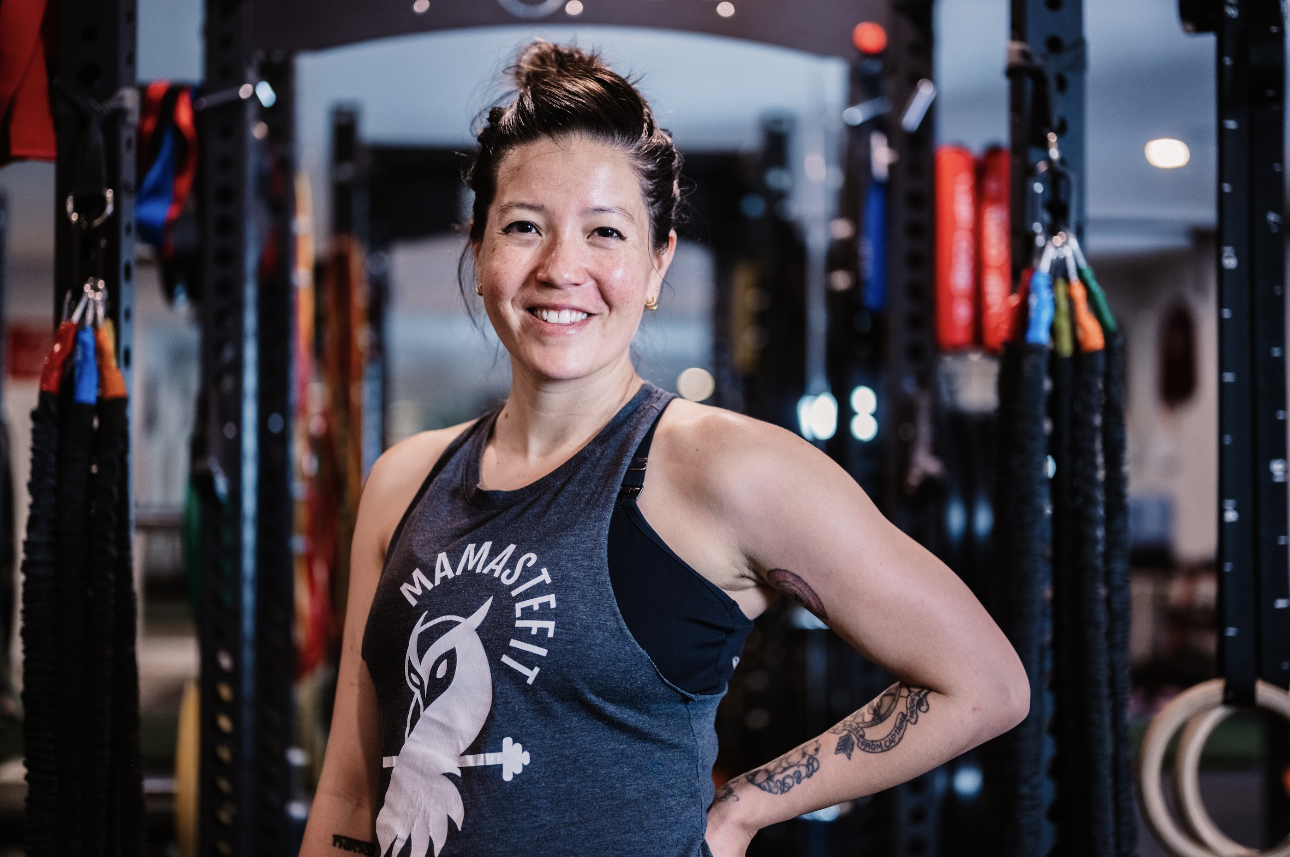
    MS. Gina has a master’s in exercise science and is a birth doula. She is a perinatal fitness trainer and owner of MamasteFit, an in-person perinatal training facility in Aberdeen, North Carolina.


    Gina has exclusively trained prenatal and postnatal fitness clients for the past 6 years and offers both in-person and online training support. Gina is a mom to three little ones and is passionate about empowering others to feel strong and pain-free throughout their pregnancies as they prepare for their birth and postpartum journey.

    • The benefits of perinatal exercise and the connection between prenatal fitness and birth preparation. 
    • How experiencing a challenging birth motivated Gina to start a business that supports and empowers other women during their perinatal journey.
    • Becoming a doula and the roles and responsibilities involved in that role. 
    • The importance of exercise throughout pregnancy and common misconceptions and fears associated with lifting weights and core exercises during this period.
    • Postpartum fitness, including the timeline for returning to exercise and movement after baby is born.


    To learn more, and for the complete show notes, visit: lytyoga.com/blog/category/podcasts/


    Guest Resources


    Connect with Lara Heimann, The Redefining Yoga Podcast, and LYT Yoga:


    Sponsor:


    Follow the podcast:

  • ‘Did my Vagina Just Fart in Yoga Class?’

    ‘Did my Vagina Just Fart in Yoga Class?’

    ‘Did my Vagina Just Fart in Yoga Class?’

    by Ashley Newton, PT, DPT

    Vaginal flatulence, vagina farting, queefing – all the same thing and can take you by surprise when you are moving through a yoga class.


    So what is vaginal flatulence? Is it actually gas like what passes through your rectum?


    Short answer: vaginal flatulence is when air that is trapped in the vagina is released. It is not created by digestion but rather by air that gets trapped as we move through space. 


    So why does it happen?? 


    Air regularly moves in and out of the vaginal canal. It is normally silent when the balance between vaginal pressure, abdominal pressure, and pelvic floor closure is balanced. However, air can get trapped in the canal as a result of poor pressure management and/or changes in the vaginal tissues. 


    Lubrication and Moisture


    The vaginal tissues are androgen-receptive aka hormonally influenced tissues. As folks with vaginas age, the lubrication at the vaginal opening decreases. However, this lubrication can also change following the birth of a baby, following radiation, as a result of medication, and hormonal changes related to thyroid dysfunction. Long story short, this is not an ‘aging problem’. It can happen at any age! This decrease in moisture results in decreased closure at the vaginal opening. Air can then escape and vibrate the tissues, making an audible sound akin to a fart. Vaginal moisturizers and hormonal creams can help to restore moisture to the vagina.


    What can you do to help it? Vaginal moisturizers are over the counter whereas hormonal creams are prescribed by a medical professional.


    The Diaphragm Paradox


    The pelvic floor musculature and the thoracic diaphragm move ideally move in harmony. When we inhale, the pelvic floor and diaphragm descend. On exhalation, they lift together. However, this relationship can change and the diaphragms can begin to move in opposition to one another. So, as the pelvic floor lifts, the thoracic diaphragm drops. As a result, the pelvic floor pulls more air into the vagina. This air becomes trapped and on the next phase of the breathing cycle when the pelvic floor drops, that additional air is pushed out and can result in a vaginal fart. 


    What can you do to help it? Working on coordinating your breathing so that as you inhale, you are able to feel the pelvic floor drop and as you exhale, feel the pelvic floor lift is the first step to improving coordination and regulating pressure changes. Remember that the pelvic floor does not have a joint like your elbow or knee and it can be challenging to discern how it is moving. If you aren’t sure, try the following exercise:


    Pelvic Floor Awareness Exercise:

    1. Take your hands and place them on the SIT bones (literally the bones you sit on) with the fingers facing inward. 
    2. Create a small cup with your hand so that your fingers sink in onto the tissue at the inside of your SIT bone. This is your pelvic floor! 
    3. As you inhale through the nose, try to focus your breath into the sides and back of your rib cage, creating a 360 degree expansion. 
    4. Bring your awareness to your fingertips. Can you drop your breath into your fingertips, feeling the tissue lower toward the seat?
    5. As you exhale, grow tall through the crown of the head like you are being pulled up on a string or you are trying to get tall on a growth chart. Keep the ribs open as you exhale. No need to squeeze the belly or pelvic floor, it will contract on its own. Do you feel the tissue at your fingertips lift up and away from your seat? 


    I always refer to this exercise as similar to an eye test where the optometrist asks you to read letters and gradually makes them sharper. The more you do this exercise, the sharper, the clearer the sensation of the pelvic floor will become.


    Pelvic Floor Muscle Activity


    The pelvic floor musculature has a resting tension. This tension is present to modulate pressure and airflow, support the spine, and support the pelvic organs (uterus, rectum, bladder). Changes in resting tension – meaning pelvic floor activity is too high or too low – can lead to air getting trapped and noisily leaving the vagina. 


    In the case of the overactive pelvic floor, when the tissues are stretched in a position such as downward dog or happy baby, air enters the vaginal canal. Upon moving out of the pose where the pelvic floor returns back to its overactive state, it can forcefully and audibly push the air out of the vagina. 


    With an underactive or lax pelvic floor (laxity can occur due to childbirth, surgery, hormonal changes, and medication), more air can flow in and out of the vaginal canal.


    What can you do to help it? 

    1. Slow down your movement and then your attention inward. Focus on breathing into your rib cage and growing long through the crown of your head in postures to avoid creating downward pressure on the pelvic floor. Take some extra time as your move through poses such as downward dog to plank and ensure that you exhale through the length of the movement. Working on your postural awareness will help to reduce pressure at the pelvic floor as well as align the two diaphragms. 
    2. Use blocks! Blocks are not crutches, they do not mean you are taking the easy way out. They are ensuring that you meet your body where it is at so you get the most out of yoga poses. Use 1 block the thinnest way between the thighs in symmetrical postures such as mountain pose, downward dog, plank, and table top to improve the activation of your pelvic floor and improve the closure at the vaginal opening. Use blocks under the hands for forward fold, twisted crescent, and triangle to avoid creating downward pressure into the pelvic floor. They help to keep the spine long and the scapular musculature engaged. 


    ‘But wait! What if I only experience this during sex??’


    With vaginal penetration, especially in postures where the pelvis is above the head, air can get trapped in the vagina as the pelvic muscles lift. 


    What can you do to help it? 

    1. Slow down the depth and speed of thrusting.
    2. Experiment with different postures and try ones lying on the side or where the pelvis is level with the head.
    3. Use supportive props. Try a sex pillow to provide support to the body to change the position of the pelvis and provide you with support to try new postures. 


    Vaginal flatulence/farts/queefing can be embarrassing. I get it, the majority of the population’s humor has not evolved beyond fart jokes. If you aren’t going to yoga class or are hesitant to engage in movement or sex because of vaginal flatulence, talk to a pelvic PT. They can give you guidance on what to work on so that you can confidently move through your yoga class without your vagina being disruptive. And know this too y’all – talking about vaginal health is hard, there are so many factors that lead us to have our voices silenced. Know that you are not alone and it’s when we talk about these hard things that it helps to amplify the voices of others as well as help us move forward to close the gaps in health equity. 


    Y’all are rockstars. ❤️

    ~Ash