Tag: motivation

  • 708. Focusing on Root Causes through Functional Medicine with Karin Reiter of Nutritious & Delicious

    708. Focusing on Root Causes through Functional Medicine with Karin Reiter of Nutritious & Delicious


    Karin Reiter, Founder of Nutritious & Delicious, transitioned from a career in law and finance after being diagnosed with Epstein Barr at a young age.

    When she discovered that standard medical approaches weren’t making her feel better, she decided to study functional medicine and nutrition.

    Karin learned firsthand the importance of identifying root causes and how addressing them holistically can lead to recovery and better health. The episode dives into the impact of mold toxicity, the crucial role of gut health, and the systemic effects of conditions like fatigue, autoimmunity, and hormonal imbalances. 

    Karin offers online workshops, educational resources, and annual retreats to help more people access functional medicine strategies. Her website is a testament to her belief that the information should be available to everyone.


    In this episode, you will learn the following:

    • Address root causes and create a personal plan using functional medicine to heal the whole body. 
    • How to identify potential mold exposure, the importance of environmental awareness, and the necessity of adequate ventilation in the home. 
    • Maintaining good gut health and understanding that negative impacts on this can come from many sources.


    Guest Resources:


    Connect with Lara Heimann, The Redefining Movement Podcast, and LYT Daily:


    Today’s podcast sponsor: 

    LYT Method – Sign up for our newsletter and get access to weekly information on movement for what’s troubling you.


    Follow the podcast:

  • Reset and Reboot: Practical Tips for a Fresh Start in Life

    Reset and Reboot: Practical Tips for a Fresh Start in Life

    Reset and Reboot: Practical Tips for a Fresh Start in Life

    by lara heimann, PT


    The last four years have shown us what we already know: that life presents challenges that can leave us feeling stuck, overwhelmed, or in need of a reboot.

    Whether you’re seeking a major life change or just a refresh, here are some practical tips that have guided me through change and helped me keep clear and compassionate while navigating some big shifts in my personal life.

    My hope is that these reminders will help you reset in any way to assist you in a new chapter of your life, whether it’s a new year or a transitional time.


    1. Reflect on your goals and values: Take a step back and reflect on what truly matters to you. Identify your core values and long-term goals. This self-awareness will guide your decisions and actions during the reset. You can find a core values list in this link so you can identify your most important ones that will be the guiding light in your reset.
    2. Declutter your physical and mental space: Streamline your environment by decluttering both your physical space and your mind. Get rid of unnecessary possessions, organize your living spaces, and consider adopting mindfulness practices to clear mental clutter. My husband, Mark, and I had to massively organize and clean out our house in Princeton in preparation for a move and it truly was refreshing to pare down the “stuff” and recognize what was not needed.
      The process was also a mental clearinghouse. We talk more about it in our podcast!
    3. Set realistic and achievable goals: Break down your larger goals into smaller, manageable tasks. This not only makes them less overwhelming but also provides a sense of accomplishment as you tick off each milestone. Research also shows that small changes create bigger shifts which lead to enduring habits. Read more about habit formation in BJ Fogg’s “Tiny Habits” and put them into action with our LYT 6-week “Build Your Capacity” program!
    4. Create a routine that serves YOU: Establishing a daily routine can bring structure and stability to your life. Include activities that contribute to your well-being, such as exercise, meditation, or dedicated time for hobbies. Many LYT daily devotees have reported that their dedicated time to practice is a non-negotiable. This structured routine will give you a foundation that allows for more freedom and clarity in the rest of your day.
    5. Embrace learning and growth: Challenge yourself to learn new things. Whether it’s acquiring a new skill, pursuing education, or exploring different perspectives, continuous learning fosters personal growth and keeps life interesting. In LYT, we intentionally provide repetition and novelty with our sequences to forge impactful neural connections in the brain. The brain craves novelty so embrace learning and challenge as a key ingredient in rebooting your system!
    6. Connect with supportive people: Surround yourself with positive and supportive individuals. Share your aspirations and challenges with friends or family who can provide encouragement, advice, or accountability when needed.
    7. Prioritize self-care: I shout this from the metaphorical rooftops every day!  You can only reboot, refresh, and reset by putting your needs first. Take care of your physical and mental health, ensure you get enough sleep, maintain a balanced diet, and engage in activities that bring you joy and relaxation.
    8. Step outside your comfort zone: Growth often happens beyond comfort zones. Challenge yourself to try new experiences, take calculated risks, and embrace the uncertainty that comes with change. Moving states, selling our house after building a new one, and spending half the year in a rental across the country were decisions that Mark and I made that brought some discomfort because of change and the unknown. The end result is amazing, but I definitely had moments of doubt, sadness, and uncertainty. I forged ahead because I knew that this process would empower me to say yes to more opportunities and challenges with excitement and it has truly has been a powerful reset.
    9. Forgive and let go: Holding onto past grievances can hinder your ability to move forward. Practice forgiveness, both towards others and yourself. Letting go of resentment can be a powerful catalyst for positive change and a necessary element for resetting overall.
    10. Celebrate progress, not perfection: Acknowledge and celebrate the progress you make along the way. Remember, the journey of resetting and rebooting is about growth and improvement, not perfection.


    By incorporating these practical tips into your life, I hope you can initiate a meaningful reset and create a path toward a more fulfilling and balanced existence. Embrace the opportunity to reboot and shape a future that aligns with your aspirations and values and know that I am pulling for you!

  • 705. Monthly Motivation: Resetting in Life as You Age

    705. Monthly Motivation: Resetting in Life as You Age


    Join Lara and husband Mark as they assess the importance of strength, endurance, and mobility training To reset & age gracefully.

    You’ll hear tips on daily health prioritization, the positive effects of self-care, goal-setting with accountability, and forgiveness by releasing emotional baggage. 

    • Reset all parts of your life while giving yourself the grace to do so.
    • Learning to reassess your priorities and properly delegate your time and energy as you age.
    • Focus on your health as you age to have energy for others and life.


    Connect with Lara Heimann, The Redefining Movement Podcast, and LYT Daily:


    Today’s podcast sponsor: 

    Almond Cow – You can get a discount off your purchase at almondcow.co/shop with code LARA


    Follow the podcast:

  • 704. Wednesday Q&A: Movement Motivation, Overcoming Ego, and Knowing Your Body in Practice

    704. Wednesday Q&A: Movement Motivation, Overcoming Ego, and Knowing Your Body in Practice


    Welcome to Wednesday Q&A, where you ask questions, and we answer them!

    In this Wednesday Q&A, we answer your questions about:

    How to find motivation for movement when it’s difficult, handling your ego as a teacher, and how to listen to your body as you practice.

    Connect with Lara Heimann, The Redefining Movement Podcast, and LYT Daily:

    Today’s podcast sponsor: 

    Herbal Face Food – Reverse sun damage and tighten the skin on your face with one of my favorite magical products, Herbal Face Food. Enter the code ‘LARA’ for 20% off!

    Follow the podcast:

  • Your End-of-Year Health Audit From a Physical Therapist, Yoga Teacher and Wellness Coach

    Your End-of-Year Health Audit From a Physical Therapist, Yoga Teacher and Wellness Coach

    by thalia wynne, pt, dpt, at, ryt

    Happy end of the year, LYT Fam! 

    This is such a magical time of year WHEN we celebrate, come together, reflect on the year we’ve had, and create powerful visions for the new year ahead of us. 


    As you read this, I’d like to invite you to take a moment to reflect on your health this year. We only get this one physical life expressed in this particular physical form. So let’s make the most of it! 


    How did you spend it this year? How did your body evolve? What was hard and painful? How did you grow and change? What were the joyous moments in your body? With your health? And how do you want to manifest physical health and well-being in 2024? 


    Welcome to your 2023 health audit. 


    Get out a piece of paper, and follow along with the exercises below to get honest with where your physical health is now, where you want it to be, and what you want to do in 2024 to manifest your ideal health. 


    Part I: Categories


    We can break health down into three main categories: mental, physical, spiritual – in other words – mind, body, & soul. 


    Step 1: In each of these broad categories, list out the smaller categories that fit in each. Here is an example to go off of. You can use this list as is, add your own categories, or delete the ones that don’t resonate. 


    Keep the body systems categories in there. These are all the major organ systems that make up the human body. We want all these systems to be functioning seamlessly for our most optimal health. If you are unsure what a particular body system is, check out this link for a breakdown of each system. https://www.verywellhealth.com/organ-system-1298691#toc-endocrine-system

    Part II: Assessment 


    Next, assign one of the following three levels to each category. 


    • Green: mastered and/or totally aligned. Ideal health actualized. 
    • Yellow: I could improve this area of my health
    • Red: Active illness. I need help/support in this area. Not at all aligned. 


    Step 2: Take out some colored pens/pencils and circle each category as green, yellow, or red. Or just write G, Y, or R next to each category. 


    Be very honest with yourself here. Think about any lab testing you’ve had done, things your doctors have told you, symptoms you’ve experienced to help you make decisions. Trust your gut responses.

    Part III: Hierarchy of Needs 


    Next up, let me introduce you to Maslow’s hierarchy of needs. The idea here is that there are levels of needs we have as humans and that the lower needs most likely need to be met before the higher needs on the pyramid can be reached. 


    For example, if you feel unsafe at home, it is unlikely that you are going to fulfill your higher purpose in life, until safety is restored. This is all relative, not absolute. And it’s a psychological theory, so don’t take this as Law. But, I find that it demonstrates our basic human needs quite well, and so we will use it in your audit today. 
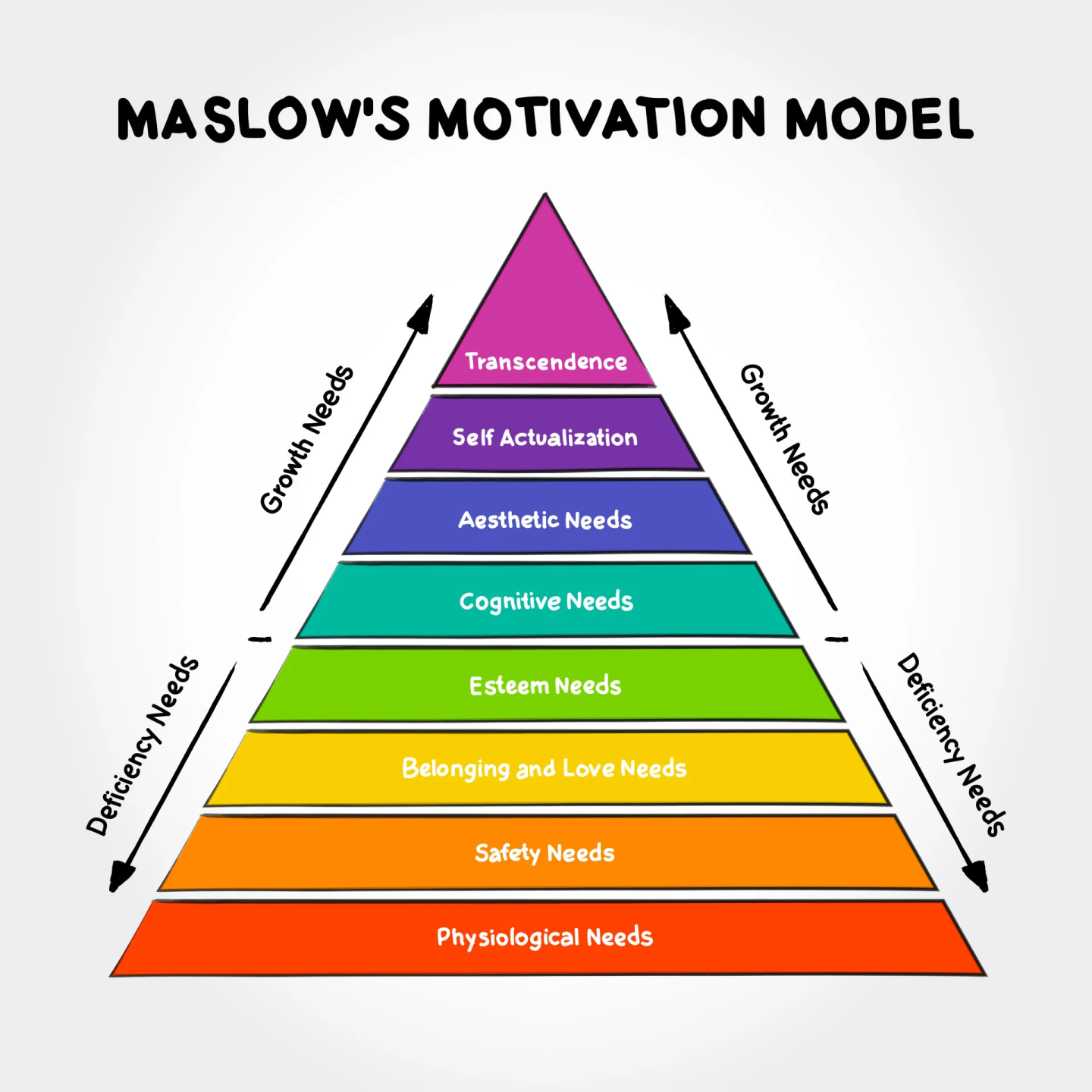
    Maslow's motivation model

    For more information on what each level means, check out this article for details: https://www.simplypsychology.org/maslow.html#Critical-Evaluation 


    Step 3: Answer the following questions: 


    In the context of this model, as it relates to your health in 2023

    1. What level(s) do you feel like you’ve spent most of your time, energy, and money on? 
    2. What level(s) do you want to feel fulfilled in? 
    3. What needs to change for these needs to be met? 


    Part IV: Reflection


    Step 4: Answer the following questions: 


    1. What didn’t go well in 2023 as it relates to my health? 
    2. What went well in my health in 2023? 
    3. In each yellow/red category, what exactly do I want to improve? List 1 thing per category. 
    4. Are you satisfied with your current trajectory in the hierarchy of needs? If not, what did you identify in part lll that could potentially be a focus of yours in 2024? 
    5. Now, let’s narrow this all down into one focus. Based on what you’ve learned from this exercise, what is the one thing you can do for your health in 2024 such that by doing it, everything else becomes easier or unnecessary? 


    Part V: Setting the Vision 


    Now that you have your heading for 2024, it’s time to dream about what this one focus could look like as it’s played out over the next year. Turn on some meditative music if you haven’t yet, and get ready to free write, or just sit and dream about what the future has in store for you. 


    Step 5: In your mind or writing it all out on paper, just dream about how life will look like in 2024 as you focus on your one health goal throughout the year. Get deep into this vision by being your #1 cheerleader. Assume everything goes better than you even hoped for. Add details to this vision – what do you see, smell, taste, hear? What environment are you in? Who is with you? Supporting you? Let your imagination run wild as you set the tone for your health in 2024. 


    Now, take action right this moment! What is the first step you can take towards actualizing this vision? 


    Keep this momentum going! 

    I hope you enjoyed this health audit and that it illuminated something powerful for you. 


    For me, in 2024 I will embody a way of living (eating, moving, sleeping, working, restoring/relaxing, and communing with the Divine, my Self, & others) that supports vibrant energy, peace in my mind, and love in my heart so that I may live a fulfilling, purposeful, and joyous life. 


    I will be filtering all of my decisions next year through this focus and building habits around it to support this beautiful dream of mine. My first action was scheduling a Neurodynamic Breathwork session this weekend. I’m also digging into the work of functional medicine MD, Dr. Hyman. Next book on my read list is this free resource on regulating blood sugar to give some love to my gut health after the holiday season. Check it out! https://10daydetox.com/wp-content/themes/tendd/downloads/resources/10-Day-Detox-PDF.pdf 


    If you’d like, I’d love to hear what your focus is for 2024 and your first action step. Send me a DM on instagram. I’d love to hear from you! 


    Thalia Wynne Dorsten, PT, DPT, AT, RYT

    IG: @thalialovee

    Wellnessbythalia.com
     

  • Mastering the Art of Habit Formation: A Blueprint for Lasting Change

    Mastering the Art of Habit Formation: A Blueprint for Lasting Change

    by Lara Heimann, PT


    In the journey of personal development, the power of habit formation cannot be overstated. Whether you’re aiming for improved health, increased productivity, or a more positive mindset, cultivating effective habits is the key to sustained success. If the word ‘habit’ feels uninteresting, daunting, or intimidating, let’s first delve into the science and strategies behind habit formation, offering you a practical blueprint for lasting change and fueling the spark for growth and change!


    Habits are the building blocks of our daily lives, often operating on autopilot. Charles Duhigg, in his book “The Power of Habit,” breaks down habits into three components: cue, routine, and reward. Recognizing these elements is crucial for understanding and reshaping our behaviors.

    The Habit Loop consists of three parts:


    1. Cue: Identify the trigger that initiates the habit. It could be a specific time of day, an emotional state, or a particular environment. A cue could be your LYT yoga mat lying out on the floor! The mat can send an immediate cue that will spark some response in your nervous system.
    2. Routine: This is the behavior or action prompted by the cue. It’s the habitual part of the habit loop. For example, the LYT mat is the place where you practice your movement routine. Even if it’s not yet as consistent as you want, the cue will help foster a more regular routine and ignite a stronger feedback loop that fuels your habit.  And your practice as part of your routine will further strengthen the loop.
    3. Reward: The positive outcome or satisfaction derived from completing the routine. Rewards reinforce the habit loop. When you practice on your mat with more regularity, just looking at the mat will prompt a positive feeling; the reward center of the brain is activated before you even begin moving because the habit loop is forged, leading to a craving for that wonderful feeling you get when you practice.


    Investing in creating more optimal habits will reap the most benefits when we implement these steps.


    First, start small! One reason many well-intentioned New Year’s resolutions don’t succeed is you might take a huge leap and attempt to do too much, too soon. When your intentions don’t manifest into habitual shifts, the feedback loop is short-circuited. For a greater possibility of success in habit formation, begin with manageable changes. Small habits are more sustainable and pave the way for larger transformations over time. For example, if you want to start being more active and consistent with your fitness/movement routine, begin with 5-10 minutes daily. If you are already doing that but want to ramp up the demand, start with 5-10 minutes of greater intensity and perform 3-4 days a week for the first month. Once you feel the benefit of that added movement or activity, you will naturally crave more time spent with that change.


    Second, be specific and clearly define your habit. Instead of a vague goal like “exercise more,” specify “take a 15-minute walk every morning” or “sign up for a 6-week program called ‘Build Your Capacity’ “(we happen to have created this habit-building program just for you!).


    Third, remember and write it down indelibly in your brain cells and even in a journal: ‘Consistency is Key’! Repetition is fundamental to habit formation so consistently practice the routine to reinforce the habit loop.


    Fourth, raise your accountability by sharing your goals with a friend or family member, or use tools like habit-tracking apps to stay accountable and motivated. Get your friend or loved one to join you in a fitness program to increase your motivation and consistency.


    Finally, celebrate progress! Acknowledge and celebrate small victories. Positive reinforcement strengthens the neural pathways associated with the habit.


    When working on habit formation, don’t be discouraged by occasional setbacks. Use them as opportunities to learn and refine your approach. In the pursuit of lasting change, mastering the art of habit formation is a transformative skill. By understanding the science behind habits and employing strategic approaches, you can cultivate positive behaviors that lead to a more fulfilling and successful life. Remember, it’s not about radical changes overnight but about consistent, intentional efforts that shape your habits and, in turn, shape your future.

    For more information about the LYT habit-building 6-week “Build Your Capacity” program that includes meditation, mobility, strength, high-intensity interval training (HIIT), LYT flows, and lifestyle tips, check out this link. We are pulling for you always!

  • Striking Harmony: The Crucial Art of Balancing Personal, Physical, Mental, and Professional Well-Being

    Striking Harmony: The Crucial Art of Balancing Personal, Physical, Mental, and Professional Well-Being

    by Lara Heimann, PT


    In the hustle and bustle of our daily lives, finding balance has become a coveted art. The delicate equilibrium between personal life, physical health, mental well-being, and professional pursuits is not just a lofty ideal but a fundamental necessity for a fulfilling and sustainable life. Let’s explore the importance of weaving this intricate tapestry of balance and I will share some tips that help me maintain harmony in my life.
    Personal Life: Nurturing Connections and Passions
    In the quest for success, it’s easy to sideline personal life. However, neglecting relationships and personal passions can lead to a sense of emptiness. Taking time for family, friends, and hobbies provides a source of joy, support, and rejuvenation. Whether it’s a quiet dinner with loved ones or indulging in a favorite hobby, these moments contribute significantly to overall well-being. Double the impact by sharing your passions with others. For example, we have our LYT community from around the world practice together online and meet up during travel!
    Physical Body: The Home That Requires Care
    Our bodies are resilient, but they demand care and attention. Regular exercise, a balanced diet, and adequate sleep are not just luxuries but essential components of a healthy lifestyle. Physical well-being is not only about looking good but feeling good, fostering energy, and preventing long-term health issues. Strive for activities that bring you joy, making physical fitness an integral part of your routine. Bring more core into your life to organize your body’s home and keep your energy flowing!
    Mental State: Cultivating Mindfulness and Resilience
    In the fast-paced world, mental health can take a back seat, yet it is the cornerstone of overall well-being. Stress, anxiety, and burnout can chip away at our mental fortitude. Incorporating mindfulness practices, such as movement or still meditation, and including practices that improve our breath capacity and nervous system can foster deep resilience. Check out our “Soothe” series for specific tools to nurture your nervous system. Always remember that seeking professional support when needed is a courageous step toward maintaining a healthy mental state.
    Professional Life: Achieving Fulfillment, Not Just Success
    The pursuit of professional success is commendable, but it should not come at the cost of well-being. Striking a balance between ambition and personal fulfillment is key. Establishing boundaries, managing workloads effectively, and fostering a positive work environment contribute to sustained professional growth without sacrificing personal happiness. The more connected you are to your core values, the clearer you will feel when establishing parameters that promote balance.
    If we envision life as a tapestry, where the personal, physical, mental, and professional elements are woven intricately together, we can see how each plays a role in the balanced product. When one thread is neglected, the entire fabric is affected. Recognizing the interconnectedness of these aspects allows for a more holistic and sustainable approach to well-being.
    Here are some tips to keep your tapestry balanced and bright!
    1. Prioritize Self-Care: Schedule time for self-care activities that nourish your mind, body, and soul.
      Look at your movement practice as an important meeting that can’t be easily canceled; I have known many LYT Studio members block out their calendars to attend the live Zoom classes. The action for accountability goes a long way to prioritize balance!
    2. Set Boundaries: Clearly define boundaries between work and personal life to avoid burnout. Create a schedule that better delineates your personal and professional time.
    3. Stay Present: Embrace mindfulness to fully engage in each moment, whether personal or professional. We practice focused attention in our LYT classes to train the brain to remain focused; remember the body is always in the present moment and moving your body is the most effective way to clear the clutter in the mind.
    4. Regular Reflection: Take time to reflect on your life, goals, and well-being regularly. Setting goals, scheduling time for yourself, and checking in with your commitments will keep you balanced and motivated.
    5. Seek Support: Don’t hesitate to seek support from loved ones or professionals when navigating challenges.
    Finding balance is not a one-size-fits-all endeavor; it’s a personal journey that evolves over time. By recognizing the importance of personal, physical, mental, and professional equilibrium, we embark on a path toward a more fulfilling and harmonious life. Strive for a balance that resonates with your values, nourishes your spirit, and allows you to thrive in every facet of your existence to feel fully LYT up!
  • Pull into Center BUT Open Your Rib Cage First

    Pull into Center BUT Open Your Rib Cage First

    by Ashley Newton, PT, DPT


    The lower ribs are attachment points for our abdominal musculature. We can actually self assess the health of our core by palpating the lower rib cage.


    The ribs articulate in the center of our body at the sternum. The sternum terminates in the cup hood bone. The space below the xyphoid is known as the infrasternal angle. This angle is important when assessing our ability to stabilize the trunk. Ideally, this angle should be 90 degrees. This tells us that our body is not compensating to try to stabilize itself at the level of the trunk. However, more often than not, the angle is greater or less than 90 degrees and believe it or not, this can tell you a lot about your body.


    If the infrasternal angle falls below 90 degrees, it is likely that you use your external oblique musculature a little too much. The external oblique stabilizes our trunk, but can oftentimes become the sole player in this action when in fact it requires the coordination of the two diaphragms and the rest of the abdominal musculature. 


    So why is this an issue? Well, if the external oblique is working overtime without the other abdominal muscles, this can lead to excessive pressure down into the pelvic floor and make one more at risk of pelvic organ prolapse, aesthetically it can create the lower abdominal “pooch”, and negatively affects our posture. 


    So what do I do?! First off, let go of your grip. Let go of your lower belly. More often than not, folks who have this tightness are walking around sucking in their belly. When we walk around, we want to think about our ribs drawing into our back body WHILE we grow tall through the back of the skull. 


    Most folks when told they need to correct their posture, brace their abdomen but this can lead to tightness and restriction in the abdomen and rib cage that can work against them and create different postural issues. 


    Instead, we need to grow tall and work on scapular strength, respiratory strength, and diaphragm length to balance the rib cage over the pelvis. Does the abdomen need to work, absolutely. But I think that you will find that by getting more length in the diaphragm and strength in the scapular musculature, it will require less effort to correct your posture and generate tension in the deepest layer of the abdomen that stabilizes the spine.


    If you have this tightness in your abdomen, give one of the following exercises a try!

    • Diaphragm release: in lying, bring the fingertips under the ribs and follow the ribs down as you scoop the fingers under the rib angle. Use lotion if available. This area should not be tender and should be mobile enough to fit up to your 2nd knuckle underneath the ribs. 
    • ILU massage 
    • Thoracic rotations/open books
    • Uddiyana bandha in lying, seated and standing 
    • Jaw release