Category: Friday with Friends

  • 140 | What is a crick in the neck?

    140 | What is a crick in the neck?

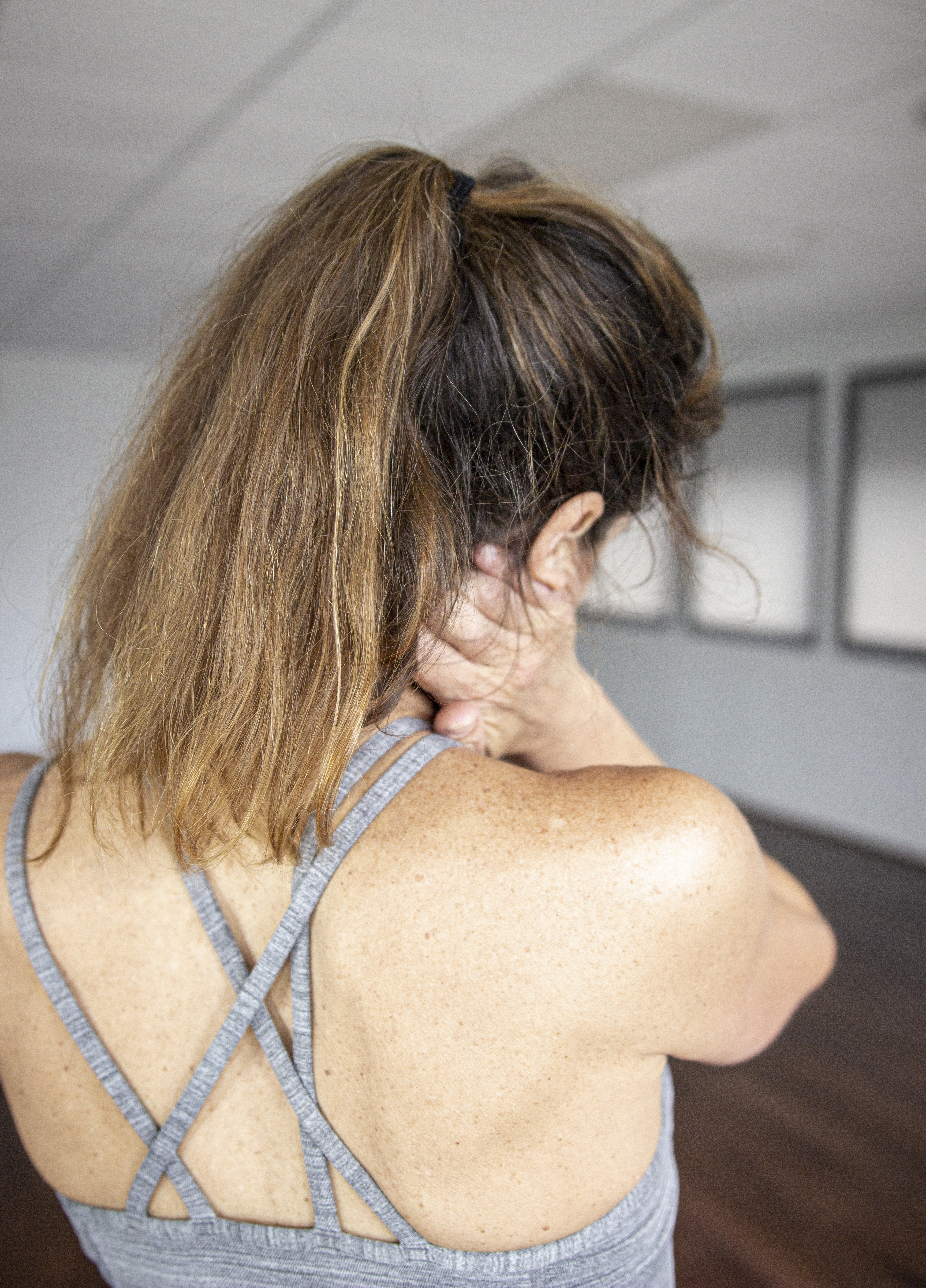
    When people say they have a crick in the neck it’s usually because they’ve woken up to find their neck is stiff and sore. Sometimes they can’t turn their head. 


    One reason it can happen is that you slept weird. You were in a position for a long time and your neck got out of whack. You’re not moving a lot when you’re sleeping so you don’t get warmth through your body. You’re not mobilizing the joints and your blood isn’t flowing in the same way as when you’re awake.


    But there’s also underlying factors. You have to examine where you spend the most time. Many people spend the most time at work and commuting to and from work. When we sit and work or drive for a long period of time, we’re staying in one position, and our neck is often offset, and that sets it up for strain. We carry that potential for strain and even the emotional stresses that we incur throughout our day into our sleep.


    A crick in the neck will go away with some time. It might be a week, later that day or in an hour. But if this is something you’re living with, I wouldn’t describe it as a crick in the neck anymore. You’ve got a cervical strain. If that’s the case you really need to address it, especially if you have any nerve sensation, like tingling, numbness or pain or chronic headaches. So please find a good physical therapist or body worker to work with you on relieving some of that strain. 


    If it’s just a crick in the neck, one thing that will help is a hot shower to get some heat into that area. Start rolling one shoulder and shoulder blade back at a time. Then stand up against the shower wall and get your skull back against the shower wall so that your neck is in a neutral position. Bring your right ear toward your right shoulder. And then let the chin fall down towards your throat and chest instead of letting it jut out. Engaging your core abdominals, hold that and breathe. And then gently come up and bring your right ear toward your right shoulder. Come up again with your head and look to your right and left.


    When you’re putting your neck to either side or rotating is when you might feel sort of locked in the neck. Sometimes one of the transverse processes, those little processes that stick outwards left and right, are a little out of place. If that’s the case, bring your hands along the back of the spine. Go to your neck and feel the bony aspects of the vertebrae and then kind of slide to the left and right so that you’re still on the vertebrae of the cervical spine but you’re not right on the spinous process on the very back. Stay to the left and right of it. With your second and third fingers, gently toggle back and forth from your left and right fingers. 


    If one of your transverse processes is really out of place and you don’t have the expertise to try and move it back into place, you should go to someone who can do that for you. I really am not a fan of anyone manipulating the cervical spine and doing that in a way that makes those awful noises. I would find a massage therapist who knows a lot about anatomy to get in there and loosen up around the area so that the transverse process will kind of slide back into its position.


    To avoid cricks in the neck:

    • Work on your posture
    • If you are at a desk all day, get your monitor or whatever you’re using at eye level
    • March your feet around if you have a standing desk
    • Alternate between sitting and standing
    • Get a wireless keyboard so you can get that into a good position
    • Check your pillows – you don’t want them too fat and fluffy
    • Keep moving because movement and exercise are going to keep everything more supple


    Resources:

  • 136 | Building strength at any age

    136 | Building strength at any age

    At any age, it’s important to have muscular strength. It’s going to protect your joints, it’s going to help you function more optimally with movement and it’s important for your bone and heart health. In this episode I talk about the best exercises to do to build strength even if you’re older and haven’t done much strength building before.


    The mechanism responsible for making someone making it possible to build muscle is the same regardless of how old you are or how much strength building you’ve done in the past. Essentially everyone has skeletal muscles, and these muscles contract in response to a stress or load. The stressor load could be your body weight, gravity or a weight that you are lifting or holding.


    If you’ve been sitting on a couch or sitting at your desk a lot and you haven’t done anything else, you have de-conditioned those skeletal muscles. They’ve been snoozing and aren’t ready to fire, and that puts you more at risk for injury. While you’re never too old to start, it’s important to go slow and gradually increase the demand on your muscles.


    Great exercises for building strength are:

    • Squats
    • Lifting kettlebells or sandbags
    • Push-ups
    • Handstands 
    • Plank position
    • Bear crawling
    • Walking your feet up the wall


    The big thing here is to move in a variety of ways. And to know that you need to continue to strength build with weight because you have to compensate for some physiological disadvantages like the decrease in testosterone, metabolism and protein synthesis that happens as we start to age. 


    Resources:

  • 134 | How to check your posture

    Today’s episode is about posture. Posture is so much more than how you stand. It is your presentation into the world. Our bodies contain everything – our energy, our emotions and our spirit. And the external frame, our posture, has an effect on all of those things. 


    A lot of people realize their posture is not great, but they don’t know what to do about it. So I want to give you some ways to check in with your posture throughout the day. 


    First of all, we need to find out what is your optimal posture. Optimal doesn’t mean perfect because there are variations, for example some people have scoliosis so that’s going to have an effect on their posture. But everyone can improve their posture in some way. 


    For optimal posture, your ankles, knees, hips, pelvis and spine are stacked really well. This means you’ll need less energy from your muscles and connective tissues to support you and you’re able to have variety in your movement patterns.


    The Triple S (the sacrum, the scapula and the back of the skull) needs to virtually be in the same line as the primary curves of your spine. You can use a wall or the floor to try and find contact with all three of those points. Use a timer to remind yourself to check in on this if you’re standing or sitting during the day and if you’re not against the wall or the floor, use your hands for feedback. 


    Secondly, get up and walk around as frequently as possible. We sit for such long periods that it’s disastrous for our bodies. It’s much better if you had to sit for eight hours to sit for 20-25 minutes, get up and move around for five minutes then come back than it is to sit for eight hours and then get up and go to the gym for an hour and a half.


    You can check your posture from the time you get up. You can brush your teeth while standing against a wall or doing a wall squat. For people who have lots of difficulty with their posture, you can do a bridge pose first thing. Make sure your glutes start to fire right away because they are going to be really helpful for keeping your pelvis in a neutral position throughout the day.


    Resources:

  • 133 | Getting better breath experience

    133 | Getting better breath experience

    Breath is a big part of any kind of movement practice. And I also think it’s the one that’s not often taught in a functional way. Having a deeper experience with your breath will increase your oxygen intake. You’re going to have more energy, you’re going to calm your nervous system and you’re connecting to your core. 


    Awareness is important. If you bring more awareness to your breath, you will get a bigger breath. 


    But for breath that gets you more oxygen and actually has a physiological impact, we need to also look at the mechanics of breath. One of my biggest missions is to get people to stand taller and have better posture because suboptimal posture impacts your breath a lot. This isn’t rocket science. If you have an aluminum can and you crush it a little bit, it changes the capacity of the liquid that can get inside the can. And that’s what your crumpled posture does. It changes the volume of your breath and the amount of oxygen you can bring in, which ultimately affects the efficiency of your breath.


    This exercise is to help you get upright and get everything more aligned. Put your second and third finger between two of your ribs and take a breath in. You should feel space and movement there. If you round your back, you’ll find that space starts to close off. Draw your tailbone down, not under, but lengthening your lower back. And then open your mouth and empty out your breath. Take another breath in and feel the breath go to your fingers. Also notice where your fingers are in that space when the breath went in. Did they go straight up into it? Or did you feel that there was a little bit of a side movement as well? Because ultimately with breath, we want it to lift up, but it also needs to go outwards. And that is the part a lot of people are missing. Because they’re either stuck in their belly or they’re stuck up in their chest. I want people to focus their breath on that inner space at the rib cage. Use your hands to get feedback. 


    Working your core muscles will also give you a deeper experience with your breath. Reset the pelvis because your pelvis needs to be neutral to have the best breath. If you’re tilted in any way, it’s going to shorten the rib cage, it’s going to change the way the ribs are or it might jut the ribs forward. They’re not going to be able to expand in the same way. Then get your abdominals firing. Take a breath in and exhale out completely, really exhale out completely and then go to this place where you draw the front body into the back body. Then take a breath and put your hands on your ribs and lift the breath up into your ribs. Feel the breath move into the hands, then take your hands and lift your ribs up a little bit. Lift them up so they’re coming away from the pelvis. And then, on your exhale, you’re going to bring the ribs together. Tighten the intercostals so you’re draw-stringing them together like you’re closing a curtain in front and you’re tightening the obliques as well. Imagine these diagonal lines coming into the midline. And if you’re lying on the ground, come up off the shoulder blades and do that on the exhale. And feel all of that pulling into the midline, closing off to help the breath move. And then as you inhale, lift that breath up, feel the expansion of the ribs, feel the space between, the intercostal space, grow and feel it lifting up toward the armpits. And then exhale and pull it together and consciously tighten your abdominals like you’re trying to siphon out every little bit of breath. And that’s going to come from the transverse abdominals, the obliques, all pulling in and pushing that air out. So you can do this in sitting or standing. And if you’re lying down, you can add the leverage of more weight by lifting your head up off the floor and by lifting your shoulder blades off the floor.

    Give those exercises a try. If you have any questions, please write me at lara@movementbylara.com. Please share this episode with a friend who has any kind of breathing issues.


    Resources:

  • 132 | How to build shoulder strength

    132 | How to build shoulder strength

    Building shoulder strength is really about building a robustness to the shoulder so that it can be adaptable both in terms of mobility and stability. 


    One of the best ways to do this is to first get the shoulder moving fully. Anytime we talk about shoulder mobility, we have to first address the scapula and back. You need to start with a good resting position of the scapula on the back body. It’s about an inch away from the spine, in a neutral resting position. And it’s not elevated, meaning it’s not way up by your ears. And from that position, it does need to be able to upwardly rotate. What is required with upwardly rotating is that if you’re reaching your arm forward, like you’re reaching out for the wall in front of you, there’s little scapula movement until 90 degrees. 


    And then beyond that, the scapula needs to be able to lift up towards your head, which is elevation slide away from the spine, which is protraction. And also tip and be held onto the spine, which is a little downward rotation. And so all of that needs to happen to get the arm up in line with your ear. So once that is happening without any impingement, or any compression or just a smoothness to it, you can work on the strength of it. 

    One of the best ways to acquire shoulder strength is through weight bearing, putting weight through your hands. So here’s a simple series to do. 


    Cat cow

    First of all, roll your shoulders one at a time and go backwards because we spend so much time with our shoulders in front. Really feel the scapula move up toward the head, and then in toward the spine and then down a little bit.


    Then reach forward with one or both arms until you get to 90 degrees. And then reach the arms forward more, with the movement coming from the scapula, and then lift them up in line with your ear. And if you feel like you’ve got a pretty good range there, then do that a few more times. 


    Come on to all fours and bring your shoulders right on top of your wrist and then get your neck in line so it’s not drooping. And then do a similar action here. But it’ll be smaller, because now you’ve got your hands grounded so you’re not going to move as much. But try and move the scapula together a little bit and then apart from each other. 


    In the yoga world this is known as cat cow. But you’re doing it just in the scapula and the thoracic spine. So the elbows won’t bend, your lower back is not getting involved, you’re just mobilizing the scapula on the back. Try doing that for about a minute. 


    Plank

    Once you’ve done it for about a minute, draw the shoulder blades together a little bit, hold the front ribs there and just feel like you’re stapling the scapula on the back ribs. And then step one foot back at a time so you’re in plank. 


    Plank is one of the best moves for your shoulder. If you’re doing it correctly, you’re not putting any compression on the shoulder, you’re trying to find space there. Continue holding yourself in plank, feeling the shoulder get stronger and also using all the core muscles to help that. Then to add on to that, you can move in different ways while still in plank. So you could step out one foot at a time, so step your left foot out to the left and then the right foot out to the right and the left foot in and the right foot in. These movement patterns will make your core and your shoulders light up. And if you find that your wrists are bothering you, you can stretch out the wrist as well.


    Reverse table

    A reverse type table is also good for the shoulders. So sit on your butt, bend your knees with your hands behind you and your fingers facing the same direction as your toes. Lift your hips up, but don’t throw your head back. So you’re using your glutes, but then feel the head of the arm bones stay centered, don’t let them drop forward. And then really tighten the muscles around the head of the arm bone and the scapula and hold there. Now you can always add some challenge to this by bending the elbows a little bit and straightening so you’re working on the triceps, which are really important for giving the shoulder stability. 


    Forearm plank

    Another way of strengthening the arms is to get onto your forearms. So come on to all fours again, with the knees down, and then bring your forearms to the ground. Interlace the fingers. The elbows are going to be more narrow than you would think, not straight under the shoulders but a little bit closer together. Then walk back so you’re in a forearm plank. Then push into your forearms and broaden the back body, which is now going to have the shoulder blades sliding a little apart from each other, and hold that feeling. The butt is in line so it’s a true plank. Hold there. And you can do the same thing you did in plank, walk out one foot at a time. Keep your head in line so you’re not dropping your head down either. Now you might only be able to do that for a few seconds. And that’s okay. If you can stay with it an extra two to five seconds after you feel like you need to come down, that’s how you’ll build some strength. 


    I hope these exercises felt good for you. There’s so many other ways to develop shoulder strength, but these are the exercises I would give right away. Let me know how it feels for you. Pass this on to someone who might need some shoulder strengthening. These exercises will be good for pretty much anyone even if they’ve had some kind of tendinitis or some kind of injury or repetitive syndrome in the shoulders.


    Resources:

  • 131 | Yoga after giving birth

    This episode is about how soon to practice yoga after giving birth, what to start with and how to teach someone who has just given birth.


    First of all, it’s different for everyone. I start by asking what kind of birth and pregnancy the mama had and how active they were during pregnancy. If you had a C-section, you can’t really start much for six to eight weeks, because your incision is healing. You might be able to walk and things like that, but picking up heavy items, certainly doing any core work, will not even be allowed until the surgical healing time has passed. But if you had a vaginal birth, and you don’t have any restrictions, how soon can you start practicing yoga again and things like that? I would say that you have to listen to your body.


    The first thing to do is look down and start reconnecting to your abdominals. Even if you see the postnatal belly, even if it looks like you’re still a couple of months pregnant, start looking there. And don’t shame yourself for any belly that’s still there. But what you can do is start to reconnect to your abdominals. That connection is going to make you feel a lot stronger and more engaged.


    Put your hand on your abdominals and try and hold them in a bit. And then maybe lift the head up a little. Those gentle activities will add a little demand to that area. And if your belly quivers while doing that, know that the quivering is not weakness, it’s awakening. It’s quivering because it hasn’t had that demand put on it recently. But it’s awakening to the demand now.


    Then start gently placing more demand as allowed. You can bring your hands behind your head. And, on an exhale, lift your hands a little bit off your head. Look down at your abdominals. Maybe they’re quivering, but you can move one hand there and help them out. 


    Standing against the wall is also great for new moms. Put the shoulder blades, the skull, the sacrum and part of your butt flush against the wall and then pull the belly in toward the wall and see if you can hold it there for 5-10 seconds. You might have to hold your breath as you’re doing it. Don’t turn blue in the face, but just use all of those muscles, because what you’re trying to actually do is use all the muscles to help your abdominal wall, and some of those muscles also help you breathe. 


    Then on the floor, you can do the same thing with your back on the floor. Instead of just lifting your hands or lifting your head, you can also try lifting one knee. Bring one knee above your hip and hold. We’re not in a bridge here, but you’re just starting to move the limbs and hold the core together. Practice holding that region together as you start walking, particularly if you’re carrying your baby.


    And then when you feel like you’re doing all of that, then you can start adding bigger movement patterns. So getting back into a yoga practice is going to be slow. You want to pay attention to your core area, and include the pelvic floor in that area, the area between your pubic bone and anus and between your two sit bones. Imagine drawing all of those points of contact together and giving that some firmness because the pelvic floor has probably been stretched.


    The other thing that you want to think about when you’re starting to move is that you will have hormones left over from birth and, if you’re nursing, you’ll have extra hormones from that. So all of your ligaments are affected by hormones. It’s much better for you to draw into your strength and hold things for a little bit, like going into a plank, instead of big movement patterns where you’re mobilizing the hips and moving with it. So just know those bigger transitions that we do in yoga, you will need your core even more because of the hormones that are present. 


    When you are feeling stronger in your abdominals, start working with bridge pose because working the glutes is part of the core as well. Have your back on the floor with the knees bent and the feet on the floor. Lift up, not too high, just until you really feel those glutes turn on. Feel the webbing of the abdominals pulling together and down and try and hold that. 


    Be easy on yourself, you’ve housed a baby and you’re coming back to yourself and reconnecting. Remember, you have just done something so amazing. But don’t ignore your body either. There’s a lot of women who just put it all into the baby and just ignore that their body needs to be rehabilitated. So do not hesitate to take care of yourself because it gets a little bit harder as the time goes on. If you’re just about to have a baby or you’re thinking about it or in the recovery, the sooner you can get re-connecting to your abdominals, the better. 


    Resources:

  • 128 | How To Stretch The Hamstrings

    128 | How To Stretch The Hamstrings

    Asking how to stretch your hamstrings is like asking, what’s the meaning of life? I say that because, although I get asked how to stretch the hamstrings all the time, there’s no simple answer. In this episode I want to expand your idea of what the hamstrings are and what stretching them actually means.


    What actually are the hamstrings and what do they do?

    The hamstrings are three muscles, They cross over two joints, the hip and the knee. And that means they influence both of the joints. The primary job of the hamstrings is to bend the knee. They also help with hip extension. 


    What is this obsession we have with stretching hamstrings about, and why is that not the whole story? 

    One reason is because people can feel tangible tightness in that area behind the legs. They can feel it when they lean over to the ground and pick something up. They can feel it when they’re running or doing yoga or other movement. The second reason is that when people experience lower back pain, they’ll go to a doctor and the doctor will say they need to stretch their hamstrings. 


    That might be the case. But I want you to start thinking about the hamstrings as a longer set of muscles that actually connect to a variety of muscles. So when we talk about stretching the hamstring, we actually have to think about that entire area. Because just to stretch that area behind the thighs would be a little reductionist. There’s so many other things tugging and pulling on it that we’re not going to accomplish what we want to accomplish by the traditional methods of stretching the hamstrings. 


    We need to see how the tightness of the entire back fascial line affects posture and therefore affects movement, like leaning over to get something off the floor, otherwise known as the standing forward fold like we do in yoga. If we are feeling that the tightness of the back is pushing the front forward, that would be first need to be addressed. We need to look at posture and get everything in alignment so we’re starting in a good position. Then, as you fold forward, what is happening? Where is the tightness most dramatic? I would say for a majority of people, it’s less than in the back of the legs, and it’s more in the lower back or maybe the mid back. And so the effort and endeavor to stretch the hamstrings isn’t really going to change much of the feeling of tightness. Where most people actually need to open up and get more space is in the low to mid back.


    How to test if the tightness is in your hamstrings or your back

    Come up to a wall and turn so your butt is facing the wall and your head is facing away from the wall. Walk away a bit so that you can bring your left foot on the floor. And then with the right foot, step up onto the wall in somewhat of a 90 degree angle. Your hands can be on a chair, they can be on blocks. If you’re more open in the back fascial line, they might be on the ground. But what is happening when you put one leg on the wall and one leg on the floor? What is happening to your back? Does it immediately respond by rounding? Or does it feel okay? For many people who claim they have tight hamstrings, it actually could be that they’re rounding in the spine. They’re tight in the spine, but they’ll feel it in the hamstrings. 


    How to stretch the whole area that affects your hamstrings
    Staying on the wall, make sure your hands are in a good position so your back can stay straight or lengthened. Your right foot is behind you on the wall, not very high, just straight back from your right glutes, at a 90 degree angle maximum from the left foot, and then really get that spine length. The spine stays long, it’s not crumpling and rounding. The left knee can be bent. It does not matter if that has to bend a little bit. But if you want to stretch your hamstrings well, keep your spine long and straight. Keep your chest open, don’t round the shoulders, keep the head lifted without getting the chin up. And see if you can hold this for a number of breaths. This is a great way to stretch your hamstrings. And you’re doing it in a way that will actually help your connective tissue expand and stretch. 


    If you don’t think you’d be able to do that, walk it back a little bit. Think more about bringing just the leg up a little bit off the ground, or you can even face the wall. Put your left foot back a little from the wall. The right foot is behind that but they’re not staggered, meaning they line up with your front frontal pelvic points, like two train tracks. Left foot in front, right foot behind and then the hands are on the wall. Start to bend the knees as much as you need to and then hinge at the hips.  


    Resources:

  • 124 | Repetitive Strain Injuries

    124 | Repetitive Strain Injuries

    Today’s podcast is about repetitive strain injuries, also known as RSI. What are repetitive strain injuries and what can we do about them? I’ll be focusing on two of the most common repetitive strain injuries – carpal tunnel syndrome and tendonitis.


    Repetitive strain injuries occur when you do repeatedly do something in an imbalanced way. This produces a stress that is beyond what your body can handle, then a strain occurs, and that strain leads to an injury. 


    Carpal tunnel syndrome occurs when you are flexing at the wrist for a great amount of the day. The kind of activities that cause us to flex at the wrist include holding a pen, holding your phone, driving your car, picking things up with your hand and typing at a computer. When we get swelling and inflammation in the wrist area, there is nowhere for it to go. So it presses and compresses on the tissue around the tendons and around the wrist joint and can also press on the vessels and nerves, causing pain, numbness and tingling. 


    Options to manage carpal tunnel syndrome include:

    • Sleeping with a splint at night to help keep the wrist neutral
    • Stretching out the wrist
    • Holding your wrists in a more neutral position as you work
    • Trying different keyboards
    • Improving your posture
    • Weight-bearing exercises like plank


    Tendonitis occurs when the Achilles tendon is shortened over and over again. This can happen when we’re wearing shoes with high heels, running with not-so-great posture or wearing shoes with too much cushioning.


    To manage tendonitis it’s imperative to look at where the imbalance is happening at its root, and that’s usually related to posture. It could be the way you are biomechanically moving. So when you take a step, if your outer hip is weak, it’ll cause your knee to drop and put more weight on the inside of your foot. So you have to strengthen your outer hips, your glutes and pretty much everything on the backside of the body. You also have to work on maintaining a neutral pelvis.


    Prevention is better than cure! Even if you haven’t had a repetitive strain injury, consider if you doing anything from a postural standpoint that could lead to a repetitive strain injury.


    Resources: