Category: Blog Posts

  • Why Am I Sore?

    Why Am I Sore?

    by Thalia Wynne


    It’s January, my beautiful friends! And for a lot of us, that means using the inspiration of a fresh year to embark on wellness journeys galore. If you’re reading this, you’ve likely decided that a daily movement practice is part of your mission to thrive in 2022. You’re two weeks into that new training program and man, are you sore. Or maybe you’re like me and you are years into making exercise a habit. If this is you, do you ever think “If my workout doesn’t make me sore, I didn’t work out hard enough?” Ever heard the phrase “No pain, no gain?” Well, don’t believe it. It’s a lie. Let’s talk about the science behind muscle soreness. I’ll bust the myth that you must be sore to make progress and teach you ways to treat it so you can show up to LYT daily ready to move and get LYT up! 


    In scientific literature, muscle soreness is termed DOMS (delayed onset muscle soreness). It’s an exercise-induced phenomenon that leads to a sensation of pain and stiffness with intensity of symptoms peaking after one to three days. It is more common after unaccustomed physical activity and specifically caused by eccentric loading. There are several theories in literature of specific physiological mechanisms that cause DOMS but there are three general ideas you need to know. One, there is an inflammatory response occurring. Two, it’s not just happening in your muscles. Fascia is the higher pain generator in this experience. Three, hormone fluctuations throughout the menstrual cycle effect DOMS. This means if you are a female in your reproductive years, you need to train differently through different phases of your cycle. P.S. DOMS has nothing to do with lactic acid build up. That’s been debunked! 


    In addition to causing discomfort and pain, research has shown DOMS to decrease joint mobility, alter joint kinematics (the way your joints move), decrease strength and power, alter muscle recruitment patterns, and reduce our capacity to efficiently absorb forces such as when running or jumping. To sum it up, being sore is negatively impacting your ability to perform and train well. Therefore, we want to avoid soreness when possible or, at the very least, modify our training when we are sore so that we minimize risk of injury. 


    So, what do we do to treat it? DOMS is simple to treat. If you are not a professional athlete who is required to train two or more times per day, you could wait for your soreness to decrease and then start training again. But we’re #thrivingin2022 and want to minimize DOMS effect on us so we can keep showing up to the mat every day, right?! This community does what we can to keep our bodies healthy and ready for movement. Here’s what the literature says about treating DOMS. 


    Our fascia is rich with sensory receptors and highly sensitive to pain and inflammation, playing a key role in our perception of soreness. Self-myofascial release is one of the most supported treatments to reduce pain and address fascial alterations after strenuous exercise. Methods such as foam rolling, vibration tools, and self-massage are great post-exercise recovery tools. Also try out the fascia section of LYT daily! Compression garments have been shown to reduce DOMS, likely through reducing the space available for swelling and edema. Contrast water therapy (alternating between hot and cold) and cold-water emersion have moderate evidence for reducing DOMS. Although not as effective as massage, active recovery will decrease soreness, but effects are temporary. You won’t feel sore for a short time during and after you move but soreness will likely return afterwards. Stretching and icepacks or ice-massages have no evidence to support their use for treating the effects of DOMS. Prophylactic nonsteroidal anti-inflammatory drugs (NSAIDS) have been supported, although I would not recommend this due to other side effects. There are a variety of supplements that are shown to reduce inflammation that you can try instead such as curcumin or tart cherry juice. For women, lower your training load or add longer recovery periods during the early follicular phase. This is where sex hormone concentrations are low and women are more vulnerable to muscle damage. Mid-luteal phase, estrogen, progesterone, and testosterone reach peak concentrations so this is a great time to increase your strength training as DOMS effects will be minimal. 


    Muscle soreness can range from quite mild to intensely irritating. Try the recovery tools mentioned above and see how they help mitigate soreness and keep you fresh for your next yoga practice. Personally, I take a preventative approach to DOMS with supplementation, foam rolling after I train (even if I don’t feel sore at the time), and by adjusting my training intensity according to my menstrual cycle. If you liked this article, DM me and let me know what your favorite recovery routine is. I’d love to hear from you. 


    Xo, 

    Thalia Wynne, DPT, PT, AT 

    IG: @thalialovee 
  • Feedback Friday with Margaux Delemasure

    Feedback Friday with Margaux Delemasure


    Margaux is an experienced LYT practitioner and teacher who wanted some feedback for fine tuning her practice. I first noticed that when she went to walk back into plank, her shoulders were not aligned over her wrists because the hands were a bit close to her feet. That positioning then set up her plank and Down Dog to be slightly less aligned. In Down Dog, her forearms were releasing a bit toward the floor, indicating that she needs to lift more in her front body to give the shoulders more support. With the slight repositioning of the hand placement, the Down Dog will have more energy. I also noticed that Margaux’s SCM (sternocleidomastoid muscle) was popping out a bit, indicating her head is slightly forward. The SCM is a superficial neck flexor that is shortened when our skull shifts forward from its neutral postion on the first cervical vertebra. I recommended focusing on lifting the front of the throat to help her neck more neutral.


    In her side lunge, Margaux needs to move back into her hip to acquire a deeper hinge and greater hip mobility. For modified side plank, I saw a slight disengagement in the scapula of the grounded hand. Pulling the scapula into the body will help the pose feel more integrated.


    Overall, Margaux’s form is wonderful; the hot spots are the neck alignment as she has a tendency to release the deep cervical flexors, which are a direct connection to the abdominal core. Finally, setting the hands slightly forward in a folded fold will better align the shoulders in plank and Down Dog.

  • Why care about your pelvic floor?

    Why care about your pelvic floor?

    by Magdalen Link


    Most of us have heard the term pelvic floor, but do you know what the pelvic floor is? Do you know why it matters? The pelvic floor is the most under-rated part of the body (in my opinion 😉) and understanding its function and being aware of signs of dysfunction is useful for everyone!


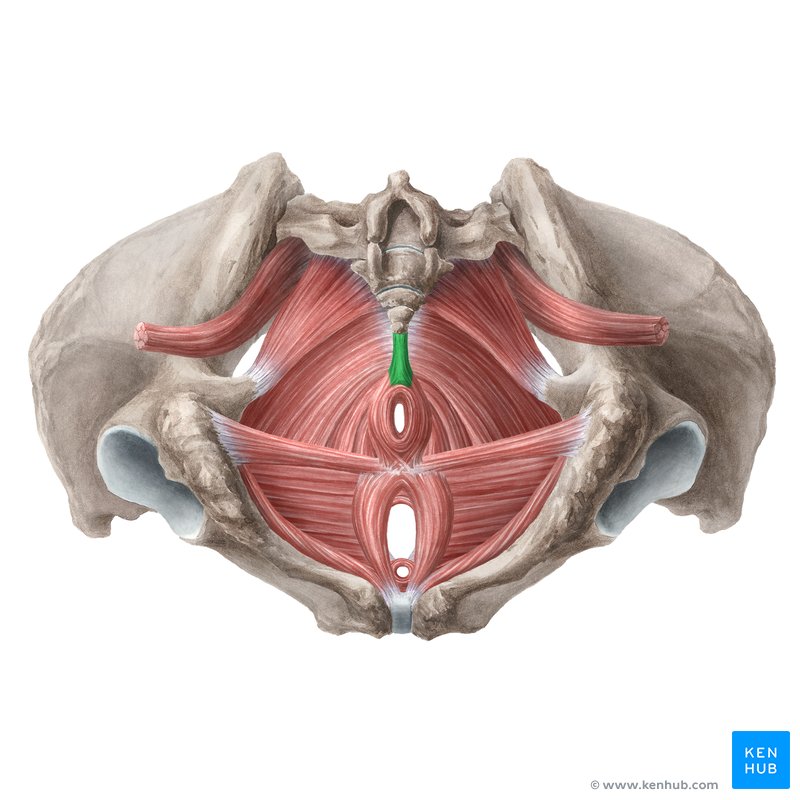
    The pelvic floor is everything inside the bowl of the bony pelvis. It is everything between your pubic bone in the front and your tailbone in the back! It contains the pelvic organs, the pelvic floor muscles and connective tissue and all the nerves and blood vessels that supply these structures. The pelvic organs include the bladder and the urethra, the uterus and the vaginal canal, the bowels and the anus. The exit points of these 3 organs are tubes that pass through the pelvic floor muscles. The pelvic floor muscles start at the pubic bone loop around at the tailbone and come back around to the tailbone as well as attach to the pelvic side walls from left to right. The pelvic floor muscles are organised into deep and superficial layers. The superficial muscles include the ischiocavernosus, bulbospongeosus, superficial transverse perineum, the perineal body and the external anal sphincter. The deep pelvic floor muscles are called pubococcygeus, ileococcygeuys, coccygeus and puborectalis muscles. 


    Alright enough with the boring anatomy–what do these muscles do? Like any other muscle in the body when they contract the muscle shortens from origin to insertion. Two main actions happen–each of the tubes is pulled forward a bit and sinched off, the pelvic floor helps with fecal continence, urinary continence, and sexual function. The pelvic floor muscles contract to close off the exits and they relax to let things out, or in. The other main action they perform is the very important job of lifting your organs up. Without them, there would be nothing holding the organs up inside your body. The pelvic floor muscles keep the organs sitting where they should! Other functions to mention include assisting with the stability of the pelvis, helping with circulation from the legs to the top half of the body. 


    Sounds like some pretty important jobs to me! Some studies have found that over 1/3 of people who identify as a female have pelvic floor dysfunction–so chances are you know someone who does or you yourself do. Now how do you know if your pelvic floor muscles are working properly? Know the simple signs that indicate they might not be functioning to their full ability: 

    -You leak urine when you cough, sneeze, jump, laugh, are trying to get to the toilet, etc.

    -You have to strain the have a bowel movement

    -You have pain with penetration 

    -You feel like you cannot completely empty your bowels or bladder and have to go back soon after to try again

    -You urinate frequently (>10x/day or >1x at night)

    -You have a hard time holding your urine–when you have to go you HAVE to GO!

    -You have low back or hip pain that has not responded to any treatment 

    – You have pain in your pelvic region–genitals, perineum, rectum, tailbone


    If you experience any of those symptoms go see a pelvic floor physical therapist! A pelvic floor physical therapist is someone who has done extra training beyond a Doctor of Physical Therapy to be qualified to address and treat various conditions related to the pelvic floor. The good news is the evidence for pelvic floor physical therapy is GREAT–there have been multiple Cochrane reviews and metanalyses published that demonstrate grade A evidence for pelvic floor rehab as a first line of treatment for many conditions. Take care of your pelvic floor today–your future self will thank you. 


    If you want to learn more about your pelvic floor follow me on:

    Instagram & TikTok  @Magdalenlink_dpt 


    Xoxo-

    Magdalen 

  • Personal Productivity

    Personal Productivity

    by Tim Bantham


    We live in an age where the lines have blurred between our work and home life. The delineation between the two has become way less defined. Along with this change, there is an increased demand on our time and attention. Now more than ever having the ability to stay productive is an essential life skill. For me, personal productivity is a goal that I am constantly pursuing. It is also one that has evolved through the years. Staying productive and finding a system that works is a personal choice. I encourage you to keep an open mind. The system I’m about to share works well for me but your mileage may vary. 

    A good system

    The key for me to maximize my personal productivity is setting myself up for success by having a good system. My system is digital and I rely on certain tools both on my laptop and my iPhone. You may be more comfortable with pen and paper. Nothing wrong with that. I just happen to like using digital applications for this.

    I am a big fan of Evernote. One of the key features of Evernote is that it just works. Any notes that I add on my laptop automatically show up on my phone. I use Evernote for just about every list I create. Lists are a big part of my life and a key component of maintaining my sanity.  I also use Evernote as part of my weekly review that I’ll touch on later. 

    Like Evernote, Todoist is another indispensable app that I love. I use Todoist for all of my projects both at home and work. These projects may be thoughts, ideas, or full-blown projects with multiple related tasks. All of these go into Todoist.  As an idea pops into my head I’ll open Todoist on my phone or laptop and enter it in. Every new task or idea funnels into an inbox within Todoist which I’ll later review as part of my weekly planning. (more on this later) For my calendar, I use iCal on my laptop and phone. Having just one calendar system is key. You don’t want to have a multitude of calendars scattered about the digital universe. One calendar, one system. 

    The Weekly Review

    Once a week, usually on Friday mornings,  I’ll sit down undistracted for approximately an hour to conduct my weekly review. The steps are as follows: 

    1. Process Inboxes – This is not time to do actual work. I use this time to go through my emails and the inbox on my Todoist app. I delete emails that I don’t need which is almost all of them. Emails that do require attention will go into my Todoist as a task with an assigned date.
    2. Planning and Organizing – Here I process loose paperwork and actually schedule tasks identified in Todoist. I’ll also spend time with my calendar looking at the week and month ahead. 
    3. Mind Dump – The next step is to free my brain of all of the things that I may be thinking about. Anything that I either want to do or think I might want to do gets typed out in either my Evernote or Todoist. The objective is to set my mind free. Doing so increases my chances of remembering things and allows me to do a better job at staying in the moment.  
    4. Review Todoist – One of the features of Todoist is that it archives a history of your completed tasks. I find it helpful to review what I’ve already done in the week prior. This helps build confidence that my system is working and that my productivity is measurable. 
    5. Review Long Term Goals – I credit author and blogger, Chris Guilebeau, with introducing me to the concept of conducting an annual review. You can check out his work at chrisguillebeau.com The idea here is to carve out a significant amount of undistracted time to take stock of your life. Use this time to plan and set goals for the upcoming year.  Each week, I review long-term goals that I had set for myself during my annual review. I want to be able to gauge whether or not I am on track with the things that I had planned to accomplish. If not, I assess why or why not and ask what may be holding me back. If there is a specific task that gets me closer to reaching a certain goal I’ll make sure it’s in my Todoist with an assigned date. 
    6. Ask Questions – What went well? What didn’t go so well? What should I start doing? What should I stop doing? What should I continue? 
    7. Prioritize Tasks – Looking at the week ahead I’ll map out what are the most important things that need to get done and I assign priorities to each. I use the flags within Todoist to organize and prioritize. An item marked as P1 or Priority 1 is the most important thing for that day. Once I complete those I move on to P2 and then finally to the P3 tasks. 

     Putting the plan into action

    Each day when I wake up the first thing I’ll do is crack open my laptop and practice LYT Daily. I bet you knew that I was going to say that! Why of course I practice LYT every single day!! The early morning hours are the time I get to myself. My movement practice is non-negotiable and the best time to get that done is first thing.  

    When I sit down to start my workday I’ll review my Todoist for the action items that need completion. Since I already spent time prioritizing and assigning dates to tasks during my weekly review I’ll have a road map for my day in front of me. Some tasks are reoccurring and others are not. Todoist allows a lot of flexibility to create projects with related tasks. Any task that has a date will show up in my Todoist on the date that I had assigned to it. From there it’s just a matter of checking off items from my list by using either the Todoist app on my phone or laptop. Although rare, the best days are when I can check everything off of my list. If I don’t get to everything on my list it will carry over as an overdue task on my Todoist. From there I can reassign a date to the task or just complete it at the next opportunity. 

    A few more tips 

    Remain flexible and adaptable – There are going to be days when life happens right? Things come up and that takes you off of your game. Learn to be ok with that. You just need to adjust and move on. Use your system to maintain order.

    Stay disciplined – Whatever system you use you need to be disciplined about applying the steps. It’s ok to be fluid and allow for adjustments that will enable the system to work for you. Once you commit to staying organized and productive, stick with it for a while to see if it works. If not, don’t be afraid to make adjustments as needed. 

    Be kind to yourself – I’ll let you in on a secret. I am not the most organized person in the world. I lose things often, I forget things and I don’t always stay focused. The one big thing that I have learned through the years is to allow myself some grace. Personal productivity, like many things in life, is constantly evolving. Responsibilities change, life situations change and there are many distractions we all have to contend with. Find what works for you and don’t be too hard on yourself if you don’t get to everything. Keep working at it and you will soon be on the path to improved personal productivity and more freedom. 


    Tim Bantham

  • Easing into a New Workout Routine

    Easing into a New Workout Routine

    Research has shown that regular physical activity is among the factors that have the most beneficial effects on health. It helps maintain body weight, can boost your brain health, reduces the risk of heart disease, enhances the immune system, and slows the effects of aging. So why do less than 5% of adults perform the minimum recommended amount of exercise (150 minutes at moderate intensity or 75 minutes at vigorous intensity) per week? Many find that getting into the habit of working out can be a huge challenge. Not to mention that there are right and wrong ways to go about it safely. In the spirit of New Year’s resolutions, let’s talk about how to ease into a workout routine. 


    The best place to start is to determine your “why” and go from there. One of the reasons listed above may be motivation enough! Figuring out which is most important to you can help you stay on track when you might feel like quitting. Keep it in the back of your mind as you go through your fitness journey. You’re going to have good days and bad days, so having this “why” may be the thing that keeps you on track.


    The next step is to set a realistic goal within a realistic timeframe. Upwards of 65% of all people who begin an exercise program end up dropping out in three to six months. This is likely due to the fact that we tend to set unrealistic goals that are unattainable within our projected timeframe. Start with smaller and more attainable short-term goals. Once you’ve set your goals, create a plan to reach them. 


    First and foremost, start slow. Progressive overload is a commonly utilized method with weight training and involves gradually increasing the weight, frequency, or repetitions in a routine. But it can be applied to cardiovascular fitness programs as well. Exercise is a science and should be approached as such. Your weekly routine should include cross-training, as I wrote about in last week’s PT Corner. Starting with anywhere from 10-15 minutes of exercise and slowly building in intensity, duration, and frequency. A general rule of thumb is increasing by no more than 10% per week. 


    Having a formal training plan or schedule to follow is a great way to help stick with the plan. When I used to train for marathons, I would write my six-month training regimen on the calendar as a way to stay motivated. Scheduling time into your day until exercise becomes part of your routine is a great place to start. Look at your schedule, determine the most ideal time for you to exercise each day, and then make it a recurring appointment. Always have a Plan B for when life gets in the way. If you can’t make your 60-min LYT Yoga Expresso class because of an unexpected engagement, schedule time for a 20-min HIIT class instead! If and when setbacks happen…and they will…don’t just throw in the towel. Be compassionate with yourself and get back in the game when you’re able. Doing something is better than nothing at all.


    Finally, accountability is huge. I used to pick a fun destination for my marathons, so once I bought that plane ticket and entry fee, there was no turning back! Many times I would run them with friends as well. Finding a social network to exercise with is a game changer! My 5:45 am classes at the LYT NJ studio grew in popularity because we all began to feel like family. People would ask about or check up on those who missed a few days in a row. We looked forward to seeing each other and sweating together, even at the wee hours of the morning! 


    On that note, we just launched our LYT Yoga 6-week Build Your Capacity challenge, which is a great way to ease into a cross-training program, which has been designed to help you build better habits in the new year! You don’t need to be a LYT Daily subscriber to join, so it’s the perfect way to introduce friends, coworkers, and family members not only to LYT Yoga, but also meditation, strength training, HIIT, mobility, and flexibility work. Even experienced LYT yogis will find the cross-training to be a useful addition to their LYT Daily! Click the link below to check it out! Until then, I’ll see you on the mat!


    LYT Yoga 6-week Build Your Capacity challenge


    Xoxo,

    Kristin

  • Never Work For Your Heroes

    Never Work For Your Heroes

    You should never work for your Heroes


    If the old adage “You should never meet your heroes” bears true, then I’m here to tell you, you should definitely never work for them.


    If you google the original warning, you’ll get search page after search page full of people corroborating the advice. 


    “You’ll be disappointed!” they say.


    “The image will be shattered!” they warn.


    “You’ll lose all hope in society!” they yell in all caps.


    I understand why people say this. I understand why the world warns you not to meet people you put on a pedestal. Let’s face it–we are all human. So it makes sense that if you meet someone you’ve placed unrealistic expectations upon…it’s probably not gonna work out for you.


    However, now that I’ve not only met my hero but then worked for her directly for two years….I’d like to weigh in.


    Y’all need to get better heroes and stop being afraid to meet them.


    Lara became a hero to me not because she was a brilliant recording artist, movie star, or something to that effect (although of course, she is a bit of a rock star in the yoga and PT world, let’s face it!)…she became my hero because she was genuinely a good person, with a good heart, doing good things, and cared about making people light up and be their best. She also knows how to effectively communicate all of that with grace, and never apologizes for her humanity.


    Her intelligence, confidence, humor, and fierce compassion for others did not let me down. It has been so inspiring to get to see Lara through life’s ups and downs and model behavior that I would like to adopt into my own life. She’s always evolving and open to change. She takes everyone’s opinions seriously. She values all life. She takes criticism with an open ear and heart and is the first to admit if she is wrong. She stands by what she says–and she gets out there and moves every day!


    Does this mean that she is 100% perfect all the time? Of course not! In the past two years, there have been moments where I’ve had the “C’mon Lara!” thought. But you know what–she’ll be the first to admit it. And guess what…I’m not perfect either (Thank God!) and she’s never made me feel poorly about it. She has hard days too, or things that didn’t go as well as planned, or any other of the plethora of things that make us human. But isn’t that amazing? To see your hero be a human, and understand that we are all human. To see how a genuinely amazing human responds in the face of adversity? A TRUE role model. Doesn’t that give you hope? Doesn’t it make striving to be a better person more of a realistic goal?


    So please, meet your heroes. If they don’t measure up to your expectations, then wouldn’t you rather know so you can find the ones that do?


    If you’ve met your hero and they rose to the occasion…then I’ll dare you to go one step further and work for them, because it might make you love and respect them even more.


    To Lara, the LYT Team, and the LYT Community….thank you for the opportunity to work with you. To serve a mission with a badass leader like Lara, hard-working souls like our team, and outstanding humans all around the world that strive to make thousands of people feel better in their bodies and minds has been an incredibly rewarding experience. I’m happy to report that Lara Heimann and all things LYT Yoga have passed the meeting and working for your heroes test, and I am honored to have been a part of the journey. 


    -Catherine Ferraro

    -Former COO, LYT Yoga

  • The Benefits of Cross-Training

    The Benefits of Cross-Training

    Most people are well aware of the benefits of exercise for not just the body, but also the mind and soul. We often find something we like, establish a routine, and not vary too far from it. I am as guilty of this as anyone! And while this is markedly better than not exercising at all, there’s a substantial argument in health and fitness for cross-training, or the practice of mixing exercise activities. It can be ideal to incorporate into your exercise regimen for a variety of reasons, beginning simply with novelty.


    Doing the same routine every day can get tedious, which can lead to finding excuses not to work out. Simply stated: cross-training keeps you from getting bored! Different types of exercise can offer different feelings of exertion and gratification, helping to keep you motivated. This is why in LYT Yoga, we have you change direction on your mat regularly, keeping the perspective fresh and helping to keep you from getting bored.  


    Cross-training also allows you to seamlessly adjust your plan when life gets in the way.  We’re all going to have those days where we simply don’t have 60 minutes to spend exercising. Opting for a 30 minute HIIT class or going for a run can give you the same bang for your buck when you’re short on time.  


    Including cross-training into your fitness program allows you to vary the stress placed on your muscles and reduce the risk of injury, as well. Any time one type of exercise is performed repeatedly, the possibility of injury increases. If there is no change or chance to rest, there is a higher risk of sprains and strains. Cross-training allows you to continue exercising parts of your body while the other parts rest.  


    While months of doing the same movements, again and again, can be beneficial for sports and competition, it can significantly limit the level of your overall fitness and wellbeing. If the frequency, intensity, time, and type of exercise never changes, the body plateaus and has no reason to become more efficient or more fit. Stagnant routines cause stagnant metabolism. If the body has become used to the energy and task requirement, caloric expenditure will not increase. On the other hand, if we cross-train, the body must continually make adjustments, more energy is required to meet these needs, and metabolism and fitness increases. 


    Finally, by cross-training, you can strengthen and condition your entire body in multiple planes of motion to improve your overall mobility, balance, flexibility, and agility. We need a variety of movements in our bodies in the same way we need variety in our diet. If you do the same exercise regimen every day, it would be kind of like eating the same meal every day. You wouldn’t get all the nutrients your body needs. 


    This matters at a genetic level as well, for the genes associated with how healthy and fit you are get expressed in your muscles. Research from 2014 on the programming of the human genome and human skeletal muscle after exercise found that training actually changes the shape and function of our genes. If certain muscle groups are left unused, those genes for health and fitness are left unexpressed. Which is why cross-training is so important. It maximizes the number of muscles used and therefore, the number of health and fitness genes triggered.


    The LYT Yoga Method already requires moving the body in multiple planes of motion, utilizing plyometrics, core strengthening, and stability work to maximize the effects of cross-training in a yoga platform. On the LYT Daily, we offer HIIT, resistance bands strengthening, and stretch classes as well. Next month, we are launching our 6-week Build Your Capacity Program, which will be available to all people of all fitness levels. With daily classes that build in length and intensity level, it utilizes the concepts of cross-training and works towards building better habits both on and off the mat. Keep an eye out and join us! Until then, I’ll see you on the mat!


    Xoxo,

    Kristin

  • Vegan Cheese Plate

    Vegan Cheese Plate

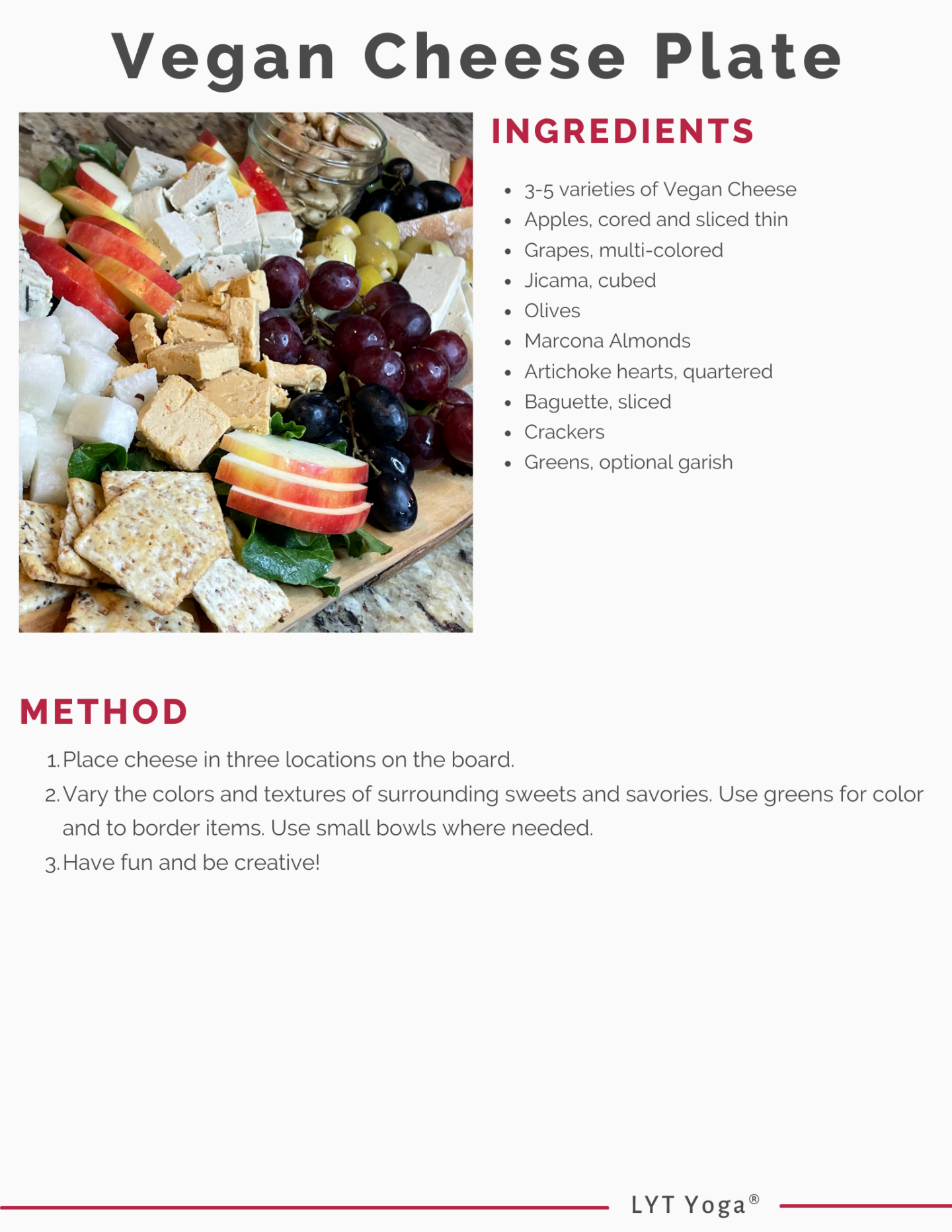
    Tis the season for eating and entertaining! Are you hosting family or friends or on appetizer duty over the Holidays? Try Rhonna’s Vegan Cheese Plate full of sweet and savory bites that make the perfect start to any snack or meal!


    Vegan Cheese Plate