Category: Blog Posts

  • Four Steps to Heal Your Tendinopathy

    Four Steps to Heal Your Tendinopathy

    by Thalia Wynne


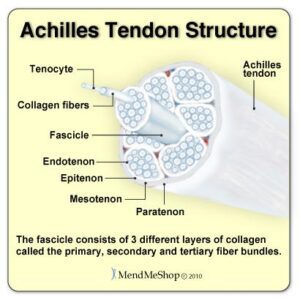
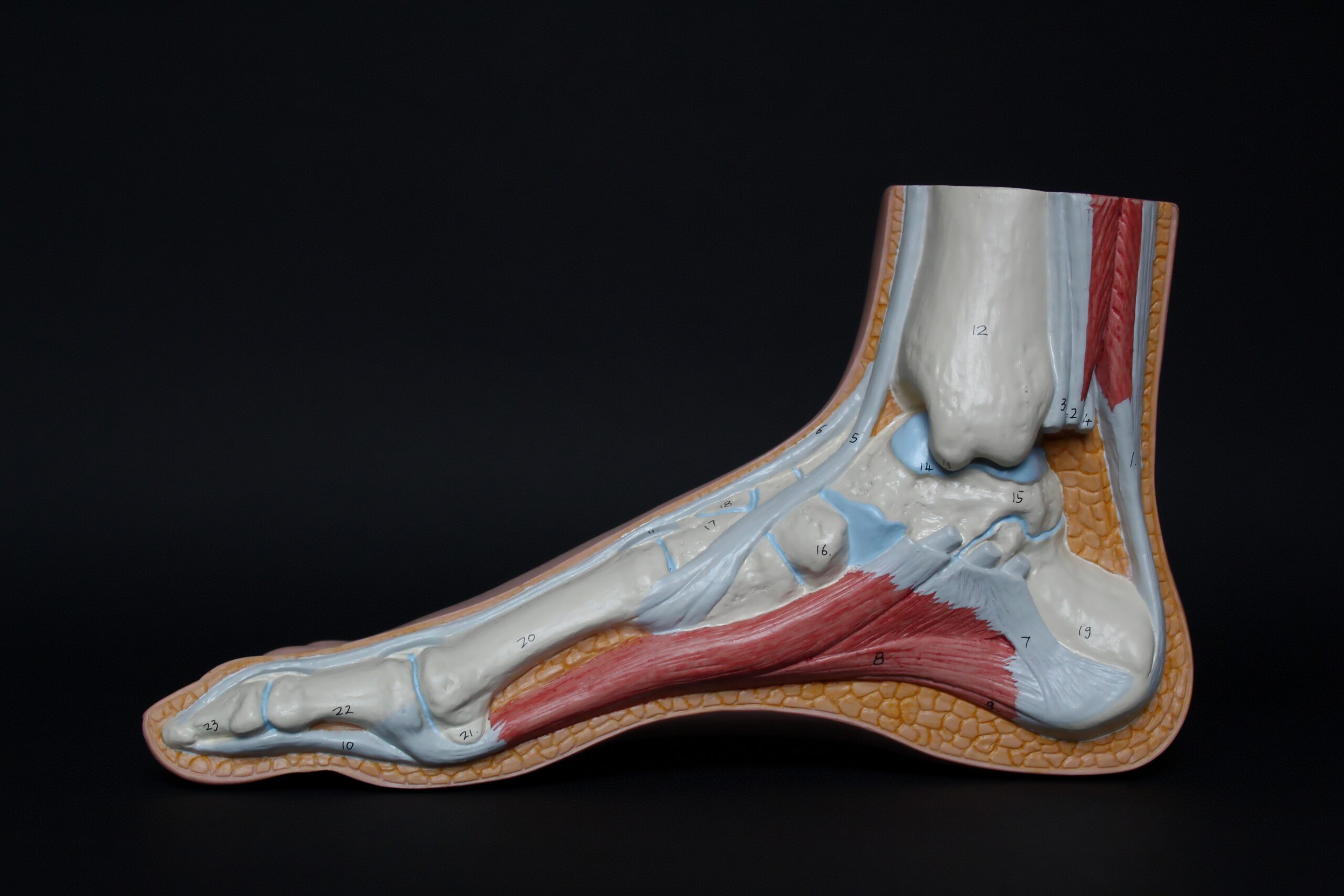
    Tendons are wonderful structures of dense connective tissue, largely composed of collagen, that help connect muscle to bone. Its job is to help transfer force from muscle to bone. When tendons lengthen, they store energy that then gets released through a stretch-shortening cycle. This is that springy feeling you might feel when you load up for a big jump. Tendons allow us to be adaptable in movement. 


    achilles tendon


    What is tendinopathy? Tendinopathy is an injury to the tendon or paratendon (the outer casing of a tendon) that is aggravated by mechanical loading which results in a tendon being less capable of sustaining repetitive tensile loading. It’s categorized as an overuse injury. The primary cause of tendinopathy is excessive load beyond the tendon’s usual capacity. Imagine you are carrying one grocery bag into your house, which you’ve done many times before. You decide to host a big party tonight and now suddenly you carry 50 bags at one time into your home. You get it done, but the unaccustomed stress aka the sudden increase in number of bags has left you sore and tired. You decide to do the same thing the next day, and the next day. You’ve now chronically overloaded yourself past your usual ability and are in a large amount of pain because of it. In this scenario, you are a tendon, and the 50 grocery bags represent excessive load. This type of experience is what leads to tendinopathy. This can happen from a sudden increase in training, a major change in training, or participating in an activity without any prior experience in that activity. Tendinopathy is a reactive inflammatory process that can lead to permanent degeneration if not checked. 


    It can be a simple injury to treat, and many people have pain relief with conservative management. Treatment includes pain management, progressive mechanical loading, biomechanics optimization, and a graded return to activity. A great place to start if you are experiencing tendon-related pain is to find local physical therapist to coach you through a unique treatment strategy for you. In general, here is an outline of what you might expect. 

    1. Pain reduction and load management 
      1. This stage includes use of isometric exercises to heal the tendon and avoiding positions of compression or aggravation.
      2. Patellar tendon example: 60 second (non-painful) wall sit 5x with a 1–2 minute rest between reps and avoiding deep squats and plyometric activity.
    2. Transition into heavy resistant training 
      1. This phase is important because it helps rebuild the capacity of the previously injured tendon. If we use our shopping example, you are training to handle those 50 grocery bags on a regular basis in this phase.  
      2. Patellar tendon example: heavy weighted goblet squat progressing from 15 to 6 reps over time for 3-5 sets, increasing weight over time. 
      3. Please note that this phase only works if the mechanics of the movement performed are not compromising the structural integrity of the tendon. This is where a LYT yoga practice would come in handy! LYT yoga teaches smarter, safer movement patterns that teach us to be more conscious in the way we load our bodies. This makes for some happy tendons ☺. 
    3. Plyometric training 
      1. This phase is where we increase the volume and intensity placed on the tendon to retrain tendon adaptability and refine the stretch-reflex response tendons were made to do!  
      2. Patellar tendon example: adding jumps and hops into your daily LYT practice. 
    4. Return to activity 
      1. Now we put the tendon to the test in a graded return to activity program specifically laid out to also include the previous phases for tendon health maintenance while returning to the desired activity. 
      2. Patellar tendon example: a walk:run return to run progression 2 days per week, heavy strength training 2 days per week, 1 total rest day, isometric exercises as needed, and a regular yoga practice to continue building better movement habits. 


    Tendons are great structures in our bodies that allow us to be adaptable in our movement patterns when trained appropriately. They are easily made grouchy when care is not taken to load them appropriately. This includes chronically underloading them! It’s a principle as old as time. Tissue responds to the demand that is placed on it. If we are not regularly placing an adequate load on these important structures of our body, we lose the adaptability that makes the human experience more enjoyable. Don’t we all want to maintain the ability to play with the dog, run with our kids, and dance just for the fun of it? Following the principles of tendon health explained in this article will help us do just that ultimately so we can live long, pain-free lives with better movement and happy tendons. 


    Happy movement and love always, 

    Thalia Wynne, PT, DPT, AT

    @thalialovee 


    Sources: 

    Image: https://aidmyachilles.com/achilles-tendonitis-injury/achilles-tendon-anatomy-function.php 

  • Upper Extremity Nerve Glides

    Upper Extremity Nerve Glides

    If you’ve ever heard me talk about nerves, I like to describe them as telephone wires. I visualize how these wires have a decent amount of slack on them as they traverse from pole to pole, transmitting countless conversations along the way. I will see birds come to perch and wonder if there’s a breaking point to where the slack needed to transmit the electrical impulse is no longer available due to the weight of the birds along the way. The nerves in our bodies can be visualized in much the same way. They need freedom to move and glide, with enough just slack to allow the neural impulses to travel from the brain to the body and back. It’s not uncommon to have areas of impingement along these nerves, which can cause a whole host of issues including sensory changes, weakness, and pain. I imagine those areas of impingement as birds sitting on that wire, taking up slack and causing tension. These “birds” can be anything from disc bulges, bone spurs, tight muscles, poor posture, to restricted soft tissues, etc. It’s my job as a physical therapist to remove as many of these birds from the wire, especially if they’re causing pain. 


    A common place people will experience nerve impingement symptoms is in the neck and arms. We have a bundle of nerves coming from our neck into our upper extremities called the brachial plexus, which exits the neck and splits into five nerve branches in the arm: the axillary, musculocutaneous, median, radial, and ulnar nerves. For the purposes of this PT Corner, we are just going to discuss the median, radial, and ulnar nerves, as these are the nerves we most commonly treat when it comes to nerve impingement syndromes. 


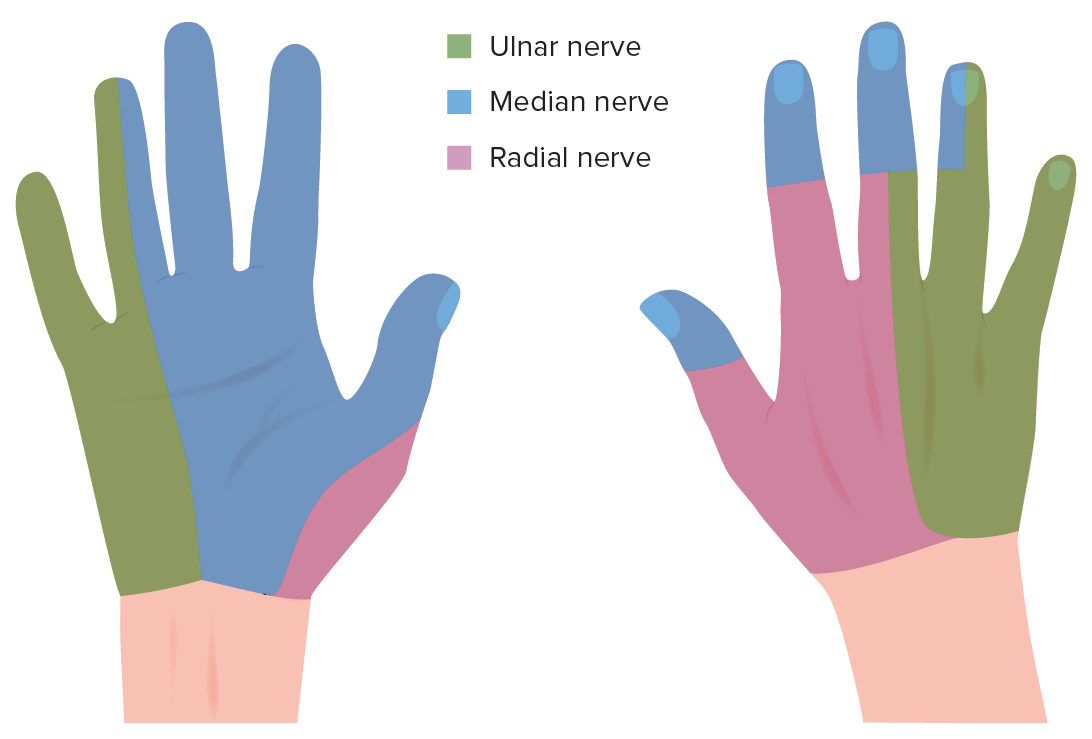
    The median nerve runs down the inside of the arm and through the center of the forearm and wrist. It is probably the most well-known of the three, as when it is impinged, people may develop something called carpal tunnel syndrome. The median nerve provides sensation to the palm of the hand, palm side of the thumb, index, middle, and half of the ring finger, and ends of the back side of the thumb, index, middle, and half of the ring finger. It innervates the muscles that pronate the forearm, flex the wrist and fingers, and abduct the hand. 


    The radial nerve runs more along the back of the arm before wrapping around the thumb side of the forearm to the thumb side of the hand. It provides sensation to the posterolateral upper arm, the posterolateral forearm, lateral side of the base of the thumb, and thumb side half of the back of the hand, and back side of the thumb, index and half of the middle finger. It innervates the muscles that flex and extend the elbow, supinate the forearm, extend the wrist and fingers, and move the thumb. 


    Finally, the ulnar nerve runs along the inside of the arm, inside of the elbow, and down the pinky side of the forearm to the pinky side of the hand. It’s the nerve you feel when you hit your “funny bone”. The ulnar nerve provides sensation to the pinky side of the hand, front and back, including the entire pinky and half of the ring finger. It innervates the muscles that flex the wrist and fingers, move the pinky, and adduct the thumb.


    Nerve gliding or mobilizing is one way to take “a bird off the wire”, by restoring homeostasis in and around a nerve. It is believed to decrease pain caused by entrapment of a nerve by encouraging movement between nerves and their surrounding structures. These nerve glides can be manual techniques performed by a healthcare professional on a patient or by the patient themselves. Studies have shown that mobilizing a nerve can decrease edema (swelling) and improve fluid dispersion within a nervous structure, reduce pain, and reverse the increased immune responses following a nerve injury. When mobilizing a nerve, you do not want to irritate or stretch the nerve. Just imagine that you are flossing the nerve along the path it follows from the head to the arm, freeing up any areas of entrapment. Here are some simple beginner nerve glide exercises for the upper extremities, which can be done on your own:


    • Median Nerve Glide – begin with your arm at your side, palm facing forward; you can place the opposite hand on the space between your neck and shoulder as an anchor; slowly flex and extend your wrist. Repeat 10-20 times.
    • Radial Nerve Glide – begin with your arm at your side, palm facing back; you can place the opposite hand on the space between your neck and shoulder as an anchor; extend the arm slightly behind you; slowly flex and extend your wrist. Repeat 10-20 times.
    • Ulnar Nerve Glide – extend your arm out to the side with the elbow bent to 90 degrees and your palm facing your face; you can place the opposite hand on the space between your neck and shoulder as an anchor; slowly flex and extend your wrist. Repeat 10-20 times.


    You can find a demonstration of these glides and some more advanced versions on our YouTube channel by clicking the link below! As always, seek the help of a physical therapist or other healthcare professional if symptoms progress or do not improve. Let’s keep those nerves moving and grooving so I can keep seeing you on the mat! 


    Xoxo,

    Kristin

  • Vegan Chocolate Covered Strawberries

    Vegan Chocolate Covered Strawberries

  • Exercise and the Nervous System

    Exercise and the Nervous System

    by Ashley Newton, PT, DPT and LYT Instructor and Educator


    We depend on our nervous system to help us interpret the world around us. Our autonomic nervous system is the part of our body that gives us ‘fight or flight’ or ‘rest and digest’ responses. Fight or flight responses are directed by the sympathetic nervous system while rest and digest responses by the parasympathetic system. However, in our modern day world, this part of our nervous system is challenged in an unprecedented way, and the task for us is to figure out how to make sense of our body’s reactions to everyday life. 


    Fight or flight responses can be as obvious as running away from a perceived threat to feeling your heart race before a big exam. It is our body’s way of coping with stressors to ultimately protect our bodies and ensure survival. Sometimes, the switch in our brains for this response gets stuck in the ‘on’ position. Meaning, the body is trapped in a state of fight or flight, preparing for threats and guarding the body. When the body is in this state, muscles tense and our body diverts energy going into processes like digestion. If the muscles contracting to protect the body do not turn off, they are in a constant state of overactivity. Now, we know that everything in life requires balance and the same goes for muscle activity. Muscles contract and lengthen to provide our body with stability and support. If they are constantly contracting, the ability of that muscle to do its job is diminished and pain can be generated in the muscle itself in the form of trigger points. Common places where the body guards and generates muscle tension include: jaw, shoulders, abdomen, and pelvic girdle. 


    Movement and Adaptability

    With a sympathetic nervous system stuck in the ‘on’ position, our ability to be adaptable is compromised. In all exercise, we need to be able to stabilize our trunk with our core – all muscles ranging from the level of the throat to the base of the pelvis at the pelvic floor. A heightened nervous system biases our body to use compensatory strategies to figure out movement, strategies that over time, can lead to pain and dysfunction. However, we can use exercise as a tool to change the state of our nervous system and train the brain to be adaptable in response to input. Studies have shown that cardiovascular activity increases parasympathetic nervous system activity while decreasing sympathetic activity. Meaning, aerobic training decreases the influence of the fight or flight/guarding process and increases the amount of input from the rest and digest part of the nervous system. Thus, we can think about movement and exercise not only to train the brain-motor connection but also the nervous system. 


    In yoga class, we have all been confronted with the option to skip savasana. Whether it be because of time, because we have trouble sitting still, or what have you, I want to make a case for savasana and its important role in nervous system retraining. We can think about savasana in terms of our ‘recovery’. At this time when we have stopped dynamic movement, the parasympathetic nervous system gets reactivated and the sympathetic nervous system gets deactivated, causing a decrease in our heart rate. (Freeman et al, 2006). Savasana is the dedicated time in a yoga flow for this process and to train our nervous system’s adaptability.  Ultimately, our body gets a chance to flip on the switch of the parasympathetic system while slowly dimming the switch of the sympathetic system to shift the body from an up-regulated (fight or flight) state to a down-regulated (rest and digest) state. 


    Quick Tips for Training the Nervous System

    As a pelvic health physical therapist, one of the mainstays of patient education is on nervous system functioning and helping to reframe our brain’s response to input so that it is not interpreted as pain in the body. Yoga as a part of our everyday movement regimen is ideal for overall health and wellness, but we know that we also need tools to be able to carry us through the day and prevent our nervous system from learning maladaptive habits. When you feel that your nervous system might be getting agitated, try a couple of these exercises below and see how you feel!

    • Tongue Posture and Breathing: Move the tongue so that it sits behind the teeth. Imagine a small raspberry is resting at the midpoint of your tongue and you are touching the raspberry to the soft palate. Inhale through the nose and exhale through the mouth for 5 breaths.
    • Hum: Hum your favorite song or chant a sound that resonates. The vibration from humming helps to stimulate our vagus nerve, a nerve that is intimately connected with our parasympathetic system. 
    • Cat/cow: Beginning in hands and knees, inhale to tip the pelvis forward (cow pose). Exhale to tip the pelvis backward (cat pose). Focus on expansion at the back of your body. Repeat. Oscillatory motions are soothing for the nervous system and this exercise focuses on oscillation and breathing!
    • Legs up wall/legs supported on chair: A gentle inversion, this posture unloads your pelvic girdle. Focus on breathing and heaviness in the legs and pelvic girdle with this pose. Remember that the pelvic floor musculature can tense and guard against perceived threats so giving it a chance to release helps to tap into the parasympathetic system.


    I am excited to share tips and education with you in LYT newsletters to come! Follow me on Instagram @ashleynewton_dpt and @activcoreprinceton_pelvic for weekly content on pelvic floor, the nervous system, yoga, and wellness!


    Xoxo, 

    Ashley 


    References

    Freeman, J.V., Dewey, F.E., Hadley, D.M., Myers, J., and Froelicher, V.F. (2006). Autonomic nervous system interaction with the cardiovascular system during exercise. Progress in Cardiovascular Diseases, 48, 343-362.


  • How to Adapt Your Yoga or Movement Practice for Pregnancy – Volume 1

    How to Adapt Your Yoga or Movement Practice for Pregnancy – Volume 1

    by Kaitlin Acharya


    Welcome! 


    First & foremost, I assume you are here because you are either thinking about getting pregnant, trying to conceive (TTC), are currently pregnant or you know someone going through one of these life stages and want to better support them. If you are still thinking about pregnancy, I hope this series shows you that you can maintain a movement practice and its benefits while pregnant. If you are TTC, hang in there! I personally know how long it can take and how frustrating it can be. If you are pregnant, I want to give a huge congratulations! If you are a support person (maybe a partner or close friend or family member), good on you for checking this out to help your loved one go through this special, but often uncertain time in their life. 


    Should I Exercise While I’m Pregnant?

    There tends to be two groups of pregnant people interested in movement and exercise – those who have a consistent and regular movement routine and want to continue it during pregnancy and those who want to start exercising or moving because they are pregnant and recognize it could have benefits. This series will focus more on the former group, but that doesn’t mean it won’t be unhelpful to the latter. 


    You might be surprised to learn that research has shown exercise during pregnancy to have no real effect on the health of the baby. So if you are looking to start an exercise or movement routine for the health of your baby, statistically it may not have the desired effect. This is also good news for people who want to exercise during pregnancy but cannot for some reason (placenta previa for instance is a condition that doctors will often recommend very limited movement for the duration of pregnancy) – if you are worried about how losing most of your movement routine will affect your baby, rest safely that it likely will not. However, exercise and movement do have benefits for mom. Exercise and movement improve mental health, which can have physiological effects on the body and therefore on your baby. In addition, exercise and movement performed correctly and with a focus on breath and body awareness (more on this below) can lead to a shorter and more efficient labor and improve recovery of your pelvic floor postpartum. Furthermore, yoga has been shown in a couple of small studies to reduce pain during labor and lead to shorter stages of first-stage labor.** Again, these studies were small, but as a yoga teacher and practitioner myself, I can attest to the power and strength that yoga brings to the body and mind – all of which you will need throughout your pregnancy journey. 

    **Everything (except the sentence where I state my own “argument”) mentioned in this paragraph before the double asterisks is from Emily Oster’s book “Expecting Better” (thank you to one of my best friends, Lindsay, for lending to me. As a self-proclaimed data nerd, this book was awesome.) Emily evaluates the data behind accepted rules of pregnancy to better inform decisions from what to eat to the efficacy of prenatal testing. The book was last updated in 2019, so there are possibly newer studies that have been done on the effects of exercise during pregnancy.


    More specifically, the LYT™ method is specially focused on posture and core – two areas that suffer greatly during pregnancy. Posture can affect the position of the baby as you get closer to delivery, possibly reducing the need for interventions during labor, and regaining core strength postpartum is especially important for mom’s health. A weak core can affect the body in many ways, the most “popular” of which being low back pain and specifically postpartum, incontinence issues due to the pelvic floor (part of the core!) being weak as well. I don’t think anyone wants to be dealing with low back pain, wetting your pants when you cough, sneeze, or laugh, AND a new baby on top of it all.


    Getting Started

    Pregnancy is a huge stress on the human body. Exercise and movement are also stressors to the body so you should expect them to look and feel a lot different than they did before you were pregnant. In general, the intensity will be toned down, but there are still so many ways to move comfortably and safely. Also, please always make sure to check with your doctor before engaging in physical activity.


    Finally, before we head into looking at the first trimester, breath and body awareness are key to safe movement during (and after) pregnancy. If there was ever a time to get more in tune with your body, it is ideally before you get pregnant but if not, certainly when you are pregnant. For my fellow athletes out there with the “no pain, no gain” attitude ingrained in them – this is not the time to listen to that voice! (nor is there ever a time to listen to it, but that’s a story for a different blog post). To ensure a speedy and healthy recovery post-partum, it is crucial that you lower intensity when your body tells you to, which is often in the form of pain. This doesn’t mean you can’t move at all, but maybe lower the weight or stick to bilateral movements instead of unilateral movements or maybe it means going for a gentle walk instead of the cycling class you had planned. Learning how to breathe properly will help increase your body awareness and prepare you for postpartum return to movement. All of which I cover in my classes and private sessions. Stay tuned for the next post to explore movement in the first trimester.

     

    1st trimester

    Congratulations on your pregnancy!


    The first trimester is often the toughest trimester for many pregnant people due to the immediate increase in hormones that start to change and affect your body. Motivation to move during these three months may be difficult, but it can also help you to feel better, if only for a few hours. We’ll start first with the core and breath, which I believe set the foundation for a healthy movement practice while pregnant and also postpartum. As I briefly mentioned above, movement during pregnancy is not just for your present body – it is also for your postpartum body so that you can feel your best and be your best for your new little one and others.


    Start Core & Breath Work Now

    If you’ve never learned how to engage your core correctly, now is the time. The LYT™ method teaches core and breath in tandem, which makes perfect sense when you look at the roles the diaphragm and the pelvic floor play in our core container. I like to teach what is often called diaphragmatic or 360-degree breathing. I actually have another blog post about this type of breathing – check it out!


    Learning how to activate your core properly now, at the beginning of your pregnancy, will set you up for success at the end, for labor, and also postpartum. As your body’s posture continues to change throughout the next 9 months, your knowledge and awareness of your core and breath will help you maintain as neutral of a posture as possible, which will limit some of the typical 2nd and 3rd-trimester aches and pains that you may experience later on.


    A note on baby safety – core work and yoga do not cause miscarriage, however, the risk for miscarriage is highest during the first trimester. This does not mean you shouldn’t move or do core work, but do what you feel comfortable doing.


    Practice What Feels Good

    Speaking of doing what you are comfortable with, you may not be comfortable doing much of anything. You may be feeling really weak and nauseous or extremely tired or any of the other fun first trimester symptoms that many pregnant people experience. Listen to your body and do what feels good, which might change day-to-day. Personally, there were days when I didn’t want to move, but when I did I felt better afterwards, and there were days when I could not even get up off the couch and movement did not happen and that is ok! First trimester for me was about learning to let go of expectations and control*, almost as if my body was preparing me for first-time parenthood!

    *In all honesty, still working on the relinquishing control thing. 😆


    If you do choose to move, here are some things to consider. Your abdominal muscles are likely not going to be stretched out at this point to cause any damage to the abdominal fascia when doing core work, which is another reason why I suggest learning core control now so you can feel what it is supposed to feel like with a relatively normal core structure. However, you may have a lot of bloating due to hormones, heartburn, and/or pelvic sensitivity. Core work can help with bloating, so can yoga, but you may notice inversions like Down Dog, Dolphin, and Handstands or even just lying flat on your back worsen your heartburn so you may want to avoid those positions. Lying on your stomach is still pretty safe since the baby and your uterus are so small at this stage, but it may not feel right for you and you can always stay on your hands and knees. It’s also generally a good idea to avoid contact sports or activities where your risk of injury is typically high.


    Speaking of handstands and other balancing poses or activities, you may notice your limbs feel more loose and even a bit more wobbly than usual. This is due to the hormone relaxin that is already hard at work relaxing your ligaments to prepare the body for your growing baby and birth. This and your center of gravity already beginning to change all make balancing poses more difficult. Pre-pregnancy I did handstands every day – I love them. But probably around 10-12 weeks I stopped doing them because my wrists just didn’t feel stable enough and I did not want to risk falling and hurting myself or my baby. If you’ve been handstanding since you were 5 years old in gymnastics, then maybe you will feel comfortable continuing throughout pregnancy, but I advise against pushing yourself to do something. If you’re already questioning whether you should do a movement or activity, you probably shouldn’t.


    Stay tuned for second-trimester tips coming soon!


    by LYT teacher Kaitlin Acharya

    Website: www.yogakaitlin.com

    Instagram: @yogakaitlin
  • “Sciatica” or Gluteal Radiculopathy?

    “Sciatica” or Gluteal Radiculopathy?

    by Sarah Kingsley


    Have you been diagnosed with “sciatica?” Although a common back issue, many doctors are quick to diagnose these vague back, hip, and leg pains as sciatica when it may not be the case. Much less discussed, and susceptible to irritation – if not more so in modern society – are the superior and inferior gluteal nerves.


    Sciatica is a term coined for pain that radiates along the path of the sciatic nerve. This nerve begins in your lower back L4-S3, branches through your hips and buttocks and down into each leg, behind the knee, and into the calf.  According to Mayo Clinic, “sciatica most commonly occurs when a herniated disk, bone spur on the spine or narrowing of the spine (spinal stenosis) compresses part of the nerve, causing inflammation, pain and often some numbness in the affected leg.” Symptoms include pain that radiates from the lower (lumbar) spine to the buttock and down the back of the leg. The pain varies in intensities from a mild ache to a sharp, burning sensation, excruciating pain, or jolt. It can be aggravated with prolonged sitting, coughing, and sneezing.  The sciatic nerve innervates the hamstring muscles that flex the knee, causing weakness of bending the knee when irritated. 


    The culprit of most back pain-related issues is poor posture! Sitting or standing for prolonged periods in a rounded spine position can lead to compression and restriction in the muscles, joints, and disc spaces. When going to stand or change positions quickly with shortened hip flexors or hamstrings, the back overly extends in compensation, compressing the sciatic nerve. 


    Performing any lifting tasks with poor body mechanics and lack of core activation to support the structures around the spine can irritate the nerve. This action overly activates the spinal extensors when coming back upright, as opposed to utilizing the gluteals, leading to disc compression that can send symptoms down into the leg. Sitting, standing, or walking with your toes pointed outwards and hips externally rotated can also decrease piriformis muscle length. For most people, the sciatic nerve runs directly through this muscle and when restricted, can lead to nerve irritation.


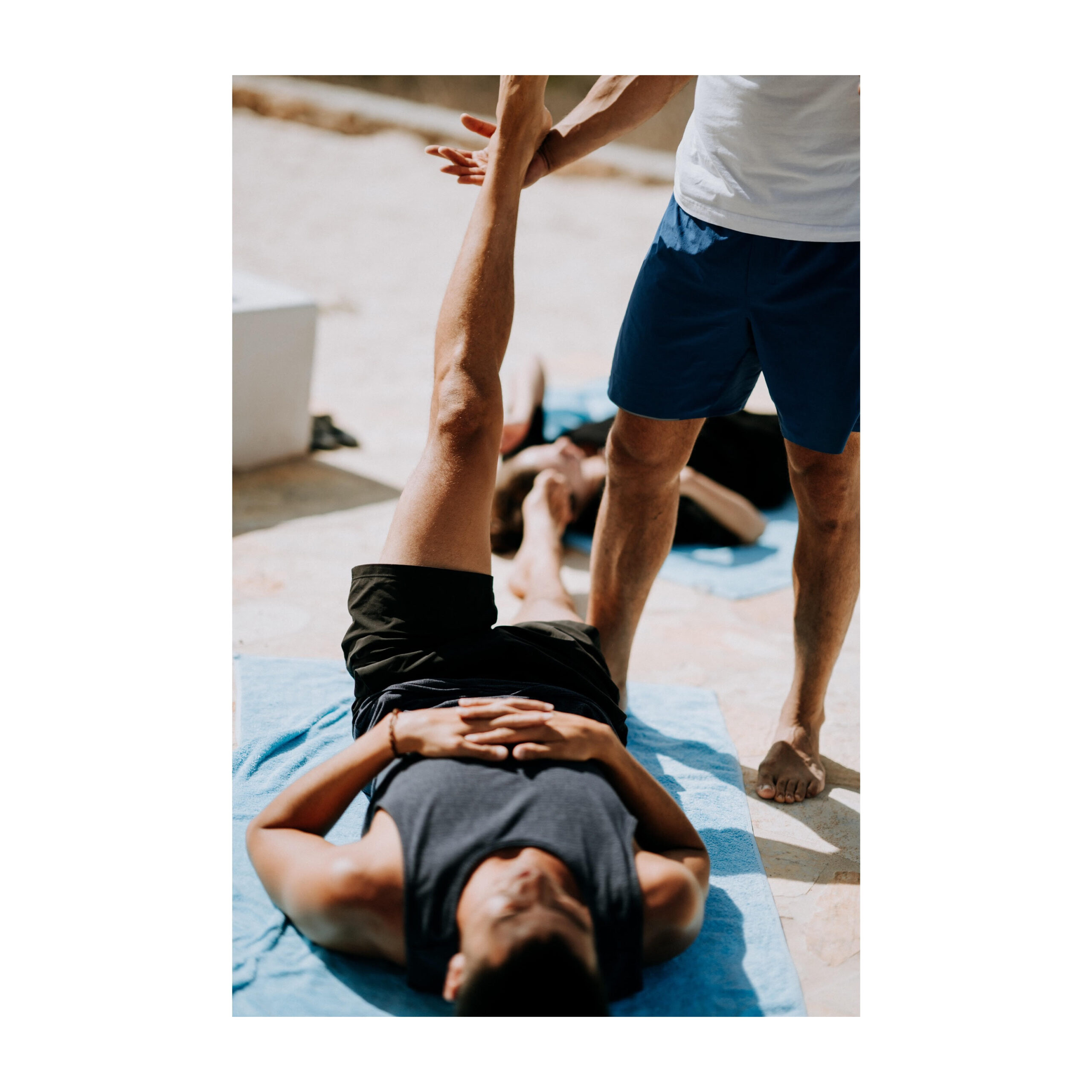
    Treatment includes variations of sciatic nerve glides/flossing techniques to increase circulation to the nerves and decompress the tissues that surround the joints and muscles. These techniques include stretching and soft tissue mobilization of the piriformis, hamstrings, and hip flexor muscles. Forms of spinal traction can also be useful, decreasing pressure on the nerve done manually by a therapist, use of a traction device, or by using one’s own hands on the thighs as done in many of our LYT classes.


    For effective management, the decompression must be combined with retraining the activation of the deep core and gluteal musculature to prevent excessive strain and overuse of the spinal extensors. Exercises to target these muscles and retraining the hip hinge strategy for squatting, bending, and lifting is key to keep the back and sciatic nerve happy.


    In severe cases, a cortisone injection can decrease the nerve inflammation. However, the effects of these injections are short-lived and come with side effects including bone degradation. Learning the tools to manage these symptoms with proper exercises and movement patterns is what will ultimately promote long-term pain relief and symptom management.


    The superior and inferior gluteal nerve branches off just before the sciatic nerve from L4-S1. They supply the gluteus maximus, medius, gluteus minimus, tensor fascia lata, and piriformis muscles that are responsible for hip extension, hip abduction (moving out to the side), internal and external rotation, and flexion. Symptoms often include difficulty climbing stairs and rising from a sitting to a standing position. Other symptoms include a deep aching pain and a “trendelenberg gait” pattern, which is when one’s hip drops down to the side.


    This injury can often occur after a hip replacement surgery or trauma. There is a higher risk of injury to the superior gluteal nerve when the hip is placed in lesser degrees of flexion and adduction during surgical nailing. Lack of proper strengthening to the hip abductor muscles and entrapment or restriction of the piriformis muscle have also been known to cause these symptoms. The immense amount of time we spend in the seated position often leads to compression and deactivation of the gluteal muscles and the nerves that supply them.


    Gluteal nerve irritation is treated very similarly to the sciatic nerve, focusing on deep core and gluteal activation, proper body mechanics, and hip hinge retraining. However, a greater emphasis is placed on mobilizing the hip joint and the surrounding tissues to increase range of motion for all hip movements to reduce typical compensations at the back and pelvis. Compensation at the pelvis can contribute to a restricted quadratus lumborum (which is our hip hiking muscle), so manual and stretching release techniques to this region can also be useful. Opening of the joints and soft tissue spaces, combined with strengthening the gluteals and hip muscles for good hip movement without pelvic compensation is key for long-term pain management.


    Be sure to check out Kristin Williams’ sciatica series on LYT daily and Lara’s Calm the QL Quarrel class for some ideas!

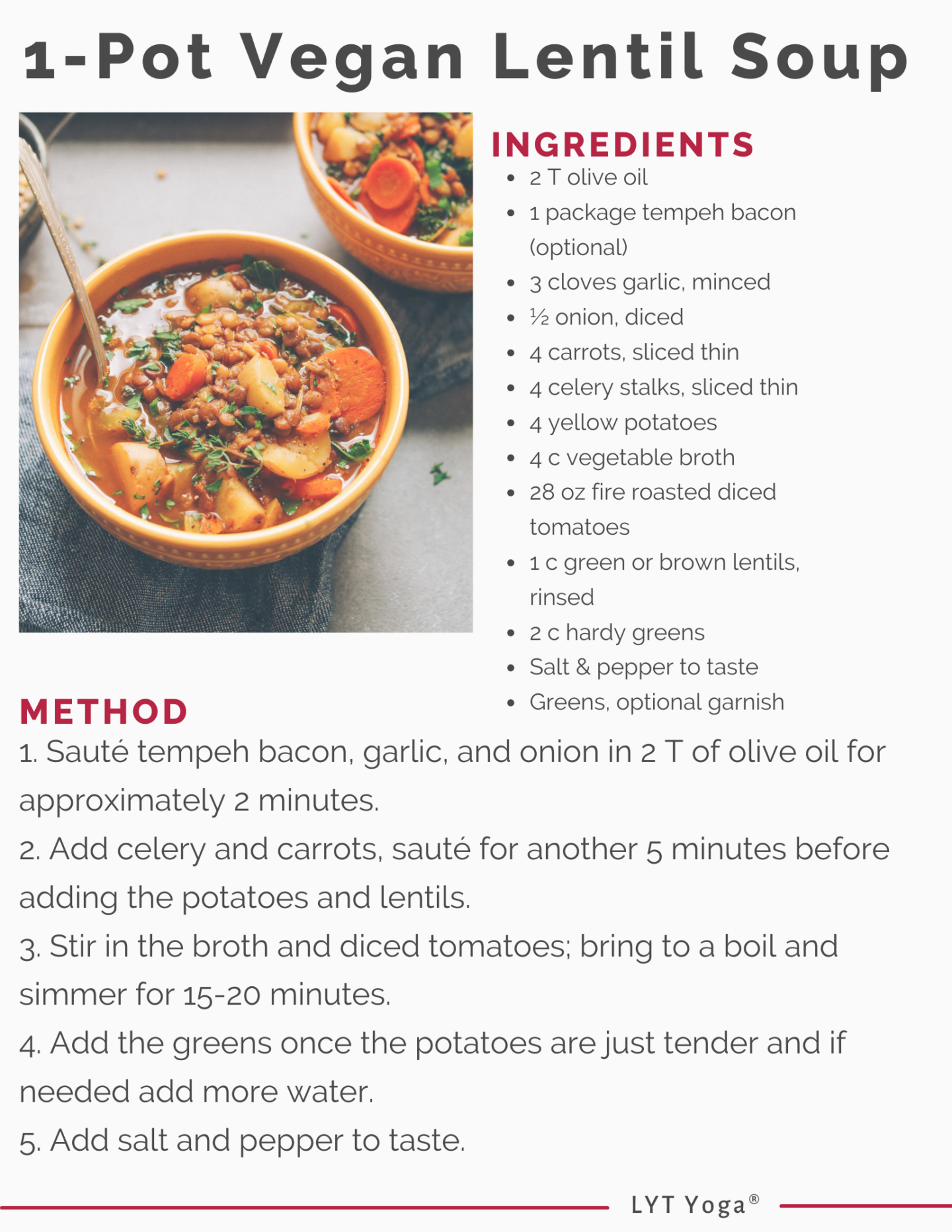
  • 1-Pot Vegan Lentil Soup

    1-Pot Vegan Lentil Soup

  • RICE vs. MEAT

    RICE vs. MEAT

    When it comes to athletics, nothing can be more devastating than an injury. Being sidelined has not only physical, but emotional effects as well. Athletes want to get back on the field or court as soon as possible. Many physicians still prescribe the decades old remedy of RICE – rest, ice, compression, elevation – despite more recent research demonstrating this is not the treatment method of choice. In fact, Dr. Gabe Mirkin who originally coined the term in 1978 publicly renounced his position in a 2015 publication on his personal website.


    Ice, or cryotherapy, has been used in medicine for years to bring down inflammation in the area of the injured soft tissue structure. However, the literature in recent years has found that when ice is applied for prolonged periods, the lymphatic vessels increase their permeability and fluid flows from their walls, resulting in a greater degree of swelling. Ice has also been shown to delay the healing process, as it inhibits the natural inflammatory production of insulin-like growth factor, which is an important stimulant of protein synthesis in muscle. 


    Evidence for compression and elevation is equally fallible. In the case of compression, it is mostly anecdotal. A 2012 study by Van der Bekerom et al concluded that “no information can be provided about the best way, amount, and duration of compression” for the treatment of ankle sprains. Elevation has been used clinically to increase venous flow from the extremity back to the circulatory system to keep swelling to a minimum. However, once again, there is no high level evidence that this is true.


    Finally, there is rest. Rest has long been prescribed for loads of injuries, including minor ankle sprains to lumbar disc herniations. For healing to occur in the body, the lymphatic system needs to move out the metabolic waste products that accumulate in the area of the tissue trauma and relies on both intrinsic and extrinsic pumping mechanisms to do so. Surrounding muscle contractions create the extrinsic mechanism, making movement a key component to healing. As they say, if you don’t use it, you lose it. With rest and inactivity comes atrophy, where the tissues of the injured area become weaker, less functional, and more susceptible to injury.


    The push towards a more active recovery is growing in popularity in medicine. In fact, a new acronym that is sweeping the medical and athletic training fields is a far cry from RICE…MEAT – movement, exercise, analgesics, treatment. The first step is movement through a pain free range of motion as early as possible. These movements will both help move fluids from the tissues and load the injured tissues lightly, allowing them to heal properly. The next step is exercise. This should be done slowly, methodically, and also in a pain free range. For injuries to tendons, eccentric or lengthening exercise is best. Since pain can limit one’s ability to move, analgesics in the form of acetaminophen, or Tylenol, can allow movement through a fuller range of motion. Naproxen (Aleve) or ibuprofen (Advil), both NSAIDs, may delay the recovery process as they slow the natural inflammatory response of healing. Other naturopathic forms of analgesia may help as well. The final step is treatment, which is a rather broad category. It can include formal physical therapy or more invasive therapies such as prolotherapy or platelet-rich plasma injections. But no matter, in all four stages of this treatment paradigm, movement is key. So while RICE may be applicable in some instances during the first 24 hours following an injury, current studies are confirming that movement is the best medicine. LYT Yoga® is one of the ways I utilize movement for healing each and every day! I hope you’ll join me on the mat for some movement medicine soon!


    Xoxo,

    Kristin