Tag: movement

  • The Benefits of Using Yoga Blocks in Your Movement Practice

    The Benefits of Using Yoga Blocks in Your Movement Practice

    The Benefits of Using Blocks and props in Your Movement Practice

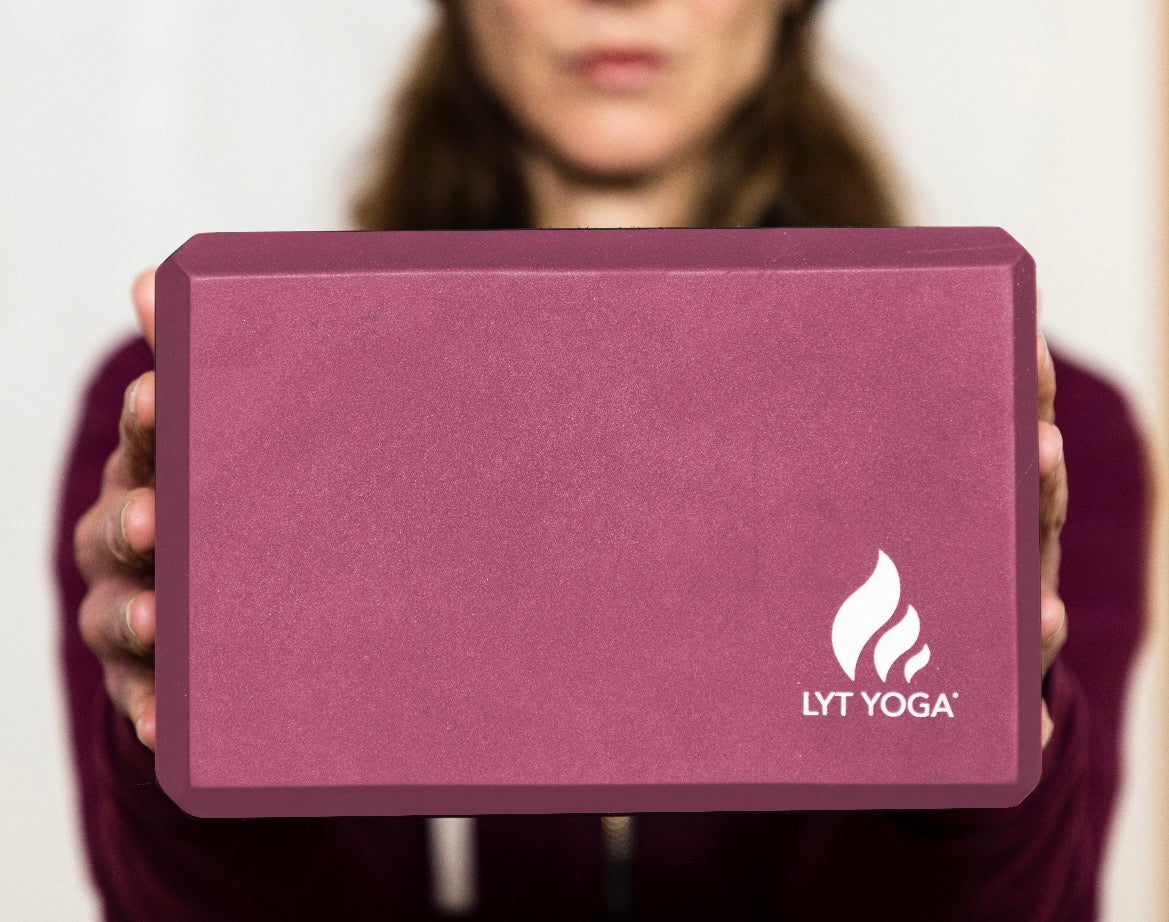
    Yoga blocks, often made of foam, cork, or wood, are more than just tools for beginners or those with limited flexibility.


    These versatile props can bring numerous benefits to your movement practice, no matter your level of expertise. We use them in every class in LYT and I can’t imagine a practice without having yoga blocks to enhance the experience!


    Why use blocks?


    For those who are new to yoga/functional training or have limited flexibility, blocks can act as an extension of the arms, making it easier to reach the floor in poses like Down Dog or bent knee standing split/standing L pose. By bridging the gap, blocks help in promoting better alignment, expansive breathing, and postural training. Yoga blocks can be used as a support system, especially in poses that require balance or strength. For instance, placing a block under the hand in Twisted Crescent, Half-Moon, or under the hips in seated twist pose can help stabilize the position, creating more space for the hips and spine, and thereby reducing strain on the joints and surrounding structures while also promoting more core activation. In LYT, we are huge believers in alignment! Alignment is not rigid or “ideal”; it is placing your bones and joints in a more optimal position to set up improved responsiveness in motor firing (how muscles activate to move, stabilize, or lengthen). Proper alignment is crucial in yoga and functional movement to prevent injuries, improve neuromuscular function, and ensure efficiency. Blocks can assist in positioning the body so that the joints and muscles work in greater harmony. 


    Importantly, blocks allow for more individualization. Everyone’s body is different, and sometimes a pose or movement that works for one person might not be comfortable for another. Blocks can be used to adapt poses to fit individual needs, ensuring a comfortable and effective practice. Blocks additionally help with transitions, allowing movement between poses to feel more possible and graceful without losing form.


    But there is more! (that’s how awesome blocks truly are 🙂


    As we experience in our LYT RESET®, blocks create a deeper connection to core! The block can be used to activate pathways into and through the core cylinder such as in bridge with a block, where the light hug of the block stimulates the hip adductors and pelvic floor connection. Utilizing a block in various ways can heighten body awareness, sparking core activity that might have been a bit more dormant without the block. The block becomes a tactile cue, reminding you to engage specific muscles or adjust certain alignments. 


    When I am creating a class where I want to utilize blocks, my innovation is in overdrive! Blocks provide so much variety, challenge, and support; it makes the practice exciting and vibrant, opening the door to enhanced mobility, stability, alignment, and overall progression and FUN!! Whether you are new to a movement practice or looking to upgrade your body-brain connection, yoga blocks can be transformative to your routine. Check out our LYT classes to FEEL for yourself how blocks are indeed a game-changer!

  • 688. Wednesday Q&A: Different Leg Lengths, Diastasis Recti, & the Pelvic Floor

    688. Wednesday Q&A: Different Leg Lengths, Diastasis Recti, & the Pelvic Floor

    In this Wednesday Q&A, we answer your questions about practicing yoga with different leg lengths, diastasis recti, and relaxing the pelvic floor.


    • I got a really good question from a new student. She has different leg lengths that in daily life is adjusted by different thickness of the soles of her shoes. However, she’s questioning how to take this into account and how and where to adjust when doing yoga. What would you advise in this case? 
    • I’m 38 years old and currently 18 months postpartum after baby number two, I’m dealing with diastasis recti. I probably always had it a bit, but worsened it a lot after baby number one when I started my normal yoga practice about four weeks postpartum. My midwife realized the separation got bigger after a checkup, about four months postpartum by then. After that, I continued my yoga practice as normal, but did some physiotherapy. My belly wasn’t as flat as before pregnancy, but that’s okay after a baby and I had no other problems. After baby number two, I was very aware of the D.R. issue and tried to do everything right. No normal yoga – any kind of backbend, chaturanga, one-legged, and so on. But the separation was five fingers and only went down to about three fingers, max. I tried, as I mentioned, to avoid many kinds of movement which is very hard for someone who loves to move. Is there something that can be done? Can I reverse this? 
    • I feel like I’m strong in my pelvic floor. I don’t leak. I can do all kinds of exercises. But I see all over Instagram and social media this call to relax, relax, relax your pelvic floor and now I feel confused.


    To learn more, and for the complete show notes, visit: lytyoga.com/blog/category/podcasts/


    Do you have a question?


    Sponsor:

    Visit relationshipschool.com/lara to get 50% off your first month of relationship coaching.


    Follow the podcast:

  • ‘Did my Vagina Just Fart in Yoga Class?’

    ‘Did my Vagina Just Fart in Yoga Class?’

    ‘Did my Vagina Just Fart in Yoga Class?’

    by Ashley Newton, PT, DPT

    Vaginal flatulence, vagina farting, queefing – all the same thing and can take you by surprise when you are moving through a yoga class.


    So what is vaginal flatulence? Is it actually gas like what passes through your rectum?


    Short answer: vaginal flatulence is when air that is trapped in the vagina is released. It is not created by digestion but rather by air that gets trapped as we move through space. 


    So why does it happen?? 


    Air regularly moves in and out of the vaginal canal. It is normally silent when the balance between vaginal pressure, abdominal pressure, and pelvic floor closure is balanced. However, air can get trapped in the canal as a result of poor pressure management and/or changes in the vaginal tissues. 


    Lubrication and Moisture


    The vaginal tissues are androgen-receptive aka hormonally influenced tissues. As folks with vaginas age, the lubrication at the vaginal opening decreases. However, this lubrication can also change following the birth of a baby, following radiation, as a result of medication, and hormonal changes related to thyroid dysfunction. Long story short, this is not an ‘aging problem’. It can happen at any age! This decrease in moisture results in decreased closure at the vaginal opening. Air can then escape and vibrate the tissues, making an audible sound akin to a fart. Vaginal moisturizers and hormonal creams can help to restore moisture to the vagina.


    What can you do to help it? Vaginal moisturizers are over the counter whereas hormonal creams are prescribed by a medical professional.


    The Diaphragm Paradox


    The pelvic floor musculature and the thoracic diaphragm move ideally move in harmony. When we inhale, the pelvic floor and diaphragm descend. On exhalation, they lift together. However, this relationship can change and the diaphragms can begin to move in opposition to one another. So, as the pelvic floor lifts, the thoracic diaphragm drops. As a result, the pelvic floor pulls more air into the vagina. This air becomes trapped and on the next phase of the breathing cycle when the pelvic floor drops, that additional air is pushed out and can result in a vaginal fart. 


    What can you do to help it? Working on coordinating your breathing so that as you inhale, you are able to feel the pelvic floor drop and as you exhale, feel the pelvic floor lift is the first step to improving coordination and regulating pressure changes. Remember that the pelvic floor does not have a joint like your elbow or knee and it can be challenging to discern how it is moving. If you aren’t sure, try the following exercise:


    Pelvic Floor Awareness Exercise:

    1. Take your hands and place them on the SIT bones (literally the bones you sit on) with the fingers facing inward. 
    2. Create a small cup with your hand so that your fingers sink in onto the tissue at the inside of your SIT bone. This is your pelvic floor! 
    3. As you inhale through the nose, try to focus your breath into the sides and back of your rib cage, creating a 360 degree expansion. 
    4. Bring your awareness to your fingertips. Can you drop your breath into your fingertips, feeling the tissue lower toward the seat?
    5. As you exhale, grow tall through the crown of the head like you are being pulled up on a string or you are trying to get tall on a growth chart. Keep the ribs open as you exhale. No need to squeeze the belly or pelvic floor, it will contract on its own. Do you feel the tissue at your fingertips lift up and away from your seat? 


    I always refer to this exercise as similar to an eye test where the optometrist asks you to read letters and gradually makes them sharper. The more you do this exercise, the sharper, the clearer the sensation of the pelvic floor will become.


    Pelvic Floor Muscle Activity


    The pelvic floor musculature has a resting tension. This tension is present to modulate pressure and airflow, support the spine, and support the pelvic organs (uterus, rectum, bladder). Changes in resting tension – meaning pelvic floor activity is too high or too low – can lead to air getting trapped and noisily leaving the vagina. 


    In the case of the overactive pelvic floor, when the tissues are stretched in a position such as downward dog or happy baby, air enters the vaginal canal. Upon moving out of the pose where the pelvic floor returns back to its overactive state, it can forcefully and audibly push the air out of the vagina. 


    With an underactive or lax pelvic floor (laxity can occur due to childbirth, surgery, hormonal changes, and medication), more air can flow in and out of the vaginal canal.


    What can you do to help it? 

    1. Slow down your movement and then your attention inward. Focus on breathing into your rib cage and growing long through the crown of your head in postures to avoid creating downward pressure on the pelvic floor. Take some extra time as your move through poses such as downward dog to plank and ensure that you exhale through the length of the movement. Working on your postural awareness will help to reduce pressure at the pelvic floor as well as align the two diaphragms. 
    2. Use blocks! Blocks are not crutches, they do not mean you are taking the easy way out. They are ensuring that you meet your body where it is at so you get the most out of yoga poses. Use 1 block the thinnest way between the thighs in symmetrical postures such as mountain pose, downward dog, plank, and table top to improve the activation of your pelvic floor and improve the closure at the vaginal opening. Use blocks under the hands for forward fold, twisted crescent, and triangle to avoid creating downward pressure into the pelvic floor. They help to keep the spine long and the scapular musculature engaged. 


    ‘But wait! What if I only experience this during sex??’


    With vaginal penetration, especially in postures where the pelvis is above the head, air can get trapped in the vagina as the pelvic muscles lift. 


    What can you do to help it? 

    1. Slow down the depth and speed of thrusting.
    2. Experiment with different postures and try ones lying on the side or where the pelvis is level with the head.
    3. Use supportive props. Try a sex pillow to provide support to the body to change the position of the pelvis and provide you with support to try new postures. 


    Vaginal flatulence/farts/queefing can be embarrassing. I get it, the majority of the population’s humor has not evolved beyond fart jokes. If you aren’t going to yoga class or are hesitant to engage in movement or sex because of vaginal flatulence, talk to a pelvic PT. They can give you guidance on what to work on so that you can confidently move through your yoga class without your vagina being disruptive. And know this too y’all – talking about vaginal health is hard, there are so many factors that lead us to have our voices silenced. Know that you are not alone and it’s when we talk about these hard things that it helps to amplify the voices of others as well as help us move forward to close the gaps in health equity. 


    Y’all are rockstars. ❤️

    ~Ash 
     

  • 686. Wednesday Q&A: Sciatica, Shoulder Positioning, & Warrior 1

    686. Wednesday Q&A: Sciatica, Shoulder Positioning, & Warrior 1

    In this Wednesday Q&A, we answer your questions about sciatica, shoulder positioning, and warrior 1 back leg. 


    • I’ve been listening to your podcast for a while. After hearing the question from the lady about sciatica, I have joined your platform. I recently had a flare-up of sciatica in my right leg and I started doing the classes that Kristin has online for sciatica mobility, hoping it will ease. I know from previous MRI scans that I have mild disc herniation L4-L5, L5-S1. My pain is like a tight wire down my back of my leg and calf and heel. Sometimes it’s in the front of the shin. I’m struggling with the inconsistency of pain. It’s definitely worse in the evening. I try to be as mobile as possible in the day, but do have a desk job. I’ve also had a prolonged issue with my right knee that has improved, but I know my mobility and right hip is much more limited than on the left side. I wonder if you had any further advice. I think your podcast and online classes are excellent. I’m passionate about functional movement for others and now I need to help myself.
    • She says some people seem to have trouble with lifting their arms and softening their shoulders. It looks like they always pull their shoulders up towards their ears when they go into cactus arms. What is the cause and what can I do to help/fix this?
    • In Warrior One with your back toes turned out about 30-45 degrees. If you pull the hip of the back leg forward, just enough to feel a good stretch in your back calf without feeling your knee being talked or twisted. Is that safe for your knee or does any action of trying to bring the hip of your back leg forward with the back hill down and your foot slightly turned out and angle twist and hurt that knee?


    To learn more, and for the complete show notes, visit: lytyoga.com/blog/category/podcasts/


    Do you have a question?


    Follow the podcast:

  • 685. Exploring Rehab Science with Tom Walters

    685. Exploring Rehab Science with Tom Walters

    Join Lara for a conversation about rehab science with Dr. Tom Walters, DPT, OCS.

    Dr. Walters is a board-certified orthopedic physical therapist that specializes in the treatment of pain and movement disorders. He is the founder of Rehab Science and dedicates his time to teaching people about human movement, pain, and how to most effectively recover from injury. Besides running his clinical practice, Tom served as a full-time undergraduate kinesiology professor for eight years where he taught human biomechanics, therapeutic exercise, and pain science.


    In this episode we chat about:

    • How to self-manage your pain.
    • What is pathokinesiology?
    • How important is biomechanics?
    • How to unpack people’s perceptions of pain.
    • Tips to help you improve your awareness of your body and your energy.
    • How movement snacks can be a key to your success. 


    To learn more, and for the complete show notes, visit: lytyoga.com/blog/category/podcasts/


    Guest Resources:


    Connect with Lara Heimann, the Redefining Movement Podcast, and the LYT Method:


    Want to become a LYT Teacher?:


    Follow the podcast:

  • Harmony in the Mind-Body Connection for Inner Peace

    Harmony in the Mind-Body Connection for Inner Peace

    Harmony in the Mind-Body Connection for Inner Peace

    by Thalia Wynne, PT, DPT, AT, RYT

    You’ve heard people talk about the mind-body connection before and how important it is to inner peace but what is it actually and why is it important? How can we optimize the mind-body connection to live freer, truer, happier lives? 

    I recently taught a LYT Method class to a group of fitness specialists who had never done a LYT class before. One comment I got repeatedly was “I couldn’t think of anything else. I had to be so dialed in.” 


    This comment describes one of my favorite things about the LYT Method. Through this style of movement, we are moving in such a way that requires specific concentration. What this has done in my own life is because of how much concentration and effort I am putting into my movement on the mat, the rest of the world melts away. I reach a state of flow. Time stops. The mat transports me to a whole new world. My inner world. And not only does my body feel good, but my whole energetic system shifts into a more expanded form. 


    My experience of reaching flow during my own personal practice was reflected back to me when I got the comment from the fitness specialists taking my class. Through the movement of the body, we are able to affect the mind. She was concentrating on her form, the body cues I gave, following directions to flow from pose, to pose, and the result was that there was no room left in her mind for distraction, to doubt herself. She was in the here and now, naturally. 


    Applying practice to enhance a balanced mind-body connection has several benefits including: 


    • The sensation of being in body vs. dissociated or out-of-body 
    • Enhanced memory and focus 
    • Boost in creativity and mood 
    • More energy 


    The connection between mind and body is both physical and not physical. Physically – it is connected via the central nervous system. 


    The central nervous system comprises the brain and the spinal cord. Several nerves sprout from the spinal cord like tree branches and create the peripheral nervous system. It is through the peripheral system that we are able to sense and move. 


    The peripheral nervous system sends signals to the brain and the brain sends signals to the peripheral nervous system in a constant energy and information exchange. 


    So physically speaking – our mind and body are literally connected through our inner circuitry. 


    As you know, we are not just meat suits. We have thoughts, feelings, intuition, and deep parts in us that I would describe as our soul. And our souls are connected to the physical and non-physical world around us via our energy. Electromagnetic fields and light waves that our sensitive systems can feel, even if we cannot see them. 


    Let me describe it in a way that I learned from the work of Dr. David Hawkins – the arm does not experience its own armness. The peripheral nervous system is sending the sensations of your arm up into your brain and your brain is interpreting the sensation of the arm. So it is the brain that is experiencing the arm. But the brain cannot experience its own thoughts. The thoughts and feelings being generated from the brain are experienced from your awareness. And our awareness is plugged into the greater consciousness that is Universal Love. 


    Everything is connected. And they all are affected by each other in this experience we call life. They can be in harmony or in disarray. In a negative energy field or a positive energy field. 


    I don’t know about you, but I choose harmony and positive energy any day of the week. I choose Love. So by raising your awareness in several different ways – whether it’s through moving your body in a specific way – syncing breath and body – taking pauses in your day to breathe – training the mind to find love and gratitude and feel it in your heart – creating flow states – find the way that suits your unique design to find harmony in the mind-body connection and discover the peace that is possible in your life.

  • 684. Wednesday Q&A: Handstands, Intermittent Back Pain, & Bell’s Palsy

    684. Wednesday Q&A: Handstands, Intermittent Back Pain, & Bell’s Palsy


    In this Wednesday Q&A, we answer your questions about handstands, intermittent back pain, and Bell’s palsy. 


    Listen in as we answer Your questions:
    • I have a handstand question for the podcast. I am following the idea to pull the femur up and I’m quite stable in my handstand hop until I have to inhale again. Then all falls apart and I sink down. Do you guys have any tips?
    • How do I know if my intermittent back pain is a disc or a muscle?
    • One of my dearest friends’ husband has Bell’s palsy. He was bitten by a tick about two weeks ago, and shortly after he woke up looking like he had a stroke. They ruled out the stroke, thank goodness. But one side of his face is drooping and he can’t close one eye. Drinking is not easy. Whistling is out of the question had been told by his neurologist that it could be at least three months before any possibility of improvement occurs and that 80% of people will improve, hopefully returning to normal facial structure and nerve activity. I do not blame him for not wanting to wait and see. He is seeing an acupuncturist and after one session he felt a little better but no change. What experience do you have in treating Bell’s palsy, if any, and what are the suggestions that you have for me to pass on to them? He’s also on doxycycline for Lyme disease, but he has no symptoms other than half of his face being all kinds of droopy. He did start practicing gentle yoga online, which can only help. Of course, I believe that LYT yoga can be helped so much of what ails us humans. I wonder if the neuro programming can somehow help his face. I know it will help the rest of him and his mood too. And you never know. I really feel for him. And my friend too. Thank you.


    To learn more, and for the complete show notes, visit: lytyoga.com/blog/category/podcasts/


    Do you have a question?


    Sponsor:


    Follow the podcast:

  • Unlocking Joint Mobility: Incorporating Yoga into Physical Therapy Practices

    Unlocking Joint Mobility: Incorporating Yoga into Physical Therapy Practices

    Unlocking Joint Mobility: Incorporating Yoga into Physical Therapy Practices

    by Sarah Apple Kingsley, pt, dpt

    My name is Sarah Apple Kingsley and I have been a practicing physical therapist since I received my Doctorate in 2014.

    During my first 5 years as a therapist, I treated how most therapists do, using standardized exercises and stretches taught in PT school or during our clinical rotations. Physical therapists are taught to apply “cookie-cutter” type exercises if a patient has low back pain, others for hip pain, and for a general geriatric population that just needs strengthening to do these generic exercises. 


    For the most part, if a patient’s case is uncomplicated, oftentimes this approach would be effective. When treating a geriatric population that just needed general strength and balance training due to lack of physical activity, I saw some promising results. However, for many of my patients, I quickly discovered that this method alone was not enough. Why were some of these standard exercises taught to thousands of PT students every year causing some of my patients more pain and dysfunction? Why were some patients simply not getting better?


    Unfortunately, it is far too common for therapists facing patients that are not improving to become discouraged and lose interest. Faced with a lack of progress, many therapists will discharge a patient and send them on their way claiming physical therapy just didn’t work for them. For me, that conclusion was frustrating and unsatisfactory. I personally experienced this scenario when trying these same cookie-cutter type exercises on myself when I was experiencing pain and injury, and found myself not only not improving, BUT GETTING WORSE!


    That is when I THANKFULLY discovered the LYT Method. This amazing method, created by a physical therapist, completely redefined yoga and functional movement. LYT focuses on how each joint is supposed to move and what typical compensatory patterns most people utilize that leads to pain, dysfunction, and a lack of proper muscle activation. Many of the moves are so simple yet so specific in the manner in which they are performed, which is what really makes a lasting change on the body and a major difference in outcomes. I began using this method and exercises on myself and after finding positive results I started to introduce some movements with my patients in the clinic!


    When I began incorporating spinal mobility stretches, hip hinging strategies, self-joint mobilization techniques, and fascia stretches into my exercise routines with patients, the results spoke for themselves! Not only were people starting to feel and notice their bodies in a way they hadn’t been aware of previously, but they were able to use these strategies to move and feel better during their daily activities. 


    A therapist can manually mobilize a joint or release a muscle that is tight or has developed a trigger point, but it is the beneficial repetitive movements that will keep the mobility in place. Conversely, the repeated dysfunctional movement patterns will cause the patient to continue to return with pain and poor joint mobility. Teaching these movements to my patients has facilitated an increase in their mobility on a daily basis, which results in lasting changes and benefits.


    Yoga allows the body to move in a variety of ways, encouraging the patient to get back in touch with their body both in an isolated manner for each part of a system as well as the entire body as a whole. Physical therapists and referring physicians often separate the body into parts due to a specific prescription for shoulder pain, hip pain, or back pain, and thus only focus on that specific area of the body. Through yoga’s full body movements, it becomes clear that a lack of mobility, strength, and/or activation in one area could be responsible for the pain in a completely different area of the body. Yoga also allows the mind to connect to the body in a way most of us are unable to during our daily lives. You can completely change an exercise or movement just by giving a different cue and focusing on a different pull or activation. The same yoga poses can be used for completely different purposes when cued accordingly. This mental and physical focus is a form of meditation in itself. I strongly believe that being able to connect to your body in this manner is a crucial factor for true healing.


    Learn how to truly heal yourself today by taking one of our LYT Daily classes! The benefits from the cues provided in these classes outweigh most all other forms of yoga for treating the body as it is meant to move. Start small and focused, then move larger and faster as the body heats up. You won’t regret giving this method a try!