Tag: movement

  • Handstand, Don’t Headstand

    Handstand, Don’t Headstand

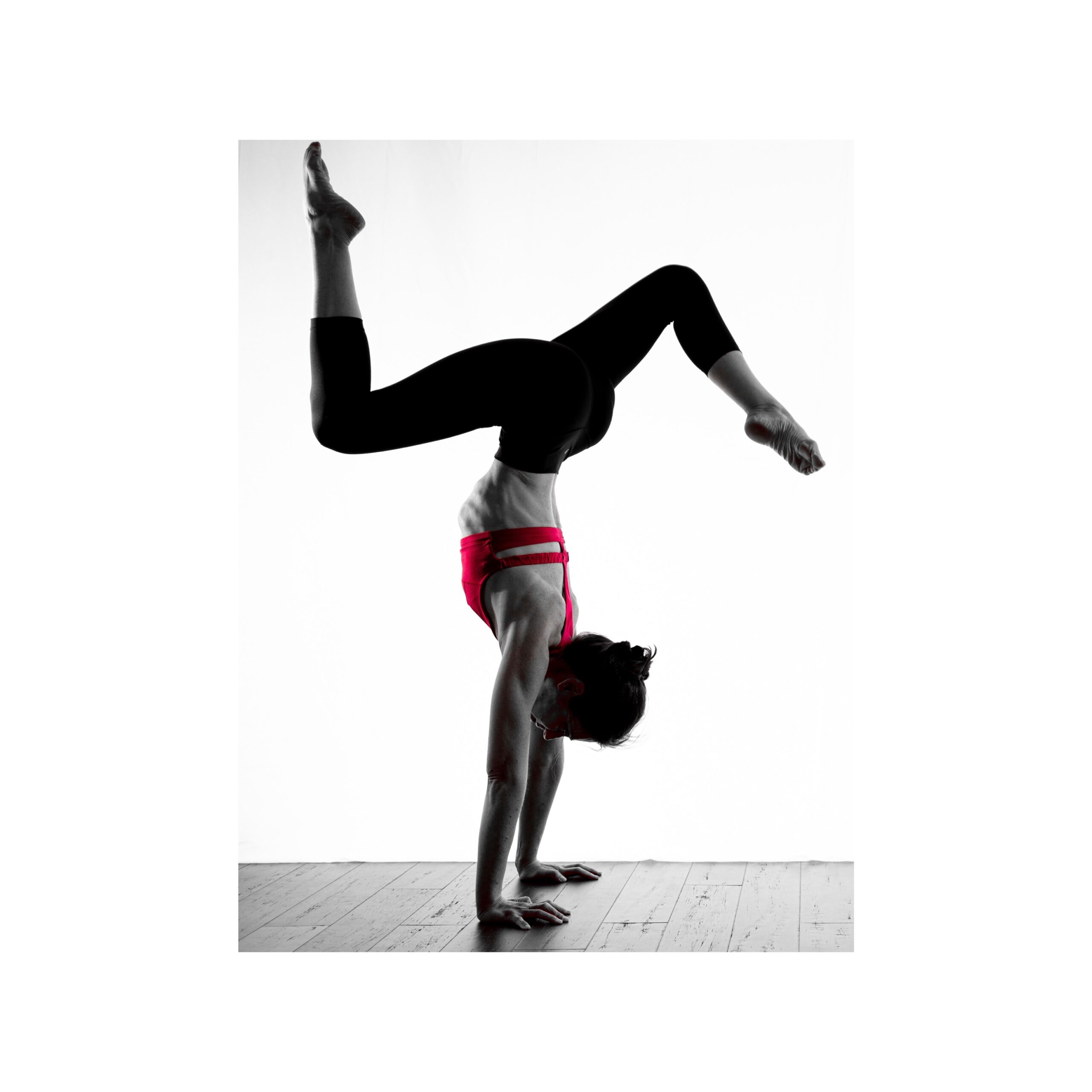
    One of the first things that drew me to LYT Yoga (then YogaStream) was the inversion practice. I used to do gymnastics when I was middle school age and younger, so I grew up comfortable on my hands as a way to get from point A to point B (ie. with cartwheels, walkovers, and handsprings). But the idea of holding a handstand, let alone in the middle of a crowded room…umm NO. I had been to other yoga studios where handstands, shoulder stands, and plow pose were offered at the end of most classes. Did I do them? Yes. Could I do them well? Yes. Anyone who knows me, knows I’m naturally pretty strong. My job as a physical therapist is demanding and I’m very physically active, so doing crazy arm balances and advanced yoga poses was relatively easy for me at the very start. But not the elusive handstand. Getting that took discipline, work, video assessment, and a daily practice to finally achieve. But this article isn’t about the handstand. It’s about why to do it versus the headstand.


    When you think about it, it makes little physical sense for the headstand to be offered as the “beginner” inversion. In what alternative universe do we feel putting up to 40-48% of our body weight through our neck is a good idea? This is the axial load that studies have shown is being put through the head and neck in a headstand. Now people will argue that you’re supposed to be putting most of the weight through your shoulders and hands, not the head. However, I would argue that most people and especially beginner yogis don’t have the shoulder or scapular strength to do so. Which is why forearm stands are that much harder to do. You are taking close to TWICE as much weight through the shoulder girdle, without the head there to support the other 40-48% of the bodyweight.


    The cervical spine is not built to carry a load greater than the head. If you look at the structural difference between the lumbar and cervical vertebrae, you’ll see why. The lumbar vertebrae have evolved to carry the weight of the upper body or, for argument’s sake, half of the body weight. Its large vertebral body (the solid cylindrical part) allows for this. The vertebral body of the cervical vertebra is roughly ¼ the size of the lumbar vertebra. Which makes sense given how relatively small the head is in comparison to the rest of the body. So why would we still subject ourselves to a pose that puts almost half the body weight through it? No, thank you.

    Another consideration is posture. We spend so much time flexed at the neck while bent over our phones or laptops. This offloads and thereby weakens the posterior chain of the body. Most people have a flattened curve of the cervical spine as well, which essentially means we walk around in perpetual cervical flexion. Studies on axial compression forces required for failure of the cervical spine (in cadavers) was four times less in a flexed position than in neutral or an extended position. This means it takes a lot less compressive force (which is what a headstand is doing) to injure the cervical spine while it’s flexed than while it’s extended or in neutral. So unless you have a perfect curve in your cervical spine (which few people do) and are strong enough in not only the paraspinal musculature but also the shoulder girdle to offset the body weight, it’s just not worth the risk.


    Lastly, we have too many important structures at the craniovertebral junction (CVJ), or where the head meets the neck. The CVJ houses the transition from the brainstem to the spinal cord. It also is where the vertebral arteries (which provide blood flow ultimately to the brain and spinal column) and first cervical nerves (which innervate the head and neck) share a small groove on either side between the skull and the first cervical vertebra. I don’t know about you, but I don’t want to mess with any of that.


    So take the hard road and work towards your forearm balance or handstand. Keep weight off the head and neck! Handstand, don’t headstand. Or as I like to say, “Lift switch, swing it, or step it.” 🙂 Until then, I’ll see you on the mat!


    Xoxo,

    Kristin

  • Low Back Pain

    Low Back Pain

    If you’ve ever had low back pain, you are not alone. Low back pain (LBP) is one of the most common conditions I treat at the clinic and it affects people of all ages. Even school age kids have it, so it does not discriminate by age. It can be described as dull and aching or sharp and shooting. Sometimes LBP is accompanied by radiating pain into the back of the leg(s), buttocks, or anterior thigh. It can extend clear down to the foot in some cases. It’s no wonder that LBP is one of the most common reasons people see a doctor or miss work.


    There are many different causes of LBP. Congenital reasons such as scoliosis (curvature of the spine) and an increased or decreased lumbar lordosis (swayback or flat back). Injuries such as strains, slips, and falls, or car accidents. Degenerative changes in the spine are another common cause and include stenosis (narrowing of the spinal canals), degenerative disc disease (thinning of the intervertebral discs with age), and other types of arthritic conditions (ie, spondylosis and ankylosing spondylitis). Some conditions affect the nerve and cause entrapment either at the spinal cord or exiting spinal nerves, such as disc herniation/protrusion, spondylolisthesis, and sciatica.


    I actually prefer when a patient comes to me and hasn’t had any diagnostic testing. While knowledge is power, oftentimes in the case of LBP, ignorance is bliss. Studies have shown that we can pull 100 people off the street who have no back pain and ~70% of them will have degenerative discs/arthritis, ~50% will have a disc bulge or two, and ~30% will have a disc herniation…with no pain!!! People are shocked to learn this and wonder how can this be? So many different factors affect whether we have pain in the body. When it comes to low back pain and especially radiating pain such as sciatica or lumbar radiculopathy, this is especially true. And if you’ve been treated by me or have taken my Stretch class, you know I love the analogy of birds on a wire.


    I’ve always been fascinated by how birds sit on telephone wires. It makes me laugh to watch them shuffle from side to side, making room as new birds arrive and spacing out as others leave. Several years ago I began explaining neural tension to my patients and students as having “birds on a wire”. The more birds that sit on a wire, the lower it sags and the more tension. Tension on a wire (nerve) is a large reason for pain and discomfort. This is true not only for back and leg pain, but also for neck and arm pain. I consider anything a person has on an MRI as just another bird on the wire. Now some birds are bigger than others and may cause more tension (large herniation or bone spurs). Other birds aren’t going anywhere (stenosis, scoliosis, arthritic/degenerative changes). But just like those studies show, people can have birds of all sizes on their wires and not have any symptoms whatsoever. My job as a physical therapist is to get as many birds off the wire as I can and let the body do the rest of the work. It is an amazing self healer if given the opportunity.


    So what are some birds we can get off our wires? Tight hips and glutes. Your sciatic nerve runs right under your buttock muscles, so if those muscles are tight, they’re just birds pushing on that wire. Limited hip mobility. If you can’t move from your hips, where are you going to move? From your back. Poor body mechanics due to limited hip mobility…bird on the wire. Weak hips and core…bird on the wire. Hypermobility of the lumbar spine…bird. Hypomobility of the thoracic spine…peep peep! Prolonged sitting…cheep cheep! Poor posture…caw caw! Honestly the list goes on and I’m running out bird sounds. 🙂 Think about ways you may be putting too much tension on your wires. What are birds you can get rid off to free up the body to heal itself? LYT yoga is a great place to start because it’s smart yoga. Listen to the cues we give you and apply them to your daily life. Mobilize, strengthen, stabilize. On that note, I’ll see you on the mat!


    Xoxo,

    Kristin
  • Relaxation Breathing

    Relaxation Breathing

    Feeling stressed out? Anxious? Sleep-deprived? Yeah…me too. This has hands down been the craziest year of my life and I’m sure many people would agree with me. As much as I hate to admit it, sometimes we need more than yoga to relax. Deep breathing is one of the best ways to relax the body because when you breathe deeply, it sends a message to your brain to relax your body. Those things that happen when we’re stressed out, like increased heart rate, blood pressure, and respiratory rate, can all be decreased when you breathe deeply to relax. Here’s a quick physiology lesson to explain how it works:


    Your autonomic nervous system, which controls involuntary actions like heart rate and blood pressure, is split into two parts. The first part, your sympathetic nervous system, controls your fight-or-flight response. The second part, your parasympathetic nervous system, controls your rest and relaxation response. Both systems can NOT be working at the same time, which means if you activate one, the other will be suppressed. Deep breathing stimulates the parasympathetic nervous system and while it may be simple, it isn’t necessarily easy and takes practice. The more you practice, the better you’ll get at it There are many different ways to practice relaxation breathing, so play around to find one that feels the most natural to you. Most importantly, be kind to yourself as you practice and accept that you might not notice results immediately. Give yourself credit for trying and keep practicing, even just for a few minutes at a time, until you reach a point where you notice it’s starting to help. Here are a few different methods of relaxation breathing to try:


    Diaphragmatic Breathing

    • Sit or lie flat in a comfortable position.
    • Put one hand on your belly just below your ribs and the other hand on your chest.
    • Take a deep breath in through your nose, and let your belly push your hand out. Your chest should not move.
    • Breathe out through pursed lips as if you were whistling. Feel the hand on your belly go in, and use it to push all the air out.
    • Do this 3 to 10 times, taking your time with each breath.


    4-7-8 Breathing

    • This can also be performed sitting or lying down.
    • Put one hand on your belly just below your ribs and the other hand on your chest.
    • Take a deep, slow breath from your belly, and silently count to 4 as you breathe in.
    • Hold your breath, and silently count from 1 to 7.
    • Breathe out completely as you silently count from 1 to 8. Try to get all the air out of your lungs by the time you count to 8.
    • Repeat 3 to 7 times or until you feel calm.


    Roll Breathing

    • You can do this in any position, but while you’re learning, it’s best to lie on your back with your knees bent.
    • Put your left hand on your belly and your right hand on your chest.
    • Breathing in through the nose and out through the mouth, practice filling your lower lungs so your belly (left) hand goes up when you inhale through the nose and your chest (right) hand remains still. Do this 8 to 10 times.
    • When you have filled and emptied your lower lungs 8 to 10 times, add the second step to roll breathing: inhale first into your lower lungs as before, and then continue inhaling into your upper chest. As you do so, your right hand will rise and your left hand will fall a little.
    • As you exhale slowly through the mouth, make a quiet, whooshing sound as first your left hand and then your right-hand fall.
    • Practice breathing in and out this way for 3 to 5 minutes. Notice that the movement of your belly and chest rises and falls like rolling waves. Feel the tension leaving your body as you exhale and become more relaxed.


    So try one of these out and see if they work for you!


    Xoxo,

    Kristin

  • Scapular Stability

    Scapular Stability

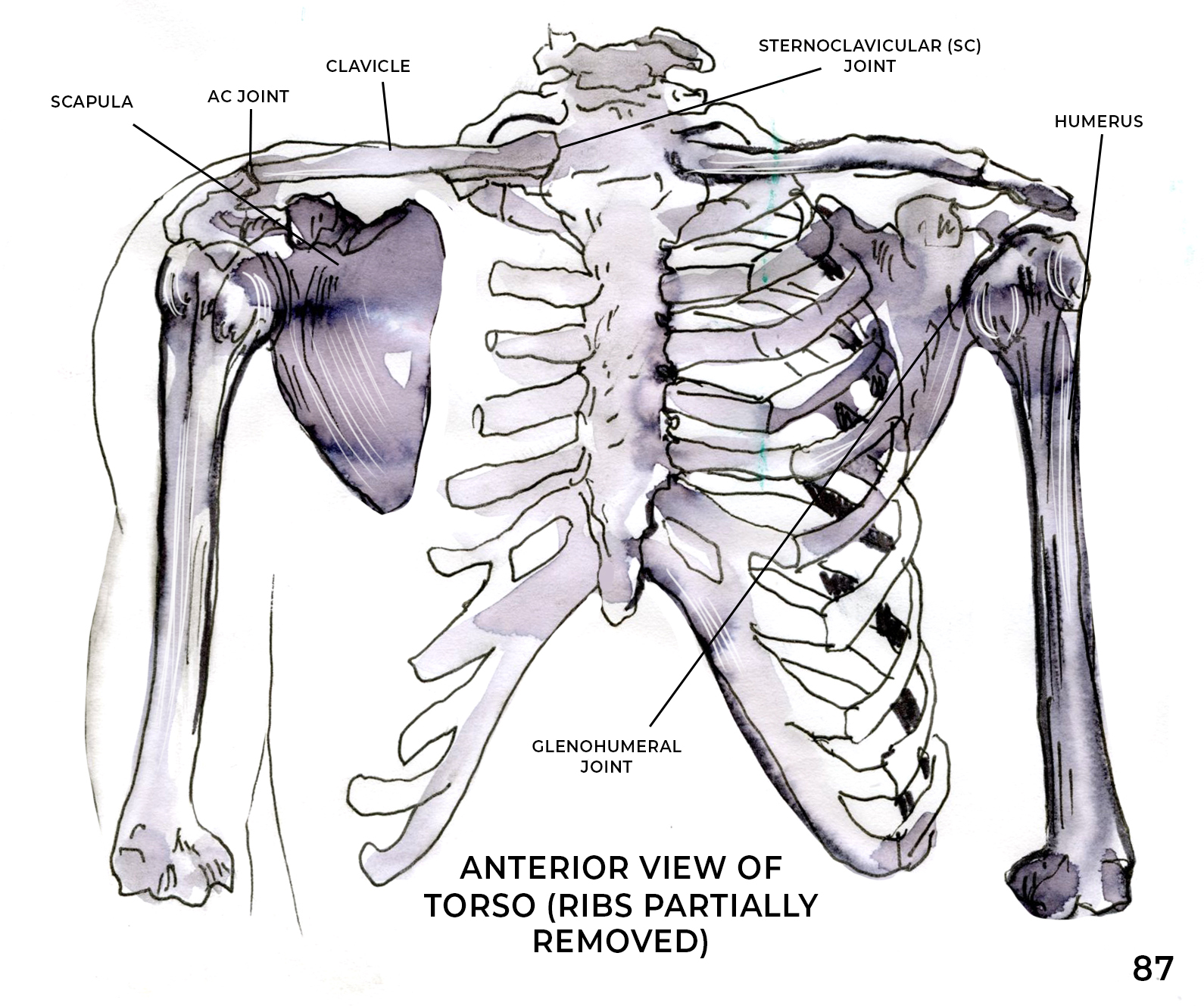
    When most people think of the shoulder joint, they usually only consider the space where the ball of the upper arm bone (humerus) articulates with the socket of the shoulder blade (scapula). In fact, most people don’t even know the socket is part of the scapula. Furthermore, calling the shoulder a “ball and socket” joint is a stretch, as it’s really more like a golf ball sitting on a tee. The socket is actually a small shallow disc (glenoid fossa). The ball (humeral head) is held in place passively by ligaments of the joint capsule and actively by the muscles of the rotator cuff. But the shoulder itself is really more of a “complex”, consisting of four separate joints that must work together to keep the shoulder complex functioning properly:


    1. Glenohumeral Joint – Humerus and Scapula
    2. Acromioclavicular Joint – Scapula and Clavicle (collar bone)
    3. Sternoclavicular Joint – Sternum (breast bone) and Clavicle
    4. Scapulothoracic Joint – Scapula and Rib Cage


    Unlike most joints of the body in which two bones are connected by ligaments and/or discs, the scapulothoracic joint relies purely on a coordinated dance of 17 muscles that attach to the scapula, as well as the mobility of the other three joints, to provide stability for the rest of the arm and shoulder. SEVENTEEN MUSCLES!!! Weakness in any one of the muscles attaching to the scapula, but particularly the large ones like the serratus anterior (Lara’s favorite!), latissimus dorsi, trapezius, and rhomboids, can affect how the shoulder and ultimately the entire upper extremity moves and functions. Poor movement patterns, muscular weakness, and limited joint mobility can lead to pain in and injury to the neck, shoulder, spine, elbow, wrist, and hand.


    Whether you are playing a racquet sport, doing yoga, or just trying to put away the dishes in an overhead cabinet, scapular strength and mobility are key to preventing injury. Weakness in these large “core” muscles can lead to overuse of the smaller muscles of the upper extremity and thereby cause injuries.


    The muscles of the scapula form force couples, which are muscular co-contractions that properly position the scapula for maximum shoulder function and provide a stable base of support for the entire upper extremity. It has been estimated that throughout 90% of shoulder range of motion, muscles (and not passive structures) are responsible for shoulder stability. Scapular issues are commonly seen in people with tight and overactive upper trapezius and pectoralis minor muscles, coupled with weak/underactive lower trapezius and serratus anterior muscles. This decreases the ability of these force couples to occur, resulting in decreased static and dynamic positioning (stability) of the scapula during movement.


    Corrective exercises can be very successful in restoring neuromuscular control of the scapula, helping to return to normal function and enhancing the overall function of the shoulder complex. An exercise program should include proximal kinetic chain exercises aimed at improving scapular muscle strength, flexibility exercises to minimize tight muscles pulling the scapula out of position, and exercises to enhance these functional force couples. In Lara’s podcast, Redefining Yoga, Episode 269 Wednesday Q & A, she describes some great ways to improve your scapular strength and stability. We will also be featuring some classes focused on the scapula in this week’s upcoming LYT® Daily, so be sure to check it out! One of the best places to begin to strengthen and stabilize the scapula is on your mat. I look forward to seeing you there!


    Xoxo,

    Kristin

  • Tension Headaches

    Tension Headaches

    Tension headaches are the most common type of headache. Traditionally, they manifest as pain that comes over your head like a hood or around your head like a headband and can occur on one side or both. Any activity that requires the head and neck to be held in the same position for prolonged periods can result in a tension headache. Considering that many of us are spending a lot of time on computers, laptops, and our phones these days, it’s no wonder they are the most common type! Other activities such as physical and emotional stress, anxiety, eye strain, fatigue, caffeine (too much or too little), clenching the jaw, and migraines can also bring them on. Tension headaches occur when muscles in the head and/or neck contract or go into spasms called trigger points. Trigger points send pain in a very specific pattern (such as the hood or headband) and can be reproduced with pressure at specific points in the muscle belly. The good news is that tension headaches and trigger points respond very well to treatment and can be managed independently! Here are some tips to treat and prevent tension headaches:


    • Tape two tennis balls together or put them in a sock and tie a knot to keep them side-by-side. Lie down with the tips of the tennis balls right under the base of the skull. You can maintain static pressure or nod the head up and down and side-to-side for a massage of the tense muscles (called your suboccipitals). This is especially useful if you find yourself in the middle of a tension headache. It may be uncomfortable at first, but eventually, the muscles will relax and you’ll find relief.
    • If you work at a computer all day, set a timer on your phone to go off every 30-60 minutes. Take a few minutes and do the following each time the timer goes off:
      • Perform 10 Chin Tucks – sit up tall and draw the ears back in line with the shoulders. Hold 5 seconds each.
      • Lean your head to one side, hold 20-30 seconds, and then the other side.
      • Interlace your hands behind your head, draw your chin down to your chest, and gently press straight back into your hands until you feel a stretch at the base of the skull. Hold 10 seconds. Turn your head 30 degrees (looking towards one armpit) and press gently back into the hand on that side. Hold 10 seconds. Repeat to the other side.
      • Keeping the hands behind the head, arch back over the top of the chair, allowing the thoracic spine to extend and the chest to open. You can hold for 10-15 seconds or rock slowly back and forth, flexing and extending the upper back.


    They say an ounce of prevention is worth a pound of cure, so the best way to keep tension headaches at bay is by maintaining good posture throughout the day and managing your stress with your regular LYT yoga practice! Tadasana, or Mountain Pose, sets the head, shoulders, hips and ankles in perfect alignment, allowing those suboccipital muscles to lengthen out, and takes strain off the muscles of the neck by eliminating their need to hold the head up. So find Tadasana to eliminate Tension!


    Xoxo,

    Kristin

  • 18 | Questions for Lara

    18 | Questions for Lara

    I reached out on my social media platforms and asked all of you what you’d like to hear, and the response was great! So many of you had questions for me, so in today’s episode, I’m going to answer them. I want to help as many people as I can, so I’m honored to be able to answer what I can with the best of my knowledge.

    How do you best move through stress, fatigue, or exhaustion?

    The best way to move through it, is to move. I try to cultivate a day of “blob” in my week, but it is difficult since I’m so used to moving throughout the week. The lymph system actually depends on movement, so I do recommend some form of movement in your day. Schedule something like a date with a friend, taking your dog on a walk, or something small like that.

    Does text-neck affect jaw-clenching at night?

    There is fascial tissue that connects both the jaw and the neck, so yes, they both can affect one another. Try breathing and / or relaxation techniques prior to going to bed.

    When I open my shoulders, I can’t stay in a neutral pelvis position. How can I help this?

    The area between the shoulder blades does have a tendency to become blocked. I recommend bringing your hands straight out in front of you, interlacing the fingers into a fist, now push this farther away so the shoulder blades begin to pull apart. Now punch your chest back, almost like a cat position. Do this a few times to feel a release of that tight feeling.

    How do you deal with people who are not aware of their own emotional issues and blame other people?

    You can only change your response to people. Ask them questions that acknowledge what they are talking about; “What happened?” let them feel heard.

    How do I lead and create an atmosphere in a class?

    Let’s apply this to any leadership position. I’m a big believer in being yourself. People want to be led, therefore you need to come prepared. Be clear and have a perspective for the class / time ahead that you are leading.

    How do you queue the body into alignment without confusion?

    Talk clearly and don’t worry about getting flourishy. Never make assumptions with your class, always teach as though everyone has no knowledge of what you are teaching.

    What does your vegan holiday food look like? Any traditions?

    For Hanukkah we make latkes with egg and sour cream replacements. For Christmas we don’t really have a tradition, we just eat whatever we want! For winter time, I love making vegan soups. The corn chowder is my favorite.

    • You’ll need: frozen organic corn, two stalks of chopped celery, chopped red bell pepper. Saute the celery and red pepper, then add the corn, salt, and a bay leaf. Cover with vegetable broth. Blend about 80% of the corn with a cup of vegan milk, then add back in.

    What’s the best sleeping position? How do I position my neck when I’m sleeping?

    You don’t want a mattress that’s too soft, or too hard because you’ll have little support or just not enough. Try to get a pillow that is thin enough to hook under your skull, but so your chin can still drop down. If you are a side-sleeper, keep your neck in the same plane.

  • 16 | Manual Therapy & Myofascial Release

    16 | Manual Therapy & Myofascial Release

    Movement is not necessarily always the end all be all, and that means that we need to apply more to movement in order to feel our best. That is where today’s episode topic comes in: manual therapy! We are going to talk about just what manual therapy is, and why it’s great if you have different issues within the body that movement patterns aren’t fully addressing.

    What is manual therapy?

    Manual therapy is when someone manually comes in and helps you with the way you move, and address and release any of the restrictions that might be in your underlying tissues.

    What is fascia?

    Around your muscles, you have fascia. Fascia is a connective tissue that runs around the muscle and through the different muscle connections. Once you get a feeling of your tension, you can start to learn how to help the area soften.

    How do you do manual therapy?

    Begin by feeling where you get senses of tautness on your body. What I teach my students helps them feel the mobility of the tissue. This can help people relax and increase their range of motion.

    What is your comfort on being touched?

    Human touch is so needed. Touch is so healing! As a yoga teacher, I provide adjustments, but I do not provide adjustments to go deeper into a pose. Rather, I suggest learning how to provide light pressure into a tissue.

    Resources:


  • 14 | Anatomy of Movement: Pelvis, Glutes, Feet, & More | John Frank, PT

    14 | Anatomy of Movement: Pelvis, Glutes, Feet, & More | John Frank, PT

    Today I welcome my brother, John Frank, back on the podcast. John is a physical therapist and movement specialist. (If you haven’t already, listen to John’s first episode!) I wanted to have John back on to answer questions that were sent in by you, and to further discuss movement and anatomy.

    What are some recommendations you’d make for runners?

    Start easy, start small, and let your body adapt to the new stresses.

    Paying attention to your balance and the form of your pelvis, as well as where your knees are going, is extremely important. By practicing a single leg stance, you can better prepare your body for the stress of running.

    What do you recommend for foot pain? What are the biggest causes of foot pain?

    Not wearing proper shoes, or having them available to you, is a main reason people have foot pain. Your body weight goes into your big toe the most, and it really needs to be in alignment with the rest of the arch and inner foot. When it’s pushed inward, your kneecaps become useless because your body weight isn’t being properly placed. A lot of the time, the pain can be alleviated by simple practices, such as recognizing postures and movements.

    What are things that are great for the lower back in yoga, and maybe not so great?

    “People with low back pain tend to have weak and/or stiff hips.”

    Maintaining a more stable low back, while opening up your hips, and keeping a neutral spine while in the transitions is very important in yoga. Women tend to hyperextend, and push their pelvis forward, so this is something to pay special attention to, especially if you are experiencing back pain.

    Resources: