Tag: core

  • Building Core Strength through Yoga to Bolster Functional Movement

    Building Core Strength through Yoga to Bolster Functional Movement

    Have you ever wondered why yogis can balance on their arms or hold handstands seemingly forever while simultaneously making it look easy? 


    I certainly get entranced when I watch a yogi in the flow start to move gracefully – like dancing. Here’s the secret – graceful yogis have amazing core strength. How do I know? 


    Anatomy and biomechanics tells me so. And I’ve personally watched my body and movement abilities change for the better since beginning my yoga journey. I was always athletic, but I never had the type of connection to my core strength that I developed when I started my yoga practice. 

    It’s made life easier. Everything from less overall body fatigue to more definition in my abs (if you care about that sort of thing). But most importantly, I elevate the people around me. I stand taller, and naturally, others mimic that and stand taller too. I have more energy because I’m a more efficient mover, which means I’m kinder to the people I love. 

    And in my career as a physical therapist, wellness coach, and yoga instructor, I have the pleasure of teaching others how to build their core strength through yoga to bolster functional movement, too.  

    Think of the core as this 360 container or tree trunk that is the energetic and physical hub of your body. It’s operational headquarters. Meanwhile, corporate headquarters and the CEO lives up in the brain. The brain sends signals down through the nervous system when you decide to move so that you can dress yourself, drive a car, and clean your home. But what happens when the operational headquarters isn’t optimized? 

    Energy is lost therefore requiring more of your body’s precious resources to move from point A to point B. Optimizing core strength is the key to improving all movement, increasing energy efficiency, and therefore making life easier, more fun, and less tiring. 

    Here are 3 simple yoga moves you can do right now to bolster functional movement

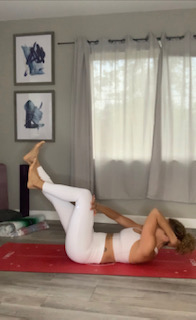
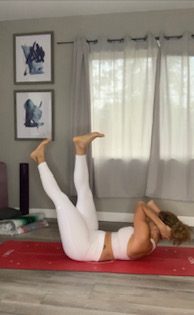
    1. Curl up variations  
    • stabilizer abs 

    Building Core Strength through Yoga

    • 90-90 abs with resisted hip flexion

    Building Core Strength through Yoga

    • juicer abs 

    Building Core Strength through Yoga

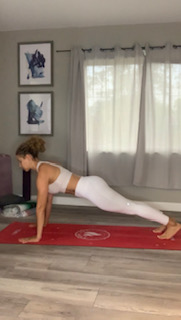
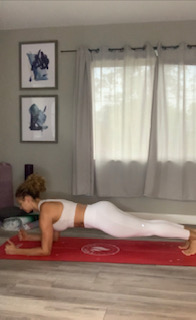
    1. Kumbbhakasana (plank) variations 
    • plank

    plank lyt yoga online classes physical therapy

    • forearm plank

    forearm plank lyt yoga online classes physical therapy

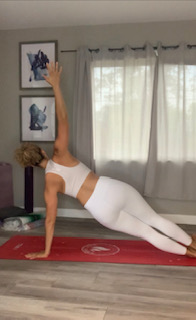
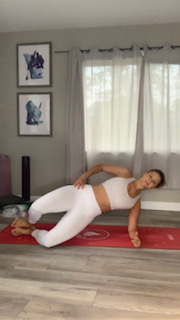
    • side plank

    side plank lyt yoga method online classes physical therapy

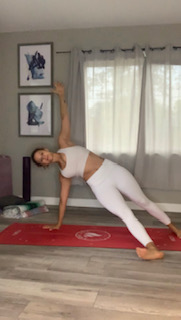
    • fallen triangle 

    fallen triangle lyt yoga method online classes physical therapy

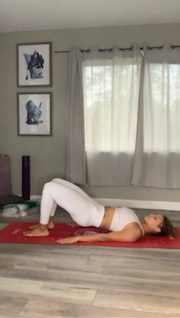
    1. Setu Bandha Sarvangasana (Bridge) variations
    • bridge

    bridge lyt yoga method online classes physical therapy

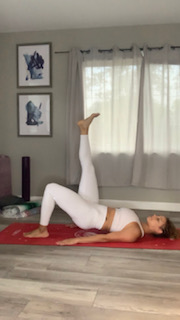
    • SL bridge

    single leg bridge lyt yoga method online classes physical therapy

    • side bridge 

    side bridge online classes lyt yoga method physical therapy

    Allow me to let you in on the real secret to more energy and grace….a strong and functional core while moving through poses aka core strength in transitions. 

    Once you have the basics down, you can uplevel by learning how to properly brace your core while moving between poses. And this is where you truly become magical – grow taller, feel lighter, increase endurance.

    This is truly what creates functional movement. Here are two functional examples of core strength at work: 

    1. Airplane <> ½ moon
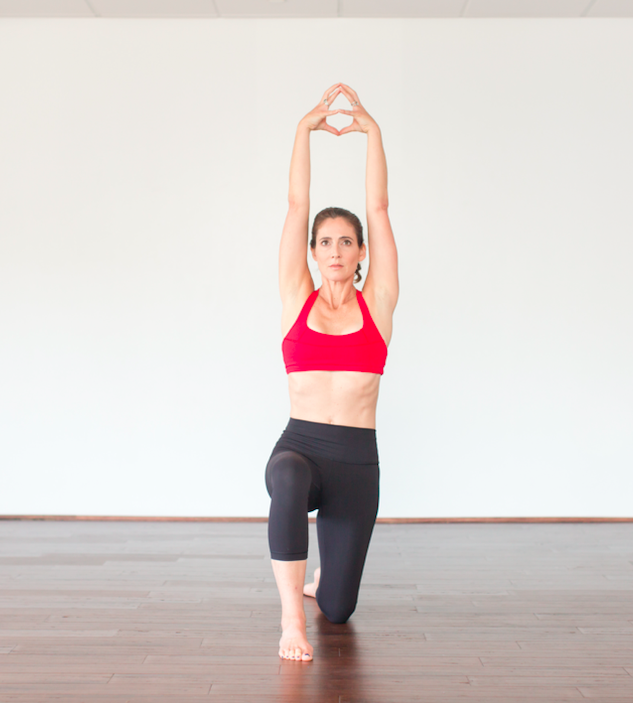
    2. Twisted crescent <> eagle 

    Practicing moves like these with max core efficiency within a yoga asana practice will build a more efficient energy system. Your body, your mind, and your loved ones will thank you for it when they see the change in how you hold yourself and the brighter demeanor you adopt with your newfound energy. 

    Try the moves above and make sure to post it on instagram and tag @lytyogamethod and @thalialovee so we can celebrate you and encourage you! 

    If you aren’t already a subscriber, make sure to check out LYTdaily for core-centric yoga classes to joyfully bolster your functional movement. 

    I’ll see you on the mat, be well. 

    Your Wellness Guideempowering you to take up space, 

    Dr. Thalia Dorsten 

    PT, DPT, AT, RYT-200 

    IG: @thalialovee

    Liked this article? 

    DM me! I’d love to hear from you ♥️
  • 540. The Breath-Body Connection with Campbell Will

    Campbell Will is a physiotherapist and the founder of BreathBody Therapy. He’s had a lifelong fascination with how the human body works. As he began to understand the functions of it, he came to realize that a large part of what makes the body work well is our breathing.

    We talk about looking at the body as a whole system, how breath connects to seemingly unrelated injuries, breathing appropriately for the situation, changing the behavior pattern of non-optimal breathing, and the power of breath retention.


    Resources:

  • 13 | More Core

    13 | More Core

    Today we are going to be talking about one of my favorite phrases: more core. What does it mean, why is it so important, especially right now in this holiday season? The core is important for controlling, harnessing, and moving energy within the body, and the holiday season is one of the most important times to maintain your inner energy.

    What is the core?

    While most assume it’s just the abdominals, the core is truly a channel and conduit of renewable energy. It is the area of our body which houses our life. The core is important for controlling, harnessing, and moving energy within the body.

    Why is the core important?

    The core will allow you to move and breathe with ease and depth of breath, and without recognizing this, we do a disservice to most all functional and fitness practices. A stronger core also helps keep your stress levels lower–think about it, when you pay more attention to your breath, your cortisol levels are more controlled.

    What do you do?

    If possible, lie on your back with your knees bent and feet flat on the floor. Feel the imprint you are making on the floor. Take a few breathes in, and place your hands on the tops of your pelvis, with your fingers angling toward the pubic bone, and your thumbs near your navel. Pull all of this together as you exhale. When you have no breath left, pull that feeling down towards your back. Can you feel that sense of energy spreading?

    Deepen by pushing into your feet and pulling your body up into a low bend.

    Try this:

    Put your hands on your hips and imagine you are holding a basin filled with water. Tip your pelvis forward, and notice what is happening in your back body and your front. Repeat and tip your pelvis backwards. When you tip forward, your abdominals should become softer while your back muscles tighten, and the opposite should happen when you tip your basin back.

    This is to give you an idea of the relationship between your lower back and abdominals. Neither should be chronically tight or weak.

    Resources:


  • 7. Adaptability: Move Through Life With More Freedom

    7. Adaptability: Move Through Life With More Freedom


    In this episode, I discuss how we can all become more adaptable in our body, in our minds, and in our spirits so that we can move through life with more freedom.

    So what is adaptability and why is it so important?

    Adaptability is defined as…

    • the quality of being able to adjust to new conditions.
    • the capacity to be modified for a new use or purpose.

    What a great concept to incorporate into our lives!

    Really, adaptability is fundamental for our own personal growth – in our yoga practice, our movement practice, as human beings, and as members of society – because it allows us to change, morph, and evolve as the things we can’t control change around us.

    And because there is so much going on in the world and things seem to change faster with every passing day, adaptability is more necessary now than ever before.

    Neural Wiring

    When we start doing something new, we need to repeat it to make the wiring in our brain stronger.

    If you haven’t climbed on the monkey bars since you were a kid, or ever in your life, then your body and brain aren’t adapted to do that. The wiring in your brain isn’t very strong, and we have to think about this in relation to movement.

    But in addition to repeating movement, we also need to challenge ourselves to grow. Otherwise, we may stop being adaptable and become rigid.

    What helps us be more adaptable?

    First, open-mindedness.

    Now, this isn’t easy by any means, especially when it comes to the starkly divided political environment in the United States. It can be difficult to be tolerant and open-minded towards views when they don’t match their own, but that practice of tolerance will actually help everyone, in the long run, become more adaptable.

    Second, positivity. You can decide your outlook, to a certain degree. I know that thinking positively isn’t going to fix everything, and I’m not suggesting that positive thinking will overcome chemical imbalances or trauma, but too many of us get caught up in our own negative thoughts.

    Even going back to the mid-20th century and Norman Vincent Peale’s The Power of Positive Thinking, it has been studied and demonstrated that a positive attitude can lead to positive events in your life.

    Third, resilience, or your ability to bounce back. When you’re stuck in a rigid mindset, things just happen to you and they often stop you in your tracks – but when you are resilient, you can stumble and still move forward.

    Here are my favorite strategies for cultivating adaptability:

    • Observation. After we start observing ourselves and noticing when we feel tense, nervous, discontent, or grumpy, we can then figure out tools to help us.
    • Look for the gray and eliminate absolutes. Embrace the gray, find the colors that aren’t black and white, and look at things from a new perspective!
    • Connect to your core. Your core is who you are at your essence, and your core strength aligns you with your purpose and your core values and helps you cope better when things don’t go your way.
    • Embrace the new. This is always good for growth, even in small amounts.
    • Self-care. This can be really difficult for some people to think about and incorporate, but you can’t serve others or live life to its fullest without serving yourself first. You’re also more likely to feel good about yourself, which will help you engage in more positive emotions and improve your outlook on life! You can decide what this looks like for you, but it needs to incorporate movement because movement is always the pathway for adaptability.
    • Rewire your brain. We discussed how the neural wiring in our brain works already, but I want to emphasize how critical this is for cultivating adaptability in every area of your life.


    To learn more, and for the complete show notes, visit: lytyoga.com/blog/category/podcasts/


    Connect with LYT Yoga and Lara Heimann:

    Instagram Lara Heimann – https://www.instagram.com/lara.heimann/

    Facebook Lara Heimann – https://www.facebook.com/lara.f.heimann

    Instagram LYT Yoga – https://www.instagram.com/lytyogamethod/

    Facebook LYT Yoga – https://www.facebook.com/lytyogamethod


  • 6. How a Handstand Can Transform Your Life

    6. How a Handstand Can Transform Your Life


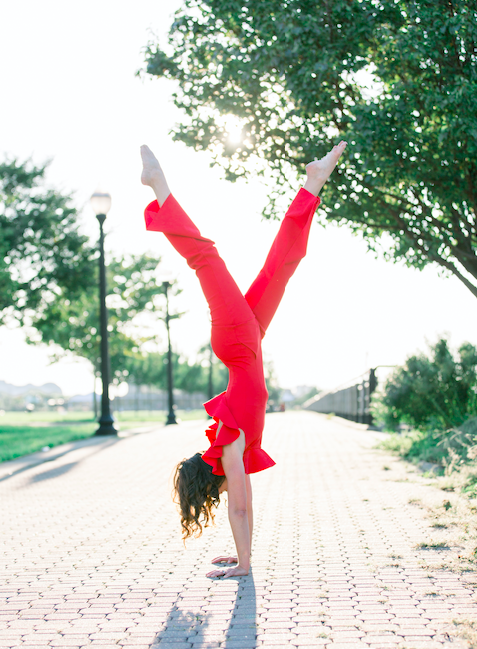
    Today I want to share why I love handstands – and how a handstand can change your life!

    People think of handstands as being this super advanced pose, which it is, but it’s so much more and I’ve seen firsthand how it’s transformed people’s’ lives. Beyond the physical movement of getting your weight onto your hands, it moves energy in the body and potential in your spirit and your belief in yourself.

    If you’ve never even kinda done a handstand in your life, don’t worry – I was right there with you! I thought I’d never do a handstand in my life, and by the time I was 36, I still hadn’t. But then I started working with neurologically impaired patients.

    I saw how they were able to remap their brains to do incredible things no one expected them to be able to do, so I thought, why can’t I remap my brain too?

    So if you want to see some of these incredible benefits – stronger core, stronger arms, better alignment, enhanced awareness, and spiritual and emotional work – I suggest being patient and starting small. Learning how to handstand can be a wonderful antidote to our Western mentality of quick fixes or instant gratification.

    You can start with something as simple as getting on all fours, putting your weight on your hands, and lifting your knees. Once you start building up your confidence and seeing you CAN do this, you can move on from there.

    To learn more about starting your handstand practice (and therapy!), check out the article I wrote for mindbodygreen article called “How Anyone Can Learn To Do a Handstand.”

    To learn more, and for the complete show notes, visit: lytyoga.com/blog/category/podcasts/

    Connect with LYT Yoga and Lara Heimann:

    Instagram Lara Heimann – https://www.instagram.com/lara.heimann/

    Facebook Lara Heimann – https://www.facebook.com/lara.f.heimann

    Instagram LYT Yoga – https://www.instagram.com/lytyogamethod/

    Facebook LYT Yoga – https://www.facebook.com/lytyogamethod

    Read: “How Anyone Can Learn To Do a Handstand”

  • 5. The Truth About Text Neck

    5. The Truth About Text Neck


    Have you heard of Text Neck?

    It’s a 21st century ailment that’s spreading globally and rapidly, and it’s something that I’m asked about daily!

    I also see Text Neck daily and, honestly, it makes my heart hurt.

    If you’re not familiar, Text Neck is a condition in which your posture is stuck in the position that you assume when you’re looking down at a cell phone, tablet, or other wireless device.

    This happens to people when – you guessed it – they look down at a device too frequently or for too long.

    I’ve been working in physical therapy for decades, and we didn’t have these kinds of devices when I started. People would have neck pain, of course, but not nearly as many people – and not nearly as many young people, in particular.

    This is a real issue when you’re younger because your body will try to adapt, leading to early onset arthritis and connective tissue dysfunction. Your connective tissue will literally get and feel thicker, and if you feel this happening then you need to start changing your habits now before it’s irreversible.

    So how can we treat and/or prevent Text Neck?

    • Keep your cell phone, laptop screen, and other devices at eye level as much as possible.
    • Don’t be on your device so much! Trust me, I get it and I am using my phone a lot for my business and personal life too. But you don’t need it 24/7, so turn it off sometimes and take a break!
    • Be mindful of your posture. Put a note somewhere you will see it to remind you and use a wall for tactile feedback while you try to elongate your cervical spine.
    • Spend some time strengthening your core, because if you’re stronger in your core then you’ll naturally give your neck more support.
    • If you already feel a lot of tightness and thickening, you probably need to go get some manual therapy. Specifically look for someone who offers myofascial work, like someone who has studied Rolfing or John Barnes.

    To learn more, and for the complete show notes, visit: lytyoga.com/blog/category/podcasts/

    Connect with LYT Yoga and Lara Heimann:

    Instagram Lara Heimann – https://www.instagram.com/lara.heimann/

    Facebook Lara Heimann – https://www.facebook.com/lara.f.heimann

    Instagram LYT Yoga – https://www.instagram.com/lytyogamethod/

    Facebook LYT Yoga – https://www.facebook.com/lytyogamethod