Category: Podcasts

  • 117 | Private Sessions | with Lara Heimann

    117 | Private Sessions | with Lara Heimann

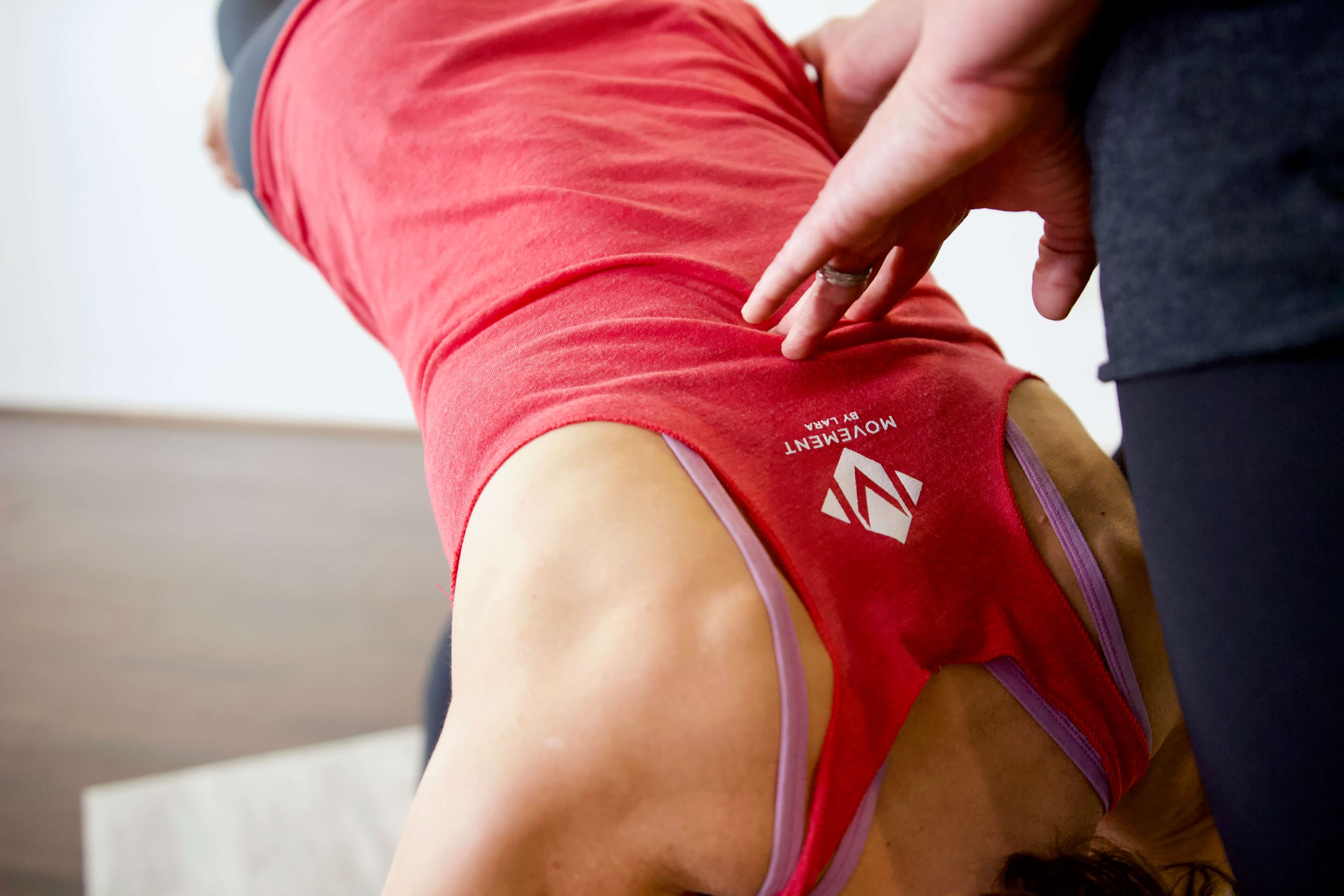
    Private yoga or other movement sessions can be a game changer for people because it offers an opportunity to dramatically improve their practice. In this episode I offer some tips for working with private students.


    To start with, I gather information that is relevant to whatever the student wants to work on. This includes asking about how they’re spending their time, for example, if they’re sitting at a computer all day. Then I observe posture. Posture tells a lot, because how you stand is how you move. And how you move is going to either dial up the muscle activity that’s needed or it will dial it down. The goal is to educate the student about how they can bring more attention to their resting posture in their daily lives, not just during the yoga or  movement practice.


    For new teachers, it’s great to practice your skills on private students. The more bodies you look at, the more you’ll develop a good sense of alignment and optimal movement patterns. Just remember to be aware of your capacity and your knowledge base. It’s important to have a mentor or someone that you can ask questions when needed.


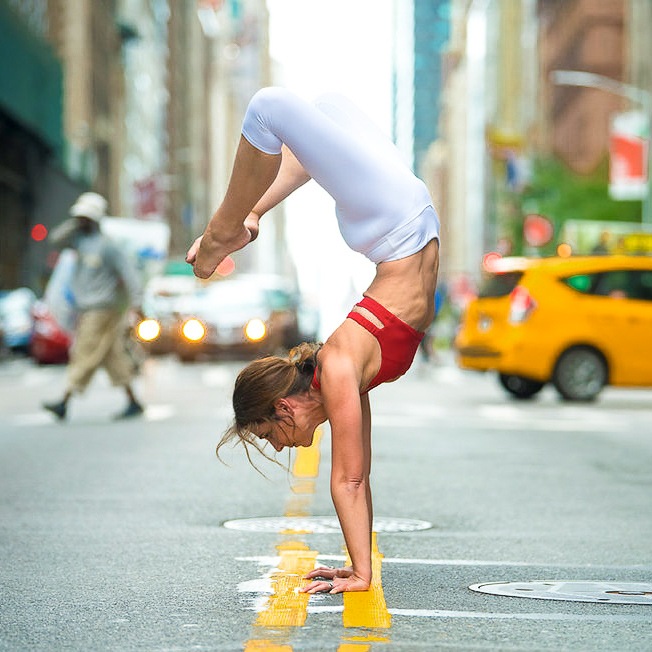
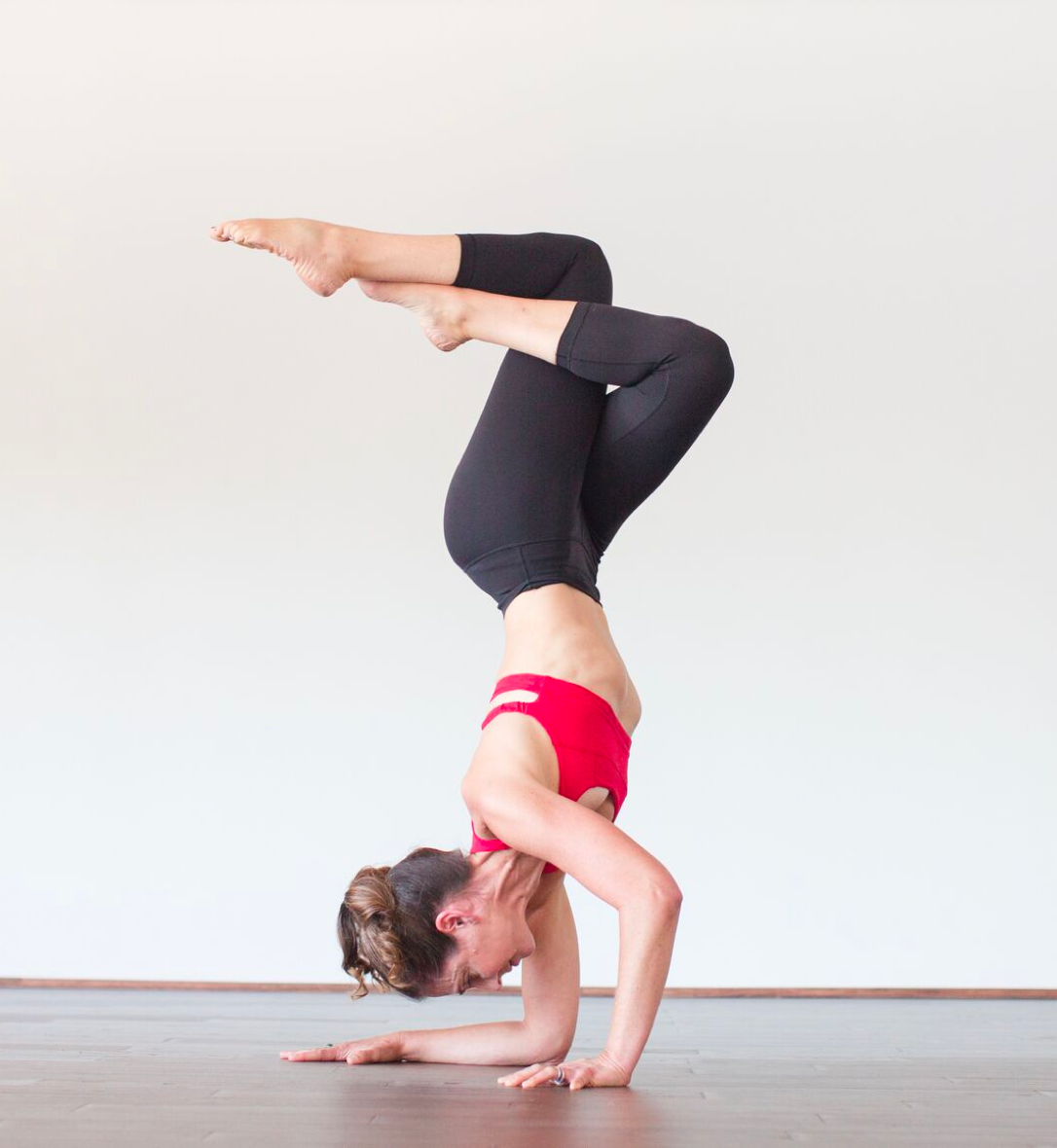
    Also, join me tomorrow, August 3, in New York City to break a world record together for the most handstands done simultaneously. The current record is 399, and I hope to see you and hug you all after we make history together. 


    Resources:

  • 116 | Where to Put Your Scapula | with Lara Heimann

    116 | Where to Put Your Scapula | with Lara Heimann

    Today’s episode is all about the scapula, otherwise known as the shoulder blade. A lot of people have problems with their shoulders, but 90% of these can be solved if you understand where to put your shoulder blades, how to move them and how to strengthen the muscles that control them.


    So how do you find the ideal position of the shoulder blades? The first thing I would say is go against a wall. Feel your shoulder blades press against the wall and then lightly pull your front ribs back more so that you really are trying to stamp the shoulder blades on the wall.


    For a lot of people the head will want to stay away from the wall so don’t strain to get the head back, just work on getting your ribs back to meet the shoulder blades. Pull your front ribs back, press your shoulder blades into the wall and you should feel quite upright. Also work to slide your shoulder blades together.


    For a floor exercise, you can get on your knees and have your wrists lined up underneath your shoulders with your fingers spread and the knees pulled in a little bit underneath your hips. Then let your chest soften toward the ground until you feel your shoulder blades do the same action they did on the wall. Now hold that feeling but lift your belly up because usually when you let the ribs soften, you let your belly go as well.


    Resources:

  • 115 | Hiring a Yoga Teacher | with Lara Heimann

    Today’s episode is all about what to look for when hiring a yoga teacher. It’s important to have some kind of standards when you’re hiring, and especially for yoga studio owners. Because when we hire yoga teachers, those teachers are branches of us, they’re representing the studio motto and studio ethos.

    The most important qualities for me are passion, curiosity and presentation.


    In terms of passion, I’m talking passion for movement, passion for yoga and passion for inquiry. I have a passion for everything that involves movement because I know that, without movement, life is static. So I want to hire someone who has passion. 


    I love to be around people who are curious because I think without curiosity, again, it’s kind of like passion, life is static. And so I want someone who I can sense that they’re curious and that they have this thirst for knowledge and they’re not thinking that they know it all. Curiosity keeps people humble, it keeps people excited, it keeps people eager. Those are such great qualities for a yoga teacher.

    Then I would start to look at things like presentation, meaning how comfortable is someone in a room with people? How are they engaging with people? How comfortable are they with helping someone who is needing assistance? I just want someone who has that genuine desire to get in there, and help people and be of service.


    Finally, this is the last big plug to join us on August 3 in New York City to break a world record for the most amount of handstands done simultaneously. Remember, you do not need to know how to do a handstand. I will take you through the steps. To help us break this world record, all you need to do is get your hands down and your feet off the floor for a few seconds. This is just a great opportunity to get together to do something that’s empowering and that will make your spirit sing. 


    Resources:

  • 114 | Forward Folds | with Lara Heimann

    In today’s episode I cover what to do instead of a seated forward fold. I get this question a lot. When I say I never do it, I’m not saying it’s wrong. If it feels good, I’m not telling you not to do it. But I’m offering you some other ways to get that same feel-good sensation from a forward fold. When people do a seated four fold, and they really love it, what they love is the feeling of that pull. Because the back part of the body, if we’re flexing a lot during the day, meaning we’re just compressed, that back part of the body wants to do the opposite. So we want to open that up and extend it.


    So then what we do is sit on the floor, and we lie on our legs, or attempt to do that, so we’re getting that pull and feeling it in the hamstrings, and maybe in the back. And there’s nothing with that, there’s just more effective ways of stretching the flexibility around the joints and affecting the pliability of the fascia without sitting more because we do sit a lot. A lot of people, they sink forward, or they’ll sink back into their pelvis and tip the pelvis and that will overly stretch the lumbar spine and the lumbar area.

    Here are a few alternative poses that will give you a better, safer stretch.


    Alternative pose 1
    The first thing you’ll do is stand and get really lengthened up through the spine. So imagine you just came from a seated position and just unfold your hips so that you’re lengthening and getting that extension in your hips. Slide your hands down your thighs, bend your knees, slide your hands down the front of your legs on your shins and all the way down, possibly to your ankles. Bend your knees as you do this with the goal of getting your belly on your thighs.


    And then when you get to that position, let your head release so almost like you’re going to look so you are folding forward and just stay like that. You’re not going to add any over pressure or you’re not going to add anything else. You’re just going to keep a small amount of engagement, at least in the abdominals, and your weight bearing down through the feet.

    Now if you want to straighten your knees more, that’s fine. With one caveat, your belly has to stay connected to the upper thighs. Once you start to pick the belly up away from it, that means you’re rounding in your back. So it’s way better to keep the knees bent. You can stay in this position for as long as you like, you can stay there for 15 seconds, you can stay there for two or three minutes. At some point your, the blood is going to want to return back out of your head. So you’re going to need to rise back up, and do that carefully. But you need to keep some engagement in the abdominals to help that lengthening.


    Alternative pose 2
    The next stage of this is to do the exact same thing, but facing a wall. You don’t want to like bonk your head against the wall so you’ll walk a few feet away from the wall, slide your hands down your legs and then start to walk toward the wall until some part of your back ribs connects to the wall. Now this is a big step up because now you’ve got weight bearing in your feet, and you’re getting some additional pressure from the wall into the ribs and it makes you feel like you’ve just been sandwiched. 


    It’ll feel like you’re really close to the wall because you’re leaning into the wall and your head is really close to your shins. Your knees can be bent a lot and your heels need to be on the floor. Stay there and breathe. Really exhale out because it’s a very compressed state. When you’re ready to exit, walk away from the wall first and then slowly come up. 


    Alternative pose 3

    Another great option for not stretching in seated forward fold is just a simple down dog on the wall. So come into a down dog, where your hands and feet are on the floor and your pelvis is up. And if you’re not familiar with yoga, you can start with your knees on the ground, your hands on the ground, and then just tuck your toes and lift your knees off the ground and pike up in the pelvis. Don’t let the ribs go toward the thighs, but instead pull the front ribs up into the back body.


    Then what you can do is walk your feet up a wall, so you would take your down dog, with your heels touching the wall, walk your hands back as close as you feel like you can you know that you feel like you’re going to be able to maintain, and then step one foot up at a time. So you’re at a 90 degree angle, essentially. Your hands are on the ground, your feet are on the wall. And you’re using gravity to help you. But also you’re countering gravity with your abdominal wall and lifting up. This is more advanced, strength wise and stretch wise. So if it feels like too much, then stay in a down dog and work it there. But that’s essentially a forward fold of sorts, and you happen to be inverting.


    Alternative pose 4
    The other option is to face the wall and bring one leg straight up and step your foot on the wall. So you’re forming, again, that kind of 90 degree angle between your top and bottom leg. Attempt to just stand there and get as tall as you can in your spine without letting your left knee bend and without letting your pelvis tuck under. 


    This is also a way of also retraining how you sit, because if you’re used to sitting and kind of rocking back into the pelvis and the lower back, this will help you form that pathway in your brain of how to keep your pelvis neutral. And the leg from the foot that’s on the wall is getting a wonderful hamstring and calf and foot stretch. 


    And you can keep it like that. You don’t even have to bend over like you would in a forward fold. If you can keep your spine long, you can start to reach your hand toward the wall. But notice if you round in the spine or the pelvis dips or something. What’s most important is that uprightness of the spine and then, if you have the flexibility, you can add the hands toward the wall. 


    Resources:
  • 113 | Connect To Your Core | with Lara Heimann

    113 | Connect To Your Core | with Lara Heimann

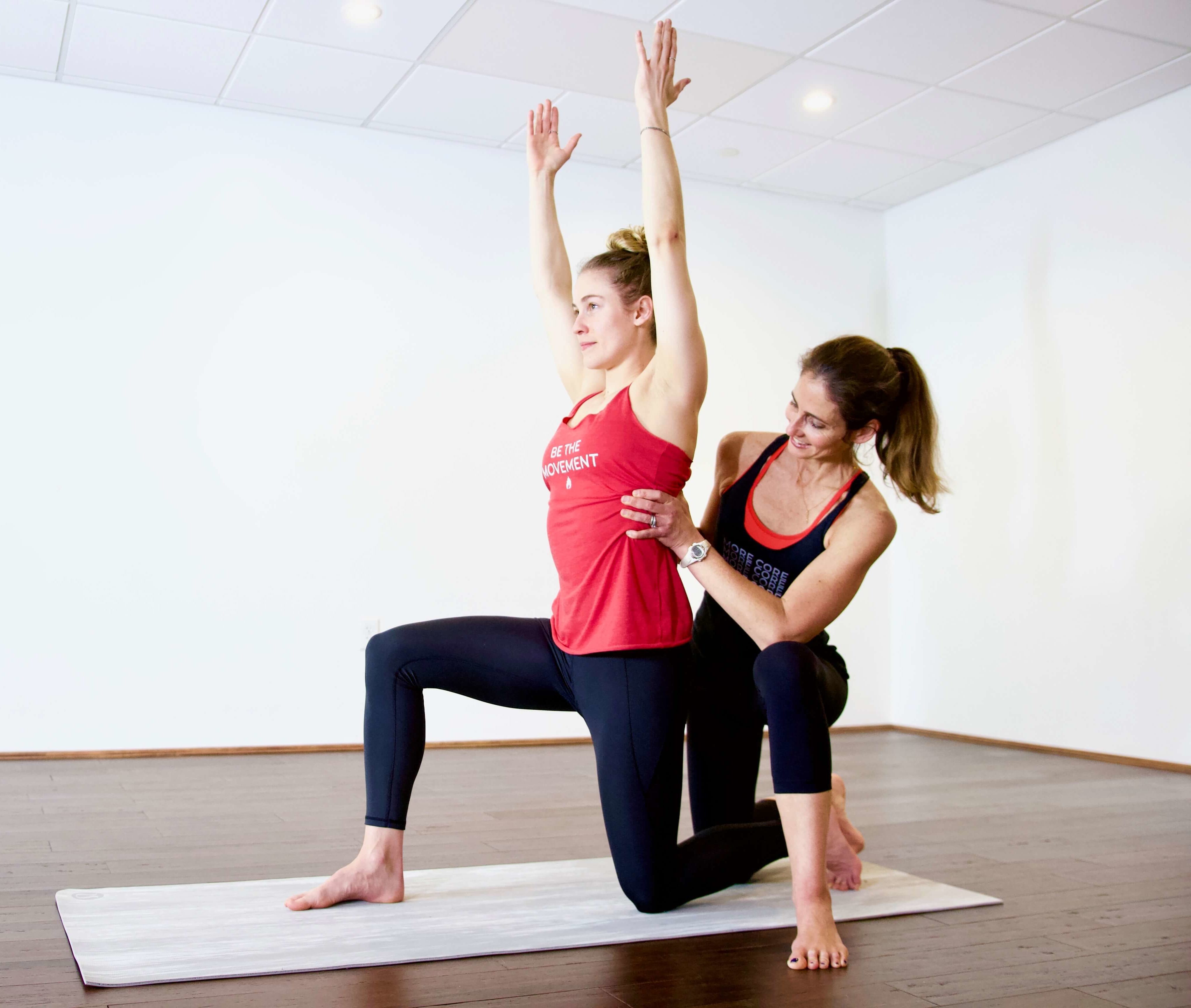
    Today’s episode is all about connecting to your core without doing abs. In other words, the traditional kind of sit-ups or anything that involves getting on the floor. I really love doing those at the beginning of class because there’s something about awakening these muscles before you ask them to do the job that they’re supposed to do, which is primarily to hold your center steady and strong so that you can move your limbs with ease. The exercises I recommend in this episode will enable you to work your deeper abdominal muscles.


    How to connect to your core without doing floor work

    Go against a wall and put yourself against the wall so that your back is on the wall and you’re facing into the room, then bend the knees and walk your feet a little bit away. Press back into the wall with the back of your ribs and then draw that whole circular area around the navel, draw it together first and then back towards the wall. And if you find that to be challenging, take your hands and do that action with your hands so your fingers will pull in toward the navel, and then pull back. So you’re almost acting as your own corset with your hands. I would say do that many times a day to start that action of using the core without having to get down on the ground.

    Then the idea is to take that feeling and incorporate it in your daily life. So come away from the wall and start to bend your knees. But then immediately hinge at your hips so you’re doing a squat. Come down so that your hips are still higher than your knees, but your torso starts to fold over like it would sit on your thighs. So it’s really keeping everything symmetric. Your hips go back, your knees bend, and then keeping the chin neutral, stay at a place where your belly isn’t on your thigh. Then do the same action you did on the wall, pull everything together from that solar plexus, from that circle, and then pull it into the back and hold there.


    So now you’re utilizing the core, you’re working the abs without being on the ground by stabilizing your spine as it starts to flex. You’re flexing at the hips, but the trunk is moving from a vertical position. So more gravitational forces are going to be pressing down on the spine. So your reaction is to pull up in the abdominals. The next stage from there is to stay tilted like that but slide your right leg back beyond the right toes. So if you have shoes, take the shoes off if possible. So you’re now from that squat position where you’ve tipped, you’ve tilted forward, your hips are back, you’ve held your belly in there, and I would say try and hold it for a minute and work your squats up to two minutes, three minutes. Then you slide that right leg back. 


    So you’re in this crescent lunge, but a tilted crescent hill lunge. So your right leg is back, your left leg is forward and the abdominals are in. And then stay pulled in from the solar plexus, pull the belly into the back and bring your hands at kind of the tops of your pelvis. So right where the jeans would sit, put the hands there and cinch the sides in as well. So you’re working the abdominals all the way down there. Then you could bring just your right arm forward by your right ear. And then bring your left arm back. So now you’re in this tilted crescent lunge where your right leg’s behind you, your left leg’s in front, your right leg is straight, you’re on your right toes. The right arm is by your ear. We’re working the abdominals because you’ve got gravity happening. You’re now moving your arms as well as trying to stabilize the grounding action of your legs.

    And then you repeat all of that on the other side. So the right leg would be forward and the left foot back. 


    And for somebody who is someone’s grandmother, for example, I would give them an exercise like this but I would just have them hold on to the wall or a chair for the balance in that tilted crescent lunge. But no one is ever too old or too disabled in their movement patterns to start working more from their core.


    Help break a world record

    Come and join me on August 3 in New York City to break a world record for the most amount of handstands done simultaneously! Right now the current record is 399 and I want to smash that. You don’t need to know how to do a handstand. I’m going to take an hour and take you through a class that will give you the building blocks of how to get on your hands and get a little air time. We just need you to get off the ground briefly. 


    Resources:

  • 112 | What To Do About Knee Pain | with Lara Heimann

    112 | What To Do About Knee Pain | with Lara Heimann

    Today’s podcast is all about knee pain. I have so many people ask me on a regular basis what they can do about the pain that they are experiencing in the knee or knees, and the knee is one of the most common body parts to get injured. The types of knee pain that people experience are due to a variety of causes and a lot of it is to do with the anatomy of the knee itself. The most common thing that I deal with is overuse injuries, but so much of this can be avoided or can be remedied when you work on your overall mechanics of the body, and that starts with how you stand.

    Things to look at if you are experiencing knee pain include:

    • How are your hip and your ankle moving? 
    • What is your running technique like? 
    • Are your glutes weak? 
    • Can you stand on one leg easily and not let that hip slide out to the side or do you kind of lock out at the knee?
    • Is your core weak?
    • Are you are you doing a variety of movement? 
    • Are you overly training one particular way? 
    • Did you increase whatever you were doing really, really quickly?


    Resources:

  • 111 | How Movement Can Help With Procrastination with Lara Heimann

    111 | How Movement Can Help With Procrastination with Lara Heimann

    The brain is capable of collecting so much information. We’re constantly collecting, and sorting and organizing information to either be stored or not stored. But because the brain is so powerful, it has the propensity or tendency to go into what’s called wayward thinking, where we would just float into this state of different emotions. And this is where we have a lot of strange impulses that work for us, like fight or flight or freeze. 


    This probably worked for us from an evolutionary standpoint, but the more advanced and evolved part of the brain is capable of overriding these impulses. And so we need to train that part of the brain to help us when we tend to do things like procrastinate. A lot of the reasons we procrastinate is boredom, but also an underlying fear of or frustration of all the things we have to do. We get really bogged down in the to do list. Our brain especially doesn’t do well with multitasking because there’s too many parts of it that are being stimulated.


    Strategies for dealing with procrastination include:

    • organizing the brain, for example by keeping written lists of what needs to be done
    • disconnecting from technology so we’re not taking in a constant stream of information


    Movement can also help overcome procrastination because exercise has such a positive effect on your brain. When you raise your heart rate even a little bit, you’re going to pump more oxygen to the brain, making the brain happier and more able to focus. You’re also releasing hormones, which are giving an environment and ecosystem for growth. You’re stimulating the connections between the cells to grow so you’re literally growing the brain, making it more robust and more capable of handling information. That makes us feel better and more capable, and all of those feelings are the perfect remedy for procrastination.


    Resources:

  • 110 | How to build new neural pathways | with Lara Heimann

    110 | How to build new neural pathways | with Lara Heimann

    Today’s episode covers what you can do to build new neural pathways. The brain is like a muscle, it can grow and change. Fifty years ago, scientists believed the brain was rigid and wouldn’t grow after a certain age. Now we recognise the neuroplasticity of the brain; the ability to reorganize neural pathways. 


    There are a number of ways to grow these pathways in your own brain. For example, be curious. Be like Leonardo Da Vinci, take a detailed interest in the world around you. Curious people are less likely to be stuck in the same routine. Every time you have a new experience, pathways are lit up and may develop. Every time you learn something, this creates more passages. Movement is also a great way to develop these pathways.


     Here are my tips on what you can do to grow these neural pathways. 


    • Get on your hands. Try crawling around the house. It works both hemispheres of the brain and acts like a jet fuel for the brain. Try hand stands. Practice weight bearing on your hands.
    • Change over your dominant hand/foot. Use your other hand and foot to fire up neural pathways.
    • Sensorial restriction. Stimulate the brain in a different way such as closing your eyes when doing yoga. Doing everyday tasks with fewer senses involved promotes neural pathways as the other senses take hold.
    • Meditation. This helps you “pull in” your senses. For the purpose of boosting neural pathways, close your eyes during a meditation session. Harnessing the control of your senses during meditation and journeying into the brain creates stronger pathways.
    • Change your routine. Doing so, even a little bit, will boost neural pathways. New experiences create new pathways. Notice how your brain reacts with the new routine.


    The overarching part of all these techniques is an increase in curiosity. Getting the brain to work in different ways. Always write things down with a pen as this stimulates the brain as well. The physical act of writing improves retention.


    Create and think and grow and expand!


    Resources: