Category: Podcasts

  • 109 | Taking advantage of summer to look after yourself | with Lara Heimann

    109 | Taking advantage of summer to look after yourself | with Lara Heimann

    Today’s episode is about summer self-care tips. Summer is such a great time for looking after ourselves. It’s a time of freedom and enjoyment — we’re hard-wired to believe that as kids— and we carry that into adulthood. However, looking after yourself in the warm weather is very important and here are some summer self-care tips that I use to take advantage of this time of year. 


    1. Make time for the things you love to do. You have more time, more light during summer. Use this to do things you want to do. Plan to have a little “staycation” at home.
    2. Enjoy movement. The longer hours means we have the opportunity to rediscover movement more. Outdoors yoga, bushwalking, playing frisbee. This is an opportunity to reconnect with the movement of our body.
    3. Enjoy the amount of added daylight. Get out in the sun and take advantage of the added light (in this part of the world). Protect your skin but get that natural source of Vitamin D. Getting outside more will also make your sleep better.
    4. Take a break from technology. There is something rejuvenating about giving yourself a break from technology. This time of year gives you that opportunity to give yourself that extended time away from screens, social media, emails etc. Giving yourself this break is like a reset button for your brain and body.
    5. Eat well and enjoy fresh food. We can move more and eat better in summer. How we eat is a form of energy. Fresh produce abounds in summer! Go to a farmers’ market or farm and pick the freshest. Try something new!


    Resources:

  • 108 | Supporting and taking care of the sacred sacrum | with Lara Heimann

    108 | Supporting and taking care of the sacred sacrum | with Lara Heimann

    Today I talk about the sacrum, one of the most essential parts of the human anatomy. The sacrum is a triangular structure located at the base of our spine which acts as the bridge between our spine and our pelvis. 


    The bulk of the sacrum lies between the two sides of the pelvis. Energy from below is transferred back up the spine through the sacrum and vice versa. Clearly, the sacrum is vital, if we didn’t have one, we wouldn’t be able to do anywhere near as much movement as we do.


    So important is the sacrum that its name means sacred in Latin. The Ancient Greeks and Romans both recognized its importance.


    Proper balance is the key to a happy and healthy sacrum as it is the center for support of the body. The muscles around the sacrum need to be well balanced to carry out this job. Get the glute muscles firing including pelvic floor muscles. Boost the muscles to the front and back of the sacrum so it isn’t being pulled on.


    The coiled energy contained in the sacral area has the potential to extend further energy throughout the entire nervous system.


    Resources:

  • 107 | Leave Your Problems At The Door | with Lara Heimann

    107 | Leave Your Problems At The Door | with Lara Heimann

    This episode is titled “How To Leave Your Problems At The Door” and I use the example of my yoga teacher training classes to show how important it is to put space between the various parts of our lives. However, the episode is aimed at anyone who needs to put boundaries between work, home and social life.


    How do we create “safety zones” in our lives between those various parts of our day-to-day existence? I see this a great deal in my yoga teacher training and I say to my students that, whatever is going on in their personal lives, they will need to be careful not to bring them to class as teachers. As yoga educators, you’re of service to others. I tell them they should guide and support the experience of students. That’s difficult to do if you bring in outside problems.


    This applies to anyone who comes home after work with related stress. It’s so important to leave these problems, worries and stresses that happened during the workday, at the door. Leave whatever is happening in your work life there, like a coat. It’ll still be there tomorrow but may well feel lighter after being given some space.


    The yoga mat gives us an opportunity to practise this. Through movement, we can shed some of this. There’s a different energy about you when you go to work and vice versa. If there are problems, practise not taking them into the separate spaces. Use your movement exercises on the mat to change your mood.


    This will enable you to keep your feelings apart.


    Resources:

  • 106 | Days Off For A Mental Recharge | with Lara Heimann

    106 | Days Off For A Mental Recharge | with Lara Heimann

    Should you take regular days off to recover? This is a key question and one I cover in detail in today’s show. Resting for a day a week for elite athletes helps the immune system recover from the demands placed on it through vigorous workouts during the week. Mental and physical recovery is therefore imperative for elite athletes. However, a day off is still important for the rest of us, though it is more to recuperate mental health than anything else.


    Resting our bodies to relax our minds. You don’t need a recovery day for your body if you’re not placing acute demands on your bodies. However, when you place too much physical stress on your body, you need to make plans to have a physical recovery day. By upping the frequency of an activity, you may need to consider that recovery day, depending on the frequency and strenuous nature of the activity.


    We are designed to keep moving, every day. Not necessarily at the same high level, but even walk, swim a little bit on our recovery day. I’m a great advocate of listening. Listening to your body and mental health. Taking that rest if it’s needed. Differentiate through between listening and just falling into a habit of doing nothing.


    • Listen to your body and your mind.
    • Have a recovery day if you are (a) increasing your stress load or (b) increasing the frequency of heavy exercise.
    • Starting up with a new strenuous activity.
    • Consider a recovery day for mental quietness. Perhaps a day where you remove yourself almost entirely from screens. Connect with nature and people.


    Resources:

  • 105 | Trip Planning and Dealing With The Unexpected | with Mark Heimann

    105 | Trip Planning and Dealing With The Unexpected | with Mark Heimann

    This episode I chat with husband Mark about the planning of hikes and trails including which matters need to be taken into account before you set out. We also talk about our original inspiration behind hiking and how to deal with unexpected events.  


    We also chat about the following:


    • Doing the research before hiking.
    • Factoring in time frames for the hikes.
    • Including children’s needs on the trip.
    • The drawbacks of going through tour companies.
    • With vegan needs, it’s often much better (and more cost effective) to do the arranging yourself.
    • The importance of booking well in advance.
    • Planning for rainy days.
    • Getting the lightest shoes that you still find comfortable.
    • The importance of using hiking poles. Great for balance and working your core.


    We also talk about why we choose to go on trails in the UK and go into detail about the natural advantages of walking through this country. Keeping an extensive blog of each is also highly recommended, something that becomes an invaluable resource for both you and other hikers. 


    Needs of children are so vital. We talk about the needs of our daughter Olivia on the hike in the middle of Wales. Her stomach virus meant we needed to create a plan B. As parents we could see she was struggling and so made the contingency plan to fly her home with our friends.


    Resources:

  • 104 | Join Us In New York City to smash a handstand world record! | with Lara Heimann

    104 | Join Us In New York City to smash a handstand world record! | with Lara Heimann

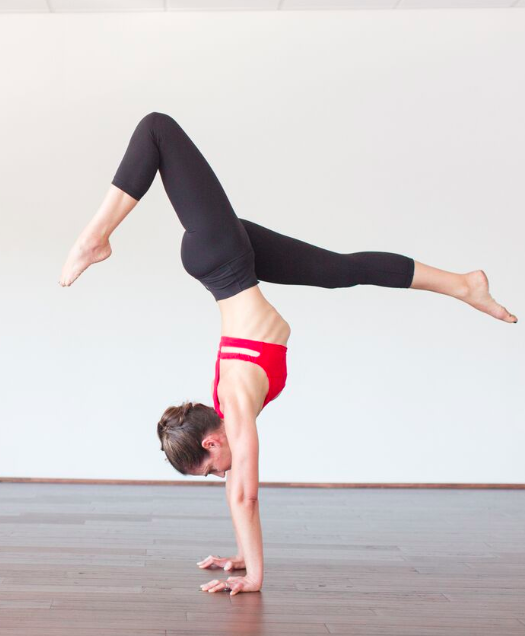
    I always love the idea of setting a goal and getting there and today I talk of our goal of breaking the world record of the number of people doing handstands simultaneously in one area. 


    I don’t just mention this flippantly. I have seen how handstands can change people. How they have gained their sense of self-worth and confidence and changed their lives in accordance with these new-found realizations. All through the exercise of getting on your hands.


    We have the opportunity now, to set the world record for the highest number of people doing handstands in one place, at the same time. It’ll be on Saturday, August 3 in New York City and will be a huge event. A 30-minute yoga class before to warm us up. Please come out to the world record attempt if you’re around! All details to register are on our online website.


    In the meantime practice your handstands!


    Resources:

  • 103 | Working on the energy in your posture | with Lara Heimann

    103 | Working on the energy in your posture | with Lara Heimann

    Today’s podcast is about posture, something I talk about all the time. You immediately have an opinion of someone you see based on their posture. Are they slouched for example? It is from a person’s posture that we receive subliminal messages. We “sense” their energy.


    Slouching is a very closed down position. There is negative energy associated with this position, something we get from the person even if we’re not intellectually aware of the exchange. On the other hand, an aggressive “fight or flight” posture means you stay in a sympathetic nervous system response, which is very stressful.


    It’s important to find a posture that feels balanced, that feels optimal and grounded.]


    • The skull, the shoulder bone and the base of the spine are critical in working out the optimal alignment.
    • Find a more upright spine by leaning up against a wall, or lying on the floor.
    • Notice the area that is not connecting properly to the wall or floor.
    • If one of the three areas feels like it’s pulling away, that’s the area that may be restricted.
    • Work on the head, work on your pelvis.
    • When you find your optimal pose, it will not only help physically but also in your day-to-day energy exchange.
    • Take a picture of yourself to gauge your pose, not judging but looking at how to become more upright, more energetic.


    Learning to see the energy in your own body will allow you to see the energy in others. Correcting our own posture will help boost our own energy and make us better human beings.


    Resources:

  • 102 | Selecting The Right Yoga Teacher Training | with Lara Heimann

    102 | Selecting The Right Yoga Teacher Training | with Lara Heimann

    More and more people are entering yoga teacher training each and every year. Sometimes people enter these classes, not so much to train as a teacher, but to deepen their knowledge of yoga. However, what you often don’t know when you sign up for classes is what you’re going to get for your money.


    As well as the logistics of attending these intensive training sessions, there are a number of other things you should research.


    These include:

    • Do you like the teacher’s philosophy?
    • Does the teacher have a good understanding of the body?
    • Do they understand the body in movement?
    • Are they teaching you to teach yoga?


    I use the example of my cousin to demonstrate this. She wanted to do yoga teacher training and signed up with a famous school. However, she found that it was not really relevant to her. She wanted to learn about the body, learn how to teach people. She learned from her initial response and eventually found what she was looking for. The point I make is that you need to make sure the teachers are top quality and understand exactly what you want to learn.


    1. Make sure the teacher or school, offers exactly the type of yoga training you want to learn.
    2. If logistics are impossible, check out online courses.
    3. Immersive courses work well. 
    4. Being in a destination and learning in person is wonderful.
    5. Understand the style and the teachers of the school.
    6. Are they teaching you how to teach yoga?


    Hone in on the type of yoga you want to teach, the type of teacher that you want to learn from and make that the Number One thing. Have the patience, the perseverance and the clarity to go for what you want.


    Resources: