Category: PT Corner with Kristin Williams

  • Scapular Stability

    Scapular Stability

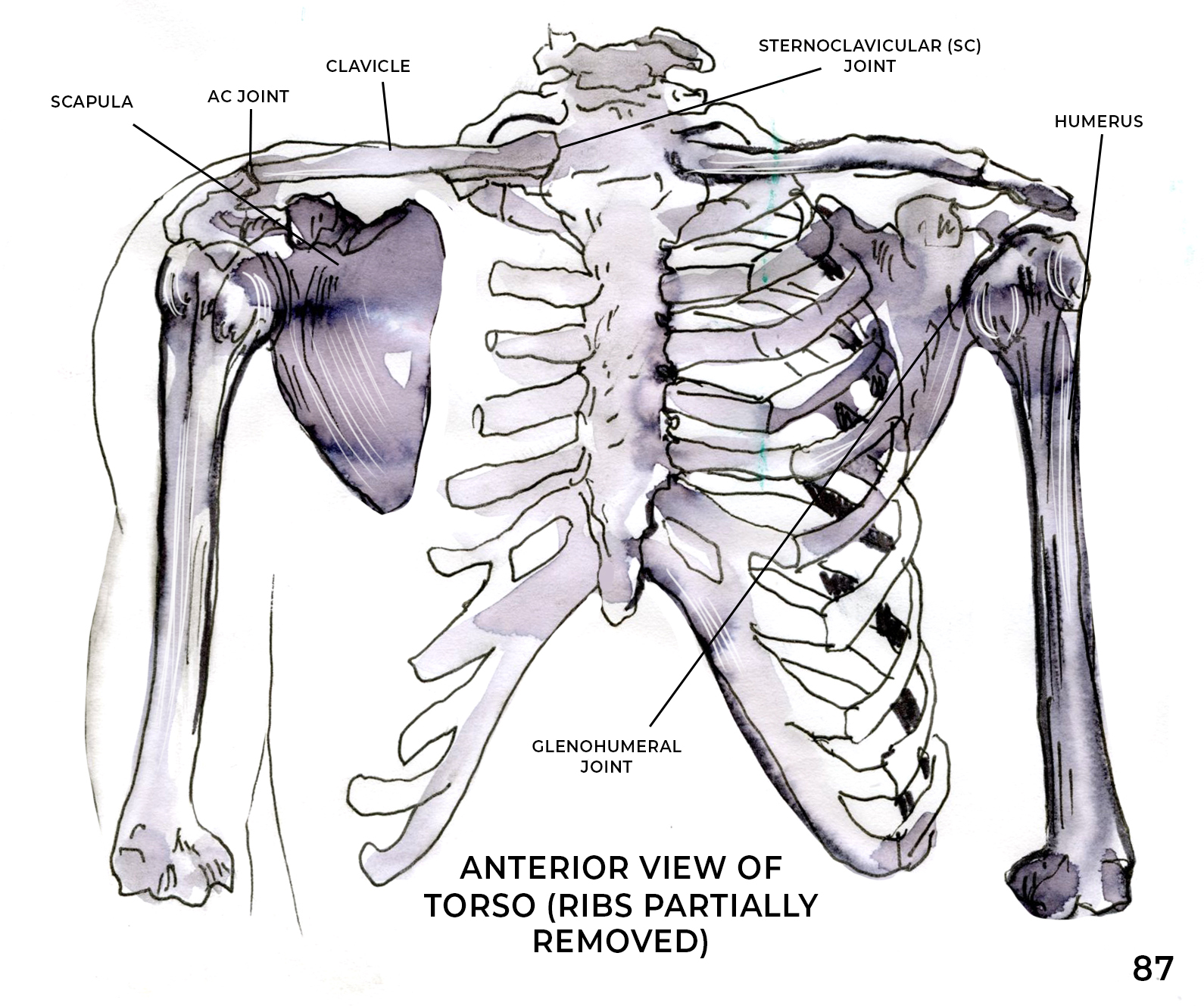
    When most people think of the shoulder joint, they usually only consider the space where the ball of the upper arm bone (humerus) articulates with the socket of the shoulder blade (scapula). In fact, most people don’t even know the socket is part of the scapula. Furthermore, calling the shoulder a “ball and socket” joint is a stretch, as it’s really more like a golf ball sitting on a tee. The socket is actually a small shallow disc (glenoid fossa). The ball (humeral head) is held in place passively by ligaments of the joint capsule and actively by the muscles of the rotator cuff. But the shoulder itself is really more of a “complex”, consisting of four separate joints that must work together to keep the shoulder complex functioning properly:


    1. Glenohumeral Joint – Humerus and Scapula
    2. Acromioclavicular Joint – Scapula and Clavicle (collar bone)
    3. Sternoclavicular Joint – Sternum (breast bone) and Clavicle
    4. Scapulothoracic Joint – Scapula and Rib Cage


    Unlike most joints of the body in which two bones are connected by ligaments and/or discs, the scapulothoracic joint relies purely on a coordinated dance of 17 muscles that attach to the scapula, as well as the mobility of the other three joints, to provide stability for the rest of the arm and shoulder. SEVENTEEN MUSCLES!!! Weakness in any one of the muscles attaching to the scapula, but particularly the large ones like the serratus anterior (Lara’s favorite!), latissimus dorsi, trapezius, and rhomboids, can affect how the shoulder and ultimately the entire upper extremity moves and functions. Poor movement patterns, muscular weakness, and limited joint mobility can lead to pain in and injury to the neck, shoulder, spine, elbow, wrist, and hand.


    Whether you are playing a racquet sport, doing yoga, or just trying to put away the dishes in an overhead cabinet, scapular strength and mobility are key to preventing injury. Weakness in these large “core” muscles can lead to overuse of the smaller muscles of the upper extremity and thereby cause injuries.


    The muscles of the scapula form force couples, which are muscular co-contractions that properly position the scapula for maximum shoulder function and provide a stable base of support for the entire upper extremity. It has been estimated that throughout 90% of shoulder range of motion, muscles (and not passive structures) are responsible for shoulder stability. Scapular issues are commonly seen in people with tight and overactive upper trapezius and pectoralis minor muscles, coupled with weak/underactive lower trapezius and serratus anterior muscles. This decreases the ability of these force couples to occur, resulting in decreased static and dynamic positioning (stability) of the scapula during movement.


    Corrective exercises can be very successful in restoring neuromuscular control of the scapula, helping to return to normal function and enhancing the overall function of the shoulder complex. An exercise program should include proximal kinetic chain exercises aimed at improving scapular muscle strength, flexibility exercises to minimize tight muscles pulling the scapula out of position, and exercises to enhance these functional force couples. In Lara’s podcast, Redefining Yoga, Episode 269 Wednesday Q & A, she describes some great ways to improve your scapular strength and stability. We will also be featuring some classes focused on the scapula in this week’s upcoming LYT® Daily, so be sure to check it out! One of the best places to begin to strengthen and stabilize the scapula is on your mat. I look forward to seeing you there!


    Xoxo,

    Kristin

  • PT Corner with Kristin Williams – Tennis Elbow

    With the desire to exercise outdoors on the rise, an increase in people playing tennis is to be expected, as people consider it to be rather COVID friendly: you can maintain social distancing guidelines and as long as both parties have clean hands, the only physical contact is hand-to-ball during serves. However, with increased time playing tennis comes an increased risk of developing tennis elbow, or lateral epicondylitis (LE). Lateral epicondylitis occurs when a person overuses the wrist extensors, which are located on the back of the forearm and attach to the outside of the elbow (lateral epicondyle of the humerus). The common extensor tendon, which attaches the muscles to the bone, gets inflamed and painful. Chronic overuse of the wrist extensors can cause the tendon to degenerate, at which point the diagnosis becomes lateral epicondylosis and is much harder to treat.


    Tennis is often implicated in LE because the muscles of the forearm act to stabilize the wrist when the elbow is extended, such as during a ground stroke. However, people can develop LE by doing a multitude of activities that require repetitive use of the wrist and fingers into extension, including typing on a keyboard, using a mouse, painting, cooking, and also with manual labor occupations, such as painters, plumbers, carpenters, and auto repair people.


    Symptoms of LE tend to come on gradually and include pain and tenderness in the lateral elbow and a loss of grip strength. Symptoms are worse during activity and ease with rest. Most cases of LE can be resolved with conservative treatment. If you find yourself suffering from LE, here are some home treatment strategies to try:


    • Rest – If you’re able to take a break from the repetitive activities, do so. If not, a tennis elbow strap can be used and acts to transfer the area of stress away from the tendon.
    • Wrist Stretching – With the palms facing down, flex at the wrist (opposite of what we do during the RESET at the beginning of class), bringing the palm side of the hand closer to the forearm. You can use the opposite hand to provide a gentle overpressure. Do this with the elbow bent and straight, holding for 60 seconds. Pronating the forearm and internally rotating the shoulder deepens this stretch.
    • Light Eccentric Strengthening – Holding a 1-2 lb weight (a can of soup works too!) and sit at a table with your forearm supported and hand hanging off the edge. Use the opposite hand to assist the wrist into extension, remove the assistance and hold for 5 seconds, and then SLOWLY lower the weight, bringing the wrist back into flexion (hand hanging below the level of the table). Do 3 sets of 10. Increase the weight resistance as tolerated.
    • Soft Tissue Mobilization – Perform gentle massage along the muscles of the forearm, encouraging muscle length and release of the fascia. A light cross-friction massage of the tendon where it attaches to the elbow can help increase blood flow and healing to the area, but don’t overdo it!
    • Neck and Chest Stretching – a lot of times pain in the elbow is directly related to what’s happening further up the chain. So stretching the muscles of the neck (upper trapezius, levator scapula, and scalenes) and chest (pectorals) can greatly decrease LE symptoms. Good posture is key as well!


    Finally, if the injury is sports-related, you may want to have a professional (physical therapist or sports professional) take a close look at your technique and equipment. Having the proper gear and most energy efficient technique will greatly decrease the demand on the elbow. Having adequate strength in the shoulder girdle and core is also hugely important for treatment and prevention of LE, so stay strong with your regular LYT™ yoga practice and I’ll see you on the mat! 🙂


    Xoxo,

    Kristin

  • Tension Headaches

    Tension Headaches

    Tension headaches are the most common type of headache. Traditionally, they manifest as pain that comes over your head like a hood or around your head like a headband and can occur on one side or both. Any activity that requires the head and neck to be held in the same position for prolonged periods can result in a tension headache. Considering that many of us are spending a lot of time on computers, laptops, and our phones these days, it’s no wonder they are the most common type! Other activities such as physical and emotional stress, anxiety, eye strain, fatigue, caffeine (too much or too little), clenching the jaw, and migraines can also bring them on. Tension headaches occur when muscles in the head and/or neck contract or go into spasms called trigger points. Trigger points send pain in a very specific pattern (such as the hood or headband) and can be reproduced with pressure at specific points in the muscle belly. The good news is that tension headaches and trigger points respond very well to treatment and can be managed independently! Here are some tips to treat and prevent tension headaches:


    • Tape two tennis balls together or put them in a sock and tie a knot to keep them side-by-side. Lie down with the tips of the tennis balls right under the base of the skull. You can maintain static pressure or nod the head up and down and side-to-side for a massage of the tense muscles (called your suboccipitals). This is especially useful if you find yourself in the middle of a tension headache. It may be uncomfortable at first, but eventually, the muscles will relax and you’ll find relief.
    • If you work at a computer all day, set a timer on your phone to go off every 30-60 minutes. Take a few minutes and do the following each time the timer goes off:
      • Perform 10 Chin Tucks – sit up tall and draw the ears back in line with the shoulders. Hold 5 seconds each.
      • Lean your head to one side, hold 20-30 seconds, and then the other side.
      • Interlace your hands behind your head, draw your chin down to your chest, and gently press straight back into your hands until you feel a stretch at the base of the skull. Hold 10 seconds. Turn your head 30 degrees (looking towards one armpit) and press gently back into the hand on that side. Hold 10 seconds. Repeat to the other side.
      • Keeping the hands behind the head, arch back over the top of the chair, allowing the thoracic spine to extend and the chest to open. You can hold for 10-15 seconds or rock slowly back and forth, flexing and extending the upper back.


    They say an ounce of prevention is worth a pound of cure, so the best way to keep tension headaches at bay is by maintaining good posture throughout the day and managing your stress with your regular LYT yoga practice! Tadasana, or Mountain Pose, sets the head, shoulders, hips and ankles in perfect alignment, allowing those suboccipital muscles to lengthen out, and takes strain off the muscles of the neck by eliminating their need to hold the head up. So find Tadasana to eliminate Tension!


    Xoxo,

    Kristin

  • Knee Pain with Running

    Knee Pain with Running

    With spring finally here, it’s time to talk about common injuries sustained with increased outdoor activities! Especially if you’ve been cooped up in the house over the winter and have the itch to hit the road running. Overuse injuries of the knees such as patellofemoral syndrome are common in the spring and early summer. Some key ways to avoid anterior knee pain associated with patellofemoral syndrome (also known as chondromalacia) include:


    1. Make sure your shoes aren’t past their expiration date! A good rule of thumb is to replace your running shoes every 500 miles. If you aren’t a regular runner and they’ve just been sitting in the closet for years, it’s probably time for a new pair sooner than that due to structural breakdown of the shoes themselves.
    2. Avoid running on the edges of the road where the pavement is crowned. Whenever possible (and only if there’s no traffic), run in the middle of the road or change sides regularly. This makes early mornings the best time to run when the traffic is the lightest.
    3. Softer surfaces are your best option, so choose the towpath over the road and the road over the sidewalk. The softer the surface, the less the force through the joints.
    4. Warm up before you hit the road. A few rounds of Sun Salutation 1 (what we begin every class with) is a great way to get limbered up, followed by a short walk. Taking the time for some static stretching at the completion of your run is a good idea too (like those in Stretch class).
    5. Build up your mileage slowly. No more than 10% increase per week is a good rule to follow. Start with just a mile or two and gradually increase. Doing a walk-run combo is a surefire way to keep injuries to a minimum, especially if you’re new to running.


    Happy knees, happy running!


    Xoxo,

    Kristin