Category: Blog Posts

  • Find out more about the LYT Level 1 Teacher Training

    Find out more about the LYT Level 1 Teacher Training

    We sat down with Rhonna Griffin, LYT Director of Education and Programming and LYT Senior Instructor, to ask some questions about the LYT Yoga Level 1 200-Hour Teacher Training. Read on to find out more!


    Q: How long has the LYT Yoga Method been around and when was the first online guided LYT Yoga Method teacher training?

    A: Lara started intentionally crafting the method and teaching from her home studio 20 years ago. As her children grew older and the demand for her classes grew she ran her first teacher training in 2012 and opened her first public studio in early 2013. Since that time we ran eight in-person trainings before creating our first online teacher training in January of 2020.


    Q: How many cohorts have there been and how has each teacher training evolved?

    A: Currently, we are enrolling our seventh group (cohort) for the Guided Online Teacher Training. Some of the biggest changes we have made since the original online training launched in 2020 are incorporating more perspectives through the Philosophy sections and refilming the original classes to incorporate more diverse bodies both in gender, age, and experience. More recently we added mentorship to the Level 1 training, which is a wonderful way for trainees to have another contact point with the LYT Team as well as an ongoing support system. Finally, we began offering a complimentary movement consultation to allow all participants to get experienced eyes on their own practice so they can get specific feedback to achieve their training goals. 


    Q: What do you wish people knew about the teacher training that maybe isn’t as obvious until you’re doing it?

    A: I wish people knew how much LOVE is put into the training. Every single person involved loves what they do and looks forward to supporting the trainees. This energy and care truly cultivates a sense of family and community that always delights me even though I have seen it happen time and time again.


    Q: What do you say to someone who already has already taken 200+ hours of yoga teacher trainings to still consider taking this one?

    A: This training is unlike anything you have done before because of its physical therapy foundations. Every pose and every move is explained from a biomechanical perspective so that you can truly understand the WHY behind them all. There is more emphasis on understanding and encouraging you to be a critical thinker rather than just repeating cues you may or may not understand.


    Q: As one of the lead teacher training instructors, what is one of your favorite things about leading the teacher training?

    A: I love seeing people from ALL OVER THE WORLD come together with the shared vision of discovering how to move better and share that love with their communities. 


    Q: Can you share a bit about how you’ve seen teacher trainees connect and network over the years through LYT workshops and retreats?

    A: I think this is actually my favorite part of my job. Our LYT Family FB group is open to all people who have gone through the Level 1 training. This allows cross-cohort introductions to be made and then deepened through continuing education courses such as Sequencing Labs and the Level 2 training. Of course, as a travel junkie, I LOVE getting my feet on the ground and hosting community events in areas where we have a density of trainees and being the conduit for them to gather and meet in real life. Such a joy.


    Q: What are some ways you’ve seen certified LYT teachers take what they learn in the training and use it beyond teaching LYT yoga classes?

    A: Such a great question! I love that we have so many people who also teach other disciples and are able to incorporate the ideas and cues we use in LYT into their respective activities. Some examples are people who coach horseback riders and baseball players, teach cycling classes, weightlifting, reformer pilates, and more. LYT is more than just a “type of yoga” it is a Method of moving that can be carried out in any discipline. Additionally, we have seen our instructors collaborate together to host workshops, retreats, teacher trainings, and even open studios with the LYT Method as the primary class type!


    Q: What can you tell me about the closed-captioning aspect and why this became a necessary feature for the training to include?

    A: Since the very first online teacher training our percentage of non-native English speakers has been significant. It felt like a natural progression for us to start making our training more accessible to that population as well as others for whom aural and visual comprehension is not their strongest learning modality. Adding the closed captions (subtitles) supports all these groups so that they can deepen their understanding of the concepts by reinforcing with text what they are hearing and seeing in the videos.


    Q: For some people, it can feel daunting to take an online training course and hold oneself accountable versus an in-person training. How does the LYT Teacher Training help combat this obstacle?

    A: Great question! I think the first thing I want to tell people is that it is NOT a requirement to watch every single video and understand every single concept in order to certify. There is an abundance of content that is intended for you to go back to and refresh as often as you’d like. This is the benefit of the online training over in-person, that you do have all the recorded content to refer back to for years to come. Additionally, the mentoring sessions really give you that sense of community and weekly accountability to show up and continue to engage in whatever way is available for you. Finally, we offer three to four weeks after the end of the ten-week course to submit your materials for certification. Should a trainee need significantly more time than that we can offer unlimited certification time with our Administrative Certificate process for a fee.

     
    Purchase LYT Level 1 Teacher Training

  • THE POSTURE DEBATE

    THE POSTURE DEBATE

    Posture Doesn’t Matter: What are they actually trying to say and what’s missing from this conversation


    by Thalia Wynne, PT, DPT, AT, RYT-200


    We’ve all heard it before: Posture doesn’t matter. And here at LYT we advocate that posture DOES indeed matter. If you have gone through LYT teacher training, then you understand why we advocate for posture. If you’ve taken a LYT class, you know first-hand how great you feel after a LYT teacher guides you to optimize your postural habits. It may seem incredulous that people don’t believe in the benefits of improving their posture. So, when people say posture doesn’t matter have you ever wondered why? Where is this coming from, and what are they actually saying? And how is this debate being misconstrued?  


    We are stewards of knowledge. This means it is important to investigate both sides of a debate. Firstly, the truth lies somewhere in the middle, and we often get so attached to our belief system that we become blind to that middle ground. Secondly, on either side of this posture conversation – when people misunderstand or oversimplify it, they perpetuate further miseducation. I encourage you to read this blog post with an open mind so that you too can embrace your status as a steward of knowledge. (I’m totally picturing us as maesters at the Citadel – shout out to any GoT fans reading this!) The next time this conversation topic comes up, you can truly educate others from a place of understanding, your own experiences, and areas of expertise.


    Okay, let’s break this down. A colleague of mine recently presented a journal club all about what he called The Posture Narrative. He presented article after article of studies investigating and disproving “perfect posture”. The article I’ve cited below is what I will be using to explain what this literature is trying to say. Further, I will explain why I think the general statement of “posture doesn’t matter” is perpetuating a false narrative and is NOT aligning with what they are actually saying.


    Here are the points they are suggesting are untrue/outdated knowledge:

    • Avoiding spinal flexion is the safest way to sit and bend
    • You must have a straight back or slight bend of the back during lifting tasks
    • There is one single ideal standing position
    • It is unhelpful/incorrect to say, “Sit Up Straight” “Sitting is bad for you” and “your pain is caused by your swayback posture”


    The article cites literature that has shown:

    • No strong evidence that avoiding incorrect posture prevents low back pain or that any single spinal curvature is strongly associated with pain
    • People with low back pain bend their spines less and show more trunk muscle activity when forwarding bending and lifting


    The authors also suggest that the narrative of “perfect posture” creates and reinforces stereotypes that your posture is a direct reflection of respect, attractiveness, and morality. That fear is being created. That overemphasizing perfect posture creates a belief that slouching and bending one’s back will lead to harm and that spines are fragile which creates fear-avoidance behavior. They then remind the reader to remember that just 40 years ago, the medical community thought that bed rest was the way to treat low back pain and this idea has been disproved by the literature and accepted by medical personnel as more harmful than helpful. They are implying that the idea of “perfect posture” as a treatment approach is the new “bed rest”.


    Here are my thoughts on this. The bottom line is that there is no such thing as perfect posture. We should be able to move in and out of any posture or position. Aka Posture = adaptability. I think we can all agree on this. The triple ‘S’ concept is not about creating a perfect posture that we must sustain at all times. It is about aligning your unique anatomy in a way that allows you to optimize the way your joints move, muscle firing potential, and to maintain a peaceful length-tension relationship with your fascial slings. When have we ever given the advice that you have to sit up straight and REMAIN IN THAT POSITION? Never. Postural alignment has always been about optimization of movement patterns.


    I do agree that we cannot put a causation stamp on posture. Did “bad” posture cause the back pain? Or did the back pain cause the bad posture? We don’t know. And while there are correlations between poor movement and pain, the literature is clear that there is no causal relationship here. This is a valid point. Does this mean we should not address posture and movement patterns? No. And the authors agree on this point stating “We strongly encourage building a relationship with patients to explore why they adopt certain postures.”  


    The main point of this debate is this: “Advice given by clinicians can lead to fear and encourage hypervigilance”. As movement instructors, we should never aim to create fear in our clients. Lara, the founder of LYT yoga, has always been clear on this. The goal is to empower our clients by showing them what they are capable of. To remind them that they are strong. To illuminate the ways they have been neglecting to move and restore total motion if movement abilities have been lost.


    Remember the concept of ‘use it or lose it’. If we never get into a ‘triple S’ posture, we may over time lose the ability to find it. I believe that for optimization of the biomechanics of our musculoskeletal system, one should be able to get into a triple ‘S’ or “neutral” spine position, in whatever way that means for that specific person. For someone with a kyphotic thoracic spine, that might mean that their head is slightly forward compared to someone with a less kyphotic thoracic spine whose ‘Triple S’ may look more like what is perceived as “perfect posture”. Both versions of this are still a ‘Triple S’. ‘Triple S’ is flexible.


    Static posture is one place we look when going through a physical assessment. It only tells part of the story. “Sitting up straight” will not necessarily keep someone from ever experiencing pain as the article suggests. Matter of fact, if you sat that way for a long time, your muscles would start to ache, shouting at you to move, please. The goal of postural education is not to limit someone’s movement pattern to strict neutral spine only movement type as the author suggests it does. That is doing a disservice to what posture advocates like myself and the LYT team are educating about. The only goal of postural education is to develop our clients’ understanding of movement patterns to increase longevity of movement abilities. This means maintaining all movement capacity, including being able to perform a forward fold and flex the spine. Posture education is just the first stepping stone to movement restoration.


    Of course, if you stop at static postural “perfection” then you have only given your client the first chapter of the healthy movement book. I believe that in actuality, the posture doesn’t matter article is just trying to remind movement experts to remember to read our client’s the whole book.


    I hope that you enjoyed reading my thoughts on this debate. I encourage you to formulate your own opinion, even if it disagrees with mine. Let us all remember that our goals are the same. The “posture nay-sayers”, if we want to call them that, want to help their clients get better just as much as we do. Let’s find the common ground that posture does matter and there is no singular “perfect posture”. There are a range of positions that can be considered optimal posture. And it is just one piece of the puzzle. As always, pain and dysfunction are multi-factorial and rarely have one single cause.


    If you liked this article, forward it along to a friend! Let’s keep the conversation going in a loving way.


    XO,


    Dr. Thalia Wynne, PT, DPT, AT, RYT

    IG: @thalialovee


    Reference: Slater D, Korakakis V, O’Sullivan P, Nolan D, O’Sullivan K. “Sit up straight”: Time to re-evaluate. Journal of Orthopaedic & Sports Physical Therapy. 2019;49(8):562-564. doi:10.2519/jospt.2019.0610

  • Thyroid Health – Association and Risks for Frozen Shoulder

    Thyroid Health – Association and Risks for Frozen Shoulder

    by Sarah Apple Kingsley, pt, dpt


    Frozen shoulder, also known as adhesive capsulitis is a disease or disorder in which you begin to lose the function and range of motion of your shoulder. It is associated with a thickening, scarring, or contracture of the capsule that surrounds the shoulder joint. Pain is often associated with this condition, however, the hallmark is loss of range of motion and stiffness of the shoulder.


    Typically there are three phases associated with Adhesive Capsulitis and now more formally and appropriately referred to as Rigid Shoulder. 


    • Stage 1 Freezing – A gradual onset of pain that lasts anywhere from 6 weeks to 9 months. As the pain progresses, a loss of motion slowly begins.
    • Stage 2 Frozen – The pain subsides, however stiffness and loss of motion remains or worsens. This phase can last anywhere from 4 to 9 months.
    • Stage 3Thawing – Range of motion and function slowly begins to return to normal over a period of 5 months to 2 years.


    This dysfunction can be caused by a variety of factors, including Diabetes (especially Type I), injury or surgery to a shoulder, Parkinson’s Disease, and Cardiac Disease. In the past Diabetes was regarded as the highest association and risk factor for this condition. However, now confirmed, one of the main risk factors stands to be thyroid disease including both hyper and hypothyroidism. 


    A 2020 study evaluated the association between thyroid disorders and frozen shoulder in those having experienced a rotator cuff tear in a population of 166 individuals. The study concluded that the relative risk of developing frozen shoulder following a rotator cuff tear was 2.69 times greater in those with thyroid disorders. The study also showed this risk was significantly greater in females with poor thyroid health as opposed to males. Results also revealed the risk of developing frozen shoulder was higher in individuals with hypothyroidism and those with the presence of benign thyroid nodules. This study was the first of its kind to specifically assess the association between frozen shoulder and rotator cuff tears, however, it did not analyze the association between frozen shoulder and shoulder injuries in general. My guess is that the risk would be similar, if not even greater with a broader diagnosis. 


    WHY??!!


    The shoulder joint is one of the most complex in the body, consisting of multiple bones, ligaments, and tendons that are surrounded by a capsule of connective tissue. Frozen shoulder occurs when there is an irritation of the structures within, leading to inflammation of the capsule. This inflammation causes the capsule to contract or constrict causing scar tissue formation. INFLAMMATION is one of the most common and classic symptoms of thyroid disease, thus likely contributing to the cause of a frozen shoulder. Endocrine disorders in general, including thyroid diseases, lead to hormone imbalances in the body, making it poorly able to respond in appropriate manners to internal and external stressors. This typically leads to a build-up of inflammation in the body with needs for highly functioning detoxification mechanisms in place in order to combat, which are also typically lacking in those with autoimmune or endocrine diseases. 


    WHAT SHOULD I DO??!!


    If you know or suspect thyroid disease or dysfunction, take matters in order to boost your thyroid health. Speak with your doctor if prescriptive or naturopathic thyroid support supplements are appropriate for you. You can also support your thyroid with food! Some thyroid-boosting foods include sea vegetables, brazil nuts, wild salmon, eggs, sesame seeds, pumpkin seeds, grass-fed beef, spinach, shrimp and scallops, cashews, and fermented foods such as greek yogurt, kombucha, or sauerkraut. 


    Lastly, PREVENT SHOULDER INJURY! Keep your shoulders healthy by performing consistent and effective range of motion and shoulder strengthening exercises, especially targeting the scapular muscles. Exercises and stretches to open the chest and prevent impingement or irritation are especially helpful. Our bodies LOVE TO MOVE. It helps to encourage the detoxification process of flushing out the tissues. Find a physical therapist or skilled personal trainer to help guide you in appropriate shoulder mobility and strengthening exercises to prevent your risk for shoulder injury, and then it won’t get locked up! And check out all of our shoulder-focused classes on LYT Daily to help you keep your shoulders healthy and mobile. 


    References:


  • Fascia and Why We May Want to Release It

    Fascia and Why We May Want to Release It

    Coming up next weekend (Sunday, February 12, 10-11:30am ET), Lara is doing her monthly workshop on ways to take care of our various soft tissues. Sounds AMAZING right? One area she will be focusing on is fascia and if you’re wondering what fascia is and why you may want to free it up, keep reading. 🙂


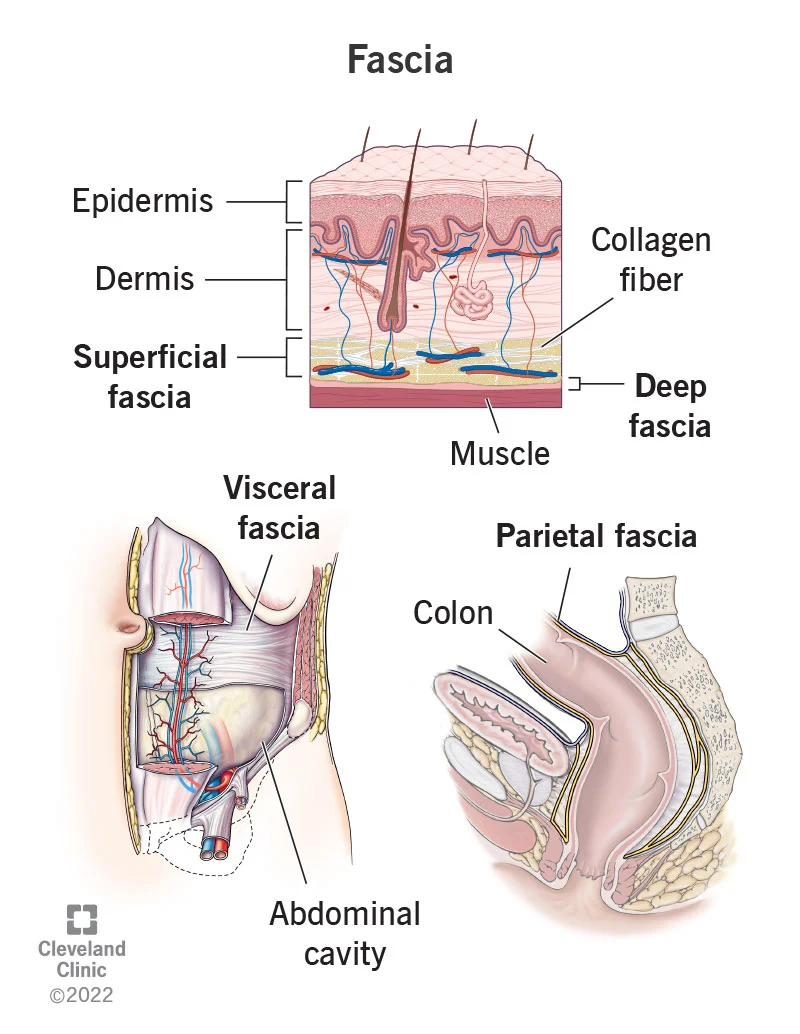
    Fascia is a connective tissue that covers every structure of the body, giving it form and function. It wraps, penetrates, supports, and forms the skin, vascular and nervous structures, bones, organs, and muscles. This three-dimensional structure provides an environment that allows all of the systems of the body to operate in an integrated way. Another important feature of fascia is that it is capable of responding to mechanical stress. It constantly transmits and receives mechano-metabolic information to influence the shape and function of the body.


    Because fascia is one of the richest sensory tissues in our body, it has both mechanical and emotional effects within the body. Normal movement is due to the presence of fascia. It allows the sliding of muscles, nerves, and blood vessels between joints, and the organs to slide and move in response to the position of the body in space. Whenever we change position, mechanoreceptors in the fascia detect the change, send the information to the brain where it is interpreted, and then this information is relayed to the muscles. Dysfunction of the fascial system can cause a disconnect between the central nervous and musculoskeletal systems and greatly affect posture and movement patterns. In addition to these receptors for spatial awareness, receptors for pain and body image/awareness are also found within the fascia. Since they are in close proximity to one another, disruptions may affect these areas as well. In fact, the position of the body has been shown to stimulate areas of emotionality in the brain. Therefore, dysfunction of the fascial system can change not only one’s posture, but also one’s emotional state, body image, and pain perception.


    Fascial dysfunction can occur for a variety of reasons. Stress on the fascial system due to poor movement patterns, sub-optimal nutrition, habitual postures, and physical or emotional trauma can all impact fascia’s ability to glide and slide. The absence or reduction of sliding causes an inflammatory environment, which creates adhesions between the various fascial layers. These adhesions then vascularize, become innervated, and can be the reason for recurrent pain, stiffness, tissue fatigue, and reduced function. Furthermore, compensatory movement patterns secondary to adhesions can then occur, resulting in more stress on the fascial system, and the cycle restarts.


    If fascia becomes fibrotic, as described above, movement is difficult. Movement patterns become uncoordinated, producing more anaerobic metabolites, which are registered by the brain and spinal cord as fatigue. This is common with conditions like fibromyalgia. Studies have also shown fascia to be a potential cause of pain. There is a decrease in viscoelasticity, or sliding and gliding, within the fascial system causing the pain receptors to become activated. Studies have shown that mobilizing fascia leads to an overall reduction in pain. Movement can be restored allowing optimal force transmission across the tissues of the body so a person can move and therefore function better. It should always be supplemented with exercise and functional movement like LYT Yoga® to retrain the body, addressing musculoskeletal strength and imbalances throughout. 


    If you want to free up your fascia and other soft tissues in the body, join Lara next weekend on LYT® Daily for her workshop! Click the link below for more details or to sign up. You won’t regret it! 


    Soft Tissue Self-Care Workshop with Lara Heimann

    Sunday, February 12, 10-11:30am ET

    https://lytyoga.uscreen.io/programs/selfcare


    Xoxo,

    Kristin

  • Why Sucking in Your Belly is Sabotaging You

    Why Sucking in Your Belly is Sabotaging You

    by Ashley Newton, PT, DPT


    Think about how you stand. Are you drawing your low belly in and trying to stand as tall as possible? Believe it or not, you may be doing too much. More often than not, when people try to correct their posture, they over-correct and can wind up creating more issues for themselves.


    The muscles of our body responsible for postural stability have something called anticipatory stability. This means that prior to a pre-planned movement, the muscles that stabilize the trunk contract. So, prior to picking up your phone, your pelvic floor, transversus abdominus, and multifidi contract to support your spine. This happens automatically! If it did not, our day-to-day functioning would be inundated with motor tasks and decisions. The body is intelligent and knows what it needs to keep itself supported and functioning.


    However, with trauma, this mechanism gets delayed. So instead of contracting prior to a movement, these muscles contract after. However, we are still able to execute the movement, so how is the body doing that? In this case, it will overload other muscles to pick up the slack when our postural muscles are late to the party. Over time, this substitution can lead to pain and abnormal movement patterns that don’t serve us in the long run.


    Knowing this, I have seen people try to contract their low belly and pelvic floor in an attempt to retrain the musculature to stabilize the spine. However, we must remember that these mechanisms should be automatic so likely, we are contracting too much in attempts to get these muscles back online. In physical therapy, I would categorize this pattern as a gripping pattern. Over-gripping the pelvic floor and low belly can lead to tissue restriction, excessive pressure on the pelvic organs, and pain. So, where is the balance between staying engaged and upright and over-gripping? The answer lies in the Triple S.


    Our bodies are at neutral when the skull is aligned with the scapulae and sacrum – the Triple S. This places the body in a position where the postural support muscles are engaged without needing to additionally contract. This is the position where our breathing is optimized and our core can begin to work more efficiently. Ultimately, when performing a postural correction, less is more. Simply grow tall, keep your Triple S aligned, and you will be golden.


  • Vegan Chili

    Vegan Chili

    Chili is a must this time of year when the temperature falls. It’s comforting, warming, satisfying, and easy to make! Try our favorite vegan chili recipe! This vegan chili is incredibly rich and velvety and packed with layers of complex flavor, just like a classic chili should be.


    Vegan Chili Recipe


  • WHY YOU SHOULD FALL IN LOVE WITH STRENGTH TRAINING, EVEN IF YOU THINK IT’S NOT FOR YOU

    WHY YOU SHOULD FALL IN LOVE WITH STRENGTH TRAINING, EVEN IF YOU THINK IT’S NOT FOR YOU

    Thalia Wynne, PT, DPT, AT, RYT-200


    Our bodies adapt to the demands we place on them – Wolff’s law. This is the foundational rule for why we need resistance training. Our brains, the CEO of our body system, want their companies, our bodies, to be efficient. This means if you don’t use it, the brain says “lose it”. Therefore, if we do not load the body appropriately, we get weaker, and weaker. The brain stops sending resources to musculoskeletal tissue because there is no reason to. 


    Seemingly so suddenly you are wondering why you are getting winded up the stairs, or why you can’t carry in as many grocery bags at once as you used to. You find yourself avoiding picking up heavy items off the floor. The plight of musculoskeletal weakness often goes unnoticed for way too long. Don’t let this become you. 


    Today, you are going to learn why you should fall in love with resistance training. If not for a love of the accomplished feeling and endorphin rush you get after picking something heavy up and putting it back down again (like I feel), then at least for the love of your beautifully designed musculoskeletal system – your human body. To help it thrive so that you may live a balanced, healthy lifestyle. Because as Mr. Wolff lays out for us – your body adapts to the demands you place on the system. 


    To thrive, you need to load your body. This came naturally in the old days of human evolution when we had to build our own shelters, make our own clothes, gather our own food, and fight for our survival. The blessing of our modern world is that for many of us, the basic needs of food, safety, and shelter are a given. We get to use our incredible brains towards other pursuits – like technology, economics, and higher-level education. However, don’t forget – humans evolved to be animals in motion. Desk jobs do not serve our physical evolution. In fact, we are devolving physically. The way we hunch with our shoulders rounded, arms dragging, and head forward is oddly similar to a caveman, don’t you think? 


    Because of the lack of movement and physical labor in our lives, there is a new problem arising – we are weak, and in physical pain from underloading the body, staying still for too long, and overstressing our minds. Enter strength training a.k.a. resistance training to save the day! 


    Now like most things in life, strength training is not a one-size-fits-all solution, nor the only solution to our modern-day problems. However, it is a powerful and underutilized one. The National Institute of Health1 raves about the benefits of strength training. Here are a few of them: 

    • reduced body fat
    • increased basal metabolic rate
    • decreased blood pressure
    • decreased cardiovascular demands to exercise
    • improved blood lipid profiles
    • improved glucose tolerance and insulin sensitivity
    • increased muscle and connective tissue cross-sectional area
    • improve functional capacity


    I could go on and on. With this list of benefits, why wouldn’t you want to start training?! There are many ways to get the job done – bodyweight resistance training, cross-fit, bodybuilding, and my personal favorite, Olympic lifting, just to name a few. The important thing is to pick a strength training strategy to start with and go! 


    How often should you be strength training? At least 3 times per week. How long? Well, that just depends on what you are doing. The more important question to be asking is simply how? How am I going to strengthen my body? If it is bodyweight only, that’s a great place to start. Work on your movement mechanics and body awareness. Manipulate time under tension – this means go slow and move through the motion with intentional muscle engagement. Your LYT practice is perfect for this type of training. Haven’t tried LYT yet? Check out the 2-week free trial on the streaming platform, LYT Daily, to see what I mean. It’s like the Netflix of yoga! 


    Eventually, you will plateau with bodyweight only exercises. Remember Mr. Wolff? We adapt. Let’s say you can do 25-50 bodyweight squats in a row and by the end you are barely breathing heavy at all. Clearly, you’ve adapted to this exercise. I bet at first, it was really challenging, and over time, it became easier and easier. Eventually, you reach a plateau – where it can be done easily and you are no longer receiving the same amount of physiological and physical benefits as you were when you started. Continuing to do the same thing repeatedly will not yield more strength or better results. There needs to be a progression of load. 


    This is why it is important to add load in the form of weights to your weekly training plan. Once you reach a certain level of fitness, bodyweight training likely won’t be enough for you to keep making physical adaptations. LYT has you covered here, too. Don’t worry. Try a Set with Weights class or the all-new LYTStrong series – coming soon! 


    The next key to resistance training is load variability. To keep improving the physical body, it is valuable to keep the CEO, your brain, guessing. This will keep the brain from trying to turn off the lights on your weak areas – ahem, talking about your scapula muscles.  Keep experimenting with new movement patterns, different repetition schemes, and switch up your routine often. It will keep your body and your brain guessing so you can continue building strength and increasing your longevity potential. 


    Remember, the great part about resistance training is that it is part of your blueprint to being functional in your daily life. You’ll climb up the stairs with ease, wow your partner when you say “I’ve got this, honey” and pick up the heaviest grocery bag, and most importantly – you will maintain your independence. 


    I hope it is clear to you what makes resistance training so valuable and that you feel inspired to pick up those dumbbells and start or continue your strength training. Check out the LYT Daily platform for inspiration with our all-new series, LYTStrong! 


    Stay strong friends, 


    Thalia Wynne, PT, DPT, AT, RYT-200 

    IG: @thalialovee 


    References: 

    Kraemer WJ, Ratamess NA, French DN. Resistance training for health and performance. Curr Sports Med Rep. 2002;1(3):165-171. doi:10.1249/00149619-200206000-00007

  • Why Yoga is Good for Mental Health

    Why Yoga is Good for Mental Health

    by Sarah Apple Kingsley, pt, dpt


    Mental health awareness has recently become a more prevalent theme in social discourse. The COVID pandemic took a major toll on families financially, physically, emotionally, and perhaps most of all mentally. Lives were flipped upside down, causing mental stress for many as human beings are creatures of habits and schedules. Socially we found ourselves isolated, hiding behind Zoom screens while losing much of our typical personal and physical connection. Depression rates skyrocketed as well as suicides and other unfortunate consequences for those suffering from mental health illnesses. Although the pandemic has mostly come to a close, depression and anxiety rates have not reflected this change of events.


    While therapy and counseling used to be something people, unfortunately, looked down on others for, or people felt ashamed for “having to go to,” thankfully now more and more people are feeling more comfortable seeking help and guidance before situations get to an unmanageable state. I myself have been seeing a counselor intermittently, as well as my husband, and can speak first hand on the immense benefits it has made in both of our lives and relationships.


    Although counseling and therapy can be helpful, many psychologists agree that the true “cure” to one’s mental health must be multifaceted. While “talk therapy,” and certain prescription medications can be beneficial, there needs to be a physical component as well. Our physical bodies hold onto the traumas we experience from childhood and throughout our lives whether the traumas are physical, mental, or emotional. These “issues” get stored in our tissues and finding ways to open and release them can be more beneficial than a pharmacological drug.


    A 2021 Harvard study concluded that not only does yoga help provide improvement in both depression and anxiety, it also actually makes your brain work better! While lifting weights makes your muscles stronger, doing yoga creates new connections within your brain. Changes in brain structure and function occur, especially in the areas of the brain responsible for memory, attention, learning, awareness, thought, and language. 


    Research conducted using MRI scans and other brain imaging technology have shown that people who regularly did yoga had a thicker cerebral cortex (the area of the brain responsible for information processing) and hippocampus (the area of the brain involved in learn­ing and memory) compared with nonpractitioners. These areas of the brain typically deteriorate with age, however they do so less in yogis! This may give light to some anti-aging benefits of this wonderful practice!


    Studies also conclude that yoga and meditation may improve executive functions, including reasoning, decision making, memory, learning, reac­tion time, and accuracy on tests of mental acuity.


    SO WHAT ABOUT YOUR MOOD??!!


    While all exercise has proven to be beneficial in releasing endorphins, lowering stress hormones, and improving oxygenation to the brain, yoga has even greater benefits. Specifically, yoga was shown to elevate levels of a brain chemical called gamma-aminobutyric acid (GABA), which is associated with improved mood and decreased anxiety. Yoga when mixed with meditation reduces the excitability of the limbic system that is responsible for our emotions. This allows you to better cope, deal, and/or react to more stressful and anxious situations.


    A 15-study review published in the journal Aging and Mental Health explored the effects of a variety of outlets on improving anxiety and depression. All outlets included in the study proved to provide some benefit, however, the greatest results were observed through both yoga and music, and YOGA provided the LONGEST-LASTING benefits!


    Some smaller studies have also examined the benefits of yoga on PTSD (Post-Traumatic Stress Disorder) when used in conjunction with other modalities. The deep breathing associated with yoga practice (as well as the deep core activation we promote in our LYT method) helps activate the parasympathetic nervous system allowing for a decreased stress response.


    If you or a loved one are suffering from anxiety or depression OR if you want to maximize that brain power for the greatest longevity, try our LYT Yoga classes today. I can speak from experience when I say that these classes have changed my life; they have improved my attitude and my wellness during COVID and other difficult times in my life, but the benefits have continued beyond that! So what’s stopping you from experiencing these amazing, life-changing effects firsthand? You’ve got this, and this community is here to support you along your journey!


    Also, check out our Stay the Course Series on LYT Daily where Dr. Paola Ricardo, LYT-certified yoga teacher and clinical psychologist specializing in health psychology, teaches classes infused with premises from a cognitive behavioral approach known as Acceptance and Commitment Therapy (ACT), which helps us foster processes that can lead us to live fuller and more vibrant lives.


    References: https://www.health.harvard.edu/staying-healthy/yoga-for-better-mental-health