Category: Blog Posts

  • Regaining Balance: Utilizing Yoga To Enhance Proprioception in Physical Therapy

    Regaining Balance: Utilizing Yoga To Enhance Proprioception in Physical Therapy

    by Sarah Apple Kingsley, pt, dpt


    I have worked as a physical therapist for over 10 years, with the majority of my career having been with a geriatric population. Over that time I have worked in a variety of settings and levels of care including inpatient skilled nursing facilities, assisted living facilities, independent living facilities, and general outpatient independent home settings. Regardless of the level of care or a particular patient’s independence, for the geriatric population the most important factor is always BALANCE. During an assessment or evaluation a physical therapist will almost always test for balance in some way and is typically required to record their findings as indicators of fall risk. Goals are set to improve balance using functional scales as a measure of improving safety, independence, function, and quality of life.


    So what makes up balance?! Balance consists of 3 major centers of the body. Our visual system utilizes our eyes to see what we are standing or stepping on. Have you ever tried standing on one leg and then closing your eyes? Harder right? This is vision’s role in balance. Second, our vestibular system is in our inner ear, using tiny hair follicles as a way for our body to know where we are in space especially when turning the head and changing focus of the eyes. This system helps our body know we are not actually moving when we are sitting in a car watching our surroundings go by. When it is malfunctioning, vertigo symptoms become apparent. Try walking in a straight line and turning your head left and right. Can you keep a straight line, without falling over or getting dizzy? If so, then your vestibular system is functioning well.


    The final and in my opinion most important component of balance is PROPRIOCEPTION! The tiny little somatosensory receptors on our feet send signals to our brain and the rest of our body, joints and muscles about where we are in space. It is responsible for keeping our balance on a variety of different surfaces, narrowing our base of support, or changing where our limbs are in space. This is the one system that I believe we have the greatest ability to control and improve upon with physical therapy. Typical forms of physical therapy use a variety of tools and exercises to work on this system such as standing on a pillow or foam airex, a wobble board or half foam roller, single leg or tandem stance positions, and my personal old and new favorites the BOSU and a vibration plate. While each of these methods have their advantages, it wasn’t until I started using yoga techniques in my practice that I started seeing completely different results.


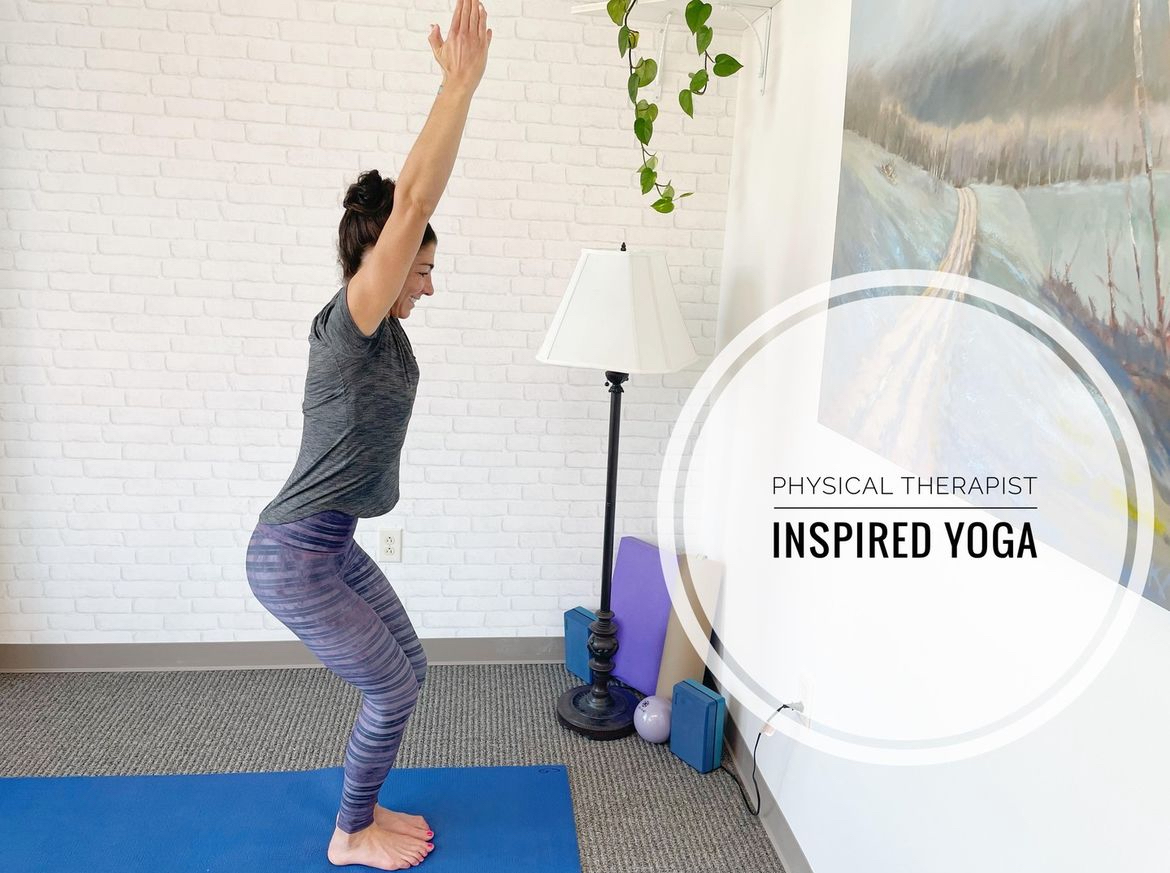
    The LYT yoga method explains in detail which parts of the body are meant to move and which are meant to stabilize, which helps target smaller muscle activation strategies that are important for functional movement patterns. Fun poses like airplane, single leg bridging and half moon, as well as transitions such as high crescent lunge into knee to chest all require the ability to stabilize on one limb. One legged stability is a huge balance challenge that works to improve your center, which most forms of common exercise do not. I have learned that you can’t simply tell someone to practice standing on one leg repetitively while expecting them to improve their single leg balance times. A variety of different movements are needed with targeted activation of different muscle groups that aid in supporting the body when in a single leg standing position, all of which need to be working in coordination. The LYT yoga method helps yogis gain these activation strategies as we build upon each move, starting small and working our way up. Progressing this way gets the body ready to support single limb standing positions as opposed to trying to go right into it and risk a fall or injury. By “training” or practicing in this manner, we can prepare the body to be more ready on a daily basis to support a load or react to a potential fall situation.


    Speaking of fall risk, being more rigid in the body (such as my patients with Parkinson’s Disease) puts you at a much greater risk for experiencing a fall. Yoga helps to open up the muscles, increase joint mobility and expand on ranges of motion to collectively experience movement in a more fluid way. Patients with this diagnosis may initially find yoga to be foreign and very difficult. When new ranges of motion become available and the body is able to move more fluidly, walking patterns improve, walking speed improves, and fall risk drastically decreases! 


    All of this to say, my practice as a therapist has been changed for the better since I implemented strategies, poses and movements that I have learned in my LYT yoga training. Whether you have Parkinson’s Disease or another diagnosis, this method can change your body for the better!
  • The Benefits of Using Yoga Blocks in Your Movement Practice

    The Benefits of Using Yoga Blocks in Your Movement Practice

    The Benefits of Using Blocks and props in Your Movement Practice

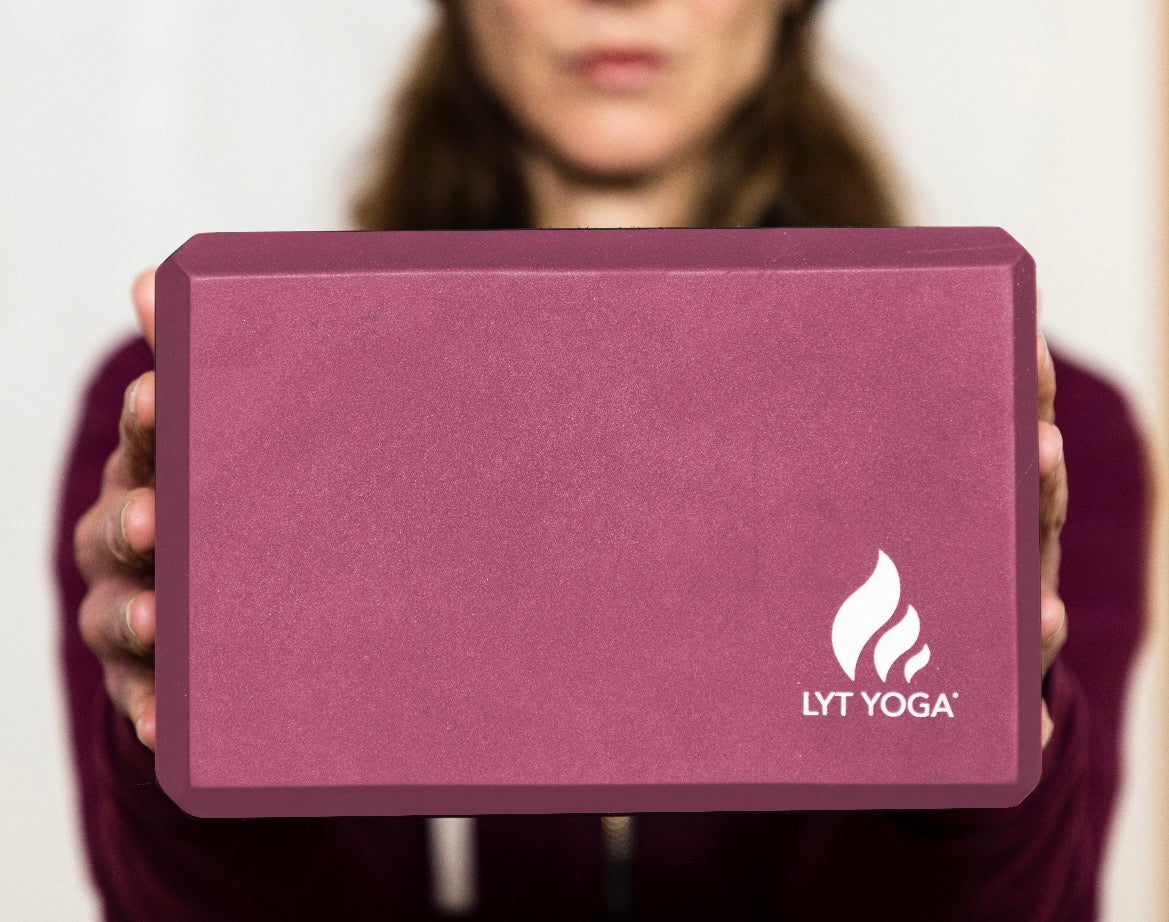
    Yoga blocks, often made of foam, cork, or wood, are more than just tools for beginners or those with limited flexibility.


    These versatile props can bring numerous benefits to your movement practice, no matter your level of expertise. We use them in every class in LYT and I can’t imagine a practice without having yoga blocks to enhance the experience!


    Why use blocks?


    For those who are new to yoga/functional training or have limited flexibility, blocks can act as an extension of the arms, making it easier to reach the floor in poses like Down Dog or bent knee standing split/standing L pose. By bridging the gap, blocks help in promoting better alignment, expansive breathing, and postural training. Yoga blocks can be used as a support system, especially in poses that require balance or strength. For instance, placing a block under the hand in Twisted Crescent, Half-Moon, or under the hips in seated twist pose can help stabilize the position, creating more space for the hips and spine, and thereby reducing strain on the joints and surrounding structures while also promoting more core activation. In LYT, we are huge believers in alignment! Alignment is not rigid or “ideal”; it is placing your bones and joints in a more optimal position to set up improved responsiveness in motor firing (how muscles activate to move, stabilize, or lengthen). Proper alignment is crucial in yoga and functional movement to prevent injuries, improve neuromuscular function, and ensure efficiency. Blocks can assist in positioning the body so that the joints and muscles work in greater harmony. 


    Importantly, blocks allow for more individualization. Everyone’s body is different, and sometimes a pose or movement that works for one person might not be comfortable for another. Blocks can be used to adapt poses to fit individual needs, ensuring a comfortable and effective practice. Blocks additionally help with transitions, allowing movement between poses to feel more possible and graceful without losing form.


    But there is more! (that’s how awesome blocks truly are 🙂


    As we experience in our LYT RESET®, blocks create a deeper connection to core! The block can be used to activate pathways into and through the core cylinder such as in bridge with a block, where the light hug of the block stimulates the hip adductors and pelvic floor connection. Utilizing a block in various ways can heighten body awareness, sparking core activity that might have been a bit more dormant without the block. The block becomes a tactile cue, reminding you to engage specific muscles or adjust certain alignments. 


    When I am creating a class where I want to utilize blocks, my innovation is in overdrive! Blocks provide so much variety, challenge, and support; it makes the practice exciting and vibrant, opening the door to enhanced mobility, stability, alignment, and overall progression and FUN!! Whether you are new to a movement practice or looking to upgrade your body-brain connection, yoga blocks can be transformative to your routine. Check out our LYT classes to FEEL for yourself how blocks are indeed a game-changer!

  • ‘Did my Vagina Just Fart in Yoga Class?’

    ‘Did my Vagina Just Fart in Yoga Class?’

    ‘Did my Vagina Just Fart in Yoga Class?’

    by Ashley Newton, PT, DPT

    Vaginal flatulence, vagina farting, queefing – all the same thing and can take you by surprise when you are moving through a yoga class.


    So what is vaginal flatulence? Is it actually gas like what passes through your rectum?


    Short answer: vaginal flatulence is when air that is trapped in the vagina is released. It is not created by digestion but rather by air that gets trapped as we move through space. 


    So why does it happen?? 


    Air regularly moves in and out of the vaginal canal. It is normally silent when the balance between vaginal pressure, abdominal pressure, and pelvic floor closure is balanced. However, air can get trapped in the canal as a result of poor pressure management and/or changes in the vaginal tissues. 


    Lubrication and Moisture


    The vaginal tissues are androgen-receptive aka hormonally influenced tissues. As folks with vaginas age, the lubrication at the vaginal opening decreases. However, this lubrication can also change following the birth of a baby, following radiation, as a result of medication, and hormonal changes related to thyroid dysfunction. Long story short, this is not an ‘aging problem’. It can happen at any age! This decrease in moisture results in decreased closure at the vaginal opening. Air can then escape and vibrate the tissues, making an audible sound akin to a fart. Vaginal moisturizers and hormonal creams can help to restore moisture to the vagina.


    What can you do to help it? Vaginal moisturizers are over the counter whereas hormonal creams are prescribed by a medical professional.


    The Diaphragm Paradox


    The pelvic floor musculature and the thoracic diaphragm move ideally move in harmony. When we inhale, the pelvic floor and diaphragm descend. On exhalation, they lift together. However, this relationship can change and the diaphragms can begin to move in opposition to one another. So, as the pelvic floor lifts, the thoracic diaphragm drops. As a result, the pelvic floor pulls more air into the vagina. This air becomes trapped and on the next phase of the breathing cycle when the pelvic floor drops, that additional air is pushed out and can result in a vaginal fart. 


    What can you do to help it? Working on coordinating your breathing so that as you inhale, you are able to feel the pelvic floor drop and as you exhale, feel the pelvic floor lift is the first step to improving coordination and regulating pressure changes. Remember that the pelvic floor does not have a joint like your elbow or knee and it can be challenging to discern how it is moving. If you aren’t sure, try the following exercise:


    Pelvic Floor Awareness Exercise:

    1. Take your hands and place them on the SIT bones (literally the bones you sit on) with the fingers facing inward. 
    2. Create a small cup with your hand so that your fingers sink in onto the tissue at the inside of your SIT bone. This is your pelvic floor! 
    3. As you inhale through the nose, try to focus your breath into the sides and back of your rib cage, creating a 360 degree expansion. 
    4. Bring your awareness to your fingertips. Can you drop your breath into your fingertips, feeling the tissue lower toward the seat?
    5. As you exhale, grow tall through the crown of the head like you are being pulled up on a string or you are trying to get tall on a growth chart. Keep the ribs open as you exhale. No need to squeeze the belly or pelvic floor, it will contract on its own. Do you feel the tissue at your fingertips lift up and away from your seat? 


    I always refer to this exercise as similar to an eye test where the optometrist asks you to read letters and gradually makes them sharper. The more you do this exercise, the sharper, the clearer the sensation of the pelvic floor will become.


    Pelvic Floor Muscle Activity


    The pelvic floor musculature has a resting tension. This tension is present to modulate pressure and airflow, support the spine, and support the pelvic organs (uterus, rectum, bladder). Changes in resting tension – meaning pelvic floor activity is too high or too low – can lead to air getting trapped and noisily leaving the vagina. 


    In the case of the overactive pelvic floor, when the tissues are stretched in a position such as downward dog or happy baby, air enters the vaginal canal. Upon moving out of the pose where the pelvic floor returns back to its overactive state, it can forcefully and audibly push the air out of the vagina. 


    With an underactive or lax pelvic floor (laxity can occur due to childbirth, surgery, hormonal changes, and medication), more air can flow in and out of the vaginal canal.


    What can you do to help it? 

    1. Slow down your movement and then your attention inward. Focus on breathing into your rib cage and growing long through the crown of your head in postures to avoid creating downward pressure on the pelvic floor. Take some extra time as your move through poses such as downward dog to plank and ensure that you exhale through the length of the movement. Working on your postural awareness will help to reduce pressure at the pelvic floor as well as align the two diaphragms. 
    2. Use blocks! Blocks are not crutches, they do not mean you are taking the easy way out. They are ensuring that you meet your body where it is at so you get the most out of yoga poses. Use 1 block the thinnest way between the thighs in symmetrical postures such as mountain pose, downward dog, plank, and table top to improve the activation of your pelvic floor and improve the closure at the vaginal opening. Use blocks under the hands for forward fold, twisted crescent, and triangle to avoid creating downward pressure into the pelvic floor. They help to keep the spine long and the scapular musculature engaged. 


    ‘But wait! What if I only experience this during sex??’


    With vaginal penetration, especially in postures where the pelvis is above the head, air can get trapped in the vagina as the pelvic muscles lift. 


    What can you do to help it? 

    1. Slow down the depth and speed of thrusting.
    2. Experiment with different postures and try ones lying on the side or where the pelvis is level with the head.
    3. Use supportive props. Try a sex pillow to provide support to the body to change the position of the pelvis and provide you with support to try new postures. 


    Vaginal flatulence/farts/queefing can be embarrassing. I get it, the majority of the population’s humor has not evolved beyond fart jokes. If you aren’t going to yoga class or are hesitant to engage in movement or sex because of vaginal flatulence, talk to a pelvic PT. They can give you guidance on what to work on so that you can confidently move through your yoga class without your vagina being disruptive. And know this too y’all – talking about vaginal health is hard, there are so many factors that lead us to have our voices silenced. Know that you are not alone and it’s when we talk about these hard things that it helps to amplify the voices of others as well as help us move forward to close the gaps in health equity. 


    Y’all are rockstars. ❤️

    ~Ash 


  • Harmony in the Mind-Body Connection for Inner Peace

    Harmony in the Mind-Body Connection for Inner Peace

    Harmony in the Mind-Body Connection for Inner Peace

    by Thalia Wynne, PT, DPT, AT, RYT

    You’ve heard people talk about the mind-body connection before and how important it is to inner peace but what is it actually and why is it important? How can we optimize the mind-body connection to live freer, truer, happier lives? 

    I recently taught a LYT Method class to a group of fitness specialists who had never done a LYT class before. One comment I got repeatedly was “I couldn’t think of anything else. I had to be so dialed in.” 


    This comment describes one of my favorite things about the LYT Method. Through this style of movement, we are moving in such a way that requires specific concentration. What this has done in my own life is because of how much concentration and effort I am putting into my movement on the mat, the rest of the world melts away. I reach a state of flow. Time stops. The mat transports me to a whole new world. My inner world. And not only does my body feel good, but my whole energetic system shifts into a more expanded form. 


    My experience of reaching flow during my own personal practice was reflected back to me when I got the comment from the fitness specialists taking my class. Through the movement of the body, we are able to affect the mind. She was concentrating on her form, the body cues I gave, following directions to flow from pose, to pose, and the result was that there was no room left in her mind for distraction, to doubt herself. She was in the here and now, naturally. 


    Applying practice to enhance a balanced mind-body connection has several benefits including: 


    • The sensation of being in body vs. dissociated or out-of-body 
    • Enhanced memory and focus 
    • Boost in creativity and mood 
    • More energy 


    The connection between mind and body is both physical and not physical. Physically – it is connected via the central nervous system. 


    The central nervous system comprises the brain and the spinal cord. Several nerves sprout from the spinal cord like tree branches and create the peripheral nervous system. It is through the peripheral system that we are able to sense and move. 


    The peripheral nervous system sends signals to the brain and the brain sends signals to the peripheral nervous system in a constant energy and information exchange. 


    So physically speaking – our mind and body are literally connected through our inner circuitry. 


    As you know, we are not just meat suits. We have thoughts, feelings, intuition, and deep parts in us that I would describe as our soul. And our souls are connected to the physical and non-physical world around us via our energy. Electromagnetic fields and light waves that our sensitive systems can feel, even if we cannot see them. 


    Let me describe it in a way that I learned from the work of Dr. David Hawkins – the arm does not experience its own armness. The peripheral nervous system is sending the sensations of your arm up into your brain and your brain is interpreting the sensation of the arm. So it is the brain that is experiencing the arm. But the brain cannot experience its own thoughts. The thoughts and feelings being generated from the brain are experienced from your awareness. And our awareness is plugged into the greater consciousness that is Universal Love. 


    Everything is connected. And they all are affected by each other in this experience we call life. They can be in harmony or in disarray. In a negative energy field or a positive energy field. 


    I don’t know about you, but I choose harmony and positive energy any day of the week. I choose Love. So by raising your awareness in several different ways – whether it’s through moving your body in a specific way – syncing breath and body – taking pauses in your day to breathe – training the mind to find love and gratitude and feel it in your heart – creating flow states – find the way that suits your unique design to find harmony in the mind-body connection and discover the peace that is possible in your life.

  • Unlocking Joint Mobility: Incorporating Yoga into Physical Therapy Practices

    Unlocking Joint Mobility: Incorporating Yoga into Physical Therapy Practices

    Unlocking Joint Mobility: Incorporating Yoga into Physical Therapy Practices

    by Sarah Apple Kingsley, pt, dpt

    My name is Sarah Apple Kingsley and I have been a practicing physical therapist since I received my Doctorate in 2014.

    During my first 5 years as a therapist, I treated how most therapists do, using standardized exercises and stretches taught in PT school or during our clinical rotations. Physical therapists are taught to apply “cookie-cutter” type exercises if a patient has low back pain, others for hip pain, and for a general geriatric population that just needs strengthening to do these generic exercises. 


    For the most part, if a patient’s case is uncomplicated, oftentimes this approach would be effective. When treating a geriatric population that just needed general strength and balance training due to lack of physical activity, I saw some promising results. However, for many of my patients, I quickly discovered that this method alone was not enough. Why were some of these standard exercises taught to thousands of PT students every year causing some of my patients more pain and dysfunction? Why were some patients simply not getting better?


    Unfortunately, it is far too common for therapists facing patients that are not improving to become discouraged and lose interest. Faced with a lack of progress, many therapists will discharge a patient and send them on their way claiming physical therapy just didn’t work for them. For me, that conclusion was frustrating and unsatisfactory. I personally experienced this scenario when trying these same cookie-cutter type exercises on myself when I was experiencing pain and injury, and found myself not only not improving, BUT GETTING WORSE!


    That is when I THANKFULLY discovered the LYT Method. This amazing method, created by a physical therapist, completely redefined yoga and functional movement. LYT focuses on how each joint is supposed to move and what typical compensatory patterns most people utilize that leads to pain, dysfunction, and a lack of proper muscle activation. Many of the moves are so simple yet so specific in the manner in which they are performed, which is what really makes a lasting change on the body and a major difference in outcomes. I began using this method and exercises on myself and after finding positive results I started to introduce some movements with my patients in the clinic!


    When I began incorporating spinal mobility stretches, hip hinging strategies, self-joint mobilization techniques, and fascia stretches into my exercise routines with patients, the results spoke for themselves! Not only were people starting to feel and notice their bodies in a way they hadn’t been aware of previously, but they were able to use these strategies to move and feel better during their daily activities. 


    A therapist can manually mobilize a joint or release a muscle that is tight or has developed a trigger point, but it is the beneficial repetitive movements that will keep the mobility in place. Conversely, the repeated dysfunctional movement patterns will cause the patient to continue to return with pain and poor joint mobility. Teaching these movements to my patients has facilitated an increase in their mobility on a daily basis, which results in lasting changes and benefits.


    Yoga allows the body to move in a variety of ways, encouraging the patient to get back in touch with their body both in an isolated manner for each part of a system as well as the entire body as a whole. Physical therapists and referring physicians often separate the body into parts due to a specific prescription for shoulder pain, hip pain, or back pain, and thus only focus on that specific area of the body. Through yoga’s full body movements, it becomes clear that a lack of mobility, strength, and/or activation in one area could be responsible for the pain in a completely different area of the body. Yoga also allows the mind to connect to the body in a way most of us are unable to during our daily lives. You can completely change an exercise or movement just by giving a different cue and focusing on a different pull or activation. The same yoga poses can be used for completely different purposes when cued accordingly. This mental and physical focus is a form of meditation in itself. I strongly believe that being able to connect to your body in this manner is a crucial factor for true healing.


    Learn how to truly heal yourself today by taking one of our LYT Daily classes! The benefits from the cues provided in these classes outweigh most all other forms of yoga for treating the body as it is meant to move. Start small and focused, then move larger and faster as the body heats up. You won’t regret giving this method a try!

  • Eating Disorders and the Pelvic Floor

    Eating Disorders and the Pelvic Floor

    Eating Disorders and the Pelvic Floor

    by Ashley Newton, PT, DPT

    When it comes to disordered eating and body image, the experience is physical as well as emotional.

    In treatment, one explores and works to change one’s relationship with food, self, others, and beyond. Treatments often utilize a team approach and can include a psychologist, social worker, dietician and nutritionist, and medical doctors. What may not be known, however, is the relationship between eating disorders and pelvic floor dysfunction and how a pelvic floor physical therapist can help.


    We know that trauma is stored in the physical body and that the way we move and interact with the physical world hinges on how we feel. Our nervous system tells us whether we are safe or in danger and the body acts accordingly. But what happens when the danger is emotional? What happens when the danger and distress is our own internal dialogue? The body responds to this too. We get small. We hunch over and curl in a ball. On a subconscious level, our jaw grips, the belly tightens, and the pelvic floor contracts. Our body is preparing for impact, preparing to protect our most vital parts by bracing itself. Unfortunately, we easily get stuck in this loop and the body remains in protection mode even when painful thoughts and dialogue aren’t actively happening. The result: our digestion suffers, we experience pain, we start to have trouble using those deep muscles responsible for stabilizing us. If those muscles are in protection mode, they are not able to as readily move with and stabilize us in day-to-day life. However, we often don’t recognize this until there is a problem such as pelvic pain, urinary leakage, constipation, bloating, etc.


    Pelvic floor issues are not specific to any one diagnosis and I would argue that they have the potential to show up in any diagnosis associated with one’s relationship to eating and body image. Binging, purging, restrictive eating, and corseting/binding/body modification all have the potential to cause issues such as leakage, prolapse, and weakness given the influence of these diagnoses on the nervous and gastrointestinal symptoms. 


    Digestion begins at the level of the glottis and ends at the level of the pelvic floor musculature. Any disruption on this path follows the butterfly effect where one small change can have large consequences. To illustrate this, let’s think about the role of body image. If a person does not feel comfortable in their body, they may wear baggy clothes, make themselves small, or on the flip side, wear size-altering garments and limit their food consumption in hopes of achieving an idealized image. In both cases, the nervous system is on edge and the abdomen and pelvic floor are likely gripping to brace oneself or trying to ‘suck in’ to change one’s appearance. That sucking in will eventually create restriction in the connective tissue and limit movement. Anything from joint movement to muscle and organ movement can be affected. As a result, we can start to see changes in the GI system and even issues involving bladder and sexual health. 


    Pelvic physical therapy should be a regular part of intervention planning in the treatment of eating disorders. Health is collaborative. No one practitioner knows everything and that knowledge is ever-evolving – that is why it is called a practice. Be an advocate for your own body and do not be afraid to ask for help. We are here for you. <3


    ~Ash

  • Starting a New Workout Routine

    Starting a New Workout Routine

    Starting a New Workout Routine

    Research has shown that a regular workout is among the factors that have the most beneficial effects on health.

    Exercise helps maintain body weight, can boost your brain health, reduces the risk of heart disease, enhances the immune system, and slows the effects of aging. So why do less than 5% of adults perform the minimum recommended amount of exercise (150 minutes at moderate intensity or 75 minutes at vigorous intensity) per week?

    Many find that getting into the habit of working out can be a huge challenge. Not to mention that there are right and wrong ways to go about it safely. In the spirit of New Year’s resolutions, let’s talk about how to ease into a workout routine. 


    The best place to start is to determine your “why” and go from there. One of the reasons listed above may be motivation enough! Figuring out which is most important to you can help you stay on track when you might feel like quitting. Keep it in the back of your mind as you go through your fitness journey. You’re going to have good days and bad days, so having this “why” may be the thing that keeps you on track.


    The next step is to set a realistic goal within a realistic timeframe. Upwards of 65% of all people who begin an exercise program end up dropping out in three to six months. This is likely due to the fact that we tend to set unrealistic goals that are unattainable within our projected timeframe. Start with smaller and more attainable short-term goals. Once you’ve set your goals, create a plan to reach them. 


    First and foremost, start slow. Progressive overload is a commonly utilized method with weight training and involves gradually increasing the weight, frequency, or repetitions in a routine. But it can be applied to cardiovascular fitness programs as well. Exercise is a science and should be approached as such. Your weekly routine should include cross-training, as I wrote about in last week’s PT Corner. Starting with anywhere from 10-15 minutes of exercise and slowly building in intensity, duration, and frequency. A general rule of thumb is increasing by no more than 10% per week. 


    Having a formal training plan or workout schedule to follow is a great way to help stick with the plan. When I used to train for marathons, I would write my six-month training regimen on the calendar as a way to stay motivated. Scheduling time into your day until exercise becomes part of your routine is a great place to start. Look at your schedule, determine the most ideal time for you to exercise each day, and then make it a recurring appointment. Always have a Plan B for when life gets in the way. If you can’t make your 60-min LYT Yoga Expresso class because of an unexpected engagement, schedule time for a 20-min HIIT class instead! If and when setbacks happen…and they will…don’t just throw in the towel. Be compassionate with yourself and get back in the game when you’re able. Doing something is better than nothing at all.


    Finally, accountability is huge. I used to pick a fun destination for my marathons, so once I bought that plane ticket and entry fee, there was no turning back! Many times I would run them with friends as well. Finding a social network to exercise with is a game changer! My 5:45 am classes at the LYT NJ studio grew in popularity because we all began to feel like family. People would ask about or check up on those who missed a few days in a row. We looked forward to seeing each other and sweating together, even at the wee hours of the morning! 


    On that note, we’ve created a “Start Here” collection of videos for those people who are new to movement or getting back to movement after a long break on our LYT Launchpad page. Going through the body from head to toe, we have created short, simple classes to restore and maintain mobility and improve strength and stability. Each move is similar to what you may see in a traditional LYT class, so you can build slowly towards our Beginner level program. A simple LYT style class is also included in each section. Check them out to help get yourself moving. I’ll see you on the mat!


    Xoxo,

    Kristin

  • The Psychological Benefits of Combining Yoga and Physical Therapy

    The Psychological Benefits of Combining Yoga and Physical Therapy

    The Psychological Benefits of Combining Yoga and Physical Therapy

    by Thalia Wynne, PT, DPT, AT, RYT


    As a human being, your goals in life can really be boiled down into two things: 

    1. Survive

    2. Increase your happiness

    I’d like to present you with two unexpected avenues that you may not have thought of to help you on your quest to survive and thrive. Yoga and physical therapy. 


    How do seemingly unrelated practices like Yoga and Physical Therapy work together to bring more joy into your life? 


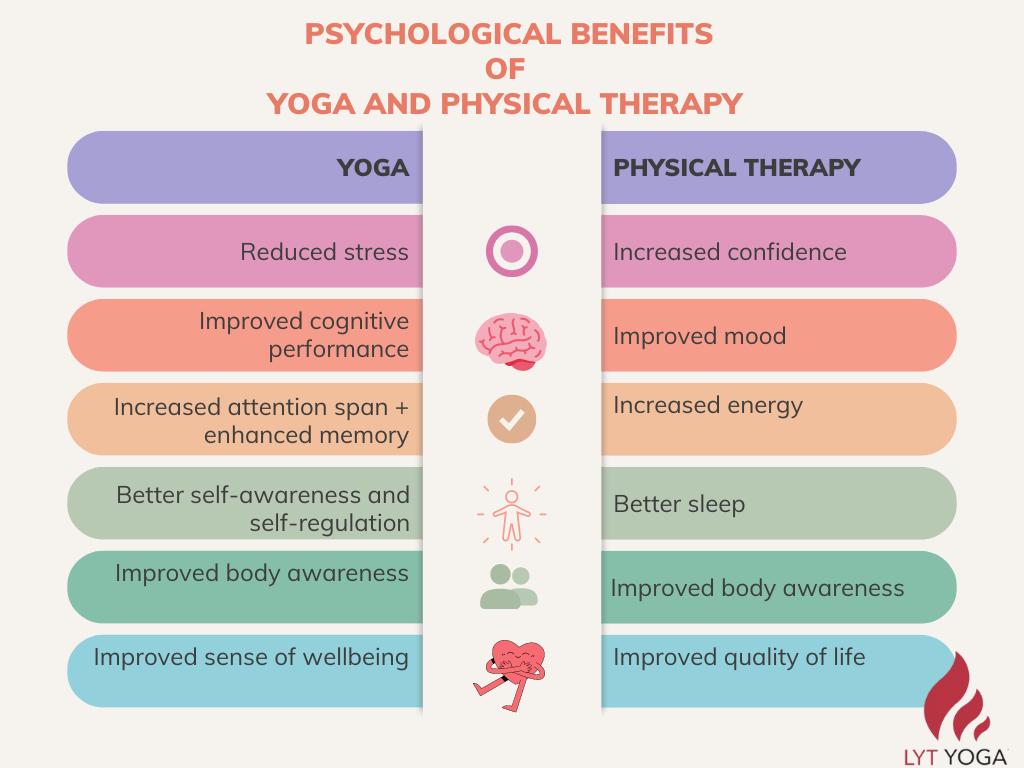
    The obvious reason people go to physical therapy is to address pain and improve physical function. While in that PT journey, pain starts to diminish and functional ability in daily life improves. But some other great psychological benefits unfold, too. These include increased confidence, improved mood, more energy, and better sleep – all of which contribute to an improved quality of life. 


    The reasons people come to their yoga mat are numerous. Personally, I was drawn to yoga because it was unlike any other form of “exercise” I had ever tried. (If you are familiar with yoga, you know it is more than just a form of exercise.) I noticed that not only did my body feel great, but my mind had relaxed and I felt clear, peaceful, and happier. I craved the culmination of feelings that were the result of my yoga practice so much that it kept me coming back to my mat over and over again. 


    Eventually, it inspired me to take a yoga teacher training so that I could share the gifts that I was feeling in my own body with others. On my quest, I knew I didn’t want just any yoga teacher training. I wanted something that was biomechanically sound, and that I could use to enhance my work as a physical therapist. That’s why I chose the LYT Method the only yoga created by a physical therapist! – for my teacher training.   


    What brings you to your mat every day? 


    If your reasons are similar to mine, then you already experience the psychological benefits of yoga in your own life. Here is a list of more psychological benefits of yoga you might not have thought of. 


    Combining these two mood-enhancing practices will give you all of the above benefits and more. Who wouldn’t want that? In fact, there is a mound of literature researching what positive effects PT and yoga together can have on someone’s overall quality of life. Like this studythat looked at yoga and PT for back health and found participants experienced an increase in quality of life. And this depression disorder study3 that found exercise and yoga improved symptoms of anxiety and depression disorders. 


    Lucky for you, because you are reading this, you have already discovered the LYT Method – a tool that combines yoga and physical therapy principles to not only improve the way you feel in your body but also the way you feel in your mind. By being a LYT member, you get to experience more happiness and joy in your life. 


    But don’t stop there. I challenge you to share LYT with one person today that you think could use some of the psychological benefits of yoga and physical therapy combined. Share the tools that have improved your happiness so that we can elevate the well-being of all of mankind – one LYT lover at a time! 


    And if you loved this article, please send me a DM on Instagram! I’d love to hear from you. 


    Until next time. 


    Your Wellness Guideempowering you to take up space, 


    Dr. Thalia Wynne Dorsten 

    Instagram: https://www.instagram.com/thalialovee/ 

    Email: thalia.wynne@gmail.com 


    References


    1. Ward L, Stebbings S, Cherkin D, Baxter GD. Yoga for functional ability, pain and psychosocial outcomes in musculoskeletal conditions: a systematic review and meta-analysis. Musculoskeletal Care. 2013;11(4):203-217. doi:10.1002/msc.1042
    2. Tang YY, Hölzel BK, Posner MI. The neuroscience of mindfulness meditation. Nat Rev Neurosci. 2015;16(4):213-225. doi:10.1038/nrn3916
    3. Saeed SA, Cunningham K, Bloch RM. Depression and Anxiety Disorders: Benefits of Exercise, Yoga, and Meditation. Am Fam Physician. 2019;99(10):620-627.
    4. Syed-Abdul MM. Benefits of Resistance Training in Older Adults. Curr Aging Sci. 2021;14(1):5-9. doi:10.2174/1874609813999201110192221
    5. Saper RB, Lemaster C, Delitto A, et al. Yoga, Physical Therapy, or Education for Chronic Low Back Pain: A Randomized Noninferiority Trial. Ann Intern Med. 2017;167(2):85-94. doi:10.7326/M16-2579