Tag: personal growth

  • 683. Monthly Motivation: Creative Breaks Are Good

    683. Monthly Motivation: Creative Breaks Are Good


    Join Lara for a conversation about the importance of creative breaks and creativity.

    we are all creative in some way – there are ways to enhance it to our benefit. In this episode, learn about: 


    • How being creative impacts problem-solving.
    • The significance of creativity in human history.
    • How creativity is tied to our brain reward centers.
    • How letting the mind wander fosters creativity.


    …and so much more!


    To learn more, and for the complete show notes, visit: lytyoga.com/blog/category/podcasts/


    Connect with Lara Heimann, the Redefining Movement Podcast, and the LYT Method:


    Sponsors:

    • Visit almondcow. co/shop and use code LARA for a discount off your purchase!
    • Shop my favorite 100% Science-Backed Amino Acid Supplements. Enter code “LYT” to save 30%. aminoco.com/LYT


    Follow the podcast:

  • Eating Disorders and the Pelvic Floor

    Eating Disorders and the Pelvic Floor

    Eating Disorders and the Pelvic Floor

    by Ashley Newton, PT, DPT

    When it comes to disordered eating and body image, the experience is physical as well as emotional.

    In treatment, one explores and works to change one’s relationship with food, self, others, and beyond. Treatments often utilize a team approach and can include a psychologist, social worker, dietician and nutritionist, and medical doctors. What may not be known, however, is the relationship between eating disorders and pelvic floor dysfunction and how a pelvic floor physical therapist can help.


    We know that trauma is stored in the physical body and that the way we move and interact with the physical world hinges on how we feel. Our nervous system tells us whether we are safe or in danger and the body acts accordingly. But what happens when the danger is emotional? What happens when the danger and distress is our own internal dialogue? The body responds to this too. We get small. We hunch over and curl in a ball. On a subconscious level, our jaw grips, the belly tightens, and the pelvic floor contracts. Our body is preparing for impact, preparing to protect our most vital parts by bracing itself. Unfortunately, we easily get stuck in this loop and the body remains in protection mode even when painful thoughts and dialogue aren’t actively happening. The result: our digestion suffers, we experience pain, we start to have trouble using those deep muscles responsible for stabilizing us. If those muscles are in protection mode, they are not able to as readily move with and stabilize us in day-to-day life. However, we often don’t recognize this until there is a problem such as pelvic pain, urinary leakage, constipation, bloating, etc.


    Pelvic floor issues are not specific to any one diagnosis and I would argue that they have the potential to show up in any diagnosis associated with one’s relationship to eating and body image. Binging, purging, restrictive eating, and corseting/binding/body modification all have the potential to cause issues such as leakage, prolapse, and weakness given the influence of these diagnoses on the nervous and gastrointestinal symptoms. 


    Digestion begins at the level of the glottis and ends at the level of the pelvic floor musculature. Any disruption on this path follows the butterfly effect where one small change can have large consequences. To illustrate this, let’s think about the role of body image. If a person does not feel comfortable in their body, they may wear baggy clothes, make themselves small, or on the flip side, wear size-altering garments and limit their food consumption in hopes of achieving an idealized image. In both cases, the nervous system is on edge and the abdomen and pelvic floor are likely gripping to brace oneself or trying to ‘suck in’ to change one’s appearance. That sucking in will eventually create restriction in the connective tissue and limit movement. Anything from joint movement to muscle and organ movement can be affected. As a result, we can start to see changes in the GI system and even issues involving bladder and sexual health. 


    Pelvic physical therapy should be a regular part of intervention planning in the treatment of eating disorders. Health is collaborative. No one practitioner knows everything and that knowledge is ever-evolving – that is why it is called a practice. Be an advocate for your own body and do not be afraid to ask for help. We are here for you. <3


    ~Ash

  • Starting a New Workout Routine

    Starting a New Workout Routine

    Starting a New Workout Routine

    Research has shown that a regular workout is among the factors that have the most beneficial effects on health.

    Exercise helps maintain body weight, can boost your brain health, reduces the risk of heart disease, enhances the immune system, and slows the effects of aging. So why do less than 5% of adults perform the minimum recommended amount of exercise (150 minutes at moderate intensity or 75 minutes at vigorous intensity) per week?

    Many find that getting into the habit of working out can be a huge challenge. Not to mention that there are right and wrong ways to go about it safely. In the spirit of New Year’s resolutions, let’s talk about how to ease into a workout routine. 


    The best place to start is to determine your “why” and go from there. One of the reasons listed above may be motivation enough! Figuring out which is most important to you can help you stay on track when you might feel like quitting. Keep it in the back of your mind as you go through your fitness journey. You’re going to have good days and bad days, so having this “why” may be the thing that keeps you on track.


    The next step is to set a realistic goal within a realistic timeframe. Upwards of 65% of all people who begin an exercise program end up dropping out in three to six months. This is likely due to the fact that we tend to set unrealistic goals that are unattainable within our projected timeframe. Start with smaller and more attainable short-term goals. Once you’ve set your goals, create a plan to reach them. 


    First and foremost, start slow. Progressive overload is a commonly utilized method with weight training and involves gradually increasing the weight, frequency, or repetitions in a routine. But it can be applied to cardiovascular fitness programs as well. Exercise is a science and should be approached as such. Your weekly routine should include cross-training, as I wrote about in last week’s PT Corner. Starting with anywhere from 10-15 minutes of exercise and slowly building in intensity, duration, and frequency. A general rule of thumb is increasing by no more than 10% per week. 


    Having a formal training plan or workout schedule to follow is a great way to help stick with the plan. When I used to train for marathons, I would write my six-month training regimen on the calendar as a way to stay motivated. Scheduling time into your day until exercise becomes part of your routine is a great place to start. Look at your schedule, determine the most ideal time for you to exercise each day, and then make it a recurring appointment. Always have a Plan B for when life gets in the way. If you can’t make your 60-min LYT Yoga Expresso class because of an unexpected engagement, schedule time for a 20-min HIIT class instead! If and when setbacks happen…and they will…don’t just throw in the towel. Be compassionate with yourself and get back in the game when you’re able. Doing something is better than nothing at all.


    Finally, accountability is huge. I used to pick a fun destination for my marathons, so once I bought that plane ticket and entry fee, there was no turning back! Many times I would run them with friends as well. Finding a social network to exercise with is a game changer! My 5:45 am classes at the LYT NJ studio grew in popularity because we all began to feel like family. People would ask about or check up on those who missed a few days in a row. We looked forward to seeing each other and sweating together, even at the wee hours of the morning! 


    On that note, we’ve created a “Start Here” collection of videos for those people who are new to movement or getting back to movement after a long break on our LYT Launchpad page. Going through the body from head to toe, we have created short, simple classes to restore and maintain mobility and improve strength and stability. Each move is similar to what you may see in a traditional LYT class, so you can build slowly towards our Beginner level program. A simple LYT style class is also included in each section. Check them out to help get yourself moving. I’ll see you on the mat!


    Xoxo,

    Kristin

  • The Psychological Benefits of Combining Yoga and Physical Therapy

    The Psychological Benefits of Combining Yoga and Physical Therapy

    The Psychological Benefits of Combining Yoga and Physical Therapy

    by Thalia Wynne, PT, DPT, AT, RYT


    As a human being, your goals in life can really be boiled down into two things: 

    1. Survive

    2. Increase your happiness

    I’d like to present you with two unexpected avenues that you may not have thought of to help you on your quest to survive and thrive. Yoga and physical therapy. 


    How do seemingly unrelated practices like Yoga and Physical Therapy work together to bring more joy into your life? 


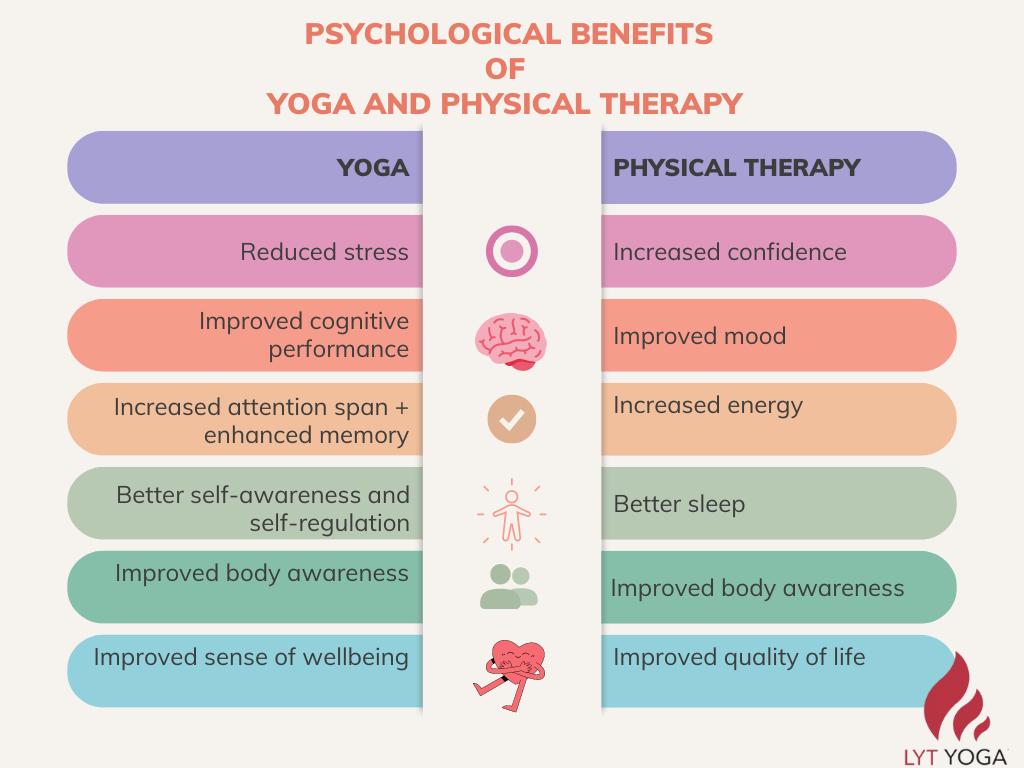
    The obvious reason people go to physical therapy is to address pain and improve physical function. While in that PT journey, pain starts to diminish and functional ability in daily life improves. But some other great psychological benefits unfold, too. These include increased confidence, improved mood, more energy, and better sleep – all of which contribute to an improved quality of life. 


    The reasons people come to their yoga mat are numerous. Personally, I was drawn to yoga because it was unlike any other form of “exercise” I had ever tried. (If you are familiar with yoga, you know it is more than just a form of exercise.) I noticed that not only did my body feel great, but my mind had relaxed and I felt clear, peaceful, and happier. I craved the culmination of feelings that were the result of my yoga practice so much that it kept me coming back to my mat over and over again. 


    Eventually, it inspired me to take a yoga teacher training so that I could share the gifts that I was feeling in my own body with others. On my quest, I knew I didn’t want just any yoga teacher training. I wanted something that was biomechanically sound, and that I could use to enhance my work as a physical therapist. That’s why I chose the LYT Method the only yoga created by a physical therapist! – for my teacher training.   


    What brings you to your mat every day? 


    If your reasons are similar to mine, then you already experience the psychological benefits of yoga in your own life. Here is a list of more psychological benefits of yoga you might not have thought of. 


    Combining these two mood-enhancing practices will give you all of the above benefits and more. Who wouldn’t want that? In fact, there is a mound of literature researching what positive effects PT and yoga together can have on someone’s overall quality of life. Like this studythat looked at yoga and PT for back health and found participants experienced an increase in quality of life. And this depression disorder study3 that found exercise and yoga improved symptoms of anxiety and depression disorders. 


    Lucky for you, because you are reading this, you have already discovered the LYT Method – a tool that combines yoga and physical therapy principles to not only improve the way you feel in your body but also the way you feel in your mind. By being a LYT member, you get to experience more happiness and joy in your life. 


    But don’t stop there. I challenge you to share LYT with one person today that you think could use some of the psychological benefits of yoga and physical therapy combined. Share the tools that have improved your happiness so that we can elevate the well-being of all of mankind – one LYT lover at a time! 


    And if you loved this article, please send me a DM on Instagram! I’d love to hear from you. 


    Until next time. 


    Your Wellness Guideempowering you to take up space, 


    Dr. Thalia Wynne Dorsten 

    Instagram: https://www.instagram.com/thalialovee/ 

    Email: thalia.wynne@gmail.com 


    References


    1. Ward L, Stebbings S, Cherkin D, Baxter GD. Yoga for functional ability, pain and psychosocial outcomes in musculoskeletal conditions: a systematic review and meta-analysis. Musculoskeletal Care. 2013;11(4):203-217. doi:10.1002/msc.1042
    2. Tang YY, Hölzel BK, Posner MI. The neuroscience of mindfulness meditation. Nat Rev Neurosci. 2015;16(4):213-225. doi:10.1038/nrn3916
    3. Saeed SA, Cunningham K, Bloch RM. Depression and Anxiety Disorders: Benefits of Exercise, Yoga, and Meditation. Am Fam Physician. 2019;99(10):620-627.
    4. Syed-Abdul MM. Benefits of Resistance Training in Older Adults. Curr Aging Sci. 2021;14(1):5-9. doi:10.2174/1874609813999201110192221
    5. Saper RB, Lemaster C, Delitto A, et al. Yoga, Physical Therapy, or Education for Chronic Low Back Pain: A Randomized Noninferiority Trial. Ann Intern Med. 2017;167(2):85-94. doi:10.7326/M16-2579
  • PT Concepts You’ll Learn in the LYT Method Level 1 (200-Hour) Teacher Training

    PT Concepts You’ll Learn in the LYT Method Level 1 (200-Hour) Teacher Training

    PT Concepts You’ll Learn in the LYT Method Level 1 (200-Hour) Teacher Training


    One of the major benefits of the LYT Method Level 1 (200-Hour) Teacher Training is that you have the opportunity to learn a number of key physical therapy concepts. Because this method is designed by physical therapist Lara Heimann and the movements are filtered through the physical therapy lens the intelligence of physical therapy and its viewpoint on how to move your body well is seamlessly interwoven throughout. This teacher training allows you to incorporate these concepts into your knowledge and personal practice to better understand and communicate how your body is meant to move in order to be and feel at its best. This is a very empowering process that has a practical impact on your life and the lives of anyone you might work with. 


    Below is a list of some of the main physical-therapy-derived concepts that are an essential part of the LYT Method and that you will have the opportunity to learn and explore during the training. This is not a comprehensive list, but it’s a great starting point.


    Neutral Pelvis & Spine – Being able to understand what it feels like to have your pelvis and spine in a neutral position is a foundational concept to good movement. Although it may seem straightforward on its surface, this concept has a lot of nuance, and being able to find neutral in dynamic movement is not easy, but doable and worth the effort. Learning what neutral means and how to find it in your body and then intentionally move in and out of it when necessary will hold you in good stead for the rest of your life. 


    Deep-dive into anatomy – Understanding your own anatomy is an important aspect of developing a deeper connection to ourselves and to humanity writ large. This teacher training provides you with the anatomy and anatomical concepts that you need to be able to appreciate what is happening on a much deeper level on the inside while you move around your mat. 


    What is the core? – In common parlance, when we say “core” we are typically referring to our abs. But, from a physical therapy standpoint, the core includes everything from the outer shoulders to the base of the pelvis, your entire torso. Learning everything that is involved in your core and how to best utilize its engagement to your advantage in movement, is another key concept you’ll be exposed to. 


    Functional Training – We hear a lot about functional training in the fitness and movement industry these days. But what does that mean? Functional training is training for life, it is training for optimally performing the types of movements you do on a daily basis so that when you go to do them you do them in a way that doesn’t hurt you and that promotes the long-term health and well-being of your body. In the LYT Method, functional training is woven into everything we do. We all deserve this kind of training so that we can stay healthy and strong for as long as possible. 


    Neurodevelopmental Sequence – In every LYT Method class we start with “the reset” which incorporates the neurodevelopmental sequence to help us reset our body back to a more neutral starting point, so we can begin to layer on more complex movements. This sequence is based on the normal movement progression that babies follow as they learn to roll, sit, crawl, stand, and then walk. It is used in clinical settings to help patients learn proper movement strategies and it allows you to establish these strategies as the foundation of your movement practice so that you can move successfully in any number of ways. 


    Neural Mapping – You’ll explore the concept of neural mapping or brain mapping. Over time, our brains wire to fire a certain way and we end up doing movements in the way that we’ve habitually done them. But these movement patterns aren’t always optimal. In the LYT Method, we create opportunities for you to refine your movement patterns and then rewire your brain map through repetition throughout the class, through a process called neuro-muscular rewiring. This process is how you change your movement patterns to better support you over the long haul. 


    Mobility, Stability, & Adaptability – LYT Method movement will allow you to achieve mobility, stability, and adaptability in all of your movements and across all of your body. To have a resilient body, you want to have all three of these components present. The LYT Method sets you up to be mobile where you need it, strong when you need it, and to adapt to whatever comes your way with aplomb. 


    Find out more about our upcoming LYT Method Level 1 Teacher Training here! Registration opens Sunday, August 13, 2023 and the course starts Sunday, September 17, 2023.

  • 680. Understanding & Resolving Chronic Pain with Nicole Sachs

    680. Understanding & Resolving Chronic Pain with Nicole Sachs


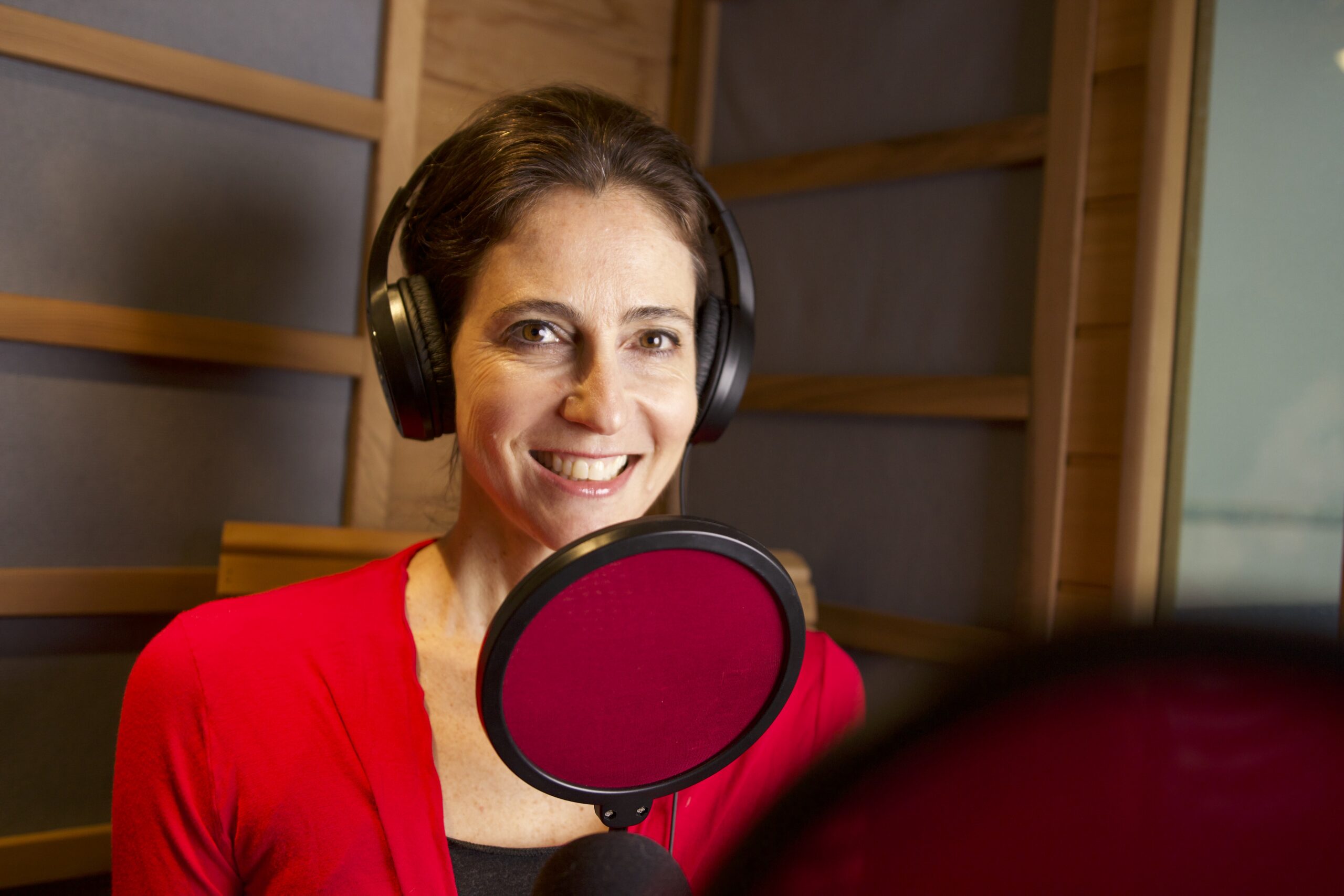
    Join Lara for a conversation with Nicole J. Sachs, LCSW, a renowned psychotherapist, speaker, writer, and podcaster who specializes in the treatment of chronic pain and related conditions.

    With her book The Meaning of Truth and her online courses “Freedom from Chronic Pain” and “Freedom from an Anxious Life,” she has guided hundreds of thousands of people worldwide toward lives of freedom. Through her brand, The Cure for Chronic Pain, including her Website, YouTube Channel, and Podcast with over 3 million downloads, Nicole Sachs shares her personal experience and transformative work with individuals, teaching them how to heal themselves without medication or surgery. Drawing from the pioneering work of Dr. John Sarno, Nicole’s programs utilize a unique personal narrative, JournalSpeak, to rewire neural pathways, allowing the mind and body to achieve equilibrium and dissolve chronic symptoms. Nicole’s passion, expertise, and personal journey inspire individuals to reclaim their lives, find inner strength, and embrace a newfound freedom for living.


    In this episode, you’ll learn about:

    1. Nicole’s personal story, particularly as it interfaces with chronic pain.
    2. The role of psychology and understanding the root causes of chronic pain.
    3. Why it can be so difficult to get out of chronic pain.
    4. The interconnectedness of physical pain, anxiety, and stress.
    5. Recommendations for a lifestyle that can prevent chronic pain.
    6. The importance of support and knowing that you are not alone when experiencing pain and suffering.


    To learn more, and for the complete show notes, visit: lytyoga.com/blog/category/podcasts/


    Guest Resources:


    Connect with Lara Heimann, The Redefining Yoga Podcast, and LYT Yoga:


    Sponsor:


    Follow the podcast:

  • 678. Anti-Inflammatory Medicine: Napropathy & Nutrition with Dr. Patrick Nuzzo

    678. Anti-Inflammatory Medicine: Napropathy & Nutrition with Dr. Patrick Nuzzo


    Join Lara for an introduction to napropathic medicine with Dr. Patrick Nuzzo, DN.


    Dr. Patrick Nuzzo and his passion for the restorative, regenerative lifestyle and the anti-inflammatory diet began in 1974 during his nutritionist studies, motivated by the loss of his influential naprapath uncle. He made significant contributions to the natural foods industry, developing renowned nutritional supplements and partnering with notable figures like Walter Payton. In 1983, Dr. Nuzzo graduated as a Doctor of Naprapathic Medicine and successfully managed Naprapathic practices in multiple locations. His efforts led to the introduction of the Naprapathic Practice Act in New Mexico in 2000. This eventually paved the way for the establishment of Southwest University of Naprapathic Medicine (SUNM) in 2010, which became the first accredited school of Naprapathic Medicine in 2021. 


    In this episode, you’ll learn about:

    • what is napropathy and what is its history.
    • the importance of opening pathways in the body to heal.
    • the impact of trauma on the body, particularly in early childhood.
    • about the regenerative lifestyle and anti-inflammatory medicine.
    • about the triumphs and challenges of establishing napropathy as a legitimate field of study and practice.


    To learn more, and for the complete show notes, visit: lytyoga.com/blog/category/podcasts/


    Guest Resources:


    Connect with Lara Heimann, The Redefining Yoga Podcast, and LYT Yoga:


    Sponsors:


    Follow the podcast:

  • 649. The How and Why of Surrender with Kute Blackson

    649. The How and Why of Surrender with Kute Blackson


    Join Lara for a conversation with Transformational Speaker and Best-selling Author and returning guest Kute Blackson.

    He is a beloved inspirational speaker and transformational teacher. He speaks at countless events around the world. Kute is a member of the Transformational Leadership Council, a select group of one hundred of the world’s foremost authorities in the personal development industry. Winner of the 2019 Unity New Thought Walden Award, Blackson is widely considered a next-generation leader in the field of personal development.


    His mission is simple: To awaken and inspire people across the planet to access inner freedom, live authentically, and fulfill their true life’s purpose.


    In this episode of Redefining movement, listen in as Kute dives deep and shares his thoughtful insights with Lara on:

    • Kute Blackson’s latest book The Magic of Surrender: Finding the Courage to Let Go.
    • the concept of surrender and its power to transform one’s life.
    • the meaning of surrender and acceptance, the strength that comes with them, and the importance of acknowledging the truth about oneself.
    • tips on how to start surrendering, including surrendering attachments and acknowledging the truth.
    • the role of ego in your every day life and the importance of active participation in change.


    To learn more, and for the complete show notes, visit: lytyoga.com/blog/category/podcasts/


    Guest Resources:


    We love to connect with you! Reach out to Lara Heimann, The Redefining Yoga Podcast, and LYT Yoga at:


    Please support our sponsors!