Tag: movement

  • Eccentric Exercise for Tissue Repair

    Eccentric Exercise for Tissue Repair

    by Sarah Apple Kingsley, pt, dpt


    If you are familiar with LYT and our yoga classes, you know by now that we LOVE eccentric exercise! If you are not, I will share with you why eccentric exercise is so beneficial in tissue repair and recovery. 


    What does eccentric mean? Muscles contract in 3 different ways. The least stressful and straining is an isometric contraction in which the muscle activates without moving at all. Think of your bicep which controls elbow flexion. If you hold the arm at 90 degrees with a weight in your hand without letting the arm move, your bicep has to contract isometrically to withstand the load. Concentric contraction is when the muscle works in its shortening phase. So for the bicep, its action is elbow flexion. When you actively bend your elbow holding that dumbbell, now you are concentrically working the bicep. Eccentrics describe when you work a muscle in its lengthening phase. In this case, begin by holding that weight with your elbow bent and trying to slowly control the lowering into full elbow extension (straightening). This motion causes the bicep to work to control the elbow extension in its lengthening phase.


    Eccentric contractions are much more challenging as you are asking the muscle to work at a greater angle. For this reason, you get more effective exercises with just a few reps/contractions of eccentric motions as opposed to doing those dumbbell curls all day long. Eccentric contractions help build muscle faster and more efficiently and also require less oxygen. This means eccentric muscle training puts less stress on the heart and is less likely to cause spikes in blood pressure. Moreover, eccentric contractions are shown to aid in breaking down adhesions throughout the muscle tissue in order to stimulate new cell regeneration and repair. This has shown to be especially effective when treating the rotator cuff with online yoga classes.


    The shoulder joint is one of the more common reasons why people seek PT treatment in clinics. There is frequently a loss of range of motion in the shoulder internal and/or external rotation due to rotator cuff dysfunction. There could be scarring, a tear (minor or major), impingement, etc. The adhesions built up in the muscle due to impingement and repetitive microtrauma to the area cause restrictions, pain, and deficits in ROM, active or passive, due to muscle guarding and therefore decreased muscle length. Continuously overstretching or attempting to passively mobilize the tissues and joints are frequently very painful and oftentimes unsuccessful.


    By performing eccentric exercises, the body will work actively against the resistance in a lengthening manner, so that you feel somewhat in control of the motion creating decreased muscle guarding. With slow releases, working on lengthening against resistance breaks down adhesions. This is promoting more length in the muscle with each contraction. These exercises can be performed against manual resistance from a therapist or with the use of a theraband. Eccentrics are especially great for improving internal and external shoulder rotation and can be beneficial for shoulder flexion as well. 


    The main consideration is the correct exercise frequency. An adequate load must be applied to make sure these exercises are effective. An over or underuse of load can further deteriorate the tendon structure. More studies need to be done on the proper application, which is why these exercises are best performed manually by a therapist. This will help to properly grade the amount of resistance being applied and to track the level of fatigue in order to gauge repetitions. I have found the ability to add a distraction moment to the glenohumeral joint at the same time makes the exercise more tolerable for the shoulder joint complex. This can make it even more effective than self-exercise with a theraband. 


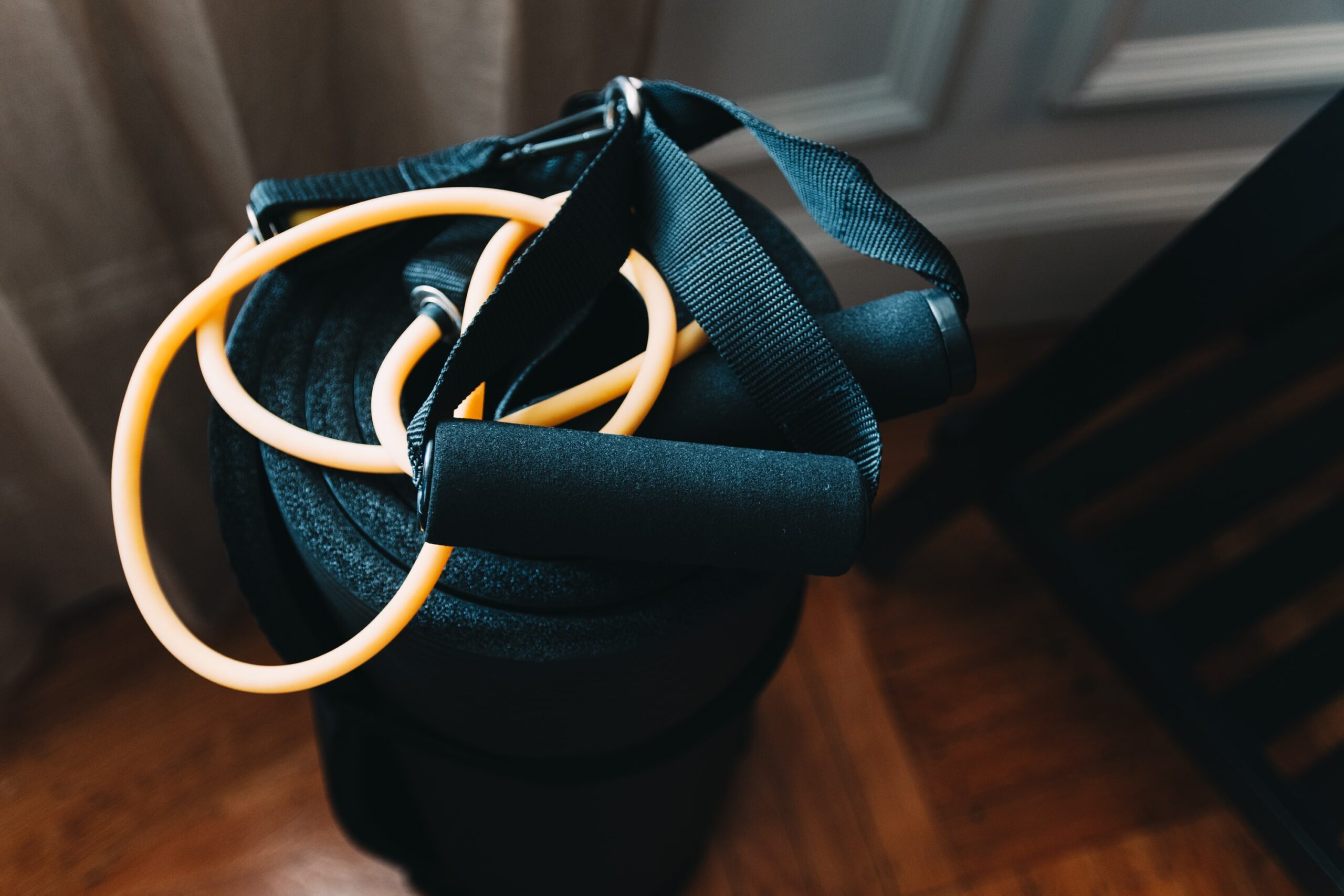
    To try the exercise, start with a light resistance band, holding one side in each hand with your elbows bent at 90 degrees and in by your sides. Make sure the heads of your arm bones are positioned well in the socket. If they tend to roll forwards, shrug your shoulders up, back, and down before beginning. Pull the band apart with both hands coming into shoulder external rotation (the elbows stay in by your sides as the fists go out with your thumbs pointing up). Then, as slowly as possible, allow the fists to return to starting position or even slightly further towards your belly for shoulder internal rotation. Perform repetitions until you are fatigued, but not in pain. 


    We LOVE eccentrics of all forms in our LYT yoga practice so check out some classes on LYT daily yoga for more eccentric exercise tips!


    References:

    https://www.ncbi.nlm.nih.gov/pmc/articles/PMC4133471/
  • How to Backbend Better

    How to Backbend Better

    A backbend is a yoga pose involving an inverted stretch, extending backward to form a bridge shape. This is a popular, fundamental yoga pose for opening the chest and engaging the hip extensors.

    If you dislike the way backbends feel in your body, start with the mechanics. When done right, a backbend should feel invigorating and refreshing. If it’s painful, you’re probably not positioning your body correctly. Focusing on the basics will help you do the pose painlessly.

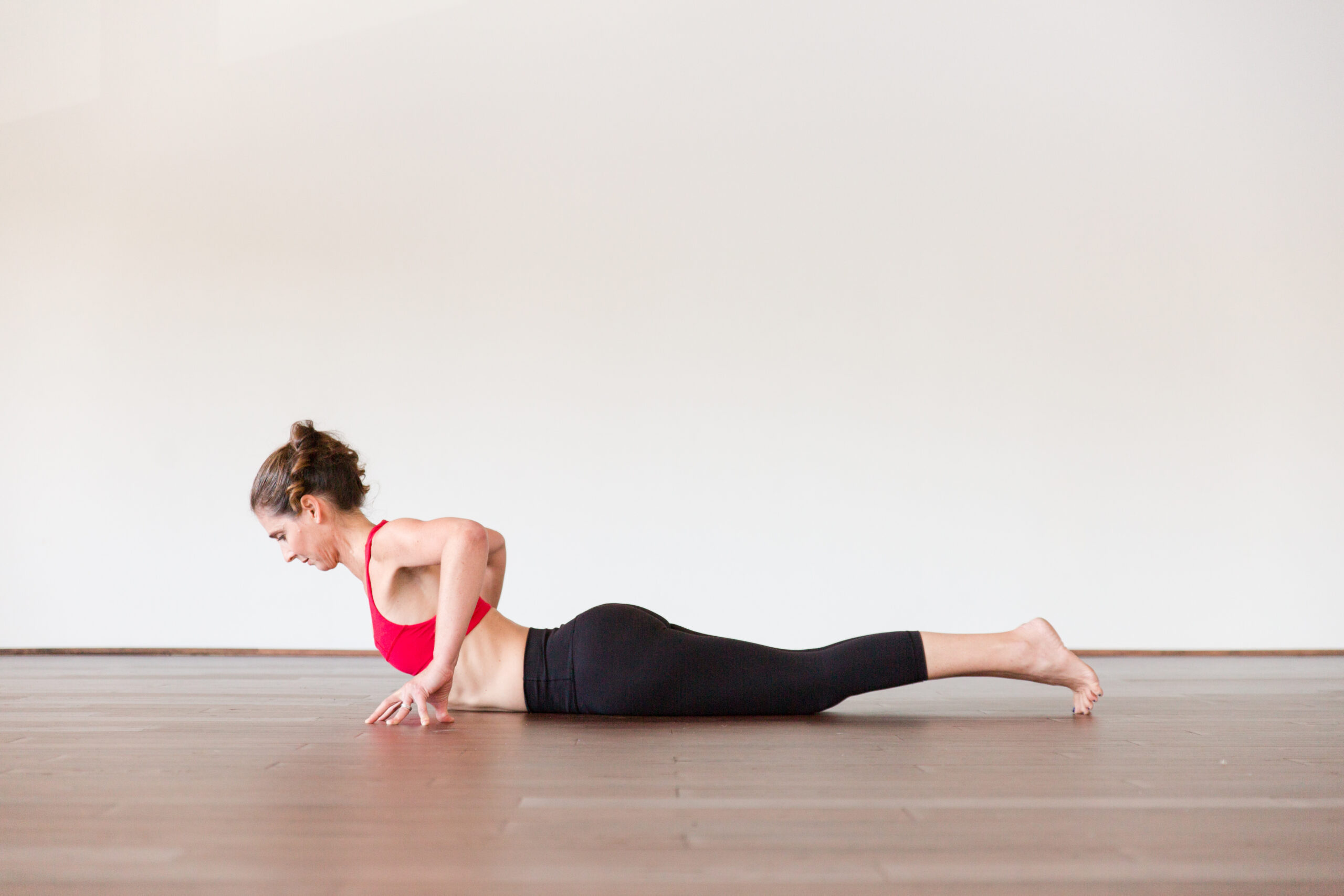
    Cobra pose, known in yoga as Bhujangasana, is a great starting pose for practicing a backbend. This pose helps with your breathing and alignment. It is one of the few yoga poses that uses a “pull” force, extending the spine while working the arms. It opens the front of the body while strengthening the back of the body and re-establishing a neutral pelvis.

    Sometimes people misinterpret the Cobra pose, thinking the head should drop back as the “hood” of the throat opens up and the hands should push down to get more of a “backbend.” This common misalignment hyperextends the neck and compresses the low back, causing more harm than good. The height of the cobra is not as important as the action and alignment. Let yourself feel the openness in your chest. 

    How To Practice Cobra

    Lie on your belly and press your public bone down to the floor. If this is challenging, place a blanket or folded towel under your pelvis to keep it neutral and not tipped forward. Bring your hands under your shoulders and push against the floor. Use this pushing action to bring the chest forward as you pull your hands back, spreading the chest tissue as the “hood” of the cobra opens up. 

    Look forward and lengthen the back of your neck. Engage the back body, including the glutes, to create a counter-stability for your chest opening. Typically, an inhale will help the movement. Lower your chest as you exhale. Perform 3-5 reps and lift into plank.

    You can also practice moving from a plank into the Cobra position. Lower your torso to the floor with an exhale, pull into the Cobra on an inhale, and return to plank on an exhale by pushing the floor away. Repeat often in a yoga sequence or on its own throughout the day. 

    Once you feel that you’ve mastered Cobra, you’ll be able to transition into a backbend. Use the same techniques for arching backward and opening your chest, but practice beginning on your feet. You’ll be amazed at how far you can comfortably reach!

    How To Practice Wheel Pose

    For a “deeper” backbend, yogis often aspire to do a Wheel pose. This is a big backbend. In order to prepare for and adapt to this advanced position, yogis must prepare their bodies during practice in a variety of areas. Focus your daily exercise on developing mobile shoulders and hips. Engage your spine, pelvis, and glutes in as many stretches as possible. Once you feel strong and confident in these important areas, you’re ready to begin practicing Wheel pose. 

    To safely do Wheel, the yogi must actively extend the spine and engage the core. If you lie over a big therapy ball or a yoga trapeze, you can get the same spinal extension but it’s much more passive. Practicing for Wheel pose activates your legs, arms, and core, making it safer and more beneficial than a passive stretch.

    The best way to modify or prepare for Wheel is to work on the fundamental building blocks. Begin with a solid bridge pose with a neutral pelvis and active glutes. Next, move close to a wall with your head near and feet farthest away from the wall. 

    Place two yoga blocks against the wall and bring your hands to the blocks. Attempt to press down and lift your head off the floor after you have first lifted into bridge pose. The blocks make it a bit easier for the shoulder opening but you still might have to work on the required strength to push off.

    Making Wheel more challenging is fairly easy. You can lift one leg at a time, or you can lift one arm at a time and grab one calf with that hand. (Just don’t do both at the same time!) You can also lower your forearms to the floor for a greater opening in the shoulders and chest.

    Start small and find joy in the nuances of bending your back with strength, integrity, and patience. It’s okay if the stretch is simple and gentle at first. With practice, your body will be capable of the amazing, rejuvenating backbend pose.

  • Fight or Flight and The Pelvic Floor

    Fight or Flight and The Pelvic Floor

    by ashley newton, pt, dpt


    The pelvic floor is known to hold onto stress. The body has nerves that go to the pelvic floor that are intimately connected with our sense of fight or flight. This area of our body is responsible for supporting our organs, so it makes sense that when the body and brain are stressed, we tighten these muscles as a method of protection. This guarding can become maladaptive when the brain and body get stuck in fight or flight mode. In pelvic PT, we refer to this state as ‘up-regulated’, a state where the nervous system is in an excitatory state and our body is focused on survival. In survival mode, the pelvic floor’s adaptability can become compromised and result in some of the following issues:


    1. Pelvic Pain: The pelvic floor muscles contract and guard in response to pain but sometimes, they get stuck in guarding mode. When the muscles undergo stretching during things like sexual activity, the experience can be painful! 
    2. Changes in Voiding: If the pelvic floor gets stuck in ‘on’ mode, it can be difficult to relax after. With both urination and defecation, the pelvic floor needs to relax and lengthen in order to completely void. If the muscles are having trouble lengthening because they are gripping/contracting, voids may feel incomplete or difficult to pass. 
    3. Leakage: If the pelvic floor muscles are gripping, guarding, and staying in fight or flight mode, they can have trouble doing their job of closing around the urethra and rectum to maintain continence. 
    4. Weakness: If the pelvic floor is constantly tightening, it becomes weak. This prevents us from being able to recruit these muscles readily to do their job of stabilizing the pelvis when we move. As a result, other tissues may become overloaded trying to do the job of the pelvic floor. 


    Ways to Get Out of Fight or Flight Mode

    To get the body and brain unstuck and move into a more relaxed, down-regulated state, we recommend trying the following exercises:


    1. Legs Up Wall: Place a pillow under the pelvis and bring the legs to a wall so they are supported. Allow the legs to relax and practice diaphragmatic breathing. 
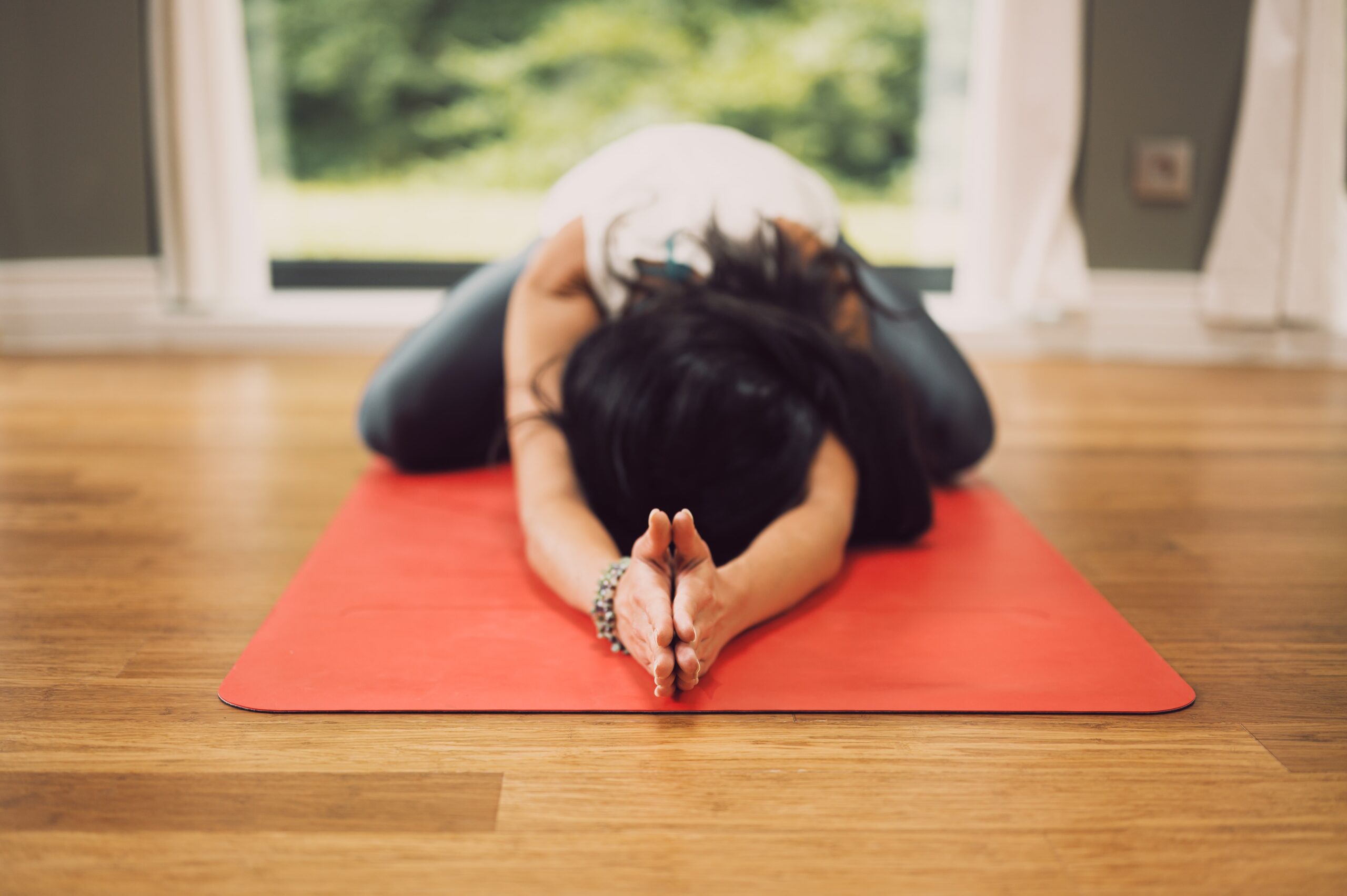
    2. Child’s Pose: Begin on hands and knees and sit the pelvis back to the heels with the knees apart. Begin breathing into the back and direct the breath down to the SIT bones, sensing that they move apart as you inhale and draw back toward your midline as you exhale
    3. Mindful Walking: Get out in nature and practice relaxing the arms and unclenching the jaw as you walk. 
    4. Daily Yoga: You can practice yoga as a way to stretch your pelvic floor muscles. With simple exercises, your pelvic floor will begin to relax and experience healthy contracting. Online yoga classes are a great way to start your stretching right from your home.
  • Four Simple Intrinsic Foot Exercises for Happy Feet

    Four Simple Intrinsic Foot Exercises for Happy Feet

    by Thalia Wynne, PT, DPT, AT


    Having poor foot intrinsic muscle activation can be an unknown cause of foot and ankle pain. Your foot intrinsic muscles are small muscles in the feet that help control your foot mechanics, provide balance and stability, and help with proprioception (your ability to sense the environment). When people come in with physical therapy with foot, ankle, knee, hip, and even back issues, we often check their foot mechanics by analyzing their gait and using the exercises listed below to see how well they can control their feet. Yoga classes can help with strengthening the foot muscles. You can get the best of both worlds by combining intrinsic foot exercises with daily yoga classes.


    By keeping your foot intrinsic muscles active and healthy, you are setting yourself up for success every time your foot hits the ground. In other words, happy feet equals a happy life! Give these moves a try to see how well you can activate your foot. If these exercises are hard or you physically can’t do them, don’t worry. Our brains are smart and the more you practice, the easier these will become. We often tell patients, “just keep staring at your foot and thinking about moving it. It’ll eventually happen.” This is because of the ‘use it or lose it’ principle in neuroanatomy. If we do not use a muscle, our brain shuts down that neural pathway in favor of saving energy for the systems we do use more often. This is problematic if you are not using the appropriate muscles to carry out your activities of daily living. If we strengthen that neural pathway with concentrated attention and repetition through yoga classes, we can get control back. Pay special attention to these little muscles of the foot to improve your arch support, and foot mobility, and ultimately move better! 


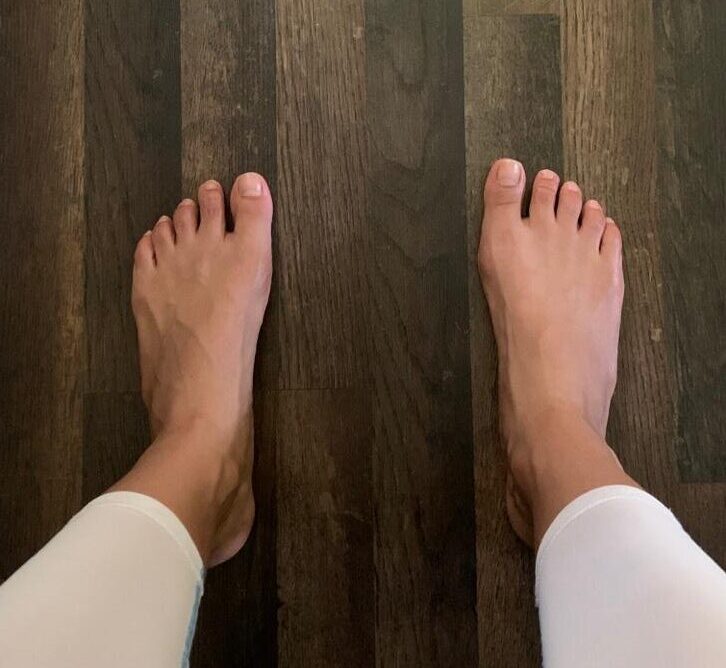
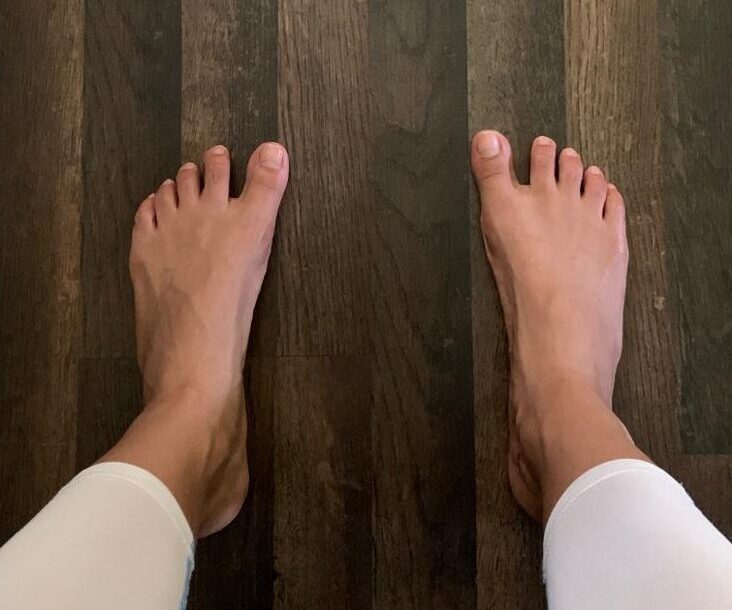
    1. TOE YOGA

    Figure 1 (b)

    Figure 1.

    Figure 2 (c)

    Figure 2.

    Instructions

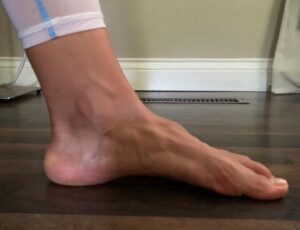
    1. Start position: seated or standing with foot flat on the floor.
    2. Lift big toe without lifting the other four toes. Focus on pressing the balls of your little toes down to stabilize, but don’t grip the floor with your toes. Lower down. 
    3. Lift the little toes without lifting the big toe. Focus on driving the ball of the big toe down to lift the little toes up. Again, don’t grip the floor by curling the toes. Lower. 
    4. Keep alternating between the two (Figures 1 & 2).

    Parameters: 2 sets of 15-20x.


    2. BIG TOE ABDUCTION

    Figure 3 (a)

    Figure 3.

    Figure 4 (b)

    Figure 4.

    Instructions:

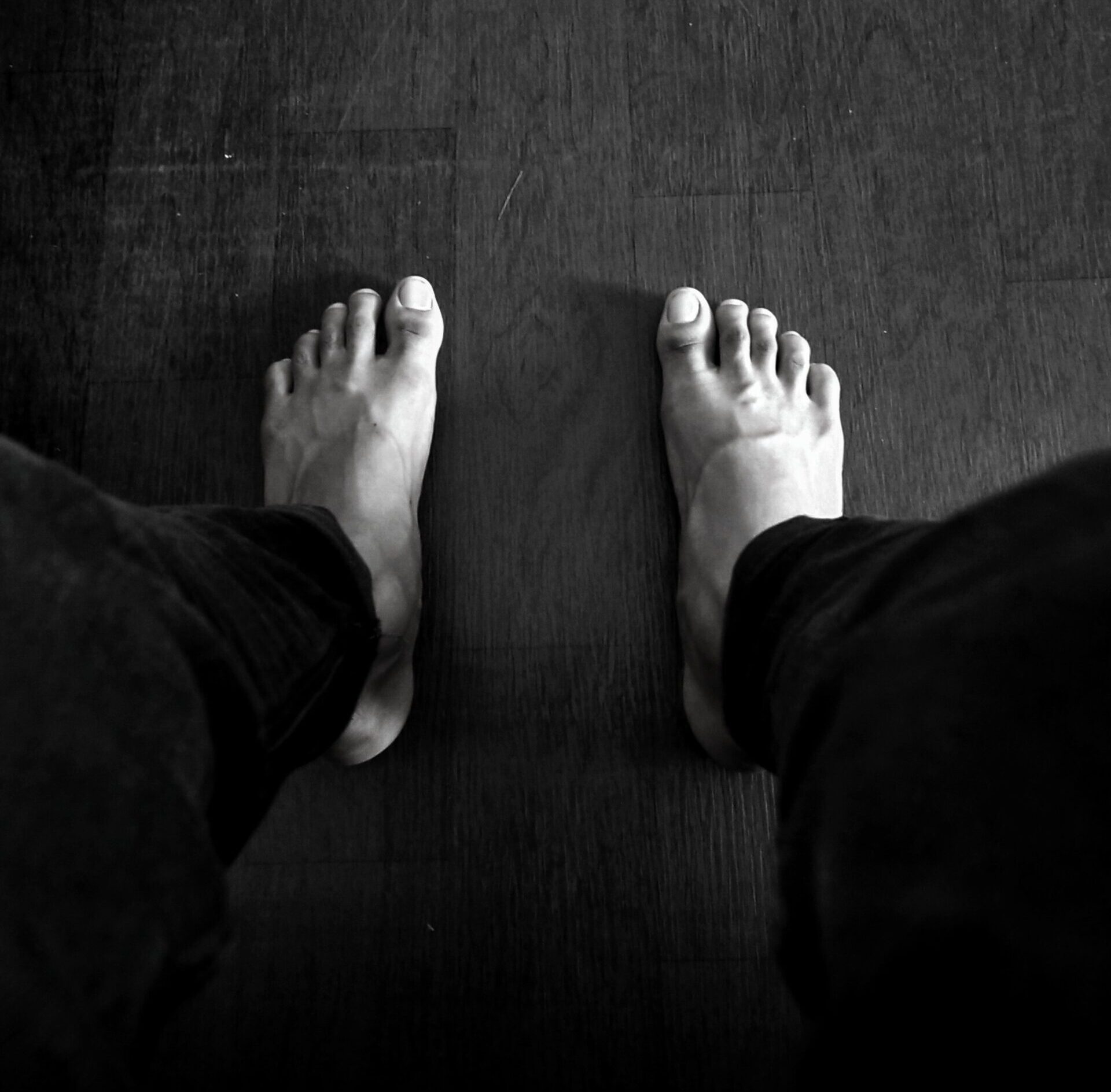
    1. Start position: seated or standing with both feet side by side but without touching. (Figure 3.)
    2. Slide big toes together without lifting your foot off the floor. (Figure 4.) Return to neutral.
    3. Repeat.

    Parameters: 2 sets of 15-20x.


    3. ARCH DOMING PROGRESSION

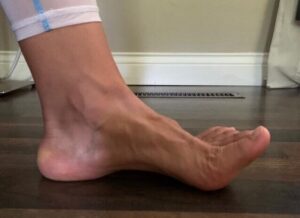
    Figure 5 (b)

    Figure 5.

    Figure 6 (c) & 7 (a)

    Figure 6.

    Progression #1 

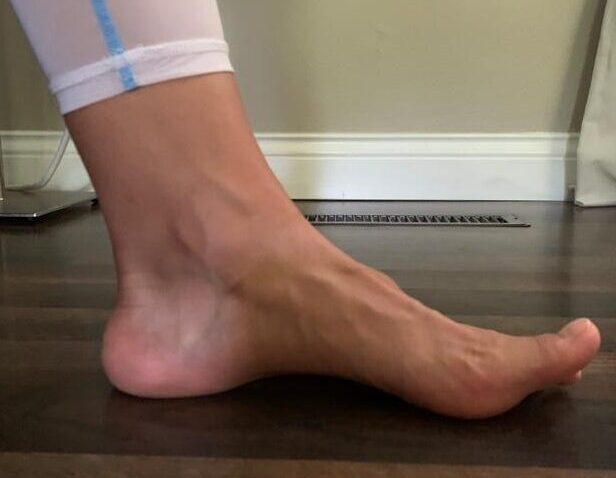
    1. Start position: seated or standing with foot flat on the floor. 
    2. Pick up all the toes but keep the balls of the feet connected to the floor. Feel how this raises your arch? (Figure 5.)
    3. Keep your arch height as you slowly let the toes come down. (Figure 6.) Hold for 5 seconds. Release the arch and relax. 
    4. Repeat. 

    Parameters: 2 sets of 15-20x.

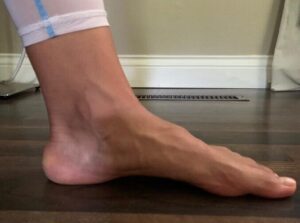
    Figure 6 (c) & 7 (a)

    Figure 7.

    Figure 8.

    Progression #2

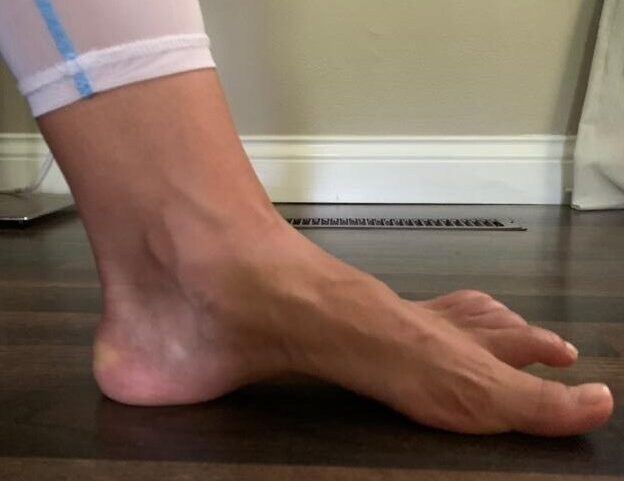
    1. Start position: seated or standing, with foot flat on the floor. (Figure 7.)
    2. Raise the arch of your foot without curling the toes. (Figure 8.) Hold for 5 seconds. 
    3. Relax. Repeat. 

    Parameters: 2 sets of 15-20x.


    Progression #3

    1. Start position: standing with feet flat on floor. (Figure 7.)
    2. Hold your arch up – we call this “doming”. (Figure 8.)
    3. Dome the arch while performing different movements. Try a squat, lunge, and side lunge. See how well you can maintain good arch support with these movement patterns. Repeat. 

    Parameters: 2 sets of 15-20x. 


    4. BIG TOE EXTENSION STRETCH

    Figure 9 (c)

    Figure 9.

    Instructions 

    1. Start position:  sitting, foot flat on the floor.
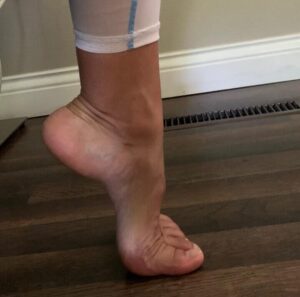
    2. Lift the heel off the floor, like a heel raise. (Figure 9.)
    3. Slide your foot back until you feel a stretch on your big toe. Keep your foot from turning in or out as you do this. 
    4. Hold for 5 breaths. 
    5. Repeat. 

    Parameters: Perform 2 sets. 


    Shoot me a video to show off your foot skills and have a healthy, happy, barefoot summer! 


    XO, 

    Thalia Wynne, PT, DPT, AT

    @thalialovee

  • The Glory of Fascia

    The Glory of Fascia

    by Sarah Apple


    June is skin health month and also my personal favorite month as my birthday is in June! 🙂 What better way to celebrate than to discuss my newfound favorite topic FASCIA! So what is this new buzzword?


    As John Barnes explains, “The fascial system surrounds, infuses with, and has the potential to profoundly influence every muscle, bone, nerve, blood vessel, organ, and cell of the body. Fascia also separates, supports, connects, and protects everything. This three-dimensional web of connective tissue is alive and ever-changing as the body demands. Thus it is a network for information exchange, influencing and influenced by every structure, system, and cell in the organism. Like air and gravity, its influence is so all-pervasive that we have tended to take it for granted.” 


    WOW! What a powerful statement. We often move through life and our busy schedules abusing our bodies without even knowing it until something breaks down and we experience pain, dysfunction, fatigue, etc. Deep inside, however, our bodies are holding onto this trauma, whether it be from day-to-day experiences, repressed memories from your childhood and distant past, or some might even argue from a previous life. All of these emotions and behaviors get trapped inside our bodies, and we continually move into positions of tension and stress, habitually creating more fascial crosslinks or intertwining of tissues. The longer we go without addressing this deeper layer, the longer it will take to truly unwind these structures and return the body to a resting or parasympathetic state. 


    So what does this have to do with skin? As mentioned above, fascia has connections to everything – including the skin – and it uses the skin to help send the body (and myofascial release therapists) a message. When we begin to dive deeper into the fascial layer and release restrictions, the body enters a parasympathetic state and increases blood circulation creating a redness response in the skin. Sometimes this response happens in the actual area of the body being addressed, but more often it appears somewhere else in the body entirely! This reveals fascia’s connections throughout the body and also guides us on where we should address next. Our subconscious minds are incredibly smart, telling our bodies to constantly adapt and change to support our needs. Although you might be experiencing pain or sensation in one area of the body, it could be related to somewhere else. Think of wearing a tight sweater. When you pull it from the top it often gets stuck elsewhere. Fascia works in a similar way, with symptoms often appearing in a different area than the actual issue.


    Like our skin, fascia is composed of collagen and elastin fibers that help absorb tensile forces in the body. Then there is a polysaccharide gel complex that fills the spaces between fibers. This complex allows the muscle fibers to slide over each other with minimal friction as well as to absorb the compressive forces of movement. As long as the forces are not too great, the gel is designed to absorb the shock of tensile forces and disperse them throughout the body. If fascia is restricted at the time of trauma, they are unable to perform their job and often result in injury. The same result can take place over time through microtrauma, such as having leg length discrepancies due to a rotated pelvis. Every step further imbalances the body, forcing the body to compensate through muscular spasm, fascial restriction, and PAIN.


    Myofascial release techniques can be performed to help reduce these symptoms. With these techniques, the enormous pressure of the fascial restrictions are eliminated from pain-sensitive structures, producing increased range of motion, alleviating symptoms, and restoring the normal quality of motion and the body’s ability to absorb shock. When having these techniques performed it is important to rehydrate the tissues because, as described above, this gel-like matrix is composed of mostly WATER. Releasing the toxins and restrictions and refueling the body with hydration allows for deep tissue healing, as well as superficial skin results, and even emotional releases! Find a myofascial therapist near you to experience the results for yourself! 


    Search for a therapist near you: http://mfrtherapists.com/


    Happy Skin Health month y’all!

  • Barefoot and Happy

    Barefoot and Happy

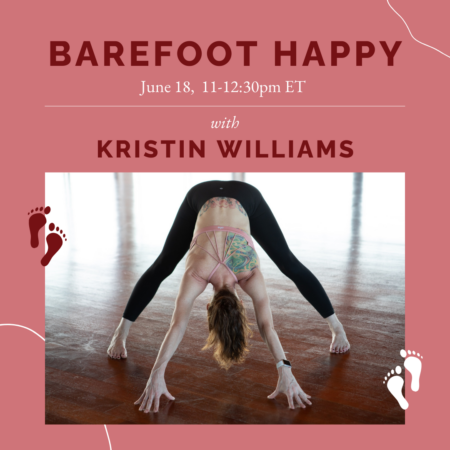
    The month of June is all about bare feet on LYT! This week, Lara interviewed podiatrist Emily Splichal for her Redefining Yoga podcast and on Saturday, June 18th, I’ll be doing our monthly workshop on LYT Daily about being Barefoot Happy. If you’re like me, you find yourself barefoot around the house all the time. I do it for comfort reasons, but being barefoot has dramatic benefits for our bodies as well. 

    Barefoot Happy


    The human foot is a very complex structure, which allows it to be adaptable to the loads placed upon it. During the gait pattern, it must be stable at heel strike and push off, while becoming a mobile adaptor during mid-stance. The arch possesses spring-like characteristics, storing and releasing energy with each step and the deformation of this arch is controlled by both intrinsic and extrinsic muscles. Therefore, stability of the arch is imperative for normal foot function and can be likened to the “core” of the foot. 


    The general consensus in the literature is that habitually barefoot people have stronger feet and fewer foot deformities. Studies have shown that barefoot walking individuals tend to have a wider forefoot, higher arch, more pliable feet, and reduced bunions/hallux angle as compared to people who regularly wear shoes. The literature has also shown that footwear has a significant impact on the gait pattern and can be an extrinsic factor for decreased gait performance over time. McKeon et al. found that permanent support to the foot may result in decreased efficiency of the foot muscles. Their study also suggests that walking barefoot is less restrictive to the motion of the foot, thereby increasing the sensitivity of the stretch mechanisms and activating the musculature of the foot and lower leg. 


    Another advantage of being barefoot is the increase in sensory input received from the sole of the foot. Sensory input has long been recognized for its importance in postural stability and dynamic gait patterns. Stability has been shown to progressively decrease with increasing amounts of footwear support. It’s a fact that as we age, we lose sensitivity in our feet. Coupling that with losing mobility by wearing restrictive shoes all the time can have a detrimental effect on balance and increase the risk of falling as we age. Being barefoot sharpens the connection between the sensory receptors of the foot and brain, giving us better and quicker information about where we are in space. Walking barefoot is one of the most fundamental sensorimotor tasks we perform. If you don’t use it, you lose it. By using and stimulating the nerves in the feet more often, you encourage their physical growth, which improves sensitivity. It is even believed to improve circulation, as we use more of the fine motor muscle of the foot and ankle while barefoot, which moves the blood and lymph more efficiently. When we’re more sensitive to changes occurring under the feet, we’re more able to react when our balance shifts and therefore, reduce our chances of falling. So when we put an overly-supportive or overly-cushioned shoe on the foot, we significantly reduce the amount of sensory feedback from these receptors. In another study, Shinohara and Gribble found that even wearing thin socks decreases postural stability in single-leg standing as compared to bare feet! So one can only extrapolate the effects of regular shoe wear.


    I think the message is clear here…slip off your shoes whenever you can! We do it every time we get on our mat, which is just one of many things I love about yoga in general. Try it around the house and around the yard. Free up those toes by checking out a pair of Correct Toes at our LYT Store! Your body and your brain will thank you in the long run!


    Xoxo,

    Kristin

  • Why do I have to pee all the time?

    Why do I have to pee all the time?

    by Ashley Newton, PT, DPT


    If your family was anything like mine, before a car trip, my mom would always ask if everyone made sure they had gone to the bathroom. And even if you didn’t have to go at that moment you would make a trip to the bathroom to try to avoid any stops on your car trip. Fast forward to today when lots of adults urinate ‘just in case’ before they go out to the store, feel like they are constantly going to the bathroom, and wait in ridiculous lines to use the toilet. What is going on? Why do people feel the almost constant urge to urinate? The answer is multi-layered, but I will discuss causes that fall into the following categories: neuromuscular, musculoskeletal, and dietary.


    The first thing that you need to know is that as the bladder fills, we get our first experience of urinary urgency at 50% full. The amount of time it takes a bladder to fill is 2-4 hours! However, the connection between the bladder and the brain is very smart and if someone starts to urinate more frequently, the body starts to experience urinary urgency earlier and earlier. As a result, people feel like they have to go to the bathroom more frequently even though their bladder is not full. The behavior ultimately trains the brain and bladder! 


    The bladder is surrounded by a muscle called the detrusor. When the detrusor contracts, it pushes urine out of the bladder. If the detrusor is contracting too much, it gives the sensation of urinary urgency. We also know that fascia suspends the bladder and that the pelvic floor muscles support it. If there are issues with pelvic floor coordination and/or strength, the muscles are not doing their job of supporting the bladder. Dysfunction in the muscles of the pelvic floor can cause urinary urgency as well.


    Lastly, there are known foods and drinks that cause bladder irritation. Bubbles from seltzer, citrus, coffee, and chocolate, just to name a few. These foods irritate the bladder lining and can cause the sensation of urgency. Now it is important to note that since the urine inside the bladder plays a role in urgency, restricting water in an attempt to not go to the bathroom actually worsens irritation! This actually makes the urine more concentrated and thus more irritating to the bladder wall. 


    If you feel like you are going to the bathroom ‘all the time’, it may be helpful to consult your local pelvic health physical therapist to retrain the brain and body so that life is not so interrupted by trips to the bathroom.


    I am excited to share tips and education with you in LYT newsletters to come! Follow me on Instagram @ashleynewton_dpt and @activcoreprinceton_pelvic for weekly content on pelvic floor, the nervous system, yoga, and wellness!


    Xoxo, 

    Ashley

  • 545. Wednesday Q&A: Teres Major Area Pain, Shoulder Blade Balance, Mom Shoulder & Cupping

    Welcome to Wednesday Q&A, where you ask questions and we answer them!

    In this Wednesday Q&A, we answer your questions about teres major area pain, feeling an imbalance in your shoulder blades, “mom shoulder,” and our opinion on cupping.


    Your questions:

    • I have pain somewhere between teres major and the armpit. Help!
    • I noticed a significant difference in my ability to engage the muscles around my right shoulder blade and the armpit, like delayed firing. What would you suggest to rebalance my shoulders?
    • Can you speak about “mom shoulder?” How can I get it to feel better?
    • Cupping: When, why, and where?


    To learn more, and for the complete show notes, visit: lytyoga.com/blog/category/podcasts/


    Do you have a question?


    Sponsors:


    Redefining Yoga is produced and published by Crate Media.