Tag: lifestyle

  • 542. Getting Yoga Happy with Hannah Barrett

    So much has changed since Hannah Barrett’s last appearance on the show. She moved from her hometown of London, underwent shoulder surgery, and published her very first book, Yoga Happy.

    In it, she’s assimilated the different aspects of yoga and her own practice to develop a wonderful toolkit for anyone to move and feel better – while deepening their understanding of meditation, yogic philosophy, and mindfulness along the way.

    We discuss how yoga can be accessible to anyone, how it can help balance the nervous system, and make you feel more vital and joyful in life. 

    No matter what time or space you have in life, Hannah wants you to know that you can find ways to increase your energy, reduce stress, and sleep well – all things that are going to make you a little happier.

    To learn more, and for the complete show notes, visit: lytyoga.com/blog/category/podcasts/


    Resources:


    Redefining Yoga is produced and published by Crate Media.

  • Plantar Fasciitis

    Plantar Fasciitis

    by Sarah kingsley


    Plantar Fasciitis is one of the most common causes of heel pain today. Best known for its hallmark sign of a nagging, aching, burning, or stabbing pain in the heel or bottom of the foot, plantar fasciitis is often felt first thing in the morning when you put your feet down on the ground. The thick band of connective tissue on your foot that connects the calcaneus (heel bone) to the toes becomes dense, restricted, and leads to pulling and pain throughout the foot and ankle complex. The reasoning for this is largely unknown, however, it is especially common in runners and those who are overweight. The connection has to do with the major fascial connective system that surrounds every tissue in our body. The positioning of the pelvis plays a major role down the fascial chain, creating 2000lb/square inch of pressure. That’s the equivalent of a steel cable pushing you forward into this anteriorly tipped position! This is evident in runners due to restrictions in their hip flexors and repetitive forward momentum, and those who are overweight due to the abdominal distension pulling them forward. This immense pressure is translated down into the feet, causing pain.


    Breaking up the fascia is the best way to find immediate symptom relief. This can be done using stainless steel instruments (or a utensil such as a butter knife) to scrape away at the bottom of the foot in various directions, around the heel, and up into the calf region. Standing on a vibration platform is also great for breaking up fascial adhesions and restrictions. You can stand statically, or perform calf raises and toe raises, bending at the base of the ankle and keeping the base of your toes down and spread wide. A third way to break down adhesions is with eccentric exercise – strengthening in the lengthening phase of a contraction. An eccentric calf raise works wonders for the gastroc/soleus complex that connects to the plantar fascia through the Achilles tendon. Stand at the edge of a step (or even better at the edge of your vibration plate!) and quickly press down through the base of your toes to lift your heels, then slowly lower the heels down as far as possible, feeling a stretch in the back of your calves before quickly lifting the heels back up and repeating. Each time you should feel yourself being able to go down a little bit lower. But don’t forget the position of your pelvis! Scoop your low belly up and in and maintain a neutral pelvis as best as possible during the exercise.


    For long-term symptom relief, we need to address the source of the issue – which is likely the positioning of your pelvis! The two most common populations to experience this type of pain are often known for an anteriorly tipped pelvis (pitched forward in space). Restrictions in the hip flexor muscles coupled with weak gluteals and hip extensors to counteract these forces create a perfect recipe for disaster! Our LYT yoga practice moves us through the perfect exercises to correct these forces. A few to try out:

    1. Stretch the hip flexors in the 90/90 lunge position, activating the back gluteal and engaging your abdominals to feel a stretch in the front of the hip and thigh.
    2.  When on your back with your knees bent, bring your hands to your thighs and press them away as you pull your belly to your spine and root your tail towards your heels to create a tractioning of the hips and low back biasing posterior pelvic tilt holding for 3 seconds and relaxing.
    3. Progress to actively work the gluteals and hip extensors by performing a bridging motion lifting the hips up, and staying low not to overly activate the spinal extensors as a substitution.


    Stretching the calf muscles can also help relieve symptoms. Begin facing a wall with your hands on the wall and one foot in front of the other in a staggered stance position. Make sure your toes are pointed forwards. Keep your back heel down as you bend into your front knee until you feel a stretch in the back of your calf on the back leg. Hold for 30 seconds and repeat 3 times. Perform this exercise both with your back knee in the straightened/extended and in the bent positions to be sure to get both your gastroc and soleus muscles respectively.


    Using a brace to keep your ankle in a neutral position or to provide a passive stretch into the dorsiflexed position while sleeping can also provide a passive stretch to the fascial tissues and help prevent pain upon waking in the morning.


    References:

    https://www.mayoclinic.org/diseases-conditions/plantar-fasciitis/symptoms-causes/syc-20354846

  • What is a BLISS class?

    What is a BLISS class?

    Bliss means to “reach a state of great joy” and the BLISS class is structured to do just that, for the body and mind. The BLISS class follows the blueprint of a regular LYT class with a focus on repetitive mobility and myofascial stretching to leave you feeling more spacious and blissful. The pace is slowed down so that you can find the pauses and release any tissue (or issue) stickiness that can make us feel agitated and imbalanced. A BLISS class is themed like any LYT class, to hone in on a particular body area or physical and spiritual endeavor. By the close of class, both the body and nervous system will feel more balanced and receptive to relax in bliss.


    Take me to BLISS classes on LYT Daily!

  • What is a SET class?

    What is a SET class?

    When I was traveling about 10 years ago, I created the SET class idea in my own practice.  I found that when I was away from home and traveling with my family, I didn’t have as long of a time to practice so I wanted to make it a very efficient movement experience while helping to unwind any kinks of travel or holiday activities. I begin to share the SET class during a retreat I was leading, and everyone loved it and asked me to continue teaching more SET classes in my regular class line-up. I think many people appreciate the efficiency, repetition, and overall robust movement variability and sweat(!) that a SET class provides. With the blueprint, a SET class can be tailored to any level, intensity, or duration, offering lots of flexibility and accessibility.


    The blueprint starts the same as a regular LYT class, with a RESET to organize the pelvis and spine and activate the entire core musculature. It can include a Sun Sal 1 or go right into the first “set”, a series of movements that is similar to our STREAM in other classes. The set can be anywhere from 5-15 minutes, depending on the complexity and intended duration. It is repeated on both sides and then the class could be finished or another set can be added. The second set repeats the first with some changes, add-ons, or amplifications such as adding plyometrics. The second set is also repeated on both sides.


    The duration and complexity of each set can be adjusted to the level and duration of the class, but no matter what, a SET class will mobilize and rejuvenate the body and spirit and set you up to feel LYT UP.


    Take me to SET classes on LYT Daily!


  • Scapular Winging

    Scapular Winging

    Scapular winging…it’s one of those mysterious musculoskeletal diagnoses that you might never hear of until you get it…and then it seems like literally everyone you come across has it or knows someone who has it! As a physical therapist, if I had a dollar for every person who asked me to “fix” their winged scapula, I’d be rich. Ok, maybe not rich, but I think you get the picture. 🙂 So what is scapular winging and what can you do about it?


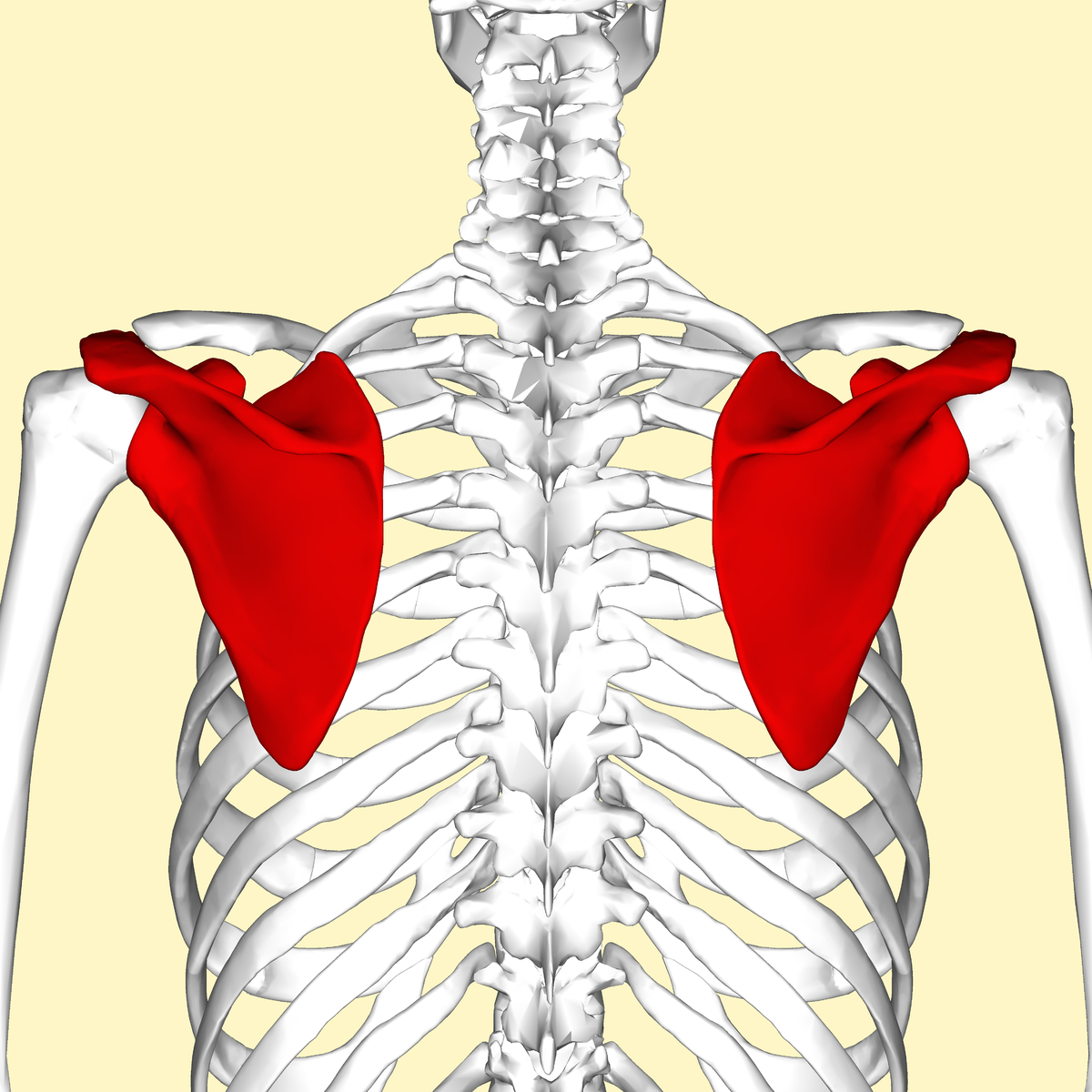
    Scapula is the anatomical term for the shoulder blade. Under normal conditions, the scapula should rest flush upon the thorax and move along the rib cage in conjunction with the upper extremity. Scapular winging is when the medial border, closest to the spine, pops off the ribs and “wings out”. So what causes it? In most cases, scapular winging is caused by damage to one of three nerves:


    • Long Thoracic Nerve – innervates the serratus anterior, which attaches to the medial border of the scapula from ribs underneath
    • Spinal Accessory Nerve – innervates the trapezius muscle, which attaches to the spine of the scapula
    • Dorsal Scapular Nerve – innervates the rhomboid muscles, which attach to the medial border of the scapula from the spine


    Various sports or blunt traumatic related injuries can cause injuries to the nerves and yield scapular winging. Surgeries can also damage the nerves, specifically those surgeries related to breast cancer. In many instances, people develop scapular winging as a result of repetitive upper extremity motion. Greater than 50% of medial scapular winging is caused by a traction nerve injury to the long thoracic nerve. So think of repetitive throwing, overhead volleyball serves, wearing a heavy backpack, or overhead weightlifting. Many cases of injuries to the long thoracic nerve which temporarily paralyze the serratus anterior will resolve on their own within 2 years, as long as the repetitive stretching stops.


    Rehabilitation following atrophy of the scapular stabilizers can be long and arduous. Depending on the severity of the scapular winging, a visit to your local physical therapist may be warranted. However, so much of what we do in LYT yoga addresses scapular stability and the serratus anterior in particular. Use of manual and visual cues to encourage forced use of the serratus on the side of the dysfunction can help to speed up recovery once the neural trauma is resolved. Maintaining optimal posture both on your mat and off also help to facilitate a neutral scapula and cervical spine, which facilitate healing and strengthening as well. So if your scapula wings, it’s not the end of the world. No need to “fly” off the handle! (Bad pun, but I couldn’t resist!) Take a hard look at what might have caused or be causing the issue and go from there. See a physical therapist for specific treatment. And as always, get on your mat and keep those scapulae neutral! Fly high friends!


    Xoxo,

    Kristin

  • 538. Tribute to Caregivers

    May is a month for celebrating and recognizing mothers. Along with mothers, there are many others that share the role of caregiving, taking care of people in their lives, whether they’re parents, a spouse, or otherwise. In this Monthly Motivation episode, we explore the deeply emotional and important topics of mothering and caregiving and how to ensure you don’t lose yourself in the act of caring for others.

    To learn more, and for the complete show notes, visit: lytyoga.com/blog/category/podcasts/


    Resources:


    Redefining Yoga is produced and published by Crate Media.


  • 537. Parents are the Change-Makers of a New Generation with Kanika Chadda-Gupta

    In this episode of Friday with Friends, we chat with Kanika Chadda-Gupta, a born storyteller and master of reinvention. Starting off as a television anchor in India, she pivoted her life by moving to the United States and becoming a digital marketing strategist – then reinvented herself once again as a podcast host and parent. We talk about parenting, organization, entrepreneurship, and trying to balance it all.

    To learn more, and for the complete show notes, visit: lytyoga.com/blog/category/podcasts/


    Resources:


    Redefining Yoga is produced and published by Crate Media.

  • Transversus Abdominis: The Abdominal Corset 

    Transversus Abdominis: The Abdominal Corset 

    by Ashley Newton PT, DPT


    “Draw the belly button into the back body”, “lift the abdominals up from the pubic bone”, “hold your core strong”, “stitch the belly in”. These cues for the abdominals can be confusing! Need some clarity on how to effectively utilize your abdominals in your yoga practice? Keep reading to get insight into how to optimize this part of your core! 


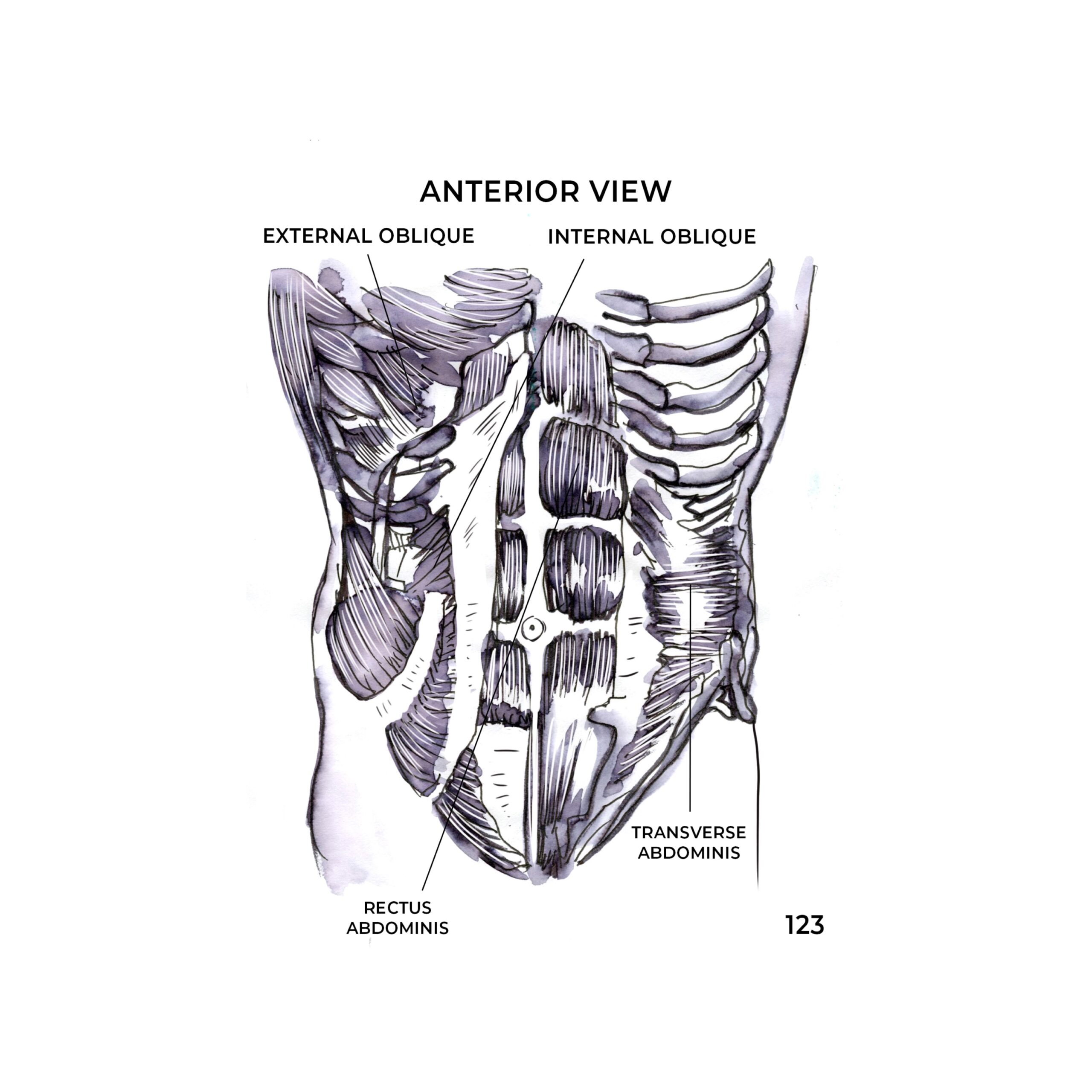
    Our abdominal wall is composed of layers of musculature. Some muscles are oriented closer to the surface (superficial) while others are deeper and attach to our spine. The deepest layer of musculature is the transversus abdominis. The fibers of transversus abdominis attach to the ribs, iliac crests (top of the hip bones), and pubic bone; they ultimately wrap around the abdomen to the back, creating a muscular ‘corset’. The transversus abdominis supports our abdominal contents, assists in expiration and defecation, and supports the lower back. Transversus abdominis has an important role in postural control where it contracts prior to a pre-planned movement. Meaning, if you are going to reach for a can on a shelf, the transversus abdominus will contract prior to that movement in order to stabilize the trunk. It has been established that in instances of pain, activation of transversus abdominis is delayed. When muscle firing is delayed, our body finds other ways to stabilize the trunk. However, these muscle substitutions are not designed to stabilize the trunk. Thus, the tissues can become overloaded by essentially having to do a job they were not designed to perform. This can play a role in future pain and dysfunctional movement. 


    When transversus abdominis is doing its job, there is a lifting and drawing in of the abdominal tissues. In this instance, we stand taller and our backs and pelvic organs are adequately supported. This is the “Triple S” posture we talk about in LYT! Sounds easy enough, but there are a couple things to look out for to ensure that the abdominals are contracting in harmony. 


    One of the more common things I see as a PT is ‘abdominal coning’. Abdominal coning occurs when the rectus abdominis fires without co-activation of transversus abdominis. When the rectus abdominis is contracting without the stability provided by transversus abdominis, the abdomen will protrude down its center in a conical shape. We can think about coning as an energy leak where the pressure in the abdomen is not contained and supported by the deep core musculature. Thus, it leaves through the path of least resistance at the linea alba (a fibrous line that connects the rectus abdominis in the midline of the abdomen). 


    **PT TIP**: If you notice the midline of your abdomen coning in your yoga practice, focus on the following:

    1) Maintaining Triple S during Exercise: Skull aligns with Scapula that aligns with Sacrum.

    2)  Exhaling through the Mouth: As you move, think about the lower abdomen deflating as the belly button draws up into the rib cage. Exhaling through the mouth when you move will prevent breath holding and ultimately recruit the abdominals. 

    3) Avoid gripping in your low belly: When you maintain neutral posture and exhale with control, you generate tension in the lower abdomen. Maintain that tension as you move during yoga postures. Avoid gripping in the side waist or attempting to maximally contract the abdomen to stabilize yourself. Rather, think about the belly button gently scooping up toward the ribs to contract transversus abdominis. This creates a flattening of the low belly. Maintain that tension while continuing to breathe into the rib cage.  


    Another common abdominal substitution is external oblique over-utilization. The external oblique musculature is more superficial than the transversus abdominus. Its actions include trunk movements such as rotation and flexion as well as playing a role in breathing and defecation. If the external oblique is doing too much without the assistance of the transversus abdominis, the sides of the abdomen cinch in, and the tissues below the belly button dome upward. 


    **PT TIP**: To avoid abdominal doming in your yoga practice, try the following:

    1. When you exhale, place one hand on the low belly and lightly draw the tissues upward to feel the tension created by that lift. This helps you to orient the pelvis to neutral posture and ultimately the ‘Triple S’ posture. 
    2. Notice Belly Button Movement: The belly button draws up toward the rib cage and the lower portion of the abdomen deflates/flattens when you use transversus abdominis. Use a mirror to watch yourself breathe and gently draw the tissues up from the pubic bone to feel the transversus abdominis contract when exhaling. 


    The abdominal wall is truly multi-layered with the deepest of the musculature keeping us upright, breathing well, and supporting our organs. It is important to be able to use this muscle without overly tensing other muscles so that our bodies are able to move through space without pain or maladaptive movements that can lead to issues in the future! If you have issues such as pain, urinary leakage, constipation, abdominal scarring, and/or abdominal coning or doming, it may be useful to contact a pelvic floor physical therapist to assess the abdominals along with other muscles of the core to ensure they are working together for safe, pain-free movement! 


    I am excited to share tips and education with you in LYT newsletters to come! Follow me on Instagram @ashleynewton_dpt and @activcoreprinceton_pelvic for weekly content on the pelvic floor, nervous system, yoga, and wellness!


    <3 Ashley