Tag: exercise

  • 723. Wednesday Q&A: Cold/Heat, NeuroKinetic Therapy, & Piriformis Syndrome

    723. Wednesday Q&A: Cold/Heat, NeuroKinetic Therapy, & Piriformis Syndrome


    In this Wednesday Q&A, we answer your questions about to cool or heat an injury, neurokinetic therapy, and piriformis syndrome.


    Your questions:

    • In case of an injury, say muscle soreness or a twisted ankle, would you still recommend ice and cooling or moderate heat?
    • What are your opinions on NeuroKinetic Therapy as a modality of physiotherapy? There seems to be a divide in opinions, curious to know what you both think!
    • Piriformis syndrome – Can you explain what it is? Exercises to help out.


    To learn more, and for the complete show notes, visit: lytyoga.com/blog/category/podcasts/


    Do you have a question?


    Sponsors:


  • 720. Wednesday Q&A: Spinal Discs, Self-Consciousness & ACL Surgery Advice

    720. Wednesday Q&A: Spinal Discs, Self-Consciousness & ACL Surgery Advice


    In this Wednesday Q&A, we answer your questions about spinal and herniated discs, self-consciousness and ACL surgery advice.


    Your questions:

    • Can please you explain how the (spinal) disc functions and is there a cure for herniated discs?
    • What do you suggest for feelings of self-consciousness or intimidation in gym or group fitness settings?
    • What’s the best advice for healing an ACL surgery as a competitive runner?


    To learn more, and for the complete show notes, visit: lytyoga.com/blog/category/podcasts/


    Do you have a question?


    Sponsors:

  • The Power of Strength Training and Why It’s Essential for Your Health

    The Power of Strength Training and Why It’s Essential for Your Health

    In a world filled with fitness trends and workout fads, one cornerstone remains true: strength training. Beyond the pursuit of beautiful muscles, strength training offers many benefits that go far beyond aesthetics. From improving overall health to enhancing daily functionality, strength training is an essential ingredient for daily life and longevity. Strength training (or resistance training) is a type of exercise that causes your muscles to resist an external force; this training intentionally loads the muscles and bones and can be performed using your own body weight, and/or outside weight via dumbbells, kettlebells, weight racks, or resistance bands. Strength training is truly having its day in the media spotlight and so to get you on board, let’s look at all the reasons that we should be doing it. 


    Strength training increases muscle mass, which in turn boosts your metabolism. Unlike cardiovascular exercise, which primarily burns calories during the activity, strength training leads to an “afterburn effect” where your body continues to burn calories even after the workout is over. This impact can help you maintain a healthy body weight to move more efficiently and joyfully in all decades of life. We know how amazing a LYT online class makes us feel- during and after- both physically and mentally. Exercise has long been associated with improved mental well-being, and strength training is no exception. The release of endorphins during exercise helps alleviate stress, anxiety, and depression, leaving you feeling happier and more energized.


    Strength training also improves muscular strength and endurance. This endurance not only makes daily tasks easier but also enhances athletic performance and reduces the risk of injury during physical activity. More than merely adding resistance to your routine, smart strength training involves movements that promote joint flexibility and mobility. By strengthening the muscles surrounding your joints, you can reduce the risk of injury and improve overall joint health. Specifically, working compound movement patterns (also known as functional movement like we incorporate into our LYT practice) such as squats and lunges enhance your ability to perform daily life activities with ease and independence. Maintaining strength and mobility is essential for maintaining independence as we age, and it is never too early to prime your body for lifelong musculoskeletal health. As we age, bone density naturally decreases, leading to an increased risk of fractures and osteoporosis. Strength training stimulates bone growth and helps maintain bone density, reducing the risk of fractures and promoting overall bone health. 


    Strength training will help older adults stay active, reduce the risk of falls, and improve overall quality of life. Because strength training improves functional capacity by enhancing muscle strength, power, and endurance, we can improve performance of activities of daily living such as walking, climbing stairs, lifting objects, and maintaining balance. By improving functional ability, strength training enables older adults to remain independent and active for longer.


    With aging, especially for women who are going through or are in menopause, strength training becomes increasingly important due to factors related to aging and hormonal changes. Age-related muscle loss, known as sarcopenia, begins as early as the fourth decade of life and accelerates after the age of 65. Strength training helps counteract this loss by stimulating muscle growth and preserving existing muscle mass. Osteoporosis, or loss of bone density, is common among older adults and increases the risk of fractures and falls. Strength training, particularly exercises that load the bones such as resistance training, can increase bone density and reduce the risk of fractures, thus promoting bone health and longevity. With falls in the elderly being a leading cause of injury and mortality, strength training proves its worth by improving balance, coordination, and proprioception, all essential ingredients for preventing falls. By strengthening muscles and improving stability, strength training reduces the risk of falls and associated injuries, thereby enhancing safety and quality of life. Additionally, strength training has been shown to be effective in managing and preventing chronic conditions such as arthritis, diabetes, and cardiovascular disease, by improving insulin sensitivity, lowering blood pressure, reducing inflammation, and promoting overall cardiovascular health.


    So I hope you are convinced of the value of incorporating strength training into your wellness routine! In addition to my daily LYT practice which offers plenty of bodyweight strengthening moves, I have started adding extra weights in smaller doses or in lighter loads for longer time to build more endurance and prevent muscle loss. For more direct loadbearing on my spine, a common area for osteopenia, I began rucking about seven months ago. Rucking involves hiking/walking with a special pack that holds weighted plates. On both of our membership platform- LYT Daily and LYT Studio- we have strength classes. The “SET with weights” is one of my favorite classes to teach and practice, so join in on the fun with me or one of the other LYT teachers.  Incorporating strength training into your workout routine doesn’t have to be complicated. Whether you prefer lifting weights at the gym, bodyweight exercises from the convenience of your home, or resistance bands during your lunch break, the key is to find activities that you enjoy and can stick with consistently. 

  • 718. Wednesday Q&A: Stepping Forward From Downdog, Hot Yoga, & Moves to Avoid with Osteoporosis

    718. Wednesday Q&A: Stepping Forward From Downdog, Hot Yoga, & Moves to Avoid with Osteoporosis


    In this Wednesday Q&A, we answer your questions about stepping forward successfully from downdog, the hot yoga craze, and moves to avoid with osteoporosis.


    Your questions:

    • I want to be able to step one foot forward form downdog into a low lunge. I can’t get my foot as far as my hands. Long legs? Short body? I don’t know. What can I do to develop this skill? Strengthen hip flexors? Core? I don’t even know what to work on and it’s a basic move. Feels like my arms are too short and I can’t get my torso high enough for my leg to go through.
    • Can you expand on the hot yoga craze?
    • Are there any moves I should avoid or modify if I have osteoporosis?


    To learn more, and for the complete show notes, visit: lytyoga.com/blog/category/podcasts/


    Do you have a question?


    Sponsors:

    • Visit almondcow.co/shop and use code LARA for a discount off your purchase!
    • Check out and sign up for LYT Daily and The LYT Studio, including our 1-week FREE trial of each here: https://lytyoga.uscreen.io/
    • 20% off coupon code for LYT Daily: LYTPOD24
  • 5 Simple Core Strengthening Exercises

    5 Simple Core Strengthening Exercises

    In the LYT Method, we stand by the motto “More Core” for a reason. Whether you’re reaching for something, balancing, getting up off the floor, or simply standing in one place, the muscles of the core are working to keep your spine and pelvis stable. Unfortunately, many people are weak in their core. Most people think only of the abdominals when they hear the term “core”, but there’s a much broader picture to consider when wanting to strengthen this area. We need to consider not only the spine, but also the girdles of the shoulders, hips, and pelvis when incorporating core strengthening exercises. 


    Why does core strength and stability matter and why incorporate core strengthening exercises? Movement of the body through space depends on the creation and transfer of forces between different segments of the body. For example when we bend over to pick something up off the floor, not only do we need the strength of the arms to lift the object up, but we need to stabilize and lift through the lower body and transfer force through the trunk just to make this movement occur. Failure to do so successfully can increase the risk of injury anywhere along this chain of movement. 


    Core stabilization exercises have been shown to reduce the risk of this type of injury, as well as decreasing pain, reducing disability, and restoring/increasing strength. When core muscles are activated, there is an increased stiffness of the spine which enhances stability, allowing for this transfer of force. We need to strengthen not only the deep postural muscles but also mover muscles, as both have been shown to be key in stability. 


    Here are five simple (yet challenging!) exercises to improve your core stability:


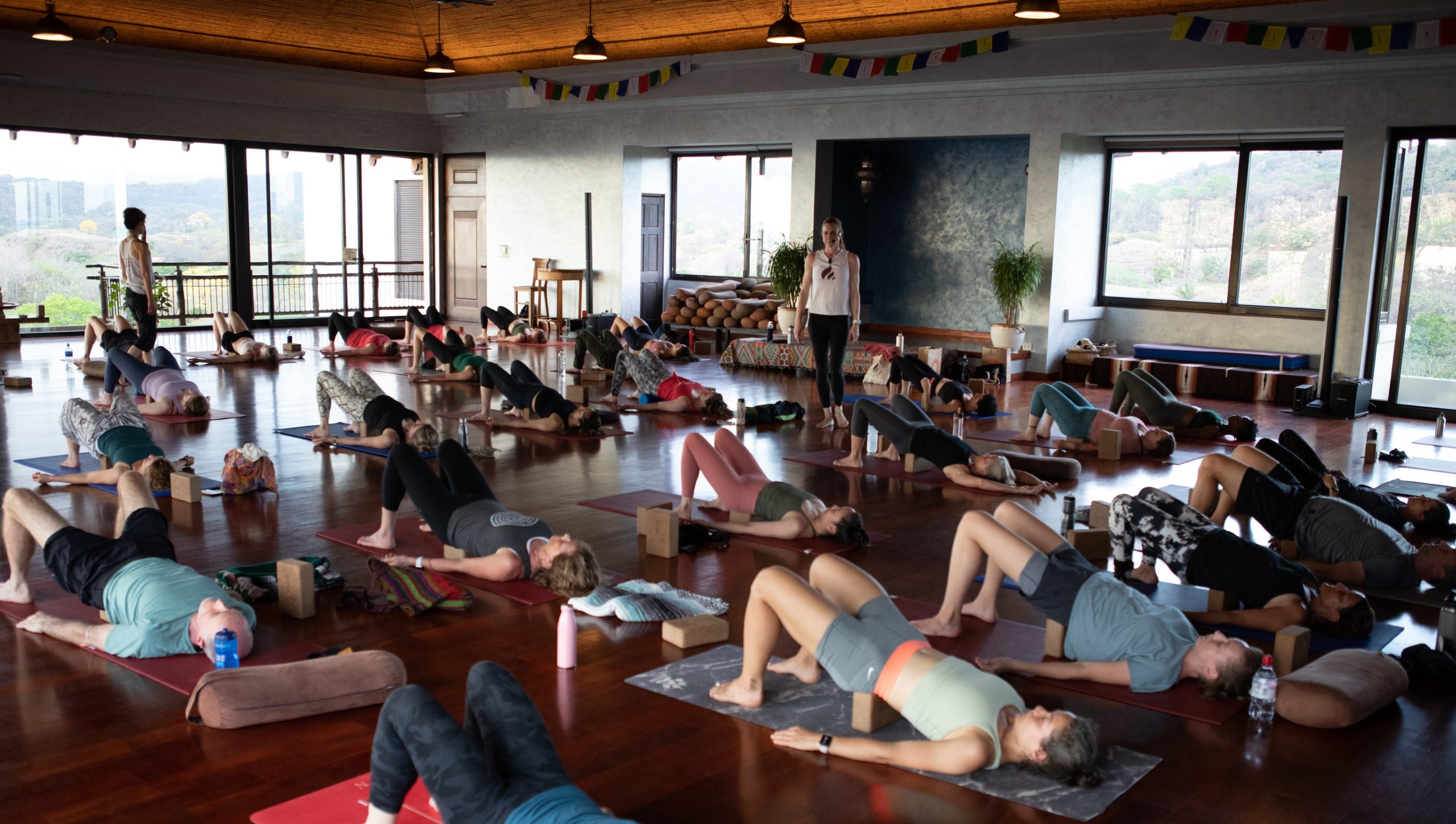
    1. Glute Bridge – as the largest muscle in the body, the glutes play a huge role in core stability, acting as both a mover and a stabilizer.
      •  Lie on your back with your knees bent and feet flat.
      •  Press down through the feet to lift the pelvis up off the floor, elongating in the spine (do not press up too high or the back will arch).
      •  Hold for 2-5 seconds, keeping the pelvis level. Lower down with control.
      •  Do 3 sets of 10-15 repetitions.
    2. Supine March – holding the spine stable while moving the lower extremities is Core Stabilization 101. 
      •  Lie on your back with your knees over the hips and shins parallel to the floor (feet off the ground).
      •  Keeping the knee bent, slowly lower the left leg to tap the toes to the floor. Do not let the back arch up or allow the ribs or pelvis to move. 
      •  Return the left knee over the hip and repeat with the right leg. That is considered 1 repetition.
      •  Do 3 sets of 10 repetitions.
    3. Side Bridge – this exercise targets the deep oblique abdominals as well as the stabilizing muscles of the shoulder and hip.
      •  Lie on your left side with your knees bent to 90-degree angles and your elbow underneath your shoulder.
      •  Lift your bottom hip off the ground, trying to keep your knees, hips, and upper body in one long line.
      •  Hold for 10 seconds. Try to work your way up to a 1-minute hold!
      •  Do 10 holds on each side. As you increase your hold time, decrease your repetitions.
    4. Forearm Plank – this is a 1-stop shop exercise, targeting all the layers of your abdominal wall, as well as the shoulders, upper back, thighs, and glutes.
      •  Start on your hands and knees and then lower the forearms to the ground with the elbows under the shoulders.
      •  Walk one foot back at a time, tucking the toes under and keeping the knees off the floor.
      •  Hold this position without letting the back arch or hips drop, while keeping the neck long and in line with the trunk.
      •  Hold for 10 seconds. Try to work your way up to a 1-minute hold!
      •  Do 3-5 repetitions. As you increase your hold time, decrease your repetitions.
    5. Half Kneeling Chop – another 1-stop shop exercise that combines core stability, balance and hip stability, and shoulder strength all together.
      •  Start on your hands and knees and then lift your hands off the floor coming into tall kneeling.
      •  Step the left foot forward so both knees are bent to 90-degrees. The left foot will be directly under the left knee and the right knee will be directly under the right hip.
      •  Option to hold a light weight in the hands or simply clasp the hands together.
      •  Rotate the torso towards the right leg, bringing the weight towards that hip, keeping the arms extended. This is the start position.
      •  Using your abdominals, rotate the trunk to lift weight diagonally across the body and above the left shoulder, keeping arms extended. 
      •  Reverse to the starting position. This is one repetition.
      •  Do 2-3 sets of 10 repetitions on each side.


    If you’re familiar with the LYT Method, all of these exercises should look familiar to you as we do these and variations of them in each and every class. More Core is not about getting six-pack abs, although that is an added benefit that many find comes with the territory. It’s about creating a readiness in the body to move well and prevent injury. It all starts with core stabilization, so give these a try! 


    Xoxo,

    Kristin

  • 717. Wednesday Q&A: Hip & Low Back Pain During Pregnancy, Cervical Spine Arthritis, & Misconceptions About Exercise & Movement Practices

    717. Wednesday Q&A: Hip & Low Back Pain During Pregnancy, Cervical Spine Arthritis, & Misconceptions About Exercise & Movement Practices


    Welcome to Wednesday Q&A, where you ask questions and we answer them!


    In this Wednesday Q&A, we answer your questions about hip and low back pain during pregnancy, cervical spine arthritis, and misconceptions about exercise and movement practices.


    Your questions:

    • Any suggestions for hip and low back pain during pregnancy? I’m in my 4th month and the pain gets worse from sitting for too long but also from working out. I’m keeping my exercise routine light and easy but the pain flares up, specifically on one side. Yoga, stretching, and even walking doesn’t feel as good as pre-pregnancy because I lost my body and movement awareness. Thanks!
    • A long-term yogi & friend (mid-60s) has recently been diagnosed with arthritis in her cervical spine, C2-C5. She has a fair bit of pain & is careful what she does in our LYT classes. In your opinion is there anything that I can do to help her?
    • What are some common misconceptions about exercise and movement practices?


    To learn more, and for the complete show notes, visit: lytyoga.com/blog/category/podcasts/


    Do you have a question?


    Sponsors:

  • To Stretch or not to Stretch? Is It Even a Question?

    To Stretch or not to Stretch? Is It Even a Question?

    Over the last 25 years or so, there has been a debate in the literature about the benefits of stretching before exercising.

    Back in my early athletic years, the thing to do before any sports activity was static stretching. We’d run a lap or two to warm up beforehand and then everyone hit the grass and did static stretching for 10-15 minutes. Around the time I was graduating from PT school, the general opinion was changing and static stretching before exercise was becoming all but taboo. However, it remained an integral part of a treatment session and any time I would stretch someone on the table, they would always tell me how great it felt and how they “wished they could take me home with them and do it every day”. Taking the evidence and my own professional experience into account, my opinion of static stretching began to evolve to a place where I still believed it had a place in people’s lives, but as part of a bigger picture. Just recently, I did a literature review of stretching to back up this claim and was pleased by what I found. 


    History tells us that people have been stretching for thousands of years and in many cultures. From the World Wars until the 1990’s, the general belief was that prolonged static stretching would improve athletic performance by increasing flexibility and range of motion and thereby improving movement economy. However, by the late 1990s and early 2000s, there was widespread evidence on the potential harmful effects of static stretching. A meta-analysis of the literature conducted on 104 studies in 2013 reported that prolonged static stretching negatively affected maximal strength and power performances, no matter the participant’s age, gender, or fitness level. Based on these results and others, several leading medical platforms changed their recommendations and stated that static stretching should be eliminated from any warm-up routine. Soon everyone was focused on dynamic stretching alone before an athletic endeavor.


    Nevertheless, I continued to believe there was a place for stretching in fitness and rehabilitation. In fact, in the summer of 2016 I created the Stretch class we now teach on LYT Daily in response to the very reactions I was receiving from clients and patients alike about how good they felt after being stretched. My goal with stretching was rarely to increase flexibility per se, but more as an assessment of soft tissue resistance and available joint range of motion. I also recognized the benefit that the sensation of stretching provides to the brain via mechanoreceptors in the muscles and tendons. I believed it was a great way for a person to learn more about their body and the story it was telling them within its tissues.   


    It seems the literature wasn’t far behind me. By 2019, the evidence was finding that static stretching itself was not the culprit of decreased strength and power. It was the duration the stretch was held that determined whether or not there were negative effects of static stretching prior to athletic activity. Across the board, these studies showed that stretches held for 60 seconds or less had no negative impact on power or strength, whereas stretches over 60 seconds did. So why does duration matter? In stretches held for over 60 seconds, there are short term changes in the neuromuscular response, including decreased motor unit activation (strength) and decreased maximal voluntary isometric torque (power). There is also evidence that long duration static stretching decreases muscle-tendon unit stiffness, which affects the length-tension relationship of the muscle, and thereby compromises the muscle’s ability to generate force/torque. However in the same stretches held for 60 seconds or less, no significant changes in motor until activation, maximal voluntary torque, or muscle tendon unit stiffness is seen. 


    Today, many researchers are recommending once again that we include short duration static stretching in a pre-exercise routine because it has the potential to lower the risk of sustaining musculotendinous injuries and does not have the previously perceived negative effect on strength and power. In addition to this, one study in particular reported their participants felt they were “more likely to perform well when stretching was part of the warm-up”, indicating a positive psychological benefit of stretching and an important component of optimal performance. My opinion on the matter is unchanged. I utilize static stretching both to treat my own injuries and to keep tabs on the general condition of the muscles, joints, and surrounding connective tissues over time and following activity. Combining regular gentle stretching with dynamic movement like we do in the LYT Method is an ideal way to move better and feel better longer. We get the best of both worlds, keeping our tissues strong and healthy while maintaining a steady conversation with our bodies through observation. If you’ve never tried one of my Stretch classes, you should join me or one of the other trained LYT Instructors on Saturday mornings from 9:30-10:30 am ET. You won’t regret it! Until then, I’ll see you on the mat.


    Xoxo,


    Kristin


    Chaabene H, Behm DG, Negra Y, Granacher U. Acute Effects of Static Stretching on Muscle Strength and Power: An Attempt to Clarify Previous Caveats. Front Physiol. 2019 Nov 29;10:1468.

    Behm, David G. The science and physiology of flexibility and stretching: implications and applications in sport performance and health. Routledge, 2018.

    Blazevich A. J., Gill N. D., Kvorning T., Kay A. D., Goh A. G., Hilton B., et al. (2018). No effect of muscle stretching within a full, dynamic warm-up on athletic performance. Med. Sci. Sports Exerc. 50, 1258–1266. 

    Simic L., Sarabon N., Markovic G. (2013). Does pre-exercise static stretching inhibit maximal muscular performance? A meta-analytical review. Scand. J. Med. Sci. Sports 23, 131–148.

  • Starting a New Workout Routine

    Starting a New Workout Routine

    Starting a New Workout Routine

    Research has shown that a regular workout is among the factors that have the most beneficial effects on health.

    Exercise helps maintain body weight, can boost your brain health, reduces the risk of heart disease, enhances the immune system, and slows the effects of aging. So why do less than 5% of adults perform the minimum recommended amount of exercise (150 minutes at moderate intensity or 75 minutes at vigorous intensity) per week?

    Many find that getting into the habit of working out can be a huge challenge. Not to mention that there are right and wrong ways to go about it safely. In the spirit of New Year’s resolutions, let’s talk about how to ease into a workout routine. 


    The best place to start is to determine your “why” and go from there. One of the reasons listed above may be motivation enough! Figuring out which is most important to you can help you stay on track when you might feel like quitting. Keep it in the back of your mind as you go through your fitness journey. You’re going to have good days and bad days, so having this “why” may be the thing that keeps you on track.


    The next step is to set a realistic goal within a realistic timeframe. Upwards of 65% of all people who begin an exercise program end up dropping out in three to six months. This is likely due to the fact that we tend to set unrealistic goals that are unattainable within our projected timeframe. Start with smaller and more attainable short-term goals. Once you’ve set your goals, create a plan to reach them. 


    First and foremost, start slow. Progressive overload is a commonly utilized method with weight training and involves gradually increasing the weight, frequency, or repetitions in a routine. But it can be applied to cardiovascular fitness programs as well. Exercise is a science and should be approached as such. Your weekly routine should include cross-training, as I wrote about in last week’s PT Corner. Starting with anywhere from 10-15 minutes of exercise and slowly building in intensity, duration, and frequency. A general rule of thumb is increasing by no more than 10% per week. 


    Having a formal training plan or workout schedule to follow is a great way to help stick with the plan. When I used to train for marathons, I would write my six-month training regimen on the calendar as a way to stay motivated. Scheduling time into your day until exercise becomes part of your routine is a great place to start. Look at your schedule, determine the most ideal time for you to exercise each day, and then make it a recurring appointment. Always have a Plan B for when life gets in the way. If you can’t make your 60-min LYT Yoga Expresso class because of an unexpected engagement, schedule time for a 20-min HIIT class instead! If and when setbacks happen…and they will…don’t just throw in the towel. Be compassionate with yourself and get back in the game when you’re able. Doing something is better than nothing at all.


    Finally, accountability is huge. I used to pick a fun destination for my marathons, so once I bought that plane ticket and entry fee, there was no turning back! Many times I would run them with friends as well. Finding a social network to exercise with is a game changer! My 5:45 am classes at the LYT NJ studio grew in popularity because we all began to feel like family. People would ask about or check up on those who missed a few days in a row. We looked forward to seeing each other and sweating together, even at the wee hours of the morning! 


    On that note, we’ve created a “Start Here” collection of videos for those people who are new to movement or getting back to movement after a long break on our LYT Launchpad page. Going through the body from head to toe, we have created short, simple classes to restore and maintain mobility and improve strength and stability. Each move is similar to what you may see in a traditional LYT class, so you can build slowly towards our Beginner level program. A simple LYT style class is also included in each section. Check them out to help get yourself moving. I’ll see you on the mat!


    Xoxo,

    Kristin