Tag: community

  • 695. Guiding Postpartum Recovery with Mama Made Strong founder, Betsy Petry-Johnson

    695. Guiding Postpartum Recovery with Mama Made Strong founder, Betsy Petry-Johnson


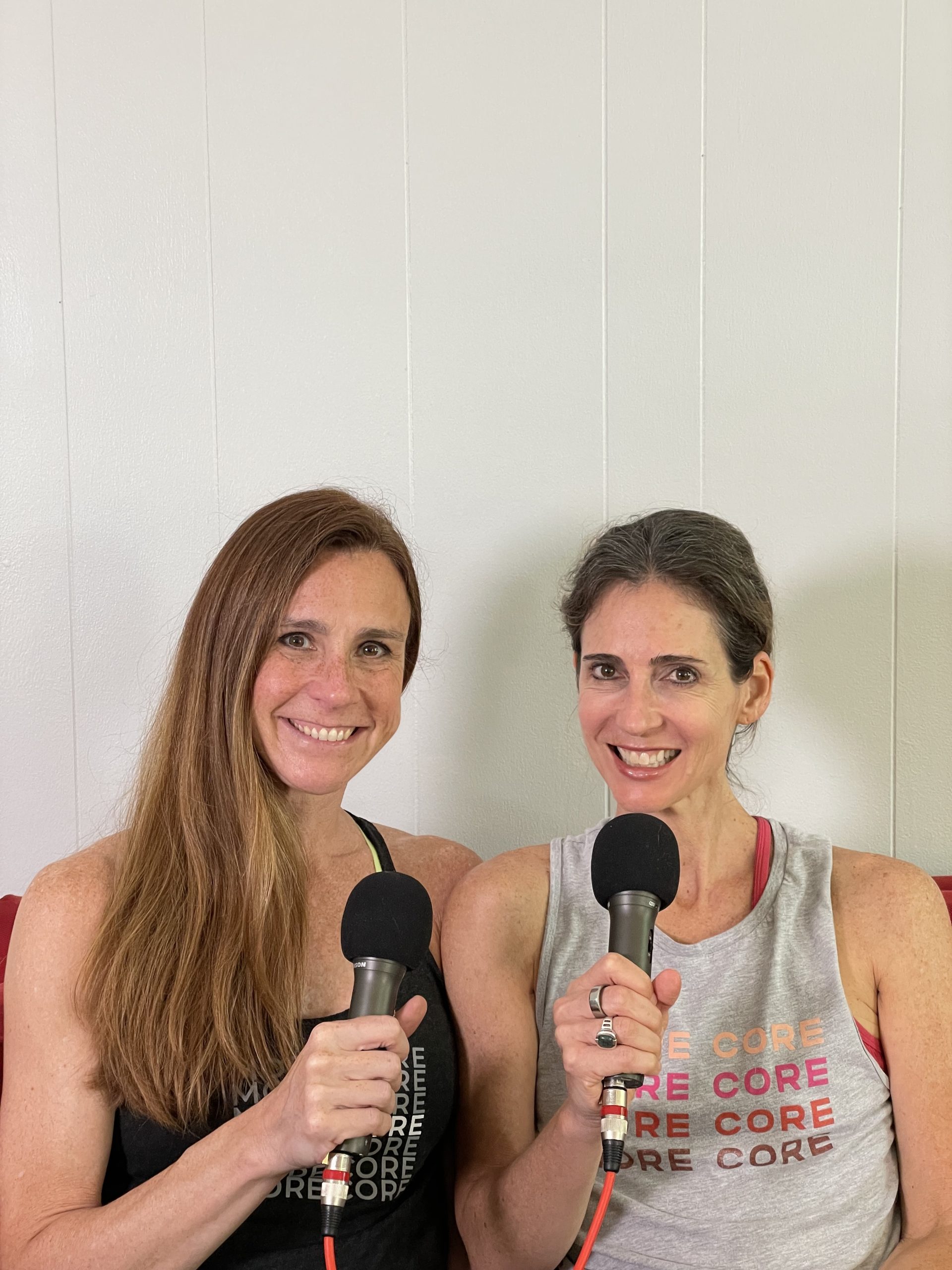
    Betsy Petry-Johnson, the founder of Mama Made Strong, is empowering postpartum mothers to feel good about their bodies after giving birth.

    Months after giving birth to triplets, her belly still wasn’t responding to the postpartum programs she found online. So she worked towards finding her own answers, founding Mama Made Strong to help mothers struggling with the same problems. 

    On this episode of Redefining Movement, Betsy discusses how important it is to understand how unique our bodies are; what works for one person might not work for another. By giving people the tools and education about fitness and wellness, you empower them to find the processes that best serve them, which can often bring better results. 

    In this episode, you will learn the following:

    • You can begin investing in your health no matter what age you are. 
    • Diastasis recti can often be a symptom that there’s something else that’s wrong with your body. 
    • Your belly is an excellent biofeedback tool to let you know how your fitness journey is going.


    Guest Resources: 


    Connect with Lara Heimann, The Redefining Movement Podcast, and LYT Daily:


    Today’s podcast sponsor:

    Almond Cow – Visit almondcow.co/shop and use code LARA for a discount off your purchase!

    Herbal Face Food – Use code Lara20 for 20% off 


    Follow the podcast:

  • 694. Wednesday Q&A: Fun Facts About Us, Daily Movement, & Deeper Breathing

    694. Wednesday Q&A: Fun Facts About Us, Daily Movement, & Deeper Breathing


    Welcome to Wednesday Q&A, where you ask questions and we answer them!

    In this episode, Lara & Kristin offer some fun facts about themselves, moving daily, and breathing.

    • What is something fun and interesting that people might not know about you and Kristin? 
    • How much should I move through the day? I work virtually but find the lack of routine—i.e. Go to work, come home—makes it harder for me to get motivated.
    • How do I help my breathing? I can’t seem to get out of shallow breaths.

    Connect with Lara Heimann, The Redefining Movement Podcast, and LYT Daily:

    Today’s podcast sponsor:

    LYT Teacher Training

    Learn more and sign up for the LYT Yoga teacher trainings here: https://www.lytyogatraining.com/

    Follow the podcast:


  • 692. Wednesday Q&A: Massages, Low Energy, & Diastasis Recti in Newborns

    692. Wednesday Q&A: Massages, Low Energy, & Diastasis Recti in Newborns


    Welcome to Wednesday Q&A, where you ask questions and we answer them!

    In this Wednesday Q&A, we answer your questions about the frequency of massages, experiencing low energy, and diastasis recti in newborns. 

    • How often would you recommend massages? Is it okay if it hurts?
    • What are your recommendations for low energy?
    • My newborn baby has diastasis recti. Will it go away on its own or will he need physio?


    Connect with Lara Heimann, The Redefining Movement Podcast, and LYT Daily:


    Today’s podcast sponsor:

    LYT Newsletter – Sign up for the LYT Newsletter: https://www.getdrip.com/forms/542247881/submissions/new 

    Herbal Face Food – Use code Lara20 for 20% off 


    Follow the podcast:

  • 691. Building a Recession-Proof Fitness Business with Jill Coleman

    691. Building a Recession-Proof Fitness Business with Jill Coleman


    Jill Coleman is a relentless fitness and business coach striving to help other health and fitness professionals get out of the gym and start building a business that attracts clients successfully. She leverages her extensive knowledge and experience in the fitness space, from running marathons to joining figure competitions, to help clients develop the right mindset for having a fulfilling fitness journey. 


    In this episode of Redefining Movement, Jill talks about the influential role branding plays on the success of a fitness business. She also shares her experiences with understanding moderation in her diets, taking discipline to the next level by learning to trust herself, and lessons she’s learned about starting an online business and developing a recession-proof brand.


    In this episode, you will learn the following:

    • Understanding what you can and can’t control is powerful knowledge you can use wherever you are, whether it’s about fixing your diet or running your business. 
    • Another name for branding is trust-building, and that takes time. You need to develop your patience and endurance for providing value to your clients daily if you truly want to succeed as an entrepreneur in the fitness space—or any space, for that matter.
    • Being authentically yourself online differentiates you from other businesses since it’s what allows people to trust, and eventually follow you and your business when you decide to expand or pivot. Always remember to show your energy to attract people who are more likely to want to work with you.


    Guest Resources


    Connect with Lara Heimann, The Redefining Movement Podcast, and LYT Daily:


    Follow the podcast:


    Today’s podcast sponsor:

    Almond Cow – Visit almondcow.co/shop and use code LARA for a discount off your purchase!

    AminoCo – Shop my favorite 100% Science-Backed Amino Acid Supplements. Enter code “LYT” to save 30%. Aminoco.com/LYT

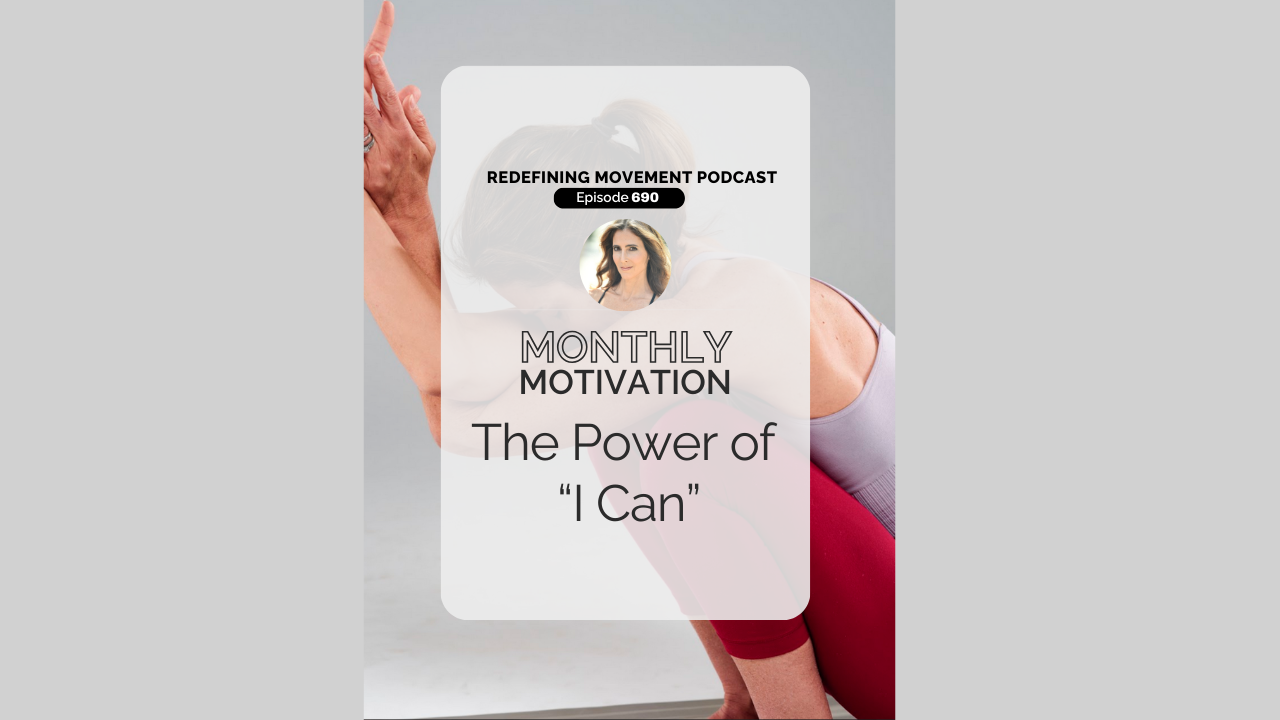
  • 690. The Power of “I Can” and “I Will”

    690. The Power of “I Can” and “I Will”

    Join Lara for a discussion about the power of the words, “I Can” and “I Will.” You’ll realize that your thoughts truly can shape your perception and reality, so it’s important to think positively to enhance your life today.

    In this episode, you will learn the following:

    • Repetition is how your brain learns. Whatever thoughts you repeat to yourself, whether negative or positive, will become how you believe your life will be.
    • You can’t achieve something without first believing you can do it.
    • Your words form your thoughts, which then color your reality. 

    Connect with Lara Heimann, The Redefining Movement Podcast, and LYT Daily:

    Today’s podcast sponsor:

    LYT Daily/Studio – Check out and sign up for LYT Daily and The LYT Studio, including our 1-week FREE trial of each here: https://lytyoga.uscreen.io/ 

    Follow the podcast:

  • ‘Did my Vagina Just Fart in Yoga Class?’

    ‘Did my Vagina Just Fart in Yoga Class?’

    ‘Did my Vagina Just Fart in Yoga Class?’

    by Ashley Newton, PT, DPT

    Vaginal flatulence, vagina farting, queefing – all the same thing and can take you by surprise when you are moving through a yoga class.


    So what is vaginal flatulence? Is it actually gas like what passes through your rectum?


    Short answer: vaginal flatulence is when air that is trapped in the vagina is released. It is not created by digestion but rather by air that gets trapped as we move through space. 


    So why does it happen?? 


    Air regularly moves in and out of the vaginal canal. It is normally silent when the balance between vaginal pressure, abdominal pressure, and pelvic floor closure is balanced. However, air can get trapped in the canal as a result of poor pressure management and/or changes in the vaginal tissues. 


    Lubrication and Moisture


    The vaginal tissues are androgen-receptive aka hormonally influenced tissues. As folks with vaginas age, the lubrication at the vaginal opening decreases. However, this lubrication can also change following the birth of a baby, following radiation, as a result of medication, and hormonal changes related to thyroid dysfunction. Long story short, this is not an ‘aging problem’. It can happen at any age! This decrease in moisture results in decreased closure at the vaginal opening. Air can then escape and vibrate the tissues, making an audible sound akin to a fart. Vaginal moisturizers and hormonal creams can help to restore moisture to the vagina.


    What can you do to help it? Vaginal moisturizers are over the counter whereas hormonal creams are prescribed by a medical professional.


    The Diaphragm Paradox


    The pelvic floor musculature and the thoracic diaphragm move ideally move in harmony. When we inhale, the pelvic floor and diaphragm descend. On exhalation, they lift together. However, this relationship can change and the diaphragms can begin to move in opposition to one another. So, as the pelvic floor lifts, the thoracic diaphragm drops. As a result, the pelvic floor pulls more air into the vagina. This air becomes trapped and on the next phase of the breathing cycle when the pelvic floor drops, that additional air is pushed out and can result in a vaginal fart. 


    What can you do to help it? Working on coordinating your breathing so that as you inhale, you are able to feel the pelvic floor drop and as you exhale, feel the pelvic floor lift is the first step to improving coordination and regulating pressure changes. Remember that the pelvic floor does not have a joint like your elbow or knee and it can be challenging to discern how it is moving. If you aren’t sure, try the following exercise:


    Pelvic Floor Awareness Exercise:

    1. Take your hands and place them on the SIT bones (literally the bones you sit on) with the fingers facing inward. 
    2. Create a small cup with your hand so that your fingers sink in onto the tissue at the inside of your SIT bone. This is your pelvic floor! 
    3. As you inhale through the nose, try to focus your breath into the sides and back of your rib cage, creating a 360 degree expansion. 
    4. Bring your awareness to your fingertips. Can you drop your breath into your fingertips, feeling the tissue lower toward the seat?
    5. As you exhale, grow tall through the crown of the head like you are being pulled up on a string or you are trying to get tall on a growth chart. Keep the ribs open as you exhale. No need to squeeze the belly or pelvic floor, it will contract on its own. Do you feel the tissue at your fingertips lift up and away from your seat? 


    I always refer to this exercise as similar to an eye test where the optometrist asks you to read letters and gradually makes them sharper. The more you do this exercise, the sharper, the clearer the sensation of the pelvic floor will become.


    Pelvic Floor Muscle Activity


    The pelvic floor musculature has a resting tension. This tension is present to modulate pressure and airflow, support the spine, and support the pelvic organs (uterus, rectum, bladder). Changes in resting tension – meaning pelvic floor activity is too high or too low – can lead to air getting trapped and noisily leaving the vagina. 


    In the case of the overactive pelvic floor, when the tissues are stretched in a position such as downward dog or happy baby, air enters the vaginal canal. Upon moving out of the pose where the pelvic floor returns back to its overactive state, it can forcefully and audibly push the air out of the vagina. 


    With an underactive or lax pelvic floor (laxity can occur due to childbirth, surgery, hormonal changes, and medication), more air can flow in and out of the vaginal canal.


    What can you do to help it? 

    1. Slow down your movement and then your attention inward. Focus on breathing into your rib cage and growing long through the crown of your head in postures to avoid creating downward pressure on the pelvic floor. Take some extra time as your move through poses such as downward dog to plank and ensure that you exhale through the length of the movement. Working on your postural awareness will help to reduce pressure at the pelvic floor as well as align the two diaphragms. 
    2. Use blocks! Blocks are not crutches, they do not mean you are taking the easy way out. They are ensuring that you meet your body where it is at so you get the most out of yoga poses. Use 1 block the thinnest way between the thighs in symmetrical postures such as mountain pose, downward dog, plank, and table top to improve the activation of your pelvic floor and improve the closure at the vaginal opening. Use blocks under the hands for forward fold, twisted crescent, and triangle to avoid creating downward pressure into the pelvic floor. They help to keep the spine long and the scapular musculature engaged. 


    ‘But wait! What if I only experience this during sex??’


    With vaginal penetration, especially in postures where the pelvis is above the head, air can get trapped in the vagina as the pelvic muscles lift. 


    What can you do to help it? 

    1. Slow down the depth and speed of thrusting.
    2. Experiment with different postures and try ones lying on the side or where the pelvis is level with the head.
    3. Use supportive props. Try a sex pillow to provide support to the body to change the position of the pelvis and provide you with support to try new postures. 


    Vaginal flatulence/farts/queefing can be embarrassing. I get it, the majority of the population’s humor has not evolved beyond fart jokes. If you aren’t going to yoga class or are hesitant to engage in movement or sex because of vaginal flatulence, talk to a pelvic PT. They can give you guidance on what to work on so that you can confidently move through your yoga class without your vagina being disruptive. And know this too y’all – talking about vaginal health is hard, there are so many factors that lead us to have our voices silenced. Know that you are not alone and it’s when we talk about these hard things that it helps to amplify the voices of others as well as help us move forward to close the gaps in health equity. 


    Y’all are rockstars. ❤️

    ~Ash 

     

  • 685. Exploring Rehab Science with Tom Walters

    685. Exploring Rehab Science with Tom Walters

    Join Lara for a conversation about rehab science with Dr. Tom Walters, DPT, OCS.

    Dr. Walters is a board-certified orthopedic physical therapist that specializes in the treatment of pain and movement disorders. He is the founder of Rehab Science and dedicates his time to teaching people about human movement, pain, and how to most effectively recover from injury. Besides running his clinical practice, Tom served as a full-time undergraduate kinesiology professor for eight years where he taught human biomechanics, therapeutic exercise, and pain science.


    In this episode we chat about:

    • How to self-manage your pain.
    • What is pathokinesiology?
    • How important is biomechanics?
    • How to unpack people’s perceptions of pain.
    • Tips to help you improve your awareness of your body and your energy.
    • How movement snacks can be a key to your success. 


    To learn more, and for the complete show notes, visit: lytyoga.com/blog/category/podcasts/


    Guest Resources:


    Connect with Lara Heimann, the Redefining Movement Podcast, and the LYT Method:


    Want to become a LYT Teacher?:


    Follow the podcast:

  • 650. Wednesday Q&A: Carrying Angles, Calcified Ligaments, Advice on a Student, & How LYT Helps You Breathe

    650. Wednesday Q&A: Carrying Angles, Calcified Ligaments, Advice on a Student, & How LYT Helps You Breathe


    In this Wednesday Q&A, we answer your questions about carrying angles, calcified ligaments, advice on handling a difficult student, and how LYT helps you breathe better. 


    • I’ve practiced other forms of yoga for many years with specific pranayama. But I find for the first time that my breath is bigger, since starting LYT. I feel lighter and I’m more connected. Why is that, when I’ve been practicing pranayama for many years?
    • Lara, you posted on Mark’s carrying angle. What is that and when to be concerned?
    • How often do ligaments calcify?
    • How to kindly respond to the objection of a student who persistently complains that the class is difficult, even though it’s described as the most advanced class in the yoga center. The student refuses the proposal to attend less challenging classes because it’s too difficult for her. The student breathes hard and loud in class, but still always chooses the most challenging transitions and positions. With her dissatisfaction to fulfill some of her expectations that she couldn’t achieve, she spreads negative energy that others notice and even bothers them. 


    To learn more, and for the complete show notes, visit: lytyoga.com/blog/category/podcasts/


    Do you have a question? Reach out – we love connecting with you! 


    Please Support Our Sponsor:

    Visit almondcow.co/shop and use code LARA for a discount off your purchase!