Category: Friday with Friends

  • 199 | How to Help Hip Pain

    199 | How to Help Hip Pain

    I get questions from people complaining about anterior hip pain. I’m going to cover the points that are beneficial without going too deep into anatomical detail.

    There are several factors to be aware of when suffering from hip pain, including being aware of your range of motion, listening to your pain and discomfort, and focusing on your posture. If you are feeling hip pain, avoid deep ranges of motion until you are not feeling that pain anymore. Pay attention to your posture, pay attention to your form, and pay attention to what needs to be stable and what needs to be mobile.


    Resources:

  • 193 | Why Elbows Can Hurt

    193 | Why Elbows Can Hurt

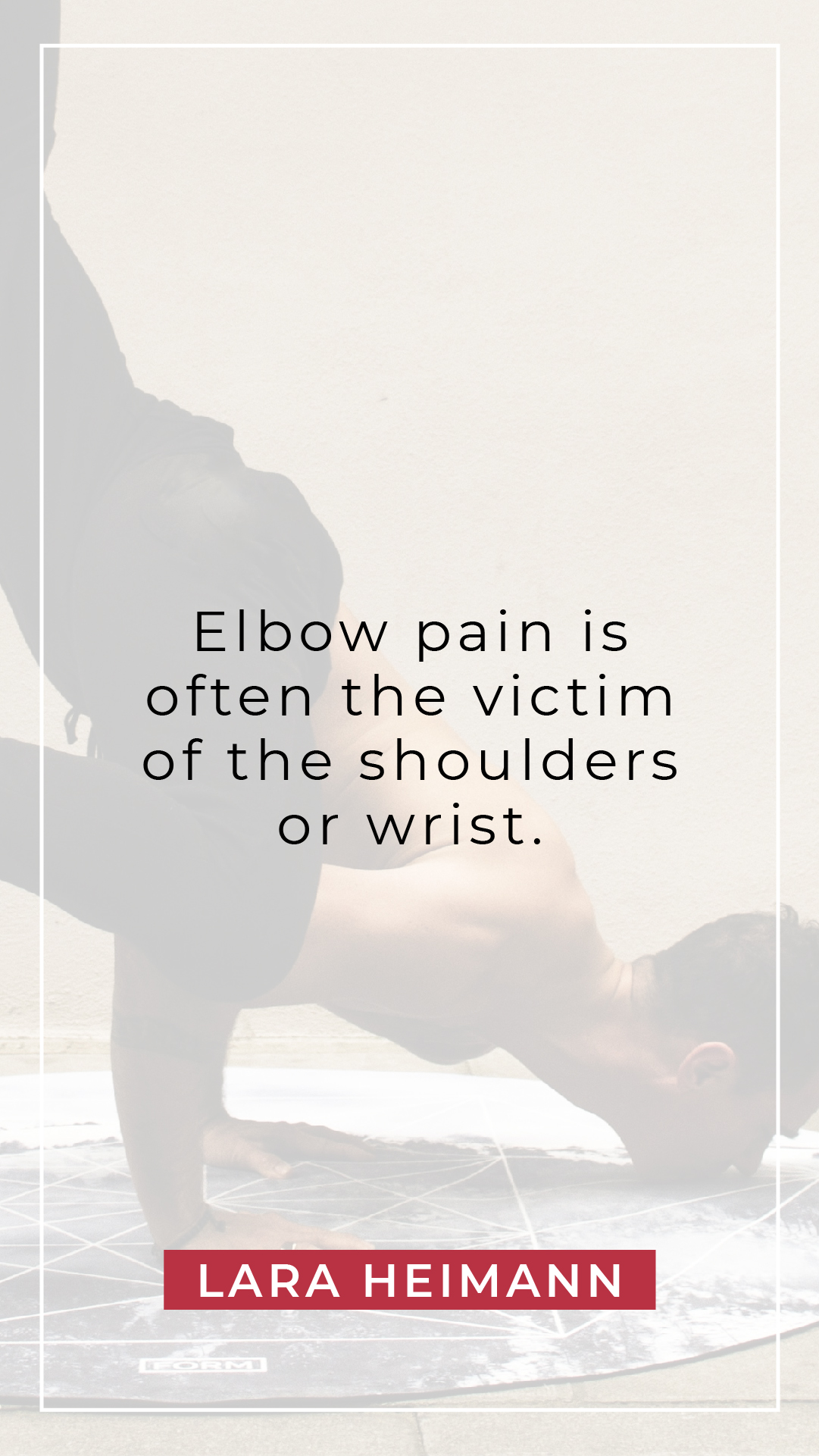
    I get a question a lot about elbow pain, specifically what is causing it. Your elbows are moving a lot, and they transmit a lot of energy from your wrist into your shoulder. So many people begin to complain of elbow pain throughout their life.


    There are a variety of possibilities for elbow pain. We’re going to go over some of those causes in case you’ve dealt with it, if you know someone who is having problems, or if it comes up for you in the future. The good news is it’s often preventable.


    Resources:

  • 190 | Thoracic Outlet Syndrome

    190 | Thoracic Outlet Syndrome

    Today’s episode is about thoracic outlet syndrome. It’s not incredibly common, but it is becoming more and more common and we need to learn to address it before it happens.


    Thoracic outlet syndrome occurs when you have pressure on the brachial plexus, which is a nerve bundle underneath the armpit. It can cause numbness, pain, or weakness in the arm.


    We’re going to talk about some of the causes of this syndrome, how to avoid them, and how to potentially work it out.


    Resources:

  • 189 | Acquiring Happiness

    189 | Acquiring Happiness

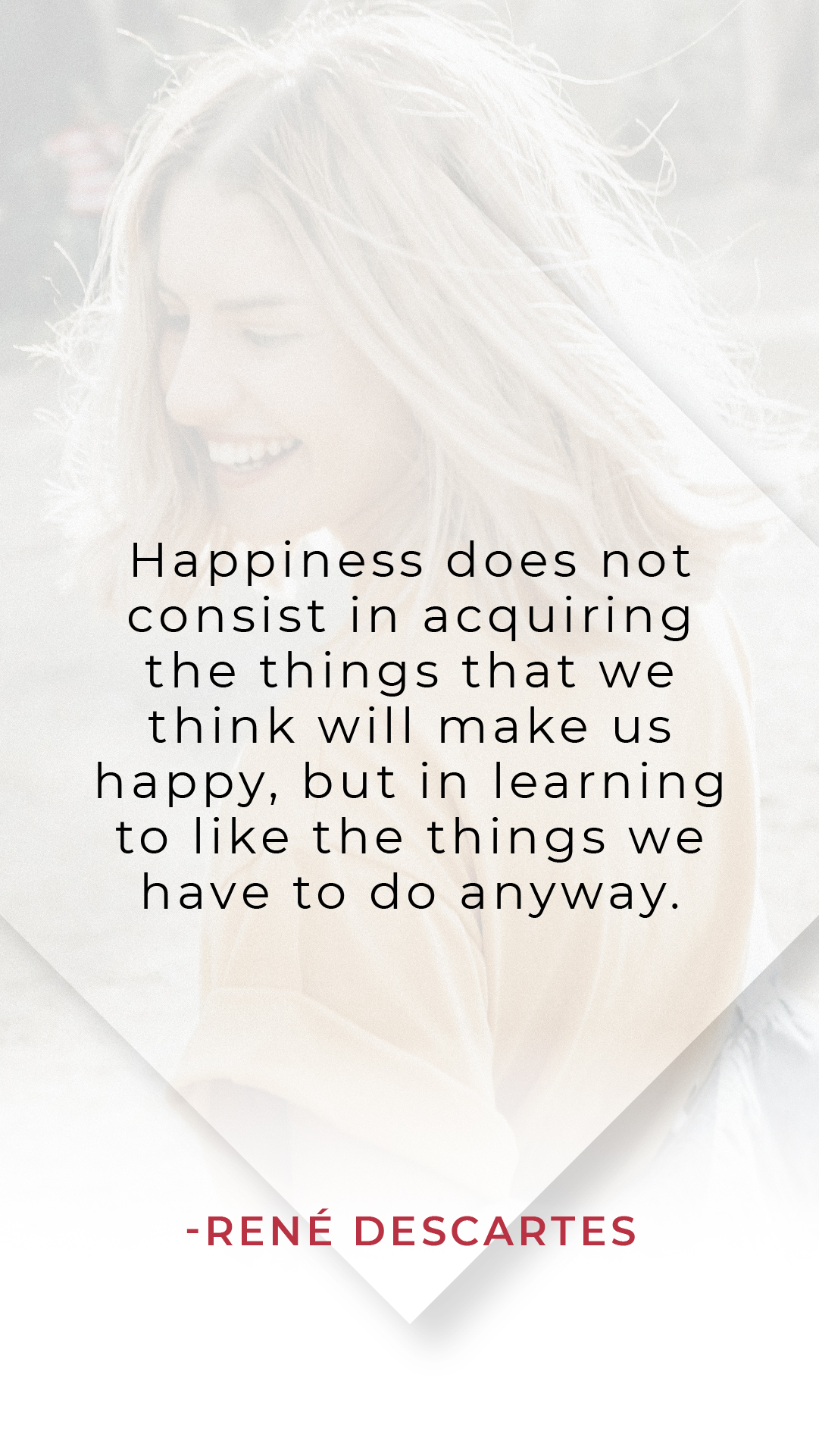
    Today would normally be our interview episode, but instead I’m going to be talking about something inspired by one of my friends. My friend Elizabeth Fryer wrote me and said she had thought of me when she was writing about the French philosopher, Descartes, who said “happiness does not consist in acquiring the things that we think will make us happy, but in learning to like the things we have to do anyway.” She said I seemed to be happy in a lot of the things that I do, and wanted to talk about it.


    I agree with Descartes: You will not reach happiness in acquiring things. We know that some people have so many things, and those things still don’t make them happy. We’re doing things, why not find happiness in learning how to do these things anyway?


    So what are some of those things we have to do anyway, and how can we find happiness in them? Here are a few examples:

    • We have to work for money, for food and shelter, and hopefully for a higher purpose. Some people don’t necessarily subscribe to the belief that you can do something that’s fulfilling. Can you find moments of happiness in whatever work you do?
    • When things are hard, remember that there are people out there who just have it so much harder. It is harder to bring yourself to complain about something when you realize all of the ways that you are really so lucky and well off. Save the complaints for things that really, really matter


    Resources:

  • 186 | Shoulders | with John Frank, PT

    186 | Shoulders | with John Frank, PT

    In this episode, my brother, John Frank, joins me to discuss the shoulder complex. John is a physical therapist, athlete, and fellow lover of movement. So often, we think that the shoulder is simple, but the shoulder is, in fact, quite complicated! 


    When you see people, what are the main complaints people have in their shoulders?

    The complaint usually comes from the front and / or top of the shoulder, so your bicep or your rotator cuff. There is never a blanket diagnosis, because the shoulder is so intricate. When you have pain when reaching overhead, you have to look at the whole complex of the shoulder, not just one place. 


    What is a good exercise that would help people re-educate their range of shoulder motions between the different parts?

    Face a wall and put your arms overhead, and move the arms slightly out to the sides. Relax the arms completely, and pretend as though someone took their fingers on the lower part of your shoulder blade, moving it upwards. Be sure to keep your neck neutral in this position. 


    What do you see in the shoulder when people have a sloped shoulder? Is this something that can be helped? 

    Even though there are a lot of genetic features, a sloped shoulder is mostly acquired. The top of the shoulder blade and the bottom of the shoulder blade should be pointing straight down as vertical, parallel to the spine. People with sloped shoulders tend to have pain in their necks as well as tingling down the arm. 


    What can people with sloped shoulders, or conditions like that, do?

    Definitely do the wall exercise described above, but also look at your posture. Shrugging the shoulders, and even raising the arms above the head periodically can help as well. 


    Resources:
  • 184 | What is good movement?

    184 | What is good movement?

    In the 25 years of being a physical therapist I’ve seen that people have become more restricted and less varied in their movement. 


    In this episode I break down exactly what I mean by good movement and tell you how to increase your ability to move well. 


    There are four crucial aspects to good movement – ease, efficiency, variation and coordination. Each of these work together to ensure we’re not putting unnecessary stress on our bodies and that we have lots of choices in our movement bank. 


    Make it your mission to move, and move well, each and every day. Also, examine the ways that you’re not moving as well, and think about how you can be more efficient and more coordinated in movement.


    Resources:

  • 183 | Two PTs and a podcast | with Kristin Williams

    183 | Two PTs and a podcast | with Kristin Williams

    Today my friend and fellow physical therapist and yogi Kristin Williams returns to the conference. Kristin actually got into yoga because she had so many PT patients coming in injured from yoga and decided that she needed to learn more about it. She has an amazing therapeutic series on the LYT daily so make sure to check that out. 

    We talk about takeaways from a PT conference we just went to, how to work out what might be causing you pain when you run and how you could be suffering from weak scapulae, even if you work out a lot.


    Plus, Kristin answers your PT questions including:

    • What would be the cardinal sign of a glute medius tendinopathy or tendinosis? 
    • Is going from warrior three III or airplane pose to half moon bad for your hips? 
    • Does the sacroiliac (SI) joint really move all that much in asymmetrical poses?
    • What is the optimal position for feet in yoga – parallel or diagonal?
    • What movements do you see from bodies on the street that make you cringe?


    Resources:

  • 180 | Second Act | with Barbara Majeski

    180 | Second Act | with Barbara Majeski

    In 2015 life was going pretty well for Barbara Majeski. She was a married stay at home mom in New Jersey. She had received a Humanitarian Award for her work advocating for children and adults with special needs. Then her marriage suddenly came to a complete crash and burn – and she was diagnosed with colon cancer.

    She got to a point during her chemo treatment where she thought she wasn’t going to make it out, and started to wonder about her legacy. She listed the things she was most proud of in her life – putting herself through college, taking care of her brother with special needs and advocating for people who didn’t have a voice. 

    Then she realized that taking care of her brother had given her the greatest gift – the gift of purpose. She asked the Universe to get her out of cancer and chemo so she could continue to use her voice for the greater good. 

    The Universe delivered, so Barbara hired a media trainer and started putting herself out there. Since then she’s appeared on media outlets like the Today Show and is building a brand about finding happiness and living a good life with purpose.

    There are so many great lessons from this interview including:

    • Confronting our own mortality
    • Using your experience to help others
    • Not letting perfectionism, comparison and fear get in our way
    • Not waiting for things to be handed to you
    • Ending a marriage with love and positivity
    • Women backing other women
    • Barbara’s upcoming podcast


    Resources: