Tag: resilience

  • Resistance Training and Metabolism

    Resistance Training and Metabolism

    As I near the golden age of 50 in just a few short months, I find myself more and more interested in resistance training and its benefits. As a matter of fact I just joined a gym for the first time in well over a decade and the weight room is the main reason! I love that LYT has been focusing on the benefits of resistance training this month and one benefit that I’ve always heard about but never really understood the “why” behind was how it improves one’s metabolism. Knowing that menopause is right around the corner has me concerned about how my metabolism may be impacted. Full disclosure is that I’ve always been blessed with a high metabolism, but I’m concerned and expect that one day that will change. So I decided to do a little research on how resistance training and metabolism. 


    The first question that one could ask is what exactly is metabolism? Simply stated, it’s the chemical reactions in the body’s cells that change the food we eat into energy, which we need to move, breathe and think. Thousands of metabolic reactions are happening at the same time to keep our cells healthy and working. The resting metabolic rate is the rate at which a person’s body burns energy in the form of calories while at rest. This can be affected by a person’s genetic makeup, health issues, and by body composition, which is where resistance training comes into play. 


    When we exercise, we are breaking down and rebuilding muscle. Research has shown that resistance training creates a higher degree of muscle damage than aerobic training, and the muscle protein repair/synthesis process is an energy-demanding metabolic process. Estimates suggest that every pound of muscle burns roughly six calories per day at rest. While this may not seem like a lot, it’s three times as many calories as a pound of fat, which burns roughly two calories. So since lean muscle is more metabolically active than fat, a body with more muscle mass will burn more energy (calories) even at rest. This equates to an increase in the resting metabolic rate. Unfortunately for us, starting as early as age 30 the body begins to slowly lose muscle mass. Women lose up to 15% of the total body muscle per decade by the age of 50. So not only are we losing strength, but our metabolism is slowing due to the decrease in muscle as well. 


    In addition to changing body composition by increasing the amount of lean muscle, resistance training has been shown to increase the excess postexercise oxygen consumption (EPOC) as compared to steady-state aerobic training, like walking or jogging. Also known as oxygen debt, EPOC is the amount of oxygen required to return the body to its resting metabolic rate and explains how your body continues to burn energy after you’ve finished your workout. Similar to how a car has to cool down after it has been running, the body continues to burn calories at rest for a period of time after you exercise. Yet another metabolic perk for resistance training!  


    However, not all resistance training modes are created equal when it comes to metabolic benefits. Higher exercise intensities produce higher EPOC values. Performing compound exercises such as squats, deadlifts, lunges, pull-ups, etc, which recruit the most amount of muscle, and doing them at higher intensities such as HIIT (or plyometric LYT classes), are all great options for higher EPOC values. The same is true for lifting weights to stimulate the most muscle growth for increased metabolism. Finding the resistance that is heavy enough for you to perform only 8-12 reps per set with proper form will increase muscle size as compared to muscular endurance. Increased muscle mass yields increased metabolism…I think we see a pattern here.


    I don’t know about you, but I’m properly convinced to stay on my LYT mat doing my online classes which are full of compound bodyweight resistance training movements for the long haul. I’m also convinced that maintaining muscle mass as I age is a good step towards maintaining if not increasing my metabolism as well. If you haven’t checked out our Monthly Challenge called “Get Pumped”, you should! It’s full of resistance training coupled with our traditional LYT method blueprint. A definite win-win situation!


    Xoxo,
    Kristin

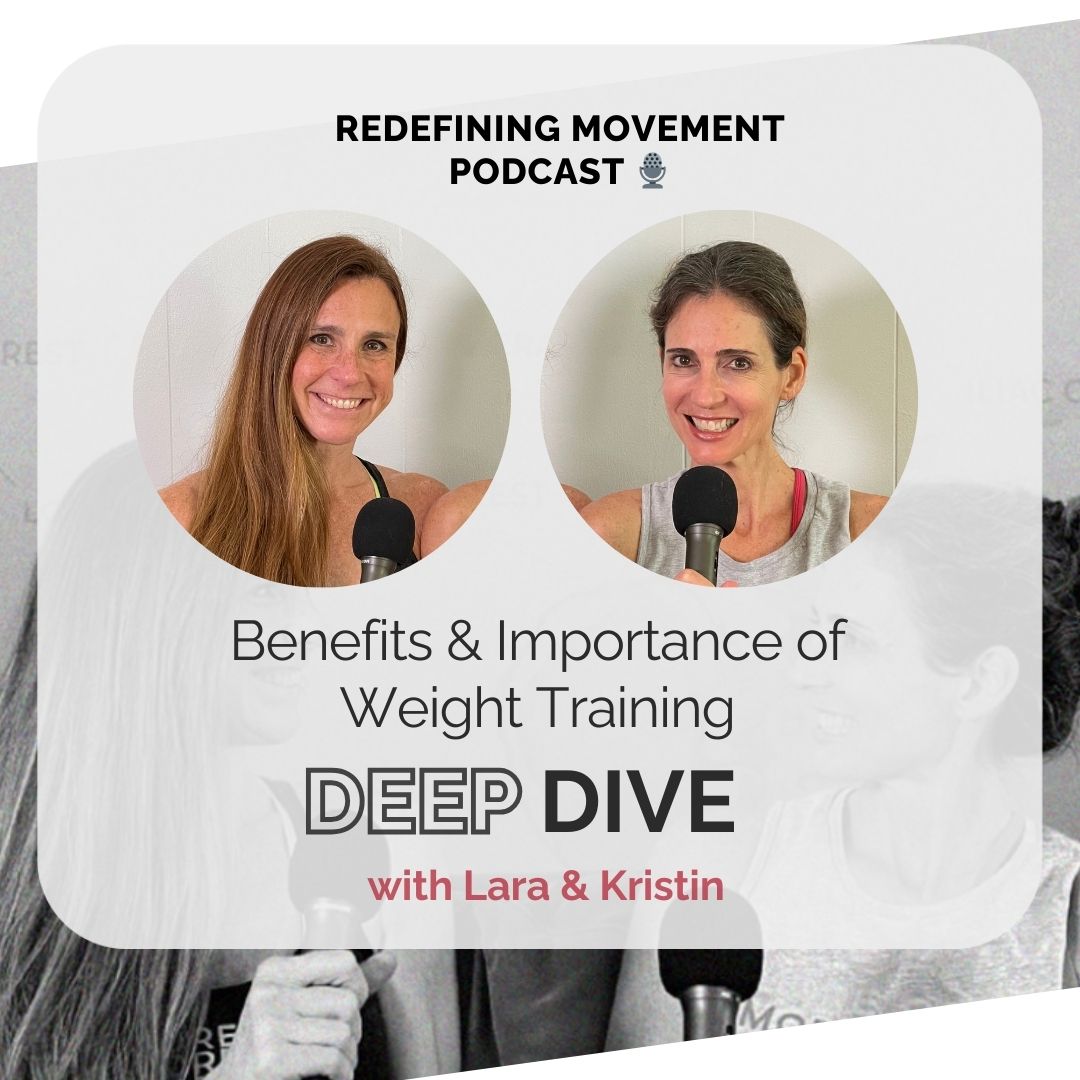
  • 719. Deep Dive – Benefits & Importance of Weight Training

    719. Deep Dive – Benefits & Importance of Weight Training


    Join Lara and Kristin for a deep dive into the benefits and importance of weight training!


    In this episode, you’ll learn about:

    • The benefits of weight training and weight-bearing exercises.
    • The positive impact these exercises can have on overall functional capacity, athletic performance, metabolism, and mental health.
    • The importance of proper form and gradually increasing intensity to avoid injury.
    • The advantages of these exercises in improving bone strength, joint stability, and mental well-being, especially in older adults.
    • The importance of muscle recovery, consistent exercise routines, and finding age-appropriate and lifestyle-suitable exercise habits.


    There’s a lot to cover, so let’s dive right in.


    To learn more, and for the complete show notes, visit: lytyoga.com/blog/category/podcasts/


    Do you have a question?


    Sponsors:

  • The Power of Strength Training and Why It’s Essential for Your Health

    The Power of Strength Training and Why It’s Essential for Your Health

    In a world filled with fitness trends and workout fads, one cornerstone remains true: strength training. Beyond the pursuit of beautiful muscles, strength training offers many benefits that go far beyond aesthetics. From improving overall health to enhancing daily functionality, strength training is an essential ingredient for daily life and longevity. Strength training (or resistance training) is a type of exercise that causes your muscles to resist an external force; this training intentionally loads the muscles and bones and can be performed using your own body weight, and/or outside weight via dumbbells, kettlebells, weight racks, or resistance bands. Strength training is truly having its day in the media spotlight and so to get you on board, let’s look at all the reasons that we should be doing it. 


    Strength training increases muscle mass, which in turn boosts your metabolism. Unlike cardiovascular exercise, which primarily burns calories during the activity, strength training leads to an “afterburn effect” where your body continues to burn calories even after the workout is over. This impact can help you maintain a healthy body weight to move more efficiently and joyfully in all decades of life. We know how amazing a LYT online class makes us feel- during and after- both physically and mentally. Exercise has long been associated with improved mental well-being, and strength training is no exception. The release of endorphins during exercise helps alleviate stress, anxiety, and depression, leaving you feeling happier and more energized.


    Strength training also improves muscular strength and endurance. This endurance not only makes daily tasks easier but also enhances athletic performance and reduces the risk of injury during physical activity. More than merely adding resistance to your routine, smart strength training involves movements that promote joint flexibility and mobility. By strengthening the muscles surrounding your joints, you can reduce the risk of injury and improve overall joint health. Specifically, working compound movement patterns (also known as functional movement like we incorporate into our LYT practice) such as squats and lunges enhance your ability to perform daily life activities with ease and independence. Maintaining strength and mobility is essential for maintaining independence as we age, and it is never too early to prime your body for lifelong musculoskeletal health. As we age, bone density naturally decreases, leading to an increased risk of fractures and osteoporosis. Strength training stimulates bone growth and helps maintain bone density, reducing the risk of fractures and promoting overall bone health. 


    Strength training will help older adults stay active, reduce the risk of falls, and improve overall quality of life. Because strength training improves functional capacity by enhancing muscle strength, power, and endurance, we can improve performance of activities of daily living such as walking, climbing stairs, lifting objects, and maintaining balance. By improving functional ability, strength training enables older adults to remain independent and active for longer.


    With aging, especially for women who are going through or are in menopause, strength training becomes increasingly important due to factors related to aging and hormonal changes. Age-related muscle loss, known as sarcopenia, begins as early as the fourth decade of life and accelerates after the age of 65. Strength training helps counteract this loss by stimulating muscle growth and preserving existing muscle mass. Osteoporosis, or loss of bone density, is common among older adults and increases the risk of fractures and falls. Strength training, particularly exercises that load the bones such as resistance training, can increase bone density and reduce the risk of fractures, thus promoting bone health and longevity. With falls in the elderly being a leading cause of injury and mortality, strength training proves its worth by improving balance, coordination, and proprioception, all essential ingredients for preventing falls. By strengthening muscles and improving stability, strength training reduces the risk of falls and associated injuries, thereby enhancing safety and quality of life. Additionally, strength training has been shown to be effective in managing and preventing chronic conditions such as arthritis, diabetes, and cardiovascular disease, by improving insulin sensitivity, lowering blood pressure, reducing inflammation, and promoting overall cardiovascular health.


    So I hope you are convinced of the value of incorporating strength training into your wellness routine! In addition to my daily LYT practice which offers plenty of bodyweight strengthening moves, I have started adding extra weights in smaller doses or in lighter loads for longer time to build more endurance and prevent muscle loss. For more direct loadbearing on my spine, a common area for osteopenia, I began rucking about seven months ago. Rucking involves hiking/walking with a special pack that holds weighted plates. On both of our membership platform- LYT Daily and LYT Studio- we have strength classes. The “SET with weights” is one of my favorite classes to teach and practice, so join in on the fun with me or one of the other LYT teachers.  Incorporating strength training into your workout routine doesn’t have to be complicated. Whether you prefer lifting weights at the gym, bodyweight exercises from the convenience of your home, or resistance bands during your lunch break, the key is to find activities that you enjoy and can stick with consistently. 

  • Reset and Reboot: Practical Tips for a Fresh Start in Life

    Reset and Reboot: Practical Tips for a Fresh Start in Life

    Reset and Reboot: Practical Tips for a Fresh Start in Life

    by lara heimann, PT


    The last four years have shown us what we already know: that life presents challenges that can leave us feeling stuck, overwhelmed, or in need of a reboot.

    Whether you’re seeking a major life change or just a refresh, here are some practical tips that have guided me through change and helped me keep clear and compassionate while navigating some big shifts in my personal life.

    My hope is that these reminders will help you reset in any way to assist you in a new chapter of your life, whether it’s a new year or a transitional time.


    1. Reflect on your goals and values: Take a step back and reflect on what truly matters to you. Identify your core values and long-term goals. This self-awareness will guide your decisions and actions during the reset. You can find a core values list in this link so you can identify your most important ones that will be the guiding light in your reset.
    2. Declutter your physical and mental space: Streamline your environment by decluttering both your physical space and your mind. Get rid of unnecessary possessions, organize your living spaces, and consider adopting mindfulness practices to clear mental clutter. My husband, Mark, and I had to massively organize and clean out our house in Princeton in preparation for a move and it truly was refreshing to pare down the “stuff” and recognize what was not needed.
      The process was also a mental clearinghouse. We talk more about it in our podcast!
    3. Set realistic and achievable goals: Break down your larger goals into smaller, manageable tasks. This not only makes them less overwhelming but also provides a sense of accomplishment as you tick off each milestone. Research also shows that small changes create bigger shifts which lead to enduring habits. Read more about habit formation in BJ Fogg’s “Tiny Habits” and put them into action with our LYT 6-week “Build Your Capacity” program!
    4. Create a routine that serves YOU: Establishing a daily routine can bring structure and stability to your life. Include activities that contribute to your well-being, such as exercise, meditation, or dedicated time for hobbies. Many LYT daily devotees have reported that their dedicated time to practice is a non-negotiable. This structured routine will give you a foundation that allows for more freedom and clarity in the rest of your day.
    5. Embrace learning and growth: Challenge yourself to learn new things. Whether it’s acquiring a new skill, pursuing education, or exploring different perspectives, continuous learning fosters personal growth and keeps life interesting. In LYT, we intentionally provide repetition and novelty with our sequences to forge impactful neural connections in the brain. The brain craves novelty so embrace learning and challenge as a key ingredient in rebooting your system!
    6. Connect with supportive people: Surround yourself with positive and supportive individuals. Share your aspirations and challenges with friends or family who can provide encouragement, advice, or accountability when needed.
    7. Prioritize self-care: I shout this from the metaphorical rooftops every day!  You can only reboot, refresh, and reset by putting your needs first. Take care of your physical and mental health, ensure you get enough sleep, maintain a balanced diet, and engage in activities that bring you joy and relaxation.
    8. Step outside your comfort zone: Growth often happens beyond comfort zones. Challenge yourself to try new experiences, take calculated risks, and embrace the uncertainty that comes with change. Moving states, selling our house after building a new one, and spending half the year in a rental across the country were decisions that Mark and I made that brought some discomfort because of change and the unknown. The end result is amazing, but I definitely had moments of doubt, sadness, and uncertainty. I forged ahead because I knew that this process would empower me to say yes to more opportunities and challenges with excitement and it has truly has been a powerful reset.
    9. Forgive and let go: Holding onto past grievances can hinder your ability to move forward. Practice forgiveness, both towards others and yourself. Letting go of resentment can be a powerful catalyst for positive change and a necessary element for resetting overall.
    10. Celebrate progress, not perfection: Acknowledge and celebrate the progress you make along the way. Remember, the journey of resetting and rebooting is about growth and improvement, not perfection.


    By incorporating these practical tips into your life, I hope you can initiate a meaningful reset and create a path toward a more fulfilling and balanced existence. Embrace the opportunity to reboot and shape a future that aligns with your aspirations and values and know that I am pulling for you!

  • 7. Adaptability: Move Through Life With More Freedom

    7. Adaptability: Move Through Life With More Freedom


    In this episode, I discuss how we can all become more adaptable in our body, in our minds, and in our spirits so that we can move through life with more freedom.

    So what is adaptability and why is it so important?

    Adaptability is defined as…

    • the quality of being able to adjust to new conditions.
    • the capacity to be modified for a new use or purpose.

    What a great concept to incorporate into our lives!

    Really, adaptability is fundamental for our own personal growth – in our yoga practice, our movement practice, as human beings, and as members of society – because it allows us to change, morph, and evolve as the things we can’t control change around us.

    And because there is so much going on in the world and things seem to change faster with every passing day, adaptability is more necessary now than ever before.

    Neural Wiring

    When we start doing something new, we need to repeat it to make the wiring in our brain stronger.

    If you haven’t climbed on the monkey bars since you were a kid, or ever in your life, then your body and brain aren’t adapted to do that. The wiring in your brain isn’t very strong, and we have to think about this in relation to movement.

    But in addition to repeating movement, we also need to challenge ourselves to grow. Otherwise, we may stop being adaptable and become rigid.

    What helps us be more adaptable?

    First, open-mindedness.

    Now, this isn’t easy by any means, especially when it comes to the starkly divided political environment in the United States. It can be difficult to be tolerant and open-minded towards views when they don’t match their own, but that practice of tolerance will actually help everyone, in the long run, become more adaptable.

    Second, positivity. You can decide your outlook, to a certain degree. I know that thinking positively isn’t going to fix everything, and I’m not suggesting that positive thinking will overcome chemical imbalances or trauma, but too many of us get caught up in our own negative thoughts.

    Even going back to the mid-20th century and Norman Vincent Peale’s The Power of Positive Thinking, it has been studied and demonstrated that a positive attitude can lead to positive events in your life.

    Third, resilience, or your ability to bounce back. When you’re stuck in a rigid mindset, things just happen to you and they often stop you in your tracks – but when you are resilient, you can stumble and still move forward.

    Here are my favorite strategies for cultivating adaptability:

    • Observation. After we start observing ourselves and noticing when we feel tense, nervous, discontent, or grumpy, we can then figure out tools to help us.
    • Look for the gray and eliminate absolutes. Embrace the gray, find the colors that aren’t black and white, and look at things from a new perspective!
    • Connect to your core. Your core is who you are at your essence, and your core strength aligns you with your purpose and your core values and helps you cope better when things don’t go your way.
    • Embrace the new. This is always good for growth, even in small amounts.
    • Self-care. This can be really difficult for some people to think about and incorporate, but you can’t serve others or live life to its fullest without serving yourself first. You’re also more likely to feel good about yourself, which will help you engage in more positive emotions and improve your outlook on life! You can decide what this looks like for you, but it needs to incorporate movement because movement is always the pathway for adaptability.
    • Rewire your brain. We discussed how the neural wiring in our brain works already, but I want to emphasize how critical this is for cultivating adaptability in every area of your life.


    To learn more, and for the complete show notes, visit: lytyoga.com/blog/category/podcasts/


    Connect with LYT Yoga and Lara Heimann:

    Instagram Lara Heimann – https://www.instagram.com/lara.heimann/

    Facebook Lara Heimann – https://www.facebook.com/lara.f.heimann

    Instagram LYT Yoga – https://www.instagram.com/lytyogamethod/

    Facebook LYT Yoga – https://www.facebook.com/lytyogamethod


  • 2. The Anatomy of Buoyancy

    2. The Anatomy of Buoyancy


    Today is my birthday, and my wish is to feel as buoyant as possible today and for many years to come – and my wish for you is that you feel a sense of buoyancy in your life, too!

    Buoyancy is such a beautiful concept: the power to float or rise in fluid, or the power of supporting a body so that it floats upwards; relative lightness; or a lightness or resilience of spirit (in a sense, cheerfulness). It’s this third definition I really want to focus on today, exploring how we can bring it into our yoga practices and our lives.

    To get a feeling of why buoyancy is so precious, I suggest saying the word out loud: buoyancy (ˈboiənsē). It’s almost like sensational onomatopoeia – when you say it, you feel it!

    Imagine floating in water, when you can truly feel the sensation of buoyancy. It’s a return to our birth body, the uterus swimming pool we used to be swimming in, and this is a state that most of us strive to return to through our spiritual and physical practices.

    In yoga, we often talk about how we have everything we need; we are essentially this beautiful essence, then life happens to us and hardening happens to us so we adapt in good and bad ways to different situations and different movement patterns.

    And when we can return to this essence of who we are, this sense of true buoyancy, through movement, it allows us to embody that delightful cheerfulness!

    So how do we do this?

    • I always say the body work that we do is the easiest, most successful gateway to changing how we feel both physically and emotionally – and so if we return to a more balanced body, we will feel more buoyant. That means we have to get up and move!
    • There’s an element of stick-to-it-ness, or in other words, persistence. We have to be willing to stay on the path to getting more buoyant… because it won’t always be as easy or fun as the destination!
    • To cultivate more buoyancy in your life, you need to spend some time trimming back the weeds. What or who in your life is dragging you down and anchoring you so that you don’t feel freedom and you don’t feel that buoyancy?
    • Another tool you can use is music! You can make a playlist with fun, joyful, pleasurable, buoyant music to help get you there. Your brain is so persuadable that when you start to hear it, you will feel lighter. It’s actually that easy!


    To learn more, and for the complete show notes, visit: lytyoga.com/blog/category/podcasts/


    Connect with LYT Yoga and Lara Heimann:

    Instagram Lara Heimann – https://www.instagram.com/lara.heimann/

    Facebook Lara Heimann – https://www.facebook.com/lara.f.heimann

    Instagram LYT Yoga – https://www.instagram.com/lytyogamethod/

    Facebook LYT Yoga – https://www.facebook.com/lytyogamethod