Tag: postpartum

  • 5 Simple Core Strengthening Exercises

    5 Simple Core Strengthening Exercises

    In the LYT Method, we stand by the motto “More Core” for a reason. Whether you’re reaching for something, balancing, getting up off the floor, or simply standing in one place, the muscles of the core are working to keep your spine and pelvis stable. Unfortunately, many people are weak in their core. Most people think only of the abdominals when they hear the term “core”, but there’s a much broader picture to consider when wanting to strengthen this area. We need to consider not only the spine, but also the girdles of the shoulders, hips, and pelvis when incorporating core strengthening exercises. 


    Why does core strength and stability matter and why incorporate core strengthening exercises? Movement of the body through space depends on the creation and transfer of forces between different segments of the body. For example when we bend over to pick something up off the floor, not only do we need the strength of the arms to lift the object up, but we need to stabilize and lift through the lower body and transfer force through the trunk just to make this movement occur. Failure to do so successfully can increase the risk of injury anywhere along this chain of movement. 


    Core stabilization exercises have been shown to reduce the risk of this type of injury, as well as decreasing pain, reducing disability, and restoring/increasing strength. When core muscles are activated, there is an increased stiffness of the spine which enhances stability, allowing for this transfer of force. We need to strengthen not only the deep postural muscles but also mover muscles, as both have been shown to be key in stability. 


    Here are five simple (yet challenging!) exercises to improve your core stability:


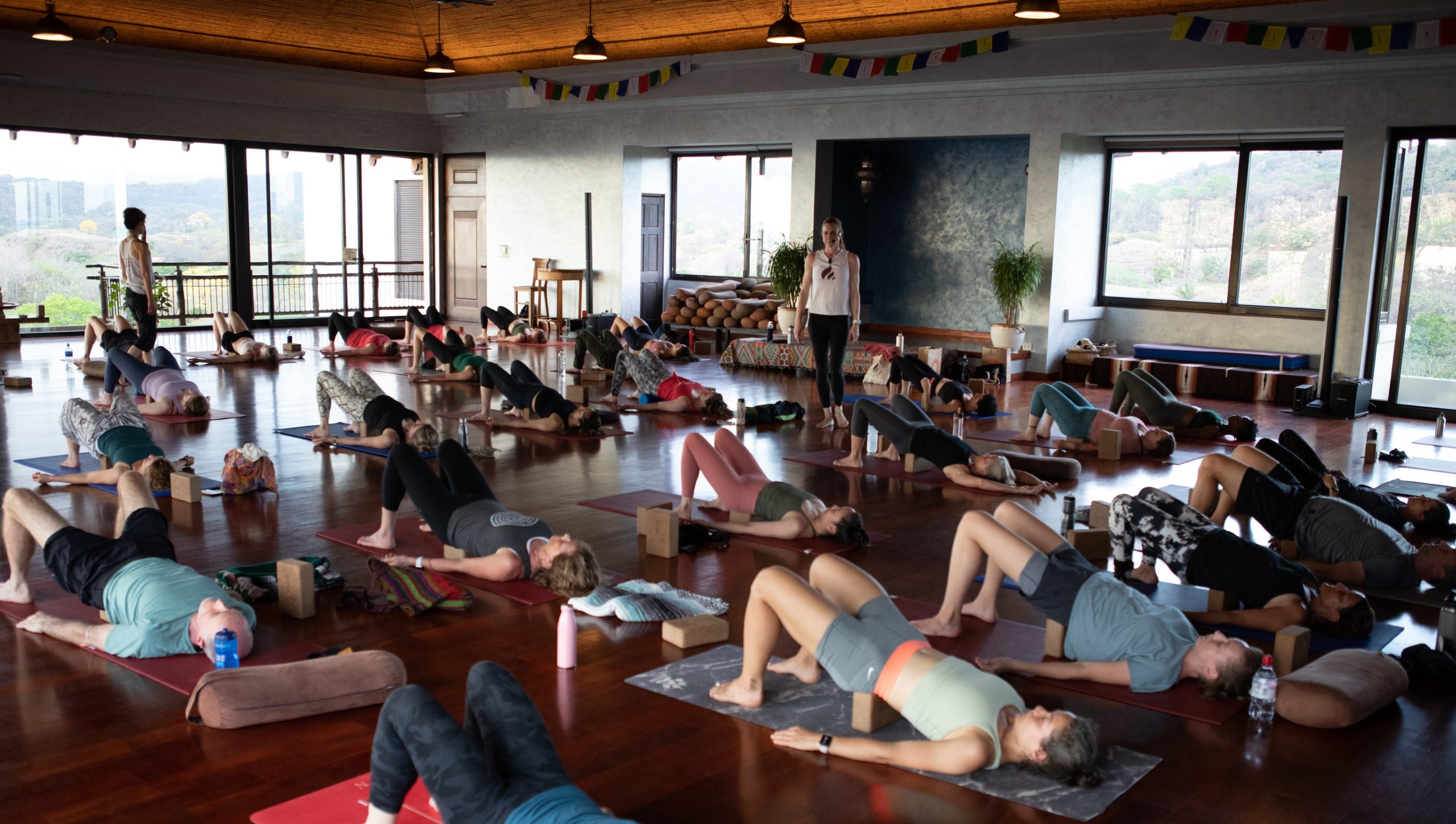
    1. Glute Bridge – as the largest muscle in the body, the glutes play a huge role in core stability, acting as both a mover and a stabilizer.
      •  Lie on your back with your knees bent and feet flat.
      •  Press down through the feet to lift the pelvis up off the floor, elongating in the spine (do not press up too high or the back will arch).
      •  Hold for 2-5 seconds, keeping the pelvis level. Lower down with control.
      •  Do 3 sets of 10-15 repetitions.
    2. Supine March – holding the spine stable while moving the lower extremities is Core Stabilization 101. 
      •  Lie on your back with your knees over the hips and shins parallel to the floor (feet off the ground).
      •  Keeping the knee bent, slowly lower the left leg to tap the toes to the floor. Do not let the back arch up or allow the ribs or pelvis to move. 
      •  Return the left knee over the hip and repeat with the right leg. That is considered 1 repetition.
      •  Do 3 sets of 10 repetitions.
    3. Side Bridge – this exercise targets the deep oblique abdominals as well as the stabilizing muscles of the shoulder and hip.
      •  Lie on your left side with your knees bent to 90-degree angles and your elbow underneath your shoulder.
      •  Lift your bottom hip off the ground, trying to keep your knees, hips, and upper body in one long line.
      •  Hold for 10 seconds. Try to work your way up to a 1-minute hold!
      •  Do 10 holds on each side. As you increase your hold time, decrease your repetitions.
    4. Forearm Plank – this is a 1-stop shop exercise, targeting all the layers of your abdominal wall, as well as the shoulders, upper back, thighs, and glutes.
      •  Start on your hands and knees and then lower the forearms to the ground with the elbows under the shoulders.
      •  Walk one foot back at a time, tucking the toes under and keeping the knees off the floor.
      •  Hold this position without letting the back arch or hips drop, while keeping the neck long and in line with the trunk.
      •  Hold for 10 seconds. Try to work your way up to a 1-minute hold!
      •  Do 3-5 repetitions. As you increase your hold time, decrease your repetitions.
    5. Half Kneeling Chop – another 1-stop shop exercise that combines core stability, balance and hip stability, and shoulder strength all together.
      •  Start on your hands and knees and then lift your hands off the floor coming into tall kneeling.
      •  Step the left foot forward so both knees are bent to 90-degrees. The left foot will be directly under the left knee and the right knee will be directly under the right hip.
      •  Option to hold a light weight in the hands or simply clasp the hands together.
      •  Rotate the torso towards the right leg, bringing the weight towards that hip, keeping the arms extended. This is the start position.
      •  Using your abdominals, rotate the trunk to lift weight diagonally across the body and above the left shoulder, keeping arms extended. 
      •  Reverse to the starting position. This is one repetition.
      •  Do 2-3 sets of 10 repetitions on each side.


    If you’re familiar with the LYT Method, all of these exercises should look familiar to you as we do these and variations of them in each and every class. More Core is not about getting six-pack abs, although that is an added benefit that many find comes with the territory. It’s about creating a readiness in the body to move well and prevent injury. It all starts with core stabilization, so give these a try! 


    Xoxo,
    Kristin

  • 716. Deep Dive: Navigating the Postnatal Period

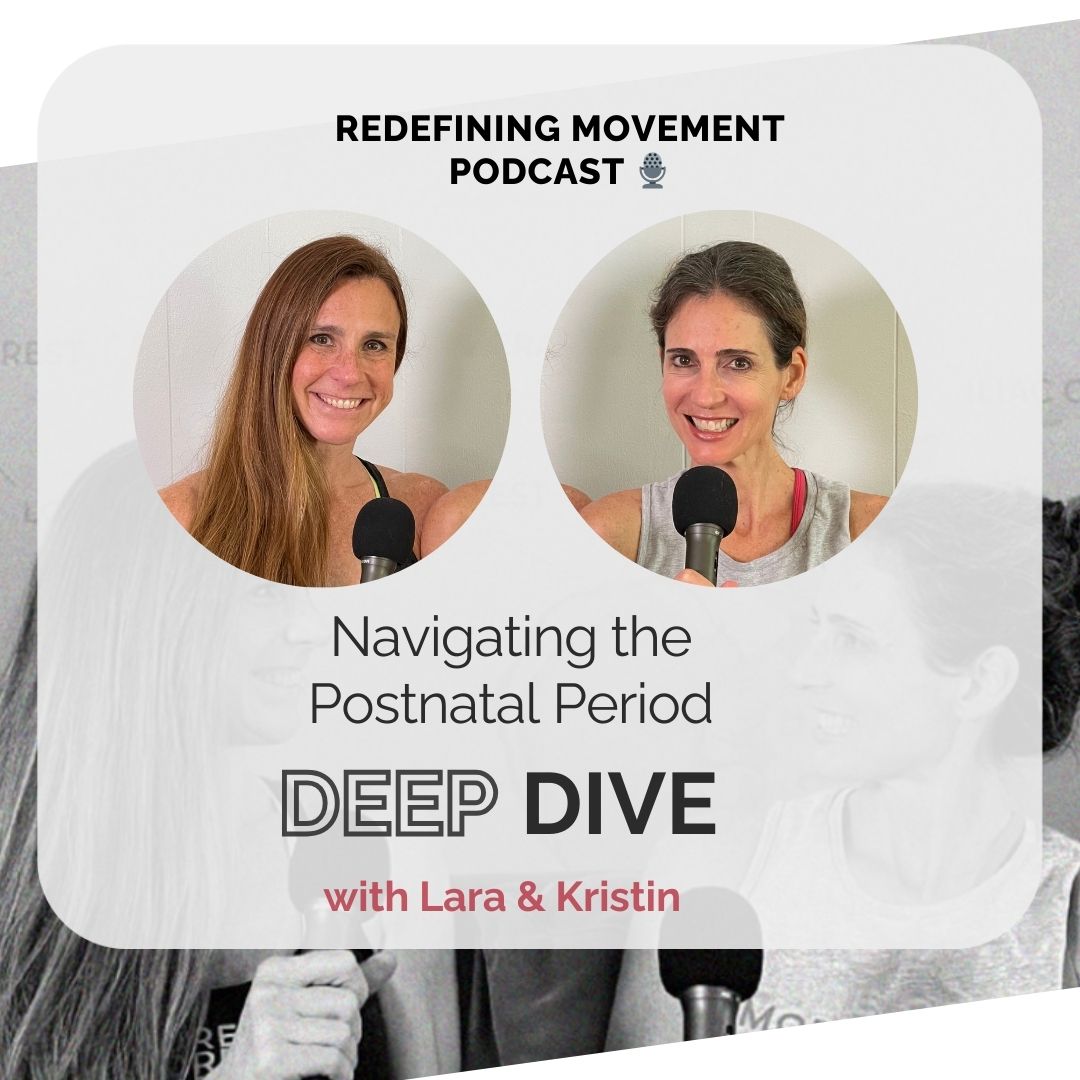
    716. Deep Dive: Navigating the Postnatal Period


    Join Lara Heimann and Kristin Williams for a deep dive into the postnatal period from a physical therapist and movement perspective! 


    In this episode, they discuss:

    • common changes that occur post-pregnancy
    • challenges and fears that new mothers face regarding their body’s changes and potential issues after giving birth
    • the importance of postural awareness and retraining in addressing core strength and stability, particularly after pregnancy
    • advice on returning to cardio activities such as running or jumping after childbirth
    • the importance of self-care for mothers


    To learn more, and for the complete show notes, visit: lytyoga.com/blog/category/podcasts/


    Do you have a question?


    Sponsors:

  • 695. Guiding Postpartum Recovery with Mama Made Strong founder, Betsy Petry-Johnson

    695. Guiding Postpartum Recovery with Mama Made Strong founder, Betsy Petry-Johnson


    Betsy Petry-Johnson, the founder of Mama Made Strong, is empowering postpartum mothers to feel good about their bodies after giving birth.

    Months after giving birth to triplets, her belly still wasn’t responding to the postpartum programs she found online. So she worked towards finding her own answers, founding Mama Made Strong to help mothers struggling with the same problems. 

    On this episode of Redefining Movement, Betsy discusses how important it is to understand how unique our bodies are; what works for one person might not work for another. By giving people the tools and education about fitness and wellness, you empower them to find the processes that best serve them, which can often bring better results. 

    In this episode, you will learn the following:

    • You can begin investing in your health no matter what age you are. 
    • Diastasis recti can often be a symptom that there’s something else that’s wrong with your body. 
    • Your belly is an excellent biofeedback tool to let you know how your fitness journey is going.


    Guest Resources: 


    Connect with Lara Heimann, The Redefining Movement Podcast, and LYT Daily:


    Today’s podcast sponsor:

    Almond Cow – Visit almondcow.co/shop and use code LARA for a discount off your purchase!

    Herbal Face Food – Use code Lara20 for 20% off 


    Follow the podcast:

  • 692. Wednesday Q&A: Massages, Low Energy, & Diastasis Recti in Newborns

    692. Wednesday Q&A: Massages, Low Energy, & Diastasis Recti in Newborns


    Welcome to Wednesday Q&A, where you ask questions and we answer them!

    In this Wednesday Q&A, we answer your questions about the frequency of massages, experiencing low energy, and diastasis recti in newborns. 

    • How often would you recommend massages? Is it okay if it hurts?
    • What are your recommendations for low energy?
    • My newborn baby has diastasis recti. Will it go away on its own or will he need physio?


    Connect with Lara Heimann, The Redefining Movement Podcast, and LYT Daily:


    Today’s podcast sponsor:

    LYT Newsletter – Sign up for the LYT Newsletter: https://www.getdrip.com/forms/542247881/submissions/new 

    Herbal Face Food – Use code Lara20 for 20% off 


    Follow the podcast:

  • 689. Empowering Prenatal Fitness & Postpartum Resilience with Gina Conley

    689. Empowering Prenatal Fitness & Postpartum Resilience with Gina Conley

    Join Lara for a conversation with Prenatal Fitness expert Gina Conley.

    MS. Gina has a master’s in exercise science and is a birth doula. She is a perinatal fitness trainer and owner of MamasteFit, an in-person perinatal training facility in Aberdeen, North Carolina.


    Gina has exclusively trained prenatal and postnatal fitness clients for the past 6 years and offers both in-person and online training support. Gina is a mom to three little ones and is passionate about empowering others to feel strong and pain-free throughout their pregnancies as they prepare for their birth and postpartum journey.

    • The benefits of perinatal exercise and the connection between prenatal fitness and birth preparation. 
    • How experiencing a challenging birth motivated Gina to start a business that supports and empowers other women during their perinatal journey.
    • Becoming a doula and the roles and responsibilities involved in that role. 
    • The importance of exercise throughout pregnancy and common misconceptions and fears associated with lifting weights and core exercises during this period.
    • Postpartum fitness, including the timeline for returning to exercise and movement after baby is born.


    To learn more, and for the complete show notes, visit: lytyoga.com/blog/category/podcasts/


    Guest Resources


    Connect with Lara Heimann, The Redefining Yoga Podcast, and LYT Yoga:


    Sponsor:


    Follow the podcast:

  • 688. Wednesday Q&A: Different Leg Lengths, Diastasis Recti, & the Pelvic Floor

    688. Wednesday Q&A: Different Leg Lengths, Diastasis Recti, & the Pelvic Floor

    In this Wednesday Q&A, we answer your questions about practicing yoga with different leg lengths, diastasis recti, and relaxing the pelvic floor.


    • I got a really good question from a new student. She has different leg lengths that in daily life is adjusted by different thickness of the soles of her shoes. However, she’s questioning how to take this into account and how and where to adjust when doing yoga. What would you advise in this case? 
    • I’m 38 years old and currently 18 months postpartum after baby number two, I’m dealing with diastasis recti. I probably always had it a bit, but worsened it a lot after baby number one when I started my normal yoga practice about four weeks postpartum. My midwife realized the separation got bigger after a checkup, about four months postpartum by then. After that, I continued my yoga practice as normal, but did some physiotherapy. My belly wasn’t as flat as before pregnancy, but that’s okay after a baby and I had no other problems. After baby number two, I was very aware of the D.R. issue and tried to do everything right. No normal yoga – any kind of backbend, chaturanga, one-legged, and so on. But the separation was five fingers and only went down to about three fingers, max. I tried, as I mentioned, to avoid many kinds of movement which is very hard for someone who loves to move. Is there something that can be done? Can I reverse this? 
    • I feel like I’m strong in my pelvic floor. I don’t leak. I can do all kinds of exercises. But I see all over Instagram and social media this call to relax, relax, relax your pelvic floor and now I feel confused.


    To learn more, and for the complete show notes, visit: lytyoga.com/blog/category/podcasts/


    Do you have a question?


    Sponsor:

    Visit relationshipschool.com/lara to get 50% off your first month of relationship coaching.


    Follow the podcast:

  • 687. Reclaiming Birth: Healing the Pelvis, Trauma, & Postpartum Wellness with Lynne Schulte

    687. Reclaiming Birth: Healing the Pelvis, Trauma, & Postpartum Wellness with Lynne Schulte


    Join Lara for a conversation with Lynn Schulte, PT, founder of the Institute for Birth Healing and pelvic health physical therapist.

    Lynn’s specialty is helping women have an easier birth by preparing their body for birth and helping them recover more completely after birth. Using energetic techniques of craniosacral therapy and visceral manipulation, Lynne helps clients to find the real issue causing their problems. As a physical therapist for over 30 years and a Women’s health specialist for more than half of that she brings a lot of experience and wisdom to her offerings and to this discussion.


    • The importance of the pelvis and pelvic floor muscles in birth healing.
    • Discovering patterns in the postpartum pelvis.
    • The “open birthing pattern” – and how it can lead to issues after birth for the mother. 
    • How to resolve symptoms from the open birthing pattern and ways for healthcare and wellness practitioners to learn these strategies.
    • How to massage your C-section scar. 
    • How birth can result in trauma. 


    To learn more, and for the complete show notes, visit: lytyoga.com/blog/category/podcasts/


    Guest Resources:


    Connect with Lara Heimann, The Redefining Yoga Podcast, and LYT Yoga:


    Sponsors:


    Follow the podcast:

  • The 6 and 8 Week Check In: What does it mean for exercise in the postpartum period?

    The 6 and 8 Week Check In: What does it mean for exercise in the postpartum period?

    by Ashley Newton, PT, DPT


    Many people who give birth are ‘cleared’ at either 6 or 8 weeks by their medical provider. However, there is often a lot of confusion about what exactly someone is cleared for at that early postpartum checkup. Many people have questions about when they can resume exercising and often interpret that 6/8 week checkup as the green light to start their pre-partum exercise routine. 


    However, the body has just gone through a multitude of bodily changes associated with pregnancy, labor, and delivery and often needs muscle retraining to be able to exercise safely and without issues that include but are not limited to: pain, urinary leakage, and abdominal separation. Moreover, we know that it is labor itself that is traumatic for the pelvic floor and not the method of delivery (vaginal vs.C-section), meaning that all people who have delivered children have the potential to have pelvic floor issues! 


    The healing process extends well beyond the 6 and 8 week marks, but 

    1) there is often limited guidance on how to approach exercise and 

    2) not everyone gets to see a pelvic floor physical therapist after their pregnancy. 


    So, how do you know if 

    1) the pelvic floor is healthy and 

    2) when to resume exercises? 


    Check out the tips below to self-check your body’s ability to stabilize itself, aka use the deep core and pelvic floor muscles correctly (this is absolutely essential as you start to exercise again!): 


    1) Can you contract, relax, and lengthen the pelvic floor musculature pain-free?
    When the pelvic floor contracts, it should compress and lift. For folks with vaginas: the contraction should feel like picking up a blueberry with the vagina. For folks with penises: the contraction should feel as though the penis is being drawn toward the abdomen. Do the muscles relax after contraction or are they stuck in the contracted position? Can you lengthen the muscles? Many people have trouble differentiating between pelvic floor contraction, relaxation, and elongation but knowing how to perform each of these movements helps to ensure that the pelvic floor is able to do its job well. 


    2) Do you have abdominal coning? 

    Abdominal coning is when the abdomen tents/cones/domes up in the middle with trunk movements. Perform a quick check: In lying with the knees bent, interlace the hands behind the head and lift the head and neck. Does the abdomen dome up or stay flat? If it domes, it means that your body is having trouble managing pressure, aka – the core muscles are not contracting enough and/or at the right time to combat the increase in intra-abdominal pressure when the head and neck lift. This can become an issue when we move as we need good pressure management to move pain-free and prevent issues such as urinary leakage and pelvic organ prolapse. 


    3) Are you able to perform a single-leg balance for at least 30 seconds? 

    If you are unable to, your body may be having trouble stabilizing with its deep core muscles. Over time, this can lead to overloading of other tissues and subsequent pain. 


    These are just a couple of things you can do to begin to self-assess the quality of your movement and start asking more questions regarding pelvic health and wellness in the post-partum period. If this self-check-in created more questions than it answered, it may be helpful to contact a pelvic health physical therapist in your area in order to determine what areas would be helpful to work on in order to optimize your health in the postpartum period and beyond! Check out pelvicrehab.com to find practitioners in your area or come see me in Princeton, NJ!