Tag: balance

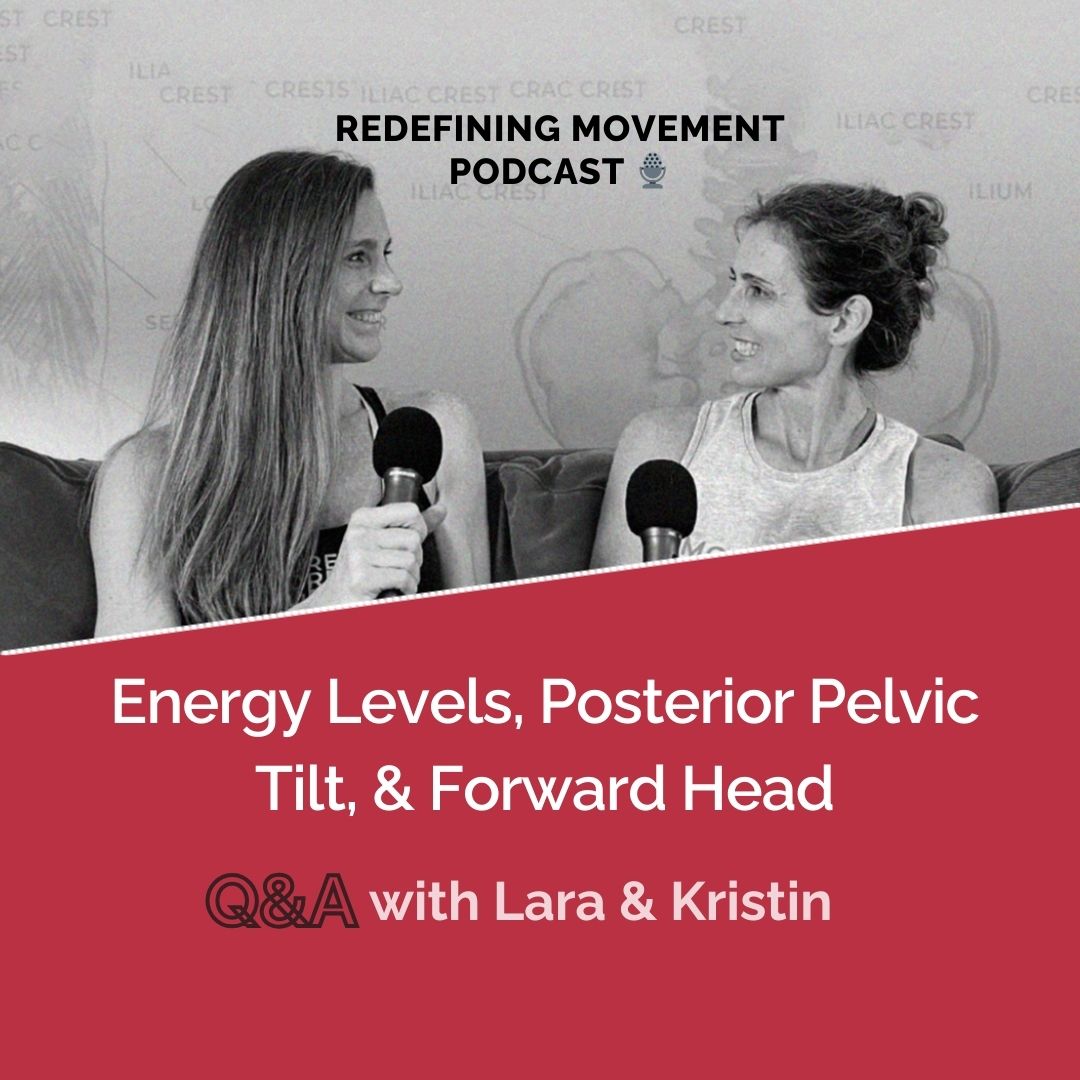
  • 721. Wednesday Q&A: Energy Levels, Posterior Pelvic Tilt, & Forward Head

    721. Wednesday Q&A: Energy Levels, Posterior Pelvic Tilt, & Forward Head


    In this Wednesday Q&A, we answer your questions about high energy levels, how to correct a posteriorly tilted pelvis, and forward head and neck hump help.


    Your questions:

    • You two seem to have a lot of energy, share the secret sauce.
    • I’ve wound up over correcting my anterior tilted pelvis and created a slight posterior tilt. What would you both recommend to correct this?
    • My forward head is getting worse. Why do I have a neck hump and what can I do to get rid of it?


    To learn more, and for the complete show notes, visit: lytyoga.com/blog/category/podcasts/


    Do you have a question?


    Sponsors:

    • Visit almondcow.co/shop and use code LARA for a discount off your purchase!
    • Check out and sign up for LYT Daily and The LYT Studio, including our 1-week FREE trial of each here with this exclusive 20% off coupon code (LYTPOD24): https://lytyoga.uscreen.io
  • Resistance Training and Metabolism

    Resistance Training and Metabolism

    As I near the golden age of 50 in just a few short months, I find myself more and more interested in resistance training and its benefits. As a matter of fact I just joined a gym for the first time in well over a decade and the weight room is the main reason! I love that LYT has been focusing on the benefits of resistance training this month and one benefit that I’ve always heard about but never really understood the “why” behind was how it improves one’s metabolism. Knowing that menopause is right around the corner has me concerned about how my metabolism may be impacted. Full disclosure is that I’ve always been blessed with a high metabolism, but I’m concerned and expect that one day that will change. So I decided to do a little research on how resistance training and metabolism. 


    The first question that one could ask is what exactly is metabolism? Simply stated, it’s the chemical reactions in the body’s cells that change the food we eat into energy, which we need to move, breathe and think. Thousands of metabolic reactions are happening at the same time to keep our cells healthy and working. The resting metabolic rate is the rate at which a person’s body burns energy in the form of calories while at rest. This can be affected by a person’s genetic makeup, health issues, and by body composition, which is where resistance training comes into play. 


    When we exercise, we are breaking down and rebuilding muscle. Research has shown that resistance training creates a higher degree of muscle damage than aerobic training, and the muscle protein repair/synthesis process is an energy-demanding metabolic process. Estimates suggest that every pound of muscle burns roughly six calories per day at rest. While this may not seem like a lot, it’s three times as many calories as a pound of fat, which burns roughly two calories. So since lean muscle is more metabolically active than fat, a body with more muscle mass will burn more energy (calories) even at rest. This equates to an increase in the resting metabolic rate. Unfortunately for us, starting as early as age 30 the body begins to slowly lose muscle mass. Women lose up to 15% of the total body muscle per decade by the age of 50. So not only are we losing strength, but our metabolism is slowing due to the decrease in muscle as well. 


    In addition to changing body composition by increasing the amount of lean muscle, resistance training has been shown to increase the excess postexercise oxygen consumption (EPOC) as compared to steady-state aerobic training, like walking or jogging. Also known as oxygen debt, EPOC is the amount of oxygen required to return the body to its resting metabolic rate and explains how your body continues to burn energy after you’ve finished your workout. Similar to how a car has to cool down after it has been running, the body continues to burn calories at rest for a period of time after you exercise. Yet another metabolic perk for resistance training!  


    However, not all resistance training modes are created equal when it comes to metabolic benefits. Higher exercise intensities produce higher EPOC values. Performing compound exercises such as squats, deadlifts, lunges, pull-ups, etc, which recruit the most amount of muscle, and doing them at higher intensities such as HIIT (or plyometric LYT classes), are all great options for higher EPOC values. The same is true for lifting weights to stimulate the most muscle growth for increased metabolism. Finding the resistance that is heavy enough for you to perform only 8-12 reps per set with proper form will increase muscle size as compared to muscular endurance. Increased muscle mass yields increased metabolism…I think we see a pattern here.


    I don’t know about you, but I’m properly convinced to stay on my LYT mat doing my online classes which are full of compound bodyweight resistance training movements for the long haul. I’m also convinced that maintaining muscle mass as I age is a good step towards maintaining if not increasing my metabolism as well. If you haven’t checked out our Monthly Challenge called “Get Pumped”, you should! It’s full of resistance training coupled with our traditional LYT method blueprint. A definite win-win situation!


    Xoxo,

    Kristin

  • 5 Simple Core Strengthening Exercises

    5 Simple Core Strengthening Exercises

    In the LYT Method, we stand by the motto “More Core” for a reason. Whether you’re reaching for something, balancing, getting up off the floor, or simply standing in one place, the muscles of the core are working to keep your spine and pelvis stable. Unfortunately, many people are weak in their core. Most people think only of the abdominals when they hear the term “core”, but there’s a much broader picture to consider when wanting to strengthen this area. We need to consider not only the spine, but also the girdles of the shoulders, hips, and pelvis when incorporating core strengthening exercises. 


    Why does core strength and stability matter and why incorporate core strengthening exercises? Movement of the body through space depends on the creation and transfer of forces between different segments of the body. For example when we bend over to pick something up off the floor, not only do we need the strength of the arms to lift the object up, but we need to stabilize and lift through the lower body and transfer force through the trunk just to make this movement occur. Failure to do so successfully can increase the risk of injury anywhere along this chain of movement. 


    Core stabilization exercises have been shown to reduce the risk of this type of injury, as well as decreasing pain, reducing disability, and restoring/increasing strength. When core muscles are activated, there is an increased stiffness of the spine which enhances stability, allowing for this transfer of force. We need to strengthen not only the deep postural muscles but also mover muscles, as both have been shown to be key in stability. 


    Here are five simple (yet challenging!) exercises to improve your core stability:


    1. Glute Bridge – as the largest muscle in the body, the glutes play a huge role in core stability, acting as both a mover and a stabilizer.
      •  Lie on your back with your knees bent and feet flat.
      •  Press down through the feet to lift the pelvis up off the floor, elongating in the spine (do not press up too high or the back will arch).
      •  Hold for 2-5 seconds, keeping the pelvis level. Lower down with control.
      •  Do 3 sets of 10-15 repetitions.
    2. Supine March – holding the spine stable while moving the lower extremities is Core Stabilization 101. 
      •  Lie on your back with your knees over the hips and shins parallel to the floor (feet off the ground).
      •  Keeping the knee bent, slowly lower the left leg to tap the toes to the floor. Do not let the back arch up or allow the ribs or pelvis to move. 
      •  Return the left knee over the hip and repeat with the right leg. That is considered 1 repetition.
      •  Do 3 sets of 10 repetitions.
    3. Side Bridge – this exercise targets the deep oblique abdominals as well as the stabilizing muscles of the shoulder and hip.
      •  Lie on your left side with your knees bent to 90-degree angles and your elbow underneath your shoulder.
      •  Lift your bottom hip off the ground, trying to keep your knees, hips, and upper body in one long line.
      •  Hold for 10 seconds. Try to work your way up to a 1-minute hold!
      •  Do 10 holds on each side. As you increase your hold time, decrease your repetitions.
    4. Forearm Plank – this is a 1-stop shop exercise, targeting all the layers of your abdominal wall, as well as the shoulders, upper back, thighs, and glutes.
      •  Start on your hands and knees and then lower the forearms to the ground with the elbows under the shoulders.
      •  Walk one foot back at a time, tucking the toes under and keeping the knees off the floor.
      •  Hold this position without letting the back arch or hips drop, while keeping the neck long and in line with the trunk.
      •  Hold for 10 seconds. Try to work your way up to a 1-minute hold!
      •  Do 3-5 repetitions. As you increase your hold time, decrease your repetitions.
    5. Half Kneeling Chop – another 1-stop shop exercise that combines core stability, balance and hip stability, and shoulder strength all together.
      •  Start on your hands and knees and then lift your hands off the floor coming into tall kneeling.
      •  Step the left foot forward so both knees are bent to 90-degrees. The left foot will be directly under the left knee and the right knee will be directly under the right hip.
      •  Option to hold a light weight in the hands or simply clasp the hands together.
      •  Rotate the torso towards the right leg, bringing the weight towards that hip, keeping the arms extended. This is the start position.
      •  Using your abdominals, rotate the trunk to lift weight diagonally across the body and above the left shoulder, keeping arms extended. 
      •  Reverse to the starting position. This is one repetition.
      •  Do 2-3 sets of 10 repetitions on each side.


    If you’re familiar with the LYT Method, all of these exercises should look familiar to you as we do these and variations of them in each and every class. More Core is not about getting six-pack abs, although that is an added benefit that many find comes with the territory. It’s about creating a readiness in the body to move well and prevent injury. It all starts with core stabilization, so give these a try! 


    Xoxo,

    Kristin

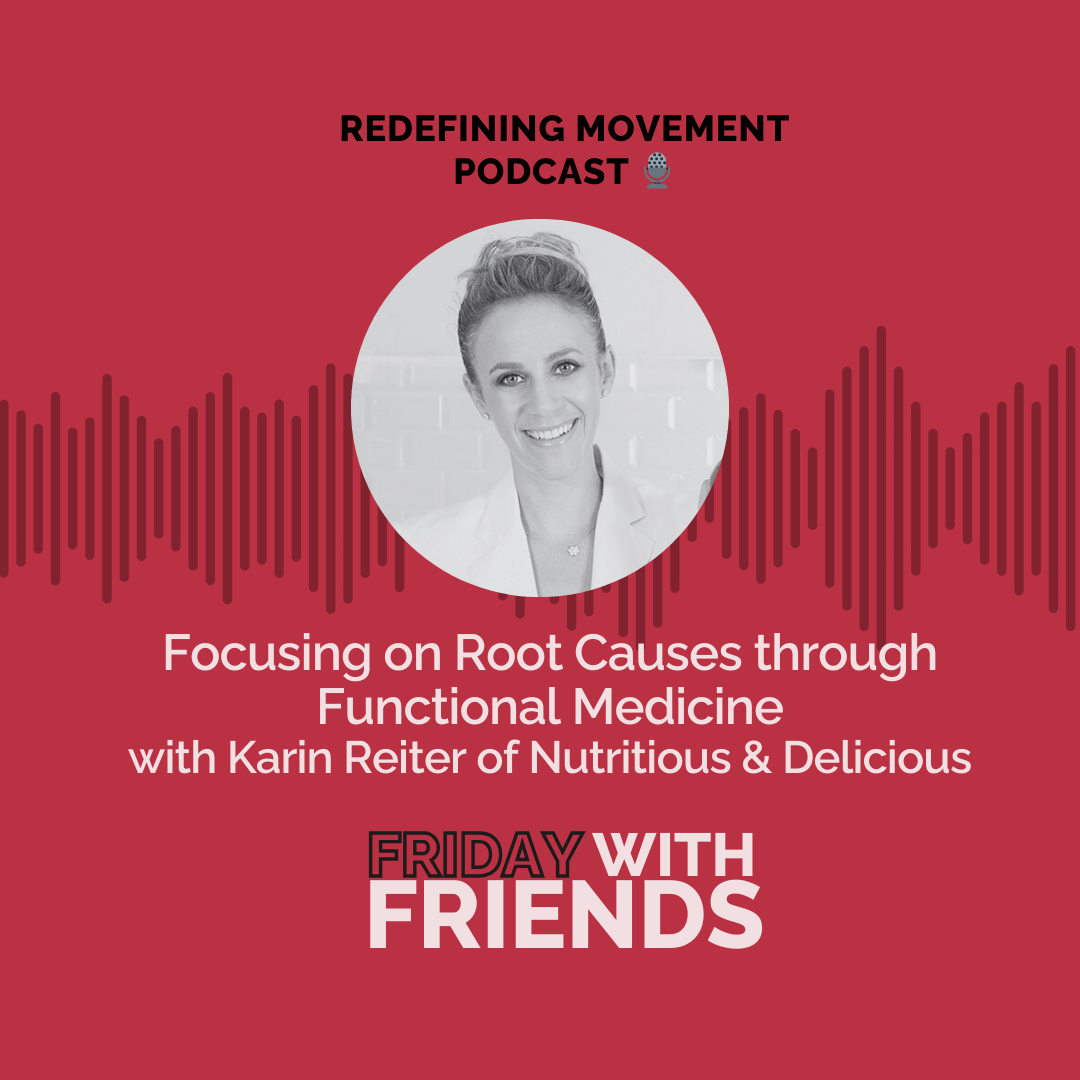
  • 708. Focusing on Root Causes through Functional Medicine with Karin Reiter of Nutritious & Delicious

    708. Focusing on Root Causes through Functional Medicine with Karin Reiter of Nutritious & Delicious


    Karin Reiter, Founder of Nutritious & Delicious, transitioned from a career in law and finance after being diagnosed with Epstein Barr at a young age.

    When she discovered that standard medical approaches weren’t making her feel better, she decided to study functional medicine and nutrition.

    Karin learned firsthand the importance of identifying root causes and how addressing them holistically can lead to recovery and better health. The episode dives into the impact of mold toxicity, the crucial role of gut health, and the systemic effects of conditions like fatigue, autoimmunity, and hormonal imbalances. 

    Karin offers online workshops, educational resources, and annual retreats to help more people access functional medicine strategies. Her website is a testament to her belief that the information should be available to everyone.


    In this episode, you will learn the following:

    • Address root causes and create a personal plan using functional medicine to heal the whole body. 
    • How to identify potential mold exposure, the importance of environmental awareness, and the necessity of adequate ventilation in the home. 
    • Maintaining good gut health and understanding that negative impacts on this can come from many sources.


    Guest Resources:


    Connect with Lara Heimann, The Redefining Movement Podcast, and LYT Daily:


    Today’s podcast sponsor: 

    LYT Method – Sign up for our newsletter and get access to weekly information on movement for what’s troubling you.


    Follow the podcast:

  • Balance Implications For Health and Aging

    Balance Implications For Health and Aging

    by Sarah Apple Kingsley, pt, dpt


    Scientists, physical therapists, and physicians have always known balance to be an important aspect of health. Falls and fall-related injuries, incidences, and hospitalizations account for a major portion of our healthcare expenses. There is now new information that actually confirms that balance is a key proponent of good health and longevity. In a recent study published in the British Journal of Medicine Longevity scientists administered a ten-second balance test to 1,792 people aged 51 to 75.1


    They coined it the “flamingo test,” with each person asked to stand barefoot on one leg while keeping their other leg lifted in the air. Importantly, they were required to keep their head upright and their arms straight at their sides for ten seconds. This is very similar to tree pose and the knee-to-chest postures we practice in LYT yoga. 


    Twenty percent of the participants wobbled and could not complete the test, especially at the top end of the age bracket. For the 20% of participants who failed the test, there was a higher correlation with being overweight, having heart disease, high blood pressure, poor lipid panels, and these individuals were twice as likely to have Type-2 Diabetes.  


    Subsequent findings that the researchers discovered after checking back in with the participants 7 years later were even more compelling. After accounting for age, gender, and underlying health conditions, the inability to pass the flamingo test was linked to an 84% higher risk of all-cause death* over that seven-year period. In addition to longevity, these researchers contend that balance is necessary for overall health, well-being, and independence.

    * What is all-cause death? Death by multiple causes, or by any cause.


    Balance and its role in optimum health


    When my patients tell me they don’t need to be able to stand on one leg, I quickly respond “Oh yes you do!” We regularly need a one-legged posture to move out of a car or to climb or descend a step or stairs. Simply walking without an assistive device requires a portion of the gait cycle to be in a single-limb stance.


    To lack this ability or have fear of standing on one leg can lead to a loss of autonomy and consequently, less exercise, less movement, and a worsening of various health conditions. Many physical therapists and experts feel balance should be included when checking vital signs. Walking speed has been considered the 6th vital sign, but we should give serious consideration to adding the flamingo test as well!


    If you want to stay active it is paramount that you maintain your physical well-being. When it comes to balance there is definitely some truth in the saying “if you don’t use it, you’ll lose it.” Healthy physical well-being includes strength, flexibility, balance, and effectively using your senses—vision, hearing, feeling physical sensation, etc.


    Balance can be affected by a variety of factors including age, spinal stenosis, pinched nerves, and inner ear issues. If you don’t have any of these issues but still consider yourself to have had poor balance your entire life, THERE IS SOMETHING YOU CAN DO ABOUT IT!


    Easy ways to improve your balance


    The Harvard Medical School newsletter offers some simple advice for improving your balance, including:2


    • Sign up for a balance-focused class (such as tai chi) at your local YMCA or senior center.
    • Walking, biking, and stair climbing all strengthen key balance muscles in the lower body.
    • Stretching loosens tight muscles which can otherwise negatively impact posture and balance.
    • Yoga strengthens and stretches tight muscles while challenging static and dynamic balance.


    The LYT yoga method specifically retrains our core musculature and balance centers, challenging our single-limb stance and causing our bodies to get in touch with new neuromotor pathways that were previously unattainable. Each day with the LYT method is a small improvement toward healthier aging!


    You can also incorporate balance moves into your everyday life. Try standing on one leg while brushing your teeth or getting up from a chair without using your hands. It’s worth the extra effort because the research strongly suggests that better balance now means better quality of life and healthier aging later.


    References:
    1 http://press.psprings.co.uk/bjsm/june/bjsm105360.pdf
    2 https://www.health.harvard.edu/staying-healthy/easy-ways-to-improve-your-balance


  • 14 | Anatomy of Movement: Pelvis, Glutes, Feet, & More | John Frank, PT

    14 | Anatomy of Movement: Pelvis, Glutes, Feet, & More | John Frank, PT

    Today I welcome my brother, John Frank, back on the podcast. John is a physical therapist and movement specialist. (If you haven’t already, listen to John’s first episode!) I wanted to have John back on to answer questions that were sent in by you, and to further discuss movement and anatomy.

    What are some recommendations you’d make for runners?

    Start easy, start small, and let your body adapt to the new stresses.

    Paying attention to your balance and the form of your pelvis, as well as where your knees are going, is extremely important. By practicing a single leg stance, you can better prepare your body for the stress of running.

    What do you recommend for foot pain? What are the biggest causes of foot pain?

    Not wearing proper shoes, or having them available to you, is a main reason people have foot pain. Your body weight goes into your big toe the most, and it really needs to be in alignment with the rest of the arch and inner foot. When it’s pushed inward, your kneecaps become useless because your body weight isn’t being properly placed. A lot of the time, the pain can be alleviated by simple practices, such as recognizing postures and movements.

    What are things that are great for the lower back in yoga, and maybe not so great?

    “People with low back pain tend to have weak and/or stiff hips.”

    Maintaining a more stable low back, while opening up your hips, and keeping a neutral spine while in the transitions is very important in yoga. Women tend to hyperextend, and push their pelvis forward, so this is something to pay special attention to, especially if you are experiencing back pain.

    Resources:


  • 2. The Anatomy of Buoyancy

    2. The Anatomy of Buoyancy


    Today is my birthday, and my wish is to feel as buoyant as possible today and for many years to come – and my wish for you is that you feel a sense of buoyancy in your life, too!

    Buoyancy is such a beautiful concept: the power to float or rise in fluid, or the power of supporting a body so that it floats upwards; relative lightness; or a lightness or resilience of spirit (in a sense, cheerfulness). It’s this third definition I really want to focus on today, exploring how we can bring it into our yoga practices and our lives.

    To get a feeling of why buoyancy is so precious, I suggest saying the word out loud: buoyancy (ˈboiənsē). It’s almost like sensational onomatopoeia – when you say it, you feel it!

    Imagine floating in water, when you can truly feel the sensation of buoyancy. It’s a return to our birth body, the uterus swimming pool we used to be swimming in, and this is a state that most of us strive to return to through our spiritual and physical practices.

    In yoga, we often talk about how we have everything we need; we are essentially this beautiful essence, then life happens to us and hardening happens to us so we adapt in good and bad ways to different situations and different movement patterns.

    And when we can return to this essence of who we are, this sense of true buoyancy, through movement, it allows us to embody that delightful cheerfulness!

    So how do we do this?

    • I always say the body work that we do is the easiest, most successful gateway to changing how we feel both physically and emotionally – and so if we return to a more balanced body, we will feel more buoyant. That means we have to get up and move!
    • There’s an element of stick-to-it-ness, or in other words, persistence. We have to be willing to stay on the path to getting more buoyant… because it won’t always be as easy or fun as the destination!
    • To cultivate more buoyancy in your life, you need to spend some time trimming back the weeds. What or who in your life is dragging you down and anchoring you so that you don’t feel freedom and you don’t feel that buoyancy?
    • Another tool you can use is music! You can make a playlist with fun, joyful, pleasurable, buoyant music to help get you there. Your brain is so persuadable that when you start to hear it, you will feel lighter. It’s actually that easy!


    To learn more, and for the complete show notes, visit: lytyoga.com/blog/category/podcasts/


    Connect with LYT Yoga and Lara Heimann:

    Instagram Lara Heimann – https://www.instagram.com/lara.heimann/

    Facebook Lara Heimann – https://www.facebook.com/lara.f.heimann

    Instagram LYT Yoga – https://www.instagram.com/lytyogamethod/

    Facebook LYT Yoga – https://www.facebook.com/lytyogamethod