Category: Podcasts

  • 573. Teaching and Parenting in a Yoga Mindset with Dr. Chelsea Roberts

    573. Teaching and Parenting in a Yoga Mindset with Dr. Chelsea Roberts

    Dr. Chelsea Roberts fainted in her first yoga class. Keeping with it, Chelsea focused her attention and came to revel in how yoga made her feel and how this practice created benefits for the other pieces of her life. Trained in child development  with a PhD in educational studies, she is wired for teaching and has found herself as a prominent yoga and meditation teacher and Peloton instructor.


    In this episode, Lara talks with Chelsea about her journey into yoga, her path as Founder of the Yoga, Literature, & Art Camp for Teen Girls at Spelman College, and how she became such a fierce advocate for yoga and literature for marginalized youth. They discuss her DNA as a teacher, her impending motherhood, and how yoga has guided her path to being a parent.  


    In this episode, you’ll learn:

    • How yoga and literature can inspire the young
    • How music can affect your practice and your soul
    • The importance of the right partner in parenthood


    Resources Mentioned:


    Connect with the Guest:


    Follow the podcast:


    Connect with LYT Daily and Lara Heimann:


    Sponsor:

  • 572. Wednesday Q&A: Hand Width in Down Dog, Splitting Classes Up, & Anatomy Knowledge


    Welcome to Wednesday Q&A, where you ask questions and we answer them!


    In this Wednesday Q&A, we answer your questions about how wide to place your hands in down dog, splitting classes up, and anatomy knowledge.


    Your questions:

    • I’m five-seven, but my arms are really long. I’m not kidding, from fingertip to fingertip I have a six-foot wingspan. When I’m in downward dog, it feels better for me to open my arms wider than shoulder-width apart by a few inches. Is this bad for my shoulders or is it okay to do? I saw Kristin in a recent class saying that she sometimes opens her arms wider in down dog to give her more space. But I don’t know if it that’s something that you can do just a little bit from time to time or is it okay to do all the time?
    • I love the classes that are longer on LYT Daily, but I sometimes don’t have time to do the whole thing in one go, so I’ll do 35 minutes or so in the morning and then pause and do the rest of the class in the evening. I know that there wouldn’t be as much of a warm-up for the second half, but are there any reasons not to do this? And do I still get the benefit of the full class if I split it up into two parts? 
    • How did you learn and retain so much knowledge about the human body?


    To learn more, and for the complete show notes, visit: lytyoga.com/blog/category/podcasts/


    Do you have a question?


    Sponsor:

  • 571. The Movement of Color with Walaa of Color Ways

    571. The Movement of Color with Walaa of Color Ways

    Color is vibration. It is movement, it is language. Walaa is a certified color mentor and therapist and Founder of Color Ways. She works with her clients to transform their lives and guide them on their journey with color to help them become their best  selves.


    In this episode, Lara talks with Walaa about her personal journey into the world of color and how she can help individuals gain a sense of renewed confidence, more happiness, and a better life balance– all through color. They discuss what colors mean, Lara’s color archetype, and how you can find your own color archetype. 


    In this episode, you’ll learn:

    • What defines your personal color archetype
    • Why you gravitate toward one color and perhaps turn away from another
    • The benefits of black


    Resources Mentioned:


    Connect with the Guest:


    Follow the podcast:


    Connect with LYT Daily and Lara Heimann:


    Sponsor:

  • 570. Wednesday Q&A: Carrying Angles, Kneeling, & Nerve Pain in Yoga


    Welcome to Wednesday Q&A, where you ask questions and we answer them!


    In this Wednesday Q&A, we answer your questions about carrying angles, kneeling, and nerve pain in yoga. 


    Your questions:

    • There is a popular yoga teacher who preaches about how the carrying angle of the forearm means that most people need to place their hands wider on the mat, thus wider than their shoulders in poses like down dog and plank. My logic is telling me this… yes, when the arm is in anatomical neutral, the carrying angle makes the hands wider than the shoulders. But when the forearm pronates like it does when you put the palms on the mat, does that mostly erase the carrying angle so that we should still align wrists under shoulders generally? What are your thoughts?
    • My students really struggle with the transition from quadruped to half kneel and can’t spend much time in any kneeling posture. Any tips or transitions through quadruped or to help them spend more time in a healthy and supported way on their knees? We use double mats and blankets under the knees as much as possible, but the limitations remain.
    • I’ve been a yoga teacher since 2017 and an athlete my entire life. I had a tubing injury in 2012, and I do think that’s impacted my SI joint. I always had issues as a hockey player, but the nerve issues only got bad with yoga. I took time off during COVID and my nerve issues improved, so I knew yoga made it worse. Getting back in, I practice now. I was more mindful in twists and bends, etc. But last week I had a severe episode and my osteopath told me my sacrum was rotated left. She did some work on it and my pain is now one out of ten, instead of ten out of ten. I couldn’t sit, stand, or lie down without pain through my left lower back and glutes. I listened to some of your podcast episode episodes on anatomy. I’m curious how I can better protect myself from this happening again and often. I think backbends are the main trigger, but also deep forward folds and poses like half pigeon, extended slight angle with a bind, and even single leg airplane pose, and half moon on that side. In the warrior series, should I keep a wider stance and turn the back toe more toward the front and in warrior two, etc.? I appreciate your insight.


    To learn more, and for the complete show notes, visit: lytyoga.com/blog/category/podcasts/


    Do you have a question?


    Sponsor:

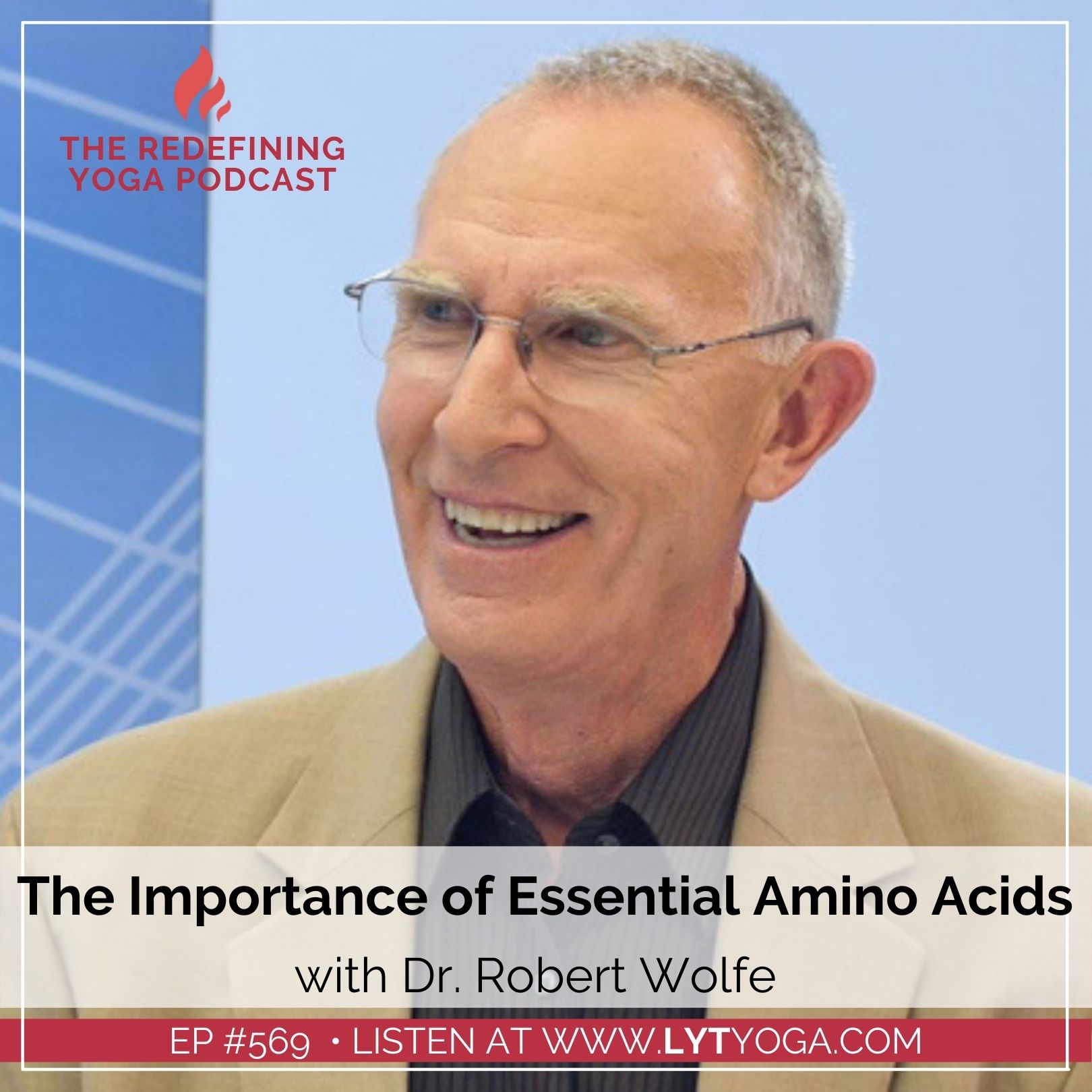
  • 569. The Importance of Essential Amino Acids with Dr. Robert Wolfe from The Amino Co

    569. The Importance of Essential Amino Acids with Dr. Robert Wolfe from The Amino Co


    Join Lara for a discussion with Dr. Robert Wolfe, director of the Center for Translational Research on Aging and Longevity at the University of Arkansas. Dr. Wolfe is both a scientist and a long-distance runner. His research is focused on the regulation of muscle metabolism and he shares how amino acids might be able to help your performance and recovery, as well as, how they can help with aging. He has developed products for Amino Company which are built on amino acid technology first funded by NASA and further refined through rigorous research and independent clinical trials.


    In this episode, you’ll learn:

    • what are amino acids and why are they important?
    • about the products that Dr. Wolfe has developed and patented so you can take advantage of his research. 
    • important amino acid considerations if you’re vegan and/or getting older.


    To learn more, and for the complete show notes, visit: lytyoga.com/blog/category/podcasts/


    Resources:

  • 568. Wednesday Q&A: Neutral Pelvis & Psoas Release Techniques


    Welcome to Wednesday Q&A, where you ask questions and we answer them!


    In this Wednesday Q&A, we answer your questions about anteriorly versus posteriorly tilted pelvis and psoas release techniques.


    Your questions:

    • In a book I’ve been reading, the author states that most people are rib thrusters and pelvis tuckers. The author says this is a response to being hunched over in a seated position with the pelvis tucked or as a counterbalance to high heels. When in doubt, stick your butt out is what he says. Shortened hamstrings and calves pull the pelvis into a posterior tilt. Tucking the pelvis under, especially while sitting brings the sacrum out of alignment, brings it forward into the bowl of the pelvis. Ultimately the pelvic floor muscles shorten and lose their ability to contract. I’m under the impression that most people suffer from an anteriorly tilted pelvis because sitting causes hip flexors to shorten and tighten while glutes get long and weak from sitting. Is that correct? Which is more prevalent, anterior or posterior tilt? Which is more of a concern for the pelvis – shortened hip flexors and weak hips, or shorten calves and hamstrings?
    • I have been seeing some posts about how you can’t relax the psoas through pressure because of all the muscle and viscera that is layered under it. And yet if I do use a block to lie on, especially after a lot of hand pressing, I do feel that it helps relax the area and loosens my low back. I feel like you think that it must help a bit because you’ve included it in one of your classes once and called it belly time for adults. I’d love to hear your thoughts on that. 


    To learn more, and for the complete show notes, visit: lytyoga.com/blog/category/podcasts/


    Do you have a question?


    Sponsor:

  • 567. Monthly Motivation: Refresh Your Brain


    Tune in to hear Lara’s take on how to refresh your brain in these challenging times so you can operate at your best!


    R – Rest – make sure you take time to rest

    E – Exercise – fit in exercise

    F – Focus – practice your focus skills, give yourself time to be bored

    R – Read – read more, it’s important

    E – Eliminate news – cut out news consumption at the end of the day

    S – Soften your face – removing tension from your face will remove tension from your soul

    H – Hum – humming has some amazing benefits, listen to hear more!


    To learn more, and for the complete show notes, visit: lytyoga.com/blog/category/podcasts/


    Resources:

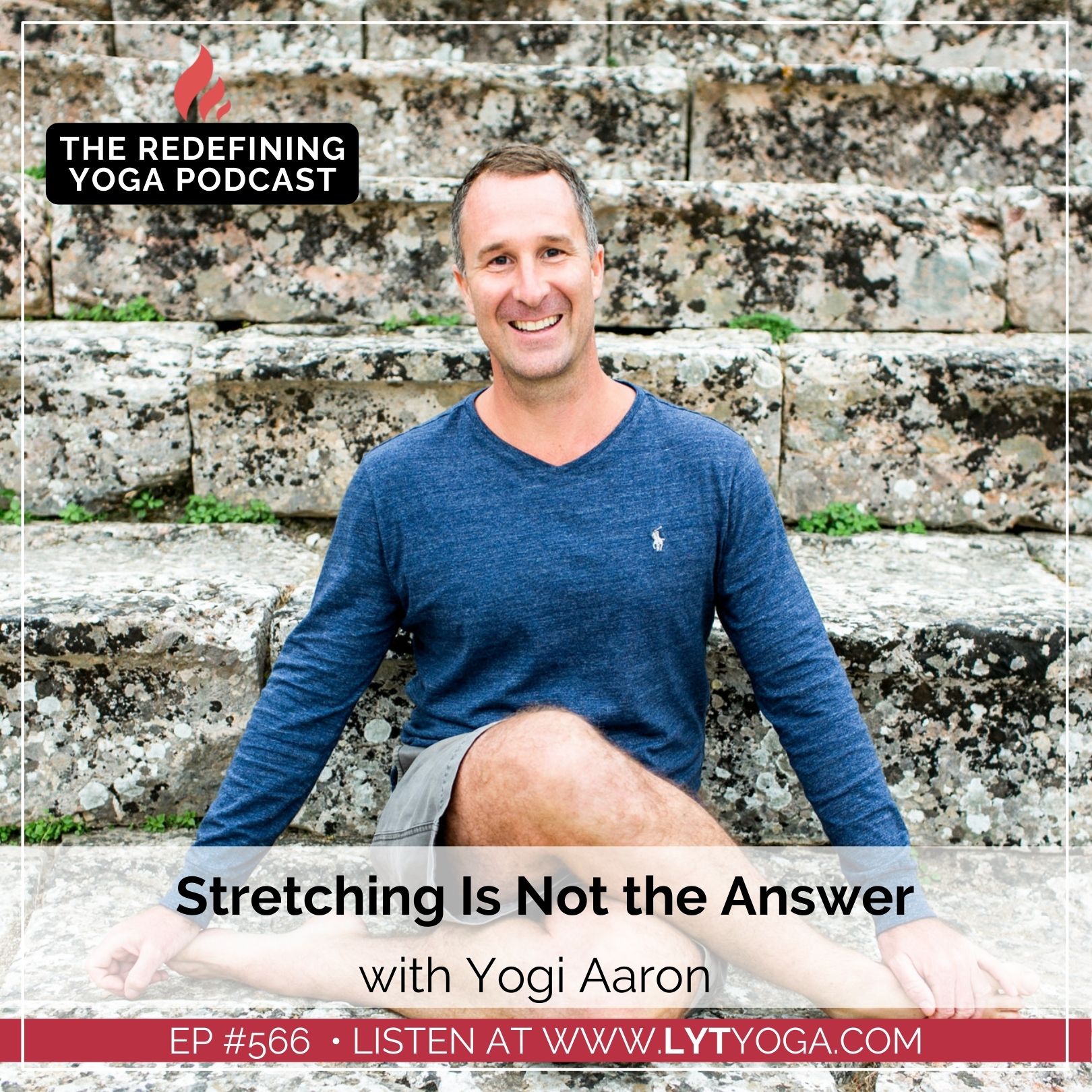
  • 566. Stretching Is Not the Answer with Yogi Aaron

    566. Stretching Is Not the Answer with Yogi Aaron


    Lara and Yogi Aaron met virtually many years ago through Aaron’s Costa Rican beautiful retreat center, Blue Osa. Yogi Aaron has been practicing yoga for a very long time, but unfortunately, like so many people, was injured by his yoga practice. He has learned a lot through his experience of pain, how to better prepare his body and better move his body. And he now has a podcast called Stop Stretching. Yogi Aaron teaches a more dynamic approach to yoga and to creating a stronger vessel so that we can go and live our best life.


    In this episode, you’ll learn:

    • about Muscle Activation Technique (MAT).
    • why stability in the body is so important. 
    • why stretching isn’t always the answer. 


    To learn more, and for the complete show notes, visit: lytyoga.com/blog/category/podcasts/


    Resources: