Category: LYT Teacher Takeover

  • Rebuilding Confidence in the Body through LYT

    Rebuilding Confidence in the Body through LYT

    by Jessica Hensley, LYT, RYT, Oncology Yoga Certified Instructor


    No one is ever prepared when they face an unexpected change in their health. Our bodies, the home we’ve been residing in our entire lives, can suddenly become a very scary place. This is especially true when there isn’t a clear cause and effect for an illness or diagnosis. When our health feels out of our control, we lose a sense of security we have in ourselves as well as part of our identity.

    Next Steps of Rebuilding Confidence

    As we navigate what comes next – be it treatment, changes in lifestyle, or finding a ‘new normal’ – one of the most important things we can do is work to rebuild confidence in our body. This begins by recognizing that our body is a powerful partner in healing, recovery, and wellness – not a place to fear. Shifting that mindset is easier said than done! It’s a gradual process that requires self-compassion, patience, and a ready set of tools to keep us on track. Beginning or maintaining a LYT Daily Yoga practice can be a game-changer.

    Daily Yoga Education

    LYT is an opportunity to re-educate ourselves about how the body works. Having a better understanding of our own anatomy, the biomechanics of our movement, and how these impact vital systems within is empowering. It can begin as simply as taking a few deep breaths. 


    When stress, anxiety, fear, or overwhelm are front and center, our nervous system loops in fight or flight mode. Coming to the mat, placing the hands on the body and feeling into the movement of the breath helps onboard the parasympathetic response. Known as ‘rest and digest,’ these elements are key to supporting the immune system. Rest, which can feel elusive at this time, is essential to healing and repair. Healthy digestive function means improved absorption of nutrients and the ability to clear toxins from the body, directly impacting energy levels, mood, and outlook.

    Alignment and Breathing

    Alignment, key to LYT, also impacts the breath. Coming to the floor in a Reset is a safe, supportive way to start connecting with how we’re holding ourselves. Emotions weigh heavy on the body. With that, it’s common to carry stress and fatigue in forward rolled shoulders and tipping through the head and pelvis. Lying supine on the mat gives immediate, tactile feedback and aids in aligning the spine and opening the front of the body to help ease the breath.


    As we progress with abdominal exercises, floor work, and standing poses, each step of the way we build strength, stability, and balance. Through this, we also work to incrementally increase range of motion. In breast cancer patients, for example, movement often feels restricted in the chest or shoulder area due to surgery or treatment. These patients benefit enormously from shoulder work in LYT daily yoga classes. They can begin in the Reset or against a wall and utilize modifications throughout to gradually realign and strengthen supporting muscles in the torso, ultimately returning to more optimal movement.

    Daily Yoga and Medical Treatments

    Cancer patients and those managing conditions with medical treatment also experience a host of short- and long-term side effects. These can include neuropathy, lymphedema, and cognitive changes. Women, in particular, are at increased risk of advanced bone loss after treatment. Weight-bearing exercise is one of the most effective ways to stimulate osteoblasts in the marrow that help build bone and may stave off further loss. LYT is an ideal way to incorporate body-weight-bearing work targeting the entire body through the flow.


    These examples skim the surface of the numerous benefits that LYT offers. Above all, when we move well, we feel better. There are aspects of our health that will always be out of our control, but what we can control is how we respond and adapt to adversity and change. LYT is a highly adaptable practice that gives us a platform to safely realign, reconnect with, and rebuild strength in our bodies at a time we need it most. Ultimately, helping to nurture a more confident mindset to carry us forward.


     If you are new to LYT or returning to your practice after treatment or surgery, be sure to have your doctor’s permission before beginning an exercise program.

  • Embodiment and the Role of Yoga

    Embodiment and the Role of Yoga

    by Svenja Borchers


    Have you ever asked yourself why you always mentally feel better after your yoga practice even when you mostly moved your body? As yogis, we know that body and mind are strongly connected. In fact, we are only able to feel and move our bodies because we have a brain. That feeling of our own body has developed over time tightly coupled to the active planning of movement and its feedback.


    When we feel sad or angry, chances are that we can feel this in our body. Maybe your chest feels tight, your throat feels like there is a lump in it, or your belly feels heavy or nervous. This is referred to as a somatic marker. Sometimes we are not even aware of our own emotions but might feel them in our body first. When you think about someone feeling sad, you’ll typically imagine a person with their head hanging down, shoulders heavily rounded forward… You can clearly differentiate the posture of someone being happy and confident or sad and insecure. And we all know how slouching will make our breathing shallower and faster. Knowing about this connection between our posture and our emotions enables us to use it to lift ourselves up. It has been shown that holding high-powered poses like V-arms (imagine crossing the finish line in a marathon) for only two minutes has a noticeable effect on how confident we are feeling. Moreover, when you feel down, you’ll recover more easily from your negative emotions when you support yourself through an upright posture. In turn, when we stand or sit upright, we can breathe freely, which signals to the brain that we are in a safe and relaxed state. 


    We LYT yogis know that posture matters. It doesn’t only make us feel ready-to-move from the position of our joints, but it also signals to our brain that we are safe and ready for new challenges. Making sure we are safe is the most important job of our brain. When this is secured, we have the energetic resources to strive for more.


    And it is not only about our body posture – but also movement patterns can have a direct influence on our belief system. You might have heard of affirmations (short positive phrases that you repeat over and over again like “I can and I will”). Studies have shown that the performance of athletes increased when they nodded while listening to their own affirmations before a specific exercise vs. when they were not moving or even shaking their heads while listening to the same phrase. Nodding is a movement pattern associated with agreement while shaking our heads is associated with disagreement. Our way of thinking is much more connected to how we feel and use our bodies than expected.


    There is a region in our brain that has been found to play a particular role in connecting information from our body to our emotions. This region is called the insular cortex. It lies just underneath the superficial cortical layer where the temporal, frontal, and parietal lobes intersect. Studies have shown that the volume of gray matter (this is where the nerve cells, synapses, and support cells are lying) of this region is increased in yogis and meditators compared to non-yogis and is positively correlated to the years of yoga experience. 


    Through yoga, we change our body awareness, which in turn changes how we feel and think. This, among other reasons, might explain why yoga practice has such a massive effect on our well-being.


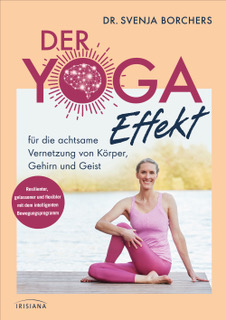
    If you would like to read more on the connection between yoga and neuroscience AND if you speak German, you’ll find tons of fascinating information in my newly launched book “Der Yoga Effekt”.


    Der Yoga-Effekt von Svenja Borchers


    Order the book from Amazon here!

    Or, if you live in Germany, order it locally from any store.

    Find Svenja Borchers on Instagram @svenjaborchers & @yogaandthebrain.

  • How to Adapt Your Yoga or Movement Practice for Pregnancy – Volume 2

    How to Adapt Your Yoga or Movement Practice for Pregnancy – Volume 2

    by Kaitlin Acharya


    How to Adapt Your Yoga or Movement Practice for Pregnancy: Second Trimester

    Enjoy the extra energy, mindfully


    Welcome to my favorite trimester. Hopefully, by now many of the difficult first trimester symptoms have subsided and you feel a surge of energy. In my experience, it was more of a return to feeling like my usual self, which did mean more energy compared to the first trimester. If you toned down intensity during the first trimester because of fatigue, you may feel like you can turn things back up now, but don’t go too hard. Listening to your body is still very important.


    Continue to work on connection to your core, but you will want to start modifying to avoid any movements where you cannot control the pressure within your abdominal cavity (also known as intra-abdominal pressure, or IAP). Pay attention to any soreness in the pelvic region or low back which can be indicators that you are pushing the intensity too hard and over-stressing your pelvic floor and core. Overhead movements, like pull-ups or shoulder press, can overload the ever-stretching abdominals at this point so keep an eye on your belly if performing these movements. Jumping and high-intensity cardio can have negative effects on joints and the pelvic floor so it’s a good idea to start modifying these types of movements as well. Crunches and sit-ups are also not advised, but that doesn’t mean you can’t work on core connection while lying on your back. Supine breathwork is a great way to connect to your pelvic floor and core without over-stressing the abdominals. It’s also a great way to train your focus for labor. Again, check out my blog post on this type of breathing.


    Kaitlin 1


    Mind the growing bump

    As your baby grows, so does your belly and you’ll start to show at some point this trimester depending on your body and whether you’ve had a baby before. Especially on the yoga mat, you will need to start modifying movements to accommodate the bump. Any position where you are lying on your belly may start to become uncomfortable, like cobra and locust. At this point, move to all fours and practice a similar movement like cat-cow or bird-dogs.


    Blocks are going to be your best friend. Use them to modify plank, down dog, and forward folds. They are also great for creating space around the belly in any sort of pose where you are bent over and have one or both hands on the floor – like fingertip lunge or side lunge. You can also widen your stance in any pose to create more space for the belly. Play around with the height of the blocks to find a position that is comfortable for you. This is also the time to be mindful of twisting. Gentle twists in the thoracic spine are ok but do not force the twist – something I don’t recommend to even my non-pregnant students. Placing a hand on the belly for abdominal support and to monitor any unmanaged IAP is also helpful. And of course, if they just don’t feel good, don’t do them!


    Mindset matters

    I realize much of this post is focused on what you can’t do or may have to limit as a pregnant person, but know that there is still so much that your body can do during this time! Personally, I felt myself being amazed and appreciative that my body was still able to move on my mat and lift weights all while growing a human inside of me. Sure, some poses looked a little different, I wasn’t doing any of my beloved handstands, and I had lowered my weights a bit but I was still moving and breathing and taking time to focus on myself and my body. Pregnancy is temporary. It may not feel that way by the time 36 weeks rolls around (me currently: have I been pregnant for 9 months or 9 years?!), but you will have your baby and with proper post-natal care you will be able to return to your regular movement practice.


    Kaitlin 2


    How to Adapt Your Yoga or Movement Practice for Pregnancy: Third Trimester

    The Final Countdown


    The last trimester – you’re almost there! This trimester can be fraught with discomfort as the belly grows even bigger and muscles and ligaments loosen even more thanks to that relaxin hormone. Fortunately, movement can help lessen pain and prepare for you for labor and delivery.


    Lighten the Load

    I like to think of movement intensity during pregnancy like a bell curve. You may lack energy during the first trimester, but slowly start to regain it and peak during second trimester. Then third trimester comes around and the body needs less of that intensity to prepare for birth. This doesn’t mean you should cease all movement, but as I advise throughout this series, listen to your body. Mine was screaming at me to slow down practically on the day that I hit the third trimester. My low back started hurting, walking up stairs left me a little winded, and even bending over was getting difficult. So I modified even more. At this point in my pregnancy my yoga practice was heavily modified, focused on connecting with my breath and staying mobile in my hips to help with labor. I was still getting my heart rate up during my weightlifting workouts, although weights were extremely light.


    Modify Daily Movements

    In addition to continuing to modify your movement practice as you did in the second trimester, it’s also important to consider modifying movements outside of your exercise regimen or yoga mat. If you haven’t already, start modifying how you sit up, whether from laying down on your mat, the sofa, or your bed. It’s best to roll to your side first and use more of your obliques to sit up so that you are not over-stressing the already stretched and stressed rectus and transverse abdominus muscles, as well as the linea alba, the midline connective tissue that holds your abdominals together.


    Bending over may also have become more difficult. Try widening your stance, squatting instead of hinging at the hips to pick something up (bending more in the knees and lowering the butt towards the ground), and sitting down to put your shoes on…maybe even enlisting your partner or a friend to help with that last task 😆. Balancing can also become noticeably difficult during this trimester and maybe even painful in the pelvic area due to separation of the pubic symphysis or issues with the SI joint.* You can ease this pain by avoiding unilateral positions (anything that uses only one leg) or shortening your stance.


    *among other possibilities — the pelvis has a lot of muscles and ligaments attached to it! But these are most common in pregnancy.


    Kaitlin Acharya 2


    Movements to Help with Labor

    Every mama wants to know how to ease the arduous task of birthing a baby — I mean, who wouldn’t?! Here are some movements that can help prepare your body for labor.

    • Down Dog – Downward-facing dog is actually classified as an inversion since your head is below your heart in this pose and it is a great position to help relieve stress on the pelvis and even move the baby out of the pelvic outlet for repositioning. If your baby is in a breech position, this pose can help, but I also suggest checking out Spinning Babies and the Webster Technique for more professional help with getting the baby in a head-down position.
    • Cat/Cow with knees together, feet wide – This was one of my go-to movements in my third trimester. Keeping the knees together and feet wide internally rotates the hips and creates more space in the back of the pelvis, which at this point in pregnancy is probably holding a lot of tension from the load of the baby in front.
    • Squats, squats, and more squats – Squats are fantastic for opening the pelvis and preparing the perineum for childbirth. There are so many different varieties as well – goddess squat (legs wide, feet turned out), asymmetrical (one foot on a higher surface), the LYT happy squat (hips high, head down, arms forward – great for the low back), side lunges, and more.


    One Last Thing…

    My most important recommendation for labor – don’t forget to BREATHE!! Keep practicing that 360 degree-breath all the way through labor and beyond. It is truly going to be your best tool.


    Happy and healthy birthing!


    by LYT teacher Kaitlin Acharya

    Website: www.yogakaitlin.com

    Instagram: @yogakaitlin

  • How to Adapt Your Yoga or Movement Practice for Pregnancy – Volume 1

    How to Adapt Your Yoga or Movement Practice for Pregnancy – Volume 1

    by Kaitlin Acharya


    Welcome! 


    First & foremost, I assume you are here because you are either thinking about getting pregnant, trying to conceive (TTC), are currently pregnant or you know someone going through one of these life stages and want to better support them. If you are still thinking about pregnancy, I hope this series shows you that you can maintain a movement practice and its benefits while pregnant. If you are TTC, hang in there! I personally know how long it can take and how frustrating it can be. If you are pregnant, I want to give a huge congratulations! If you are a support person (maybe a partner or close friend or family member), good on you for checking this out to help your loved one go through this special, but often uncertain time in their life. 


    Should I Exercise While I’m Pregnant?

    There tends to be two groups of pregnant people interested in movement and exercise – those who have a consistent and regular movement routine and want to continue it during pregnancy and those who want to start exercising or moving because they are pregnant and recognize it could have benefits. This series will focus more on the former group, but that doesn’t mean it won’t be unhelpful to the latter. 


    You might be surprised to learn that research has shown exercise during pregnancy to have no real effect on the health of the baby. So if you are looking to start an exercise or movement routine for the health of your baby, statistically it may not have the desired effect. This is also good news for people who want to exercise during pregnancy but cannot for some reason (placenta previa for instance is a condition that doctors will often recommend very limited movement for the duration of pregnancy) – if you are worried about how losing most of your movement routine will affect your baby, rest safely that it likely will not. However, exercise and movement do have benefits for mom. Exercise and movement improve mental health, which can have physiological effects on the body and therefore on your baby. In addition, exercise and movement performed correctly and with a focus on breath and body awareness (more on this below) can lead to a shorter and more efficient labor and improve recovery of your pelvic floor postpartum. Furthermore, yoga has been shown in a couple of small studies to reduce pain during labor and lead to shorter stages of first-stage labor.** Again, these studies were small, but as a yoga teacher and practitioner myself, I can attest to the power and strength that yoga brings to the body and mind – all of which you will need throughout your pregnancy journey. 

    **Everything (except the sentence where I state my own “argument”) mentioned in this paragraph before the double asterisks is from Emily Oster’s book “Expecting Better” (thank you to one of my best friends, Lindsay, for lending to me. As a self-proclaimed data nerd, this book was awesome.) Emily evaluates the data behind accepted rules of pregnancy to better inform decisions from what to eat to the efficacy of prenatal testing. The book was last updated in 2019, so there are possibly newer studies that have been done on the effects of exercise during pregnancy.


    More specifically, the LYT™ method is specially focused on posture and core – two areas that suffer greatly during pregnancy. Posture can affect the position of the baby as you get closer to delivery, possibly reducing the need for interventions during labor, and regaining core strength postpartum is especially important for mom’s health. A weak core can affect the body in many ways, the most “popular” of which being low back pain and specifically postpartum, incontinence issues due to the pelvic floor (part of the core!) being weak as well. I don’t think anyone wants to be dealing with low back pain, wetting your pants when you cough, sneeze, or laugh, AND a new baby on top of it all.


    Getting Started

    Pregnancy is a huge stress on the human body. Exercise and movement are also stressors to the body so you should expect them to look and feel a lot different than they did before you were pregnant. In general, the intensity will be toned down, but there are still so many ways to move comfortably and safely. Also, please always make sure to check with your doctor before engaging in physical activity.


    Finally, before we head into looking at the first trimester, breath and body awareness are key to safe movement during (and after) pregnancy. If there was ever a time to get more in tune with your body, it is ideally before you get pregnant but if not, certainly when you are pregnant. For my fellow athletes out there with the “no pain, no gain” attitude ingrained in them – this is not the time to listen to that voice! (nor is there ever a time to listen to it, but that’s a story for a different blog post). To ensure a speedy and healthy recovery post-partum, it is crucial that you lower intensity when your body tells you to, which is often in the form of pain. This doesn’t mean you can’t move at all, but maybe lower the weight or stick to bilateral movements instead of unilateral movements or maybe it means going for a gentle walk instead of the cycling class you had planned. Learning how to breathe properly will help increase your body awareness and prepare you for postpartum return to movement. All of which I cover in my classes and private sessions. Stay tuned for the next post to explore movement in the first trimester.

     

    1st trimester

    Congratulations on your pregnancy!


    The first trimester is often the toughest trimester for many pregnant people due to the immediate increase in hormones that start to change and affect your body. Motivation to move during these three months may be difficult, but it can also help you to feel better, if only for a few hours. We’ll start first with the core and breath, which I believe set the foundation for a healthy movement practice while pregnant and also postpartum. As I briefly mentioned above, movement during pregnancy is not just for your present body – it is also for your postpartum body so that you can feel your best and be your best for your new little one and others.


    Start Core & Breath Work Now

    If you’ve never learned how to engage your core correctly, now is the time. The LYT™ method teaches core and breath in tandem, which makes perfect sense when you look at the roles the diaphragm and the pelvic floor play in our core container. I like to teach what is often called diaphragmatic or 360-degree breathing. I actually have another blog post about this type of breathing – check it out!


    Learning how to activate your core properly now, at the beginning of your pregnancy, will set you up for success at the end, for labor, and also postpartum. As your body’s posture continues to change throughout the next 9 months, your knowledge and awareness of your core and breath will help you maintain as neutral of a posture as possible, which will limit some of the typical 2nd and 3rd-trimester aches and pains that you may experience later on.


    A note on baby safety – core work and yoga do not cause miscarriage, however, the risk for miscarriage is highest during the first trimester. This does not mean you shouldn’t move or do core work, but do what you feel comfortable doing.


    Practice What Feels Good

    Speaking of doing what you are comfortable with, you may not be comfortable doing much of anything. You may be feeling really weak and nauseous or extremely tired or any of the other fun first trimester symptoms that many pregnant people experience. Listen to your body and do what feels good, which might change day-to-day. Personally, there were days when I didn’t want to move, but when I did I felt better afterwards, and there were days when I could not even get up off the couch and movement did not happen and that is ok! First trimester for me was about learning to let go of expectations and control*, almost as if my body was preparing me for first-time parenthood!

    *In all honesty, still working on the relinquishing control thing. 😆


    If you do choose to move, here are some things to consider. Your abdominal muscles are likely not going to be stretched out at this point to cause any damage to the abdominal fascia when doing core work, which is another reason why I suggest learning core control now so you can feel what it is supposed to feel like with a relatively normal core structure. However, you may have a lot of bloating due to hormones, heartburn, and/or pelvic sensitivity. Core work can help with bloating, so can yoga, but you may notice inversions like Down Dog, Dolphin, and Handstands or even just lying flat on your back worsen your heartburn so you may want to avoid those positions. Lying on your stomach is still pretty safe since the baby and your uterus are so small at this stage, but it may not feel right for you and you can always stay on your hands and knees. It’s also generally a good idea to avoid contact sports or activities where your risk of injury is typically high.


    Speaking of handstands and other balancing poses or activities, you may notice your limbs feel more loose and even a bit more wobbly than usual. This is due to the hormone relaxin that is already hard at work relaxing your ligaments to prepare the body for your growing baby and birth. This and your center of gravity already beginning to change all make balancing poses more difficult. Pre-pregnancy I did handstands every day – I love them. But probably around 10-12 weeks I stopped doing them because my wrists just didn’t feel stable enough and I did not want to risk falling and hurting myself or my baby. If you’ve been handstanding since you were 5 years old in gymnastics, then maybe you will feel comfortable continuing throughout pregnancy, but I advise against pushing yourself to do something. If you’re already questioning whether you should do a movement or activity, you probably shouldn’t.


    Stay tuned for second-trimester tips coming soon!


    by LYT teacher Kaitlin Acharya

    Website: www.yogakaitlin.com

    Instagram: @yogakaitlin
  • Personal Productivity

    Personal Productivity

    by Tim Bantham


    We live in an age where the lines have blurred between our work and home life. The delineation between the two has become way less defined. Along with this change, there is an increased demand on our time and attention. Now more than ever having the ability to stay productive is an essential life skill. For me, personal productivity is a goal that I am constantly pursuing. It is also one that has evolved through the years. Staying productive and finding a system that works is a personal choice. I encourage you to keep an open mind. The system I’m about to share works well for me but your mileage may vary. 

    A good system

    The key for me to maximize my personal productivity is setting myself up for success by having a good system. My system is digital and I rely on certain tools both on my laptop and my iPhone. You may be more comfortable with pen and paper. Nothing wrong with that. I just happen to like using digital applications for this.

    I am a big fan of Evernote. One of the key features of Evernote is that it just works. Any notes that I add on my laptop automatically show up on my phone. I use Evernote for just about every list I create. Lists are a big part of my life and a key component of maintaining my sanity.  I also use Evernote as part of my weekly review that I’ll touch on later. 

    Like Evernote, Todoist is another indispensable app that I love. I use Todoist for all of my projects both at home and work. These projects may be thoughts, ideas, or full-blown projects with multiple related tasks. All of these go into Todoist.  As an idea pops into my head I’ll open Todoist on my phone or laptop and enter it in. Every new task or idea funnels into an inbox within Todoist which I’ll later review as part of my weekly planning. (more on this later) For my calendar, I use iCal on my laptop and phone. Having just one calendar system is key. You don’t want to have a multitude of calendars scattered about the digital universe. One calendar, one system. 

    The Weekly Review

    Once a week, usually on Friday mornings,  I’ll sit down undistracted for approximately an hour to conduct my weekly review. The steps are as follows: 

    1. Process Inboxes – This is not time to do actual work. I use this time to go through my emails and the inbox on my Todoist app. I delete emails that I don’t need which is almost all of them. Emails that do require attention will go into my Todoist as a task with an assigned date.
    2. Planning and Organizing – Here I process loose paperwork and actually schedule tasks identified in Todoist. I’ll also spend time with my calendar looking at the week and month ahead. 
    3. Mind Dump – The next step is to free my brain of all of the things that I may be thinking about. Anything that I either want to do or think I might want to do gets typed out in either my Evernote or Todoist. The objective is to set my mind free. Doing so increases my chances of remembering things and allows me to do a better job at staying in the moment.  
    4. Review Todoist – One of the features of Todoist is that it archives a history of your completed tasks. I find it helpful to review what I’ve already done in the week prior. This helps build confidence that my system is working and that my productivity is measurable. 
    5. Review Long Term Goals – I credit author and blogger, Chris Guilebeau, with introducing me to the concept of conducting an annual review. You can check out his work at chrisguillebeau.com The idea here is to carve out a significant amount of undistracted time to take stock of your life. Use this time to plan and set goals for the upcoming year.  Each week, I review long-term goals that I had set for myself during my annual review. I want to be able to gauge whether or not I am on track with the things that I had planned to accomplish. If not, I assess why or why not and ask what may be holding me back. If there is a specific task that gets me closer to reaching a certain goal I’ll make sure it’s in my Todoist with an assigned date. 
    6. Ask Questions – What went well? What didn’t go so well? What should I start doing? What should I stop doing? What should I continue? 
    7. Prioritize Tasks – Looking at the week ahead I’ll map out what are the most important things that need to get done and I assign priorities to each. I use the flags within Todoist to organize and prioritize. An item marked as P1 or Priority 1 is the most important thing for that day. Once I complete those I move on to P2 and then finally to the P3 tasks. 

     Putting the plan into action

    Each day when I wake up the first thing I’ll do is crack open my laptop and practice LYT Daily. I bet you knew that I was going to say that! Why of course I practice LYT every single day!! The early morning hours are the time I get to myself. My movement practice is non-negotiable and the best time to get that done is first thing.  

    When I sit down to start my workday I’ll review my Todoist for the action items that need completion. Since I already spent time prioritizing and assigning dates to tasks during my weekly review I’ll have a road map for my day in front of me. Some tasks are reoccurring and others are not. Todoist allows a lot of flexibility to create projects with related tasks. Any task that has a date will show up in my Todoist on the date that I had assigned to it. From there it’s just a matter of checking off items from my list by using either the Todoist app on my phone or laptop. Although rare, the best days are when I can check everything off of my list. If I don’t get to everything on my list it will carry over as an overdue task on my Todoist. From there I can reassign a date to the task or just complete it at the next opportunity. 

    A few more tips 

    Remain flexible and adaptable – There are going to be days when life happens right? Things come up and that takes you off of your game. Learn to be ok with that. You just need to adjust and move on. Use your system to maintain order.

    Stay disciplined – Whatever system you use you need to be disciplined about applying the steps. It’s ok to be fluid and allow for adjustments that will enable the system to work for you. Once you commit to staying organized and productive, stick with it for a while to see if it works. If not, don’t be afraid to make adjustments as needed. 

    Be kind to yourself – I’ll let you in on a secret. I am not the most organized person in the world. I lose things often, I forget things and I don’t always stay focused. The one big thing that I have learned through the years is to allow myself some grace. Personal productivity, like many things in life, is constantly evolving. Responsibilities change, life situations change and there are many distractions we all have to contend with. Find what works for you and don’t be too hard on yourself if you don’t get to everything. Keep working at it and you will soon be on the path to improved personal productivity and more freedom. 


    Tim Bantham

  • Never Work For Your Heroes

    Never Work For Your Heroes

    You should never work for your Heroes


    If the old adage “You should never meet your heroes” bears true, then I’m here to tell you, you should definitely never work for them.


    If you google the original warning, you’ll get search page after search page full of people corroborating the advice. 


    “You’ll be disappointed!” they say.


    “The image will be shattered!” they warn.


    “You’ll lose all hope in society!” they yell in all caps.


    I understand why people say this. I understand why the world warns you not to meet people you put on a pedestal. Let’s face it–we are all human. So it makes sense that if you meet someone you’ve placed unrealistic expectations upon…it’s probably not gonna work out for you.


    However, now that I’ve not only met my hero but then worked for her directly for two years….I’d like to weigh in.


    Y’all need to get better heroes and stop being afraid to meet them.


    Lara became a hero to me not because she was a brilliant recording artist, movie star, or something to that effect (although of course, she is a bit of a rock star in the yoga and PT world, let’s face it!)…she became my hero because she was genuinely a good person, with a good heart, doing good things, and cared about making people light up and be their best. She also knows how to effectively communicate all of that with grace, and never apologizes for her humanity.


    Her intelligence, confidence, humor, and fierce compassion for others did not let me down. It has been so inspiring to get to see Lara through life’s ups and downs and model behavior that I would like to adopt into my own life. She’s always evolving and open to change. She takes everyone’s opinions seriously. She values all life. She takes criticism with an open ear and heart and is the first to admit if she is wrong. She stands by what she says–and she gets out there and moves every day!


    Does this mean that she is 100% perfect all the time? Of course not! In the past two years, there have been moments where I’ve had the “C’mon Lara!” thought. But you know what–she’ll be the first to admit it. And guess what…I’m not perfect either (Thank God!) and she’s never made me feel poorly about it. She has hard days too, or things that didn’t go as well as planned, or any other of the plethora of things that make us human. But isn’t that amazing? To see your hero be a human, and understand that we are all human. To see how a genuinely amazing human responds in the face of adversity? A TRUE role model. Doesn’t that give you hope? Doesn’t it make striving to be a better person more of a realistic goal?


    So please, meet your heroes. If they don’t measure up to your expectations, then wouldn’t you rather know so you can find the ones that do?


    If you’ve met your hero and they rose to the occasion…then I’ll dare you to go one step further and work for them, because it might make you love and respect them even more.


    To Lara, the LYT Team, and the LYT Community….thank you for the opportunity to work with you. To serve a mission with a badass leader like Lara, hard-working souls like our team, and outstanding humans all around the world that strive to make thousands of people feel better in their bodies and minds has been an incredibly rewarding experience. I’m happy to report that Lara Heimann and all things LYT Yoga have passed the meeting and working for your heroes test, and I am honored to have been a part of the journey. 


    -Catherine Ferraro

    -Former COO, LYT Yoga

  • Sequencing Tips & Tricks for LYT Teachers

    Sequencing Tips & Tricks for LYT Teachers

    Hi all! I’m Teagan.


    As a longtime yoga teacher, but newer LYT yoga teacher (I was in the 1st cohort of the online 200-hour program which graduated in April 2020 & completed the 300-hour in September 2021 – LYT Level 2 certified, woot!), and a recent addition to the LYT Prime platform, I thought it might be helpful to share some of the ways I put together my sequences for classes each week. Each class is different, and everyone has strategies that work for them, but I hope that by sharing my current process, you’ll get something useful out of it. 


    And I should say, first and foremost, if you haven’t taken Kristin William’s sequencing labs, then you need to get on that ASAP!


    You can join me weekly on LYT Prime for LIVE Zoom classes every Thursday 8-9AM ET!

    Teagan LYT Prime image


    1. Find Your Theme


    My classes almost always start with an idea/theme/body part, etc. – some concept that is going to be the throughline. Here are some of the ways that themes come to me:


    • it may come to me during a class I’m taking
      • might be a cue that sticks with me – either from the teacher or something I come up with myself in my own body/mind
      • might be something about their theme that I want to chew on and put my own spin on, something that feels meaningful to me 
      • might be some shapes or transitions that are in the class that I want to dissect and play around with more and in different ways
    • because of an injury or pain I’m experiencing OR a part of my body that feels like it needs attention
      • I ask myself ‘what can I do to try to help myself with this on my mat?’ 
      • I know that what helps me can often be a way to help others
    • from what I’m seeing working with my clients/students 
      • issues they’re having in their bodies 
      • concepts I think they need more clarification/work on as I watch them practice/move
    • from something I’ve read or seen
    • a body part or action in the body I want to know more about and am willing to do some research on OR one I want to educate others more on
      • I think choosing a body part or action is a great way to embody your knowledge and help others to really understand it too
    • of course, there are all the holidays, seasons, chakras, states of matter, etc. to pull from


    I keep a running list of ideas on my phone that is ever-expanding. Whenever I think of one, I just add it to the list. That way I’m never short on inspiration when I need to pull together a class. And I try to pick a theme that I’m really excited about to teach on a given week so that I’m showing up with as much enthusiasm as possible when I’m teaching. 


    1. Start Making a List of Poses/Ideas


    The next thing I do is open up a Google doc and start listing off poses or movements that are in line with the theme. I think back on and also sometimes go back and look at previous classes that have relevant examples of whatever I’m looking to theme my class around. One of the wonderful things about LYT Daily, LYT Prime, and all the LYT trainings is that we have such an expansive library of resources to draw from. The more you practice LYT, the more the concepts, movements, and ideas become embedded into your body and mind, so start there, with what is already inside.


    1. Refer to Other Resources for Inspiration


    Depending on the theme/idea I will also often go to Instagram and look at relevant hashtags or YouTube and seek out videos, usually from physical therapists, addressing whatever topic. These are great resources that have really helped spark my creativity in the past. I always try any ideas I get from these places out on my body first to make sure they make sense to me and convey what I’m trying to get across. 


    1. Get On Your Mat


    Once I have some ideas to work from, the next thing to do is to get on my mat. It’s true, I can design a class sitting on my bed (where I usually do work from at home), but it tends to be much more predictable, rote, and boring (in my personal opinion)*. When I get on my mat and start playing around with movement, the class often almost seems to write itself. And I get excited about what I’m putting together. This part somehow amazes me a lot of the time. Even though I’ve been planning yoga classes for over 15 years, the magic of the sequencing coming together still feels special. I love it. 


    * Although I have also considered designing a class called “The Obvious Class” and making the poses and transitions between poses as obvious as possible. I think that would be fun too!


    1. Refinement


    Ideally, I have a day or two to let the class sit before I come back to it. That way I have a little more time to process the movements and have some space away from it so that I can come back with fresher eyes and make some refinements. These days I often end up with a few too many ideas and need to do some culling or trimming to fit it into the allotted time frame. 


    I do also design classes where I simply get on my mat and figure it out from there; no specific idea or theme per se, but just allowing my body to speak to me and move me around my mat as it needs. As yogis/human beings, we want to be able to access the wants, needs, desires of our minds, bodies, and spirits. So being able to tack between these different layers of ourselves and listen to them is an important aspect of feeling well-balanced and fulfilled.


    I hope, for those of you who are teachers, these thoughts/explanations might add something to your sequencing process. I’d love to hear about your strategies too. Feel free to reach out on Instagram @yogawithteagan.


    And I hope to see you in class soon.


    xo,

    Teagan


    Teagan Schweitzer, Ph.D., E-RYT 500

    yogawithteagan.com

  • Three Rules of Gratitude

    Three Rules of Gratitude

    by Professor Jeremy David Engels, PhD, E-RYT500 (@yoga.professor)


    What’s your gratitude practice?

    In addition to being a longtime mindfulness, meditation, and LYT yoga teacher, I am also a scholar and professor of communication. In my book The Art of Gratitude, I argue that gratitude matters. The words we use to describe our emotions are important, as they influence how we and others feel.

    Here are my three rules for how to practice gratitude.


    1. Practice gratitude every day

    Scholars have documented the many personal, social and health benefits of gratitude. Gratitude can lower blood pressurereduce anxietyimprove sleep, and make people feel happier and more at home in the world. In general, research shows that the practice of gratitude reduces suffering and promotes individual well-being.

    So the practice of gratitude each day is important – but it also requires the right philosophy and the right rhetoric.


    Jeremy 2


    1. Avoid the language of debt

    Many of us regularly say “I owe you one,” “I owe you a debt of gratitude,” or some other phrase that means basically the same thing.

    In doing so, gratitude becomes a kind of a debt incurred during daily life that I need to repay.

    In The Art of Gratitude I argue that the trouble with the language of debt is that it transforms how we talk about gratitude into a transaction. When gratitude becomes a daily practice of counting and keeping score, and when we only do kind things for others when they can repay them, it’s easy to start thinking of life itself as a series of economic transactions—and this way of thinking is so limited. Life is not a transaction. Life is not a debt. The value of our fellow human beings can never be captured in economic terms.


    Jeremy 3


    1. Recognize interconnectedness

    My academic research is influenced profoundly by yoga philosophy. I define yoga as a practice that aims to reduce suffering in the world by sensitizing us to our fundamental interconnectedness with all living beings and the earth itself. This is what it means when we say that yoga is union (from the Sanskrit root yuj, yoking, connection, union).

    In the United States, it is common to speak of self-reliance. But no person builds their life alone. Everyone is supported. The yogic practice of gratitude, or “santosha,” encourages practitioners to acknowledge and give thanks for the many forms of support that allow them to live their lives.

    To breathe is to take in the same air that others breathe; to stand is to stand on the same earth that others stand on. Without the air, or the earth, shared by all, we wouldn’t be here. The practice of yogic gratitude encourages people to recognize that they are part of the world, not separate from it.

    It also teaches people to recognize that to reduce their suffering they must also work to reduce the suffering of those around them. Often people don’t see it this way, but there is no injustice that affects someone else that does not also in some way affect each one of us too.

    True gratitude is a practice of recognizing our interconnectedness – that we are all in this together, and that we need each other to face the challenges of life in a world beyond our control. True gratitude is a practice of yoga, and yoga is a practice of true gratitude.

    Feel free to reach out and tell me about your gratitude practice! You can connect with me on Instagram @yoga.professor