by Svenja Borchers
Have you ever asked yourself why you always mentally feel better after your yoga practice even when you mostly moved your body? As yogis, we know that body and mind are strongly connected. In fact, we are only able to feel and move our bodies because we have a brain. That feeling of our own body has developed over time tightly coupled to the active planning of movement and its feedback.
When we feel sad or angry, chances are that we can feel this in our body. Maybe your chest feels tight, your throat feels like there is a lump in it, or your belly feels heavy or nervous. This is referred to as a somatic marker. Sometimes we are not even aware of our own emotions but might feel them in our body first. When you think about someone feeling sad, you’ll typically imagine a person with their head hanging down, shoulders heavily rounded forward… You can clearly differentiate the posture of someone being happy and confident or sad and insecure. And we all know how slouching will make our breathing shallower and faster. Knowing about this connection between our posture and our emotions enables us to use it to lift ourselves up. It has been shown that holding high-powered poses like V-arms (imagine crossing the finish line in a marathon) for only two minutes has a noticeable effect on how confident we are feeling. Moreover, when you feel down, you’ll recover more easily from your negative emotions when you support yourself through an upright posture. In turn, when we stand or sit upright, we can breathe freely, which signals to the brain that we are in a safe and relaxed state.

We LYT yogis know that posture matters. It doesn’t only make us feel ready-to-move from the position of our joints, but it also signals to our brain that we are safe and ready for new challenges. Making sure we are safe is the most important job of our brain. When this is secured, we have the energetic resources to strive for more.
And it is not only about our body posture – but also movement patterns can have a direct influence on our belief system. You might have heard of affirmations (short positive phrases that you repeat over and over again like “I can and I will”). Studies have shown that the performance of athletes increased when they nodded while listening to their own affirmations before a specific exercise vs. when they were not moving or even shaking their heads while listening to the same phrase. Nodding is a movement pattern associated with agreement while shaking our heads is associated with disagreement. Our way of thinking is much more connected to how we feel and use our bodies than expected.
There is a region in our brain that has been found to play a particular role in connecting information from our body to our emotions. This region is called the insular cortex. It lies just underneath the superficial cortical layer where the temporal, frontal, and parietal lobes intersect. Studies have shown that the volume of gray matter (this is where the nerve cells, synapses, and support cells are lying) of this region is increased in yogis and meditators compared to non-yogis and is positively correlated to the years of yoga experience.
Through yoga, we change our body awareness, which in turn changes how we feel and think. This, among other reasons, might explain why yoga practice has such a massive effect on our well-being.
If you would like to read more on the connection between yoga and neuroscience AND if you speak German, you’ll find tons of fascinating information in my newly launched book “Der Yoga Effekt”.
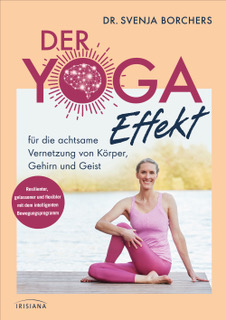
Order the book from Amazon here!
Or, if you live in Germany, order it locally from any store.
Find Svenja Borchers on Instagram @svenjaborchers & @yogaandthebrain.