Tag: lyt yoga

  • 722. Deep Dive: Reintroducing LYT

    722. Deep Dive: Reintroducing LYT


    Join Lara & Kristin this month for a deep dive into all things LYT. What is LYT Method? Let’s chat!


    In this episode, you’ll learn about:

    • Lara’s story of what led her to create the LYT Method.
    • How LYT is evolving the approach to yoga and movement.
    • Lara’s journey from teaching classes in her house to opening a studio to designing and teaching her own teacher training.
    • The creation of the LYT Daily platform.
    • Kristin’s story of what led her to yoga and why LYT resonated with her.
    • The future goals of LYT.


    There’s a lot to cover, so let’s dive in!


    To learn more, and for the complete show notes, visit: lytyoga.com/blog/category/podcasts/


    Do you have a question?


    Sponsors:


  • 615. Why Your Brain Matters in Movement with Dr. Svenja Borchers

    615. Why Your Brain Matters in Movement with Dr. Svenja Borchers


    Join Lara for a conversation with Dr. Svenja Borchers, a brilliant neuropsychologist and LYT Yoga® instructor. Dr. Borchers, who lives in Germany, grew up wanting to learn more about why people are the way they are. This led her to a fascination with neuroscience, cognitive psychology, philosophy, and even artificial intelligence. She has a Ph.D. in neuropsychology and focuses on how movement works, perception, and proprioception.


    In this episode, you’ll learn…


    • What is the difference between the brain and the mind?
    • About neuroplasticity (how our brain changes) and what factors impact plasticity.
    • Why posture is important from a neuroscience perspective. 
    • How different parts of the brain are involved in movement.
    • The importance of visualization in movement practices.
    • What pain means and how important movement is in relation to pain.
    • Brain hacks or things to think about when practicing movement.


    To learn more, and for the complete show notes, visit: lytyoga.com/blog/category/podcasts/


    Resources:


    Sponsor:

  • How to Have a Happy Low Back – Part 1

    How to Have a Happy Low Back – Part 1

    by Thalia Wynne, PT, DPT, AT, RYT-200 


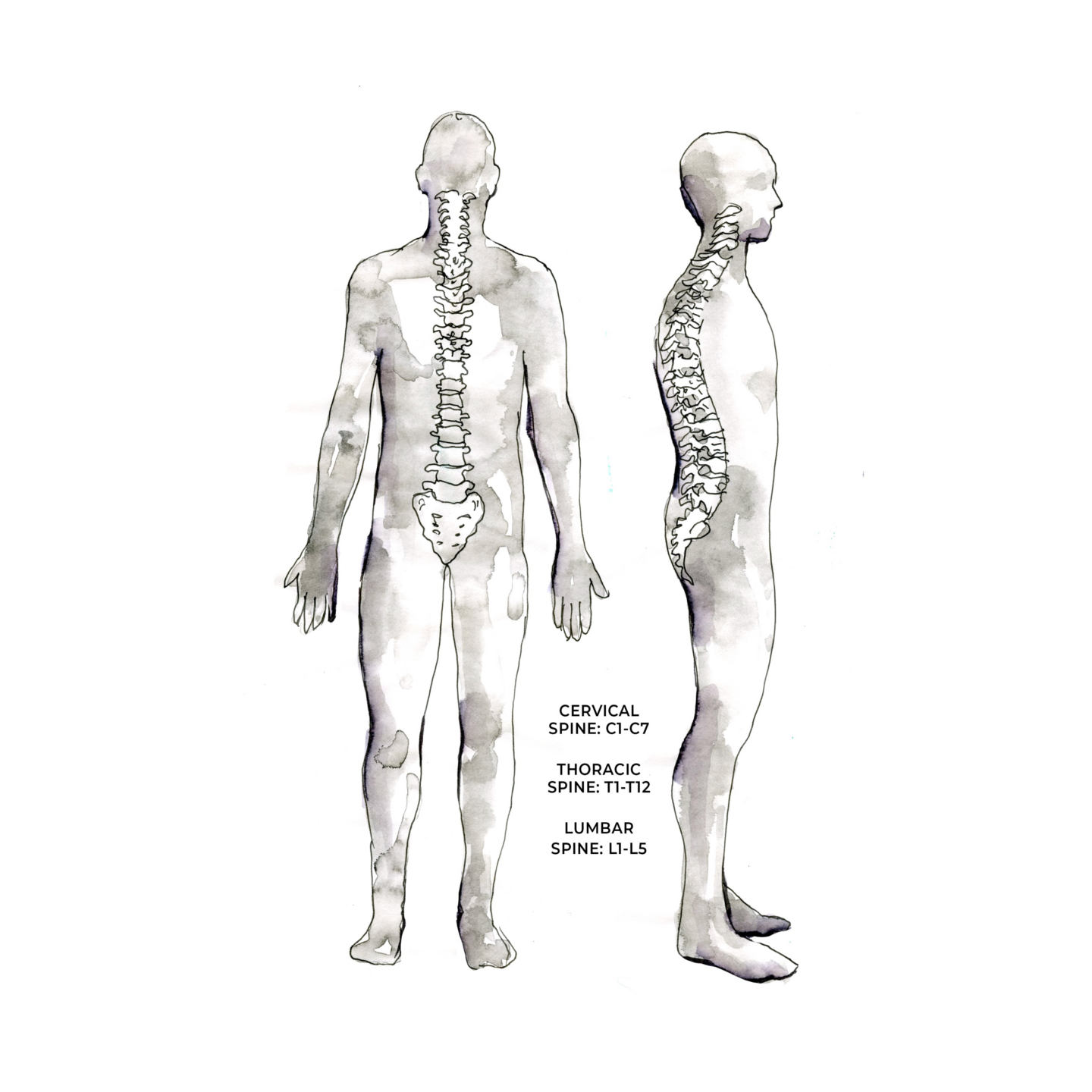
    The lumbar spine consists of 5 vertebrae and is surrounded by layers of muscle and connective tissue. Encapsulated by layers of fascia, the lumbar spine is the home of the energetic hub of our central nervous system – the spinal cord. This wonderful playground of tissue and bone gives us the capacity to move in a variety of ways and remain upright when we want to be. Unfortunately, low back pain is a major issue in our world, and we spend millions of dollars a year trying to figure out how to keep our lumbar playground from becoming a garbage pit of pain, dysfunction, and inflammation. 

    Yoga for Increased Stability

    So, how do you have a happy low back? We give it what it craves! Stability, mobility, and adaptability. Many chronic lumbar conditions are easily preventable through proactive healthy lifestyle changes that include a daily movement practice, healthy food and drink choices, and stress management. Each month, in a series of three articles, you are going to learn what to do to develop a stable, mobile, and adaptable spine with yoga so you can live a happy, back-pain free life! 


    Let’s dive in with a chat about stability. The definition of stability is the state of being firmly fixed. Our lumbar spine gains stability through the natural shape of its vertebrae, with a thick and massive vertebral body. These large structures were designed to hold the weight of our entire upper body. The lumbar spine can handle a lot of force because of its natural anatomy. The 5th lumbar vertebra attaches to the sacrum. Through the stability of the sacrum, weight is transferred from the spine to the pelvis. The bony structures of the lumbar spine are supported by joints, discs, ligaments, tendons, muscles, and fascia.  


    When all these players are doing their roles, we have structural integrity. Forces get dispersed evenly, and energy flows easily. This is why POSTURE *#*^ing MATTERS. We must train our muscles to align our joints to their anatomical positions. Gravity wants to pull us down. Because of our modern lifestyles – sitting in school, working at a desk, looking at our phones, less time playing and exploring – we are vulnerable to unintentionally developing poor postural habits that take us out of our anatomical alignment because of the way gravity pulls on us when we slouch. This malalignment shows up as adaptive muscle weakness, tightness, and, over time, joint and bone degeneration, spinal compression, nerve irritation, and duh duh duh – pain. The good news is most of the time, we can reverse the pain through movement practices that bring us back to anatomical alignment. 


    LYT yoga is a wonderful practice for this very reason. If you practice with us, you already know how intentional every pose and transition is to keep optimal posture. Don’t be fooled – it is a PRACTICE. You will feel better after one class certainly but having a happy back takes time and effort. Think of the many years it took to develop the weakness and tightness in your body. Be consistent with your posture work to rewire your brain and increase muscle strength and flexibility to undo the years of poor movement and open up the energetic freeway between your pelvis and spine for a happy, healthy, and stable low back. 


    Try our LYT Daily posture challenge

    posture challenge day 1


    and check out this month’s latest workshop from Lara – Love for The Low Back

    Love for the low back


    to get started on your posture journey to stabilize your lumbar spine today! 


    XO, 

    Thalia Wynne, PT, DPT, AT, RYT-200 

    @thalialovee

  • The Safe Way To Do Yoga For Back Pain

    The Safe Way To Do Yoga For Back Pain

    For anyone who doesn’t know my story, the reason I got into yoga is that numerous patients in my physical therapy practice were coming having injured themselves in yoga, particularly in online yoga classes. I couldn’t understand what people could be doing in these classes to strain their backs, so I decided to check it out for myself. It only took one class for me to realize why I was having an influx of patients. 


    The bottom line is that traditional yoga puts most participants at risk for injury. The extreme end-range poses, coupled with either too much or too little flexibility/mobility, is the perfect recipe for painful results—especially low back injuries. Still, the challenge of yoga appealed to me, so I kept dabbling in it. 


    It wasn’t until I was introduced to the LYT Yoga Method that I realized there was a safe, correct way to do yoga. When performed safely, yoga can be great for back pain. I started adding the principles of LYT Yoga to my outpatient practice, recruiting many of my patients to join me on their yoga mats. 


    The keys to safely doing yoga for back pain include finding a neutral pelvis, mobilizing and strengthening the hips, and strengthening the core. 


    Many people who suffer from low back pain exhibit poor movement patterns that originate from the pelvis. If you observe people in their day-to-day activities, you’ll often see them dipping into their low back or sinking into one side. So why would we want to ask someone to do the same thing over and over on the yoga mat? 


    A traditional Low Lunge puts the pelvis into a deep anterior tilt while dumping into the low back and sinking into the hips. The same is often true of other poses, such as Crescent Lunge, Cobra, Plank, and Upward Facing Dog. 


    By finding a neutral pelvis, we eliminate the hyperextension that occurs in the low back and hips. This greatly decreases compression on the discs and lumbosacral joints. In upright poses, the pelvis should be perpendicular to the floor. In prone or supine poses, the pubic bow should draw up towards the sternum, creating length and space in the low back. By minimizing compression and actively lengthening your body with a neutral pelvis, we can decrease low back pain.


    My patients with low back pain are often surprised when we work largely on hip mobility and strength. They feel confused because they came for treatment of their backs, but end up thrilled when, in relatively no time at all, they feel so much better.

    Our hips are the second most mobile joints in the body. If we don’t move through them or stabilize around them, the stress and strain of daily life will shift to the next closest areas: The low back, pelvis, and knees. Utilizing your yoga practice to develop mobility and stability around the hips allows your yoga to become your low back therapy. 

    Many traditional poses sink into the hips passively rather than moving with strength and intention. For example, a traditional Standing Split or Three-legged Down Dog tilts the pelvis to one side and sinks into the standing hip. In LYT Yoga we level the pelvis, allowing for more active hip engagement and a longer lumbar spine. This makes the exercise safe and sustainable. 

    A traditional yoga Forward Fold flexes at the low back, tipping forward in the pelvis. Neither of these movements is conducive to a healthy lumbar spine over time. Sitting back and flexing the hips and knees keeps the spine long and puts the demand on the larger gluteal muscles instead of the low back muscles.

    Finally, strengthening the core is paramount to practicing yoga, especially yoga that is safe for low back pain. In LYT Yoga, we begin every class with The Reset. We want to establish a neutral pelvis, but we also want to awaken the core, which includes the deep abdominals plus the shoulder and hip girdles. These areas are weak in many people who suffer from low back pain. 

    The Reset warms us up from the inside out. It lets the brain know that the core will be a major player throughout the rest of our practice. Just the act of maintaining a neutral pelvis and scapula during your practice is enough to strengthen your core against future back injuries. Moving from the core container to lift out of the pelvis decreases compression in the low back and alleviates unnecessary weight from the vertebral discs. This is why one of our mantras is “More Core”!

    I have yet to come across a patient suffering from low back pain who wouldn’t benefit from a neutral pelvis, better hip mobility/stability, and increased core strength. I can’t think of a better way to do it than with LYT Yoga. Through our online yoga classes, we strive to educate you on the mat so you can be a better and stronger version of yourself off the mat. 

    The type of yoga matters. The way we move matters. And yes, posture matters. Until next time, I’ll see you on the mat!

    Title tag: Safe Online Yoga Classes for Back Pain

    Meta Description: Online yoga classes are a great way to stay in shape, but they can be dangerous. Learn how to safely do yoga poses to reduce injury and back pain.