Tag: low back pain

  • 717. Wednesday Q&A: Hip & Low Back Pain During Pregnancy, Cervical Spine Arthritis, & Misconceptions About Exercise & Movement Practices

    717. Wednesday Q&A: Hip & Low Back Pain During Pregnancy, Cervical Spine Arthritis, & Misconceptions About Exercise & Movement Practices


    Welcome to Wednesday Q&A, where you ask questions and we answer them!


    In this Wednesday Q&A, we answer your questions about hip and low back pain during pregnancy, cervical spine arthritis, and misconceptions about exercise and movement practices.


    Your questions:

    • Any suggestions for hip and low back pain during pregnancy? I’m in my 4th month and the pain gets worse from sitting for too long but also from working out. I’m keeping my exercise routine light and easy but the pain flares up, specifically on one side. Yoga, stretching, and even walking doesn’t feel as good as pre-pregnancy because I lost my body and movement awareness. Thanks!
    • A long-term yogi & friend (mid-60s) has recently been diagnosed with arthritis in her cervical spine, C2-C5. She has a fair bit of pain & is careful what she does in our LYT classes. In your opinion is there anything that I can do to help her?
    • What are some common misconceptions about exercise and movement practices?


    To learn more, and for the complete show notes, visit: lytyoga.com/blog/category/podcasts/


    Do you have a question?


    Sponsors:

  • 716. Deep Dive: Navigating the Postnatal Period

    716. Deep Dive: Navigating the Postnatal Period


    Join Lara Heimann and Kristin Williams for a deep dive into the postnatal period from a physical therapist and movement perspective! 


    In this episode, they discuss:

    • common changes that occur post-pregnancy
    • challenges and fears that new mothers face regarding their body’s changes and potential issues after giving birth
    • the importance of postural awareness and retraining in addressing core strength and stability, particularly after pregnancy
    • advice on returning to cardio activities such as running or jumping after childbirth
    • the importance of self-care for mothers


    To learn more, and for the complete show notes, visit: lytyoga.com/blog/category/podcasts/


    Do you have a question?


    Sponsors:

  • Core CliffsNotes: Unveiling the Powerhouse of Your Body

    Core CliffsNotes: Unveiling the Powerhouse of Your Body

    When it comes to fitness and overall well-being, few elements are as crucial as understanding and harnessing the power of your core. Often misconstrued as just a set of abdominal muscles, the core is ultimately a complex network of muscles that provide stability, strength, and mobility to the entire body. From maintaining proper posture to excelling in athletic endeavors, the core plays a pivotal role in every movement we make. In our LYT classes, we often say the answer to joint aches, mobility concerns, low energy, and most everything else is MORE CORE. As the powerhouse of the body, the core transmits energy from the floor and lower limbs through the pelvis and spine, which aids in efficient movement and endurance. When the core muscles work collaboratively as a team, our movement and breath feel fluid and natural because all the systems in the body are operating well. The significance of the core’s role could be an entire book, but here are some CliffsNotes to highlight the core essentials and explore why optimizing posture is key to enhancing core dynamic stability.


    What is the core and why is it so important?

    The core encompasses more than just the visible six-pack abs that are often glorified in magazines or social media. The core container, as we often reference in LYT, includes the four layers of abdominals—the rectus, obliques, and the deeper corset-like muscle known as the transverse abdominis–along with muscles of the pelvic floor, spine, diaphragm, and shoulder girdle. An easy way to picture the entire core cylinder is to imagine all the muscles around and inside the pelvis, spine, ribcage, and scapulae. Together, these muscles form a stabilizing powerhouse that connects the upper and lower body, providing a solid foundation for movement. The core muscles are often synonymous with postural muscles in terms of function since they work continuously to support the skeletal structure in a variety of positions and planes of motion.


    Strengthening the core will give support to the musculoskeletal system to maintain more optimal posture, allowing you to better control your center of mass with movement. This dynamic control conserves energy, prevents injuries, and optimizes function. With movement and load (including gravity, body weight, or other weight) the core muscles provide the stabilizing anchor for the limbs to perform. Every daily activity, from bending down to tie your shoes to reaching for a high shelf, requires core engagement. A strong core ensures that movements are coordinated and efficient, reducing the risk of strain or injury. Whether you’re lifting a heavy object, running a marathon, or simply sitting at your desk, a strong and stable core (we also say “adaptable”) is essential for optimal movement, breath capacity, and joint health. Athletes across all disciplines rely on core strength to generate power, transfer energy, and maintain balance. Whether you’re sprinting on the track, swinging a pickleball racket, or practicing LYT, a solid core is essential for peak performance.


    Why do we emphasize TRIPLE S (aligning the skull, scapulae, and sacrum) to optimize posture and prime us for enhanced core activation? 


    When the skeletal scaffolding that represents our posture or carriage is out of alignment, the resulting sub-optimal posture creates an imbalance in the muscles and neuromuscular firing (lengthened muscles or underactive core muscles may be slow to respond and shortened muscles might continually activate instead). A slouched or slumped posture is common in our modern-day life, exemplified by rounded shoulders, forward neck, and a tilted pelvis. Optimal posture starts from the core and the collaborative engagement of the muscles leads to decreased pressure on joints or overreliance on individual muscle groups.  Weak core muscles can lead to poor alignment in any version of posture, which may contribute to musculoskeletal issues, depleted energy, and a delayed response between the brain and body. As the central channel of energy transmission and exchange, the core muscles are meant to respond appropriately to differing demands on the body. One of the most effective ways to enhance core stability is by optimizing posture. Proper posture aligns the spine, activates the core muscles, and promotes efficient movement patterns. When our posture improves, this nervous system communication is finer-tuned and adaptable, which translates into navigating through life with more reliable responses to stress and challenge.  


    Finally, how do we best improve overall core function? 


    I believe that practicing LYT is one of the best ways! LYT is designed with a specific method to prime the core muscle engagement and improve postural deficits through feedback and increased support for our center of mass in the RESET. We then apply this reinforced activation in the sequences through creative moves requiring more mobility, increased demand of bodyweight and gravitational forces, and with functional movements that mimic real-life activities, such as squatting, lunging, and twisting. Finally, we encode this information through repetition and added challenge in the STREAM to update brain mapping and nervous system communication. Each class is curated in this manner to provide greater carryover into daily life so that the core stability and postural alignment becomes more and more encoded/automatic. Both on and off the LYT mat, think of growing the spine and supporting with a balanced hug that summons all the core players to engage. An easy way to practice in daily life is to first set up your Triple S, where the skull, scapulae, and sacrum touch some part of a wall that you stand up against. Connect your brain to the feeling of having to sustain that alignment as you walk away from the wall and notice if you sense an energetic hold toward the center of your body. Continue to pay attention to your body’s alignment throughout the day, whether sitting, standing, or moving. Focus on keeping the entire spine lengthened and create a corset-like sensation around and within the pelvis to maintain a neutral position. As we say in LYT (and even have printed on our tanks!), STAND TALL, engage your core, and unleash the limitless potential within. This daily awareness to core and posture leads to true transformation. 


    I wrote this last year and feel that it speaks to the magic of LYT and the power of the core, providing an even more condensed CliffsNotes version:


    Movement is multifaceted and how we move is often determined by our habits. 

    • These habits become the GPS in our brain mapping, and we often need to update the software. 
    • Creating improved global movement often requires more specific or localized input. 
    • Building movement competency or literacy necessitates sensory-rich opportunities to develop and encode new motor planning and skills.
  • How to Have a Happy Low Back – Part 1

    How to Have a Happy Low Back – Part 1

    by Thalia Wynne, PT, DPT, AT, RYT-200 


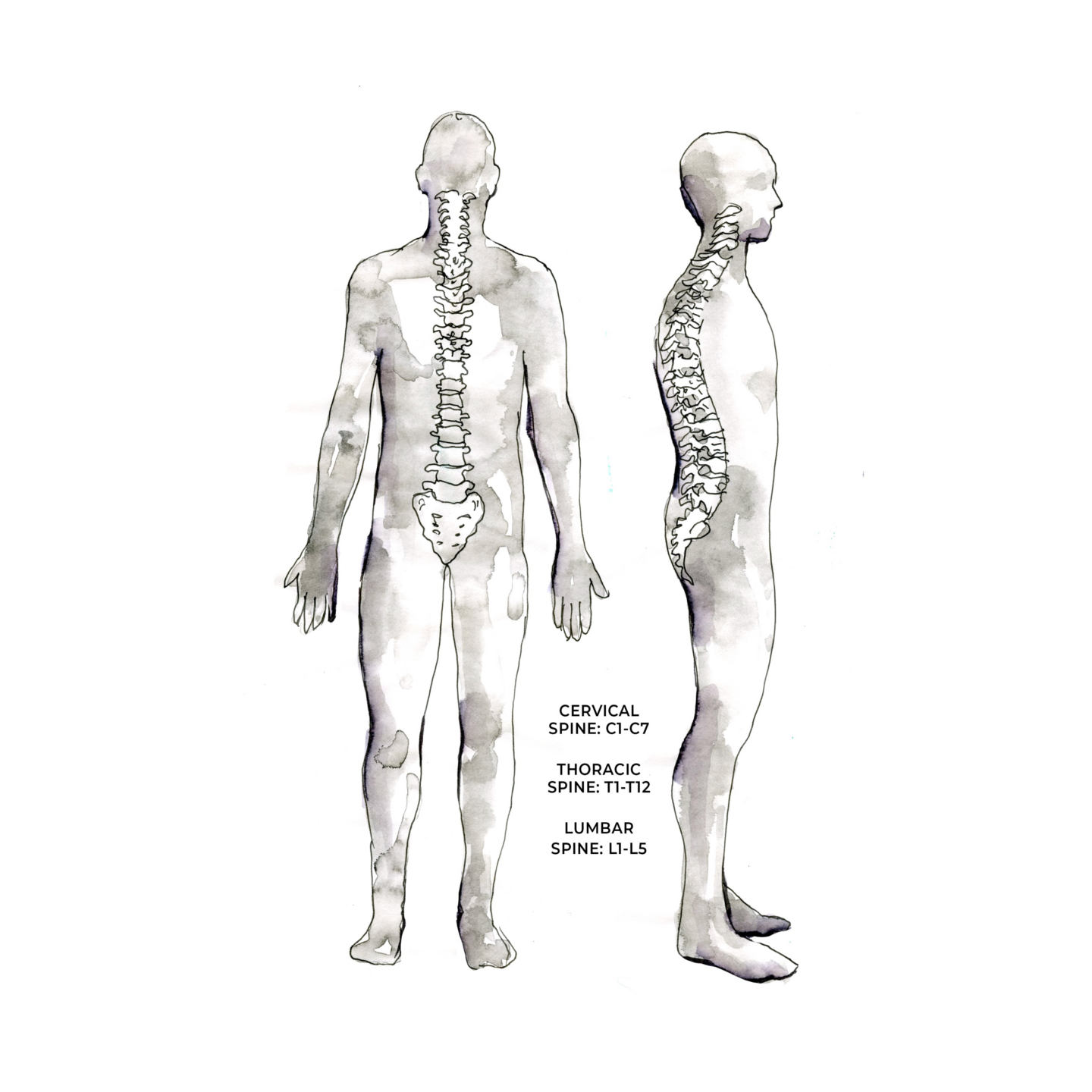
    The lumbar spine consists of 5 vertebrae and is surrounded by layers of muscle and connective tissue. Encapsulated by layers of fascia, the lumbar spine is the home of the energetic hub of our central nervous system – the spinal cord. This wonderful playground of tissue and bone gives us the capacity to move in a variety of ways and remain upright when we want to be. Unfortunately, low back pain is a major issue in our world, and we spend millions of dollars a year trying to figure out how to keep our lumbar playground from becoming a garbage pit of pain, dysfunction, and inflammation. 

    Yoga for Increased Stability

    So, how do you have a happy low back? We give it what it craves! Stability, mobility, and adaptability. Many chronic lumbar conditions are easily preventable through proactive healthy lifestyle changes that include a daily movement practice, healthy food and drink choices, and stress management. Each month, in a series of three articles, you are going to learn what to do to develop a stable, mobile, and adaptable spine with yoga so you can live a happy, back-pain free life! 


    Let’s dive in with a chat about stability. The definition of stability is the state of being firmly fixed. Our lumbar spine gains stability through the natural shape of its vertebrae, with a thick and massive vertebral body. These large structures were designed to hold the weight of our entire upper body. The lumbar spine can handle a lot of force because of its natural anatomy. The 5th lumbar vertebra attaches to the sacrum. Through the stability of the sacrum, weight is transferred from the spine to the pelvis. The bony structures of the lumbar spine are supported by joints, discs, ligaments, tendons, muscles, and fascia.  


    When all these players are doing their roles, we have structural integrity. Forces get dispersed evenly, and energy flows easily. This is why POSTURE *#*^ing MATTERS. We must train our muscles to align our joints to their anatomical positions. Gravity wants to pull us down. Because of our modern lifestyles – sitting in school, working at a desk, looking at our phones, less time playing and exploring – we are vulnerable to unintentionally developing poor postural habits that take us out of our anatomical alignment because of the way gravity pulls on us when we slouch. This malalignment shows up as adaptive muscle weakness, tightness, and, over time, joint and bone degeneration, spinal compression, nerve irritation, and duh duh duh – pain. The good news is most of the time, we can reverse the pain through movement practices that bring us back to anatomical alignment. 


    LYT yoga is a wonderful practice for this very reason. If you practice with us, you already know how intentional every pose and transition is to keep optimal posture. Don’t be fooled – it is a PRACTICE. You will feel better after one class certainly but having a happy back takes time and effort. Think of the many years it took to develop the weakness and tightness in your body. Be consistent with your posture work to rewire your brain and increase muscle strength and flexibility to undo the years of poor movement and open up the energetic freeway between your pelvis and spine for a happy, healthy, and stable low back. 


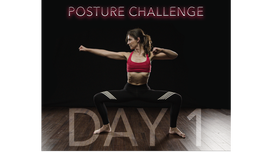
    Try our LYT Daily posture challenge

    posture challenge day 1


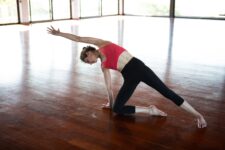
    and check out this month’s latest workshop from Lara – Love for The Low Back

    Love for the low back


    to get started on your posture journey to stabilize your lumbar spine today! 


    XO, 

    Thalia Wynne, PT, DPT, AT, RYT-200 

    @thalialovee

  • The Safe Way To Do Yoga For Back Pain

    The Safe Way To Do Yoga For Back Pain

    For anyone who doesn’t know my story, the reason I got into yoga is that numerous patients in my physical therapy practice were coming having injured themselves in yoga, particularly in online yoga classes. I couldn’t understand what people could be doing in these classes to strain their backs, so I decided to check it out for myself. It only took one class for me to realize why I was having an influx of patients. 


    The bottom line is that traditional yoga puts most participants at risk for injury. The extreme end-range poses, coupled with either too much or too little flexibility/mobility, is the perfect recipe for painful results—especially low back injuries. Still, the challenge of yoga appealed to me, so I kept dabbling in it. 


    It wasn’t until I was introduced to the LYT Yoga Method that I realized there was a safe, correct way to do yoga. When performed safely, yoga can be great for back pain. I started adding the principles of LYT Yoga to my outpatient practice, recruiting many of my patients to join me on their yoga mats. 


    The keys to safely doing yoga for back pain include finding a neutral pelvis, mobilizing and strengthening the hips, and strengthening the core. 


    Many people who suffer from low back pain exhibit poor movement patterns that originate from the pelvis. If you observe people in their day-to-day activities, you’ll often see them dipping into their low back or sinking into one side. So why would we want to ask someone to do the same thing over and over on the yoga mat? 


    A traditional Low Lunge puts the pelvis into a deep anterior tilt while dumping into the low back and sinking into the hips. The same is often true of other poses, such as Crescent Lunge, Cobra, Plank, and Upward Facing Dog. 


    By finding a neutral pelvis, we eliminate the hyperextension that occurs in the low back and hips. This greatly decreases compression on the discs and lumbosacral joints. In upright poses, the pelvis should be perpendicular to the floor. In prone or supine poses, the pubic bow should draw up towards the sternum, creating length and space in the low back. By minimizing compression and actively lengthening your body with a neutral pelvis, we can decrease low back pain.


    My patients with low back pain are often surprised when we work largely on hip mobility and strength. They feel confused because they came for treatment of their backs, but end up thrilled when, in relatively no time at all, they feel so much better.

    Our hips are the second most mobile joints in the body. If we don’t move through them or stabilize around them, the stress and strain of daily life will shift to the next closest areas: The low back, pelvis, and knees. Utilizing your yoga practice to develop mobility and stability around the hips allows your yoga to become your low back therapy. 

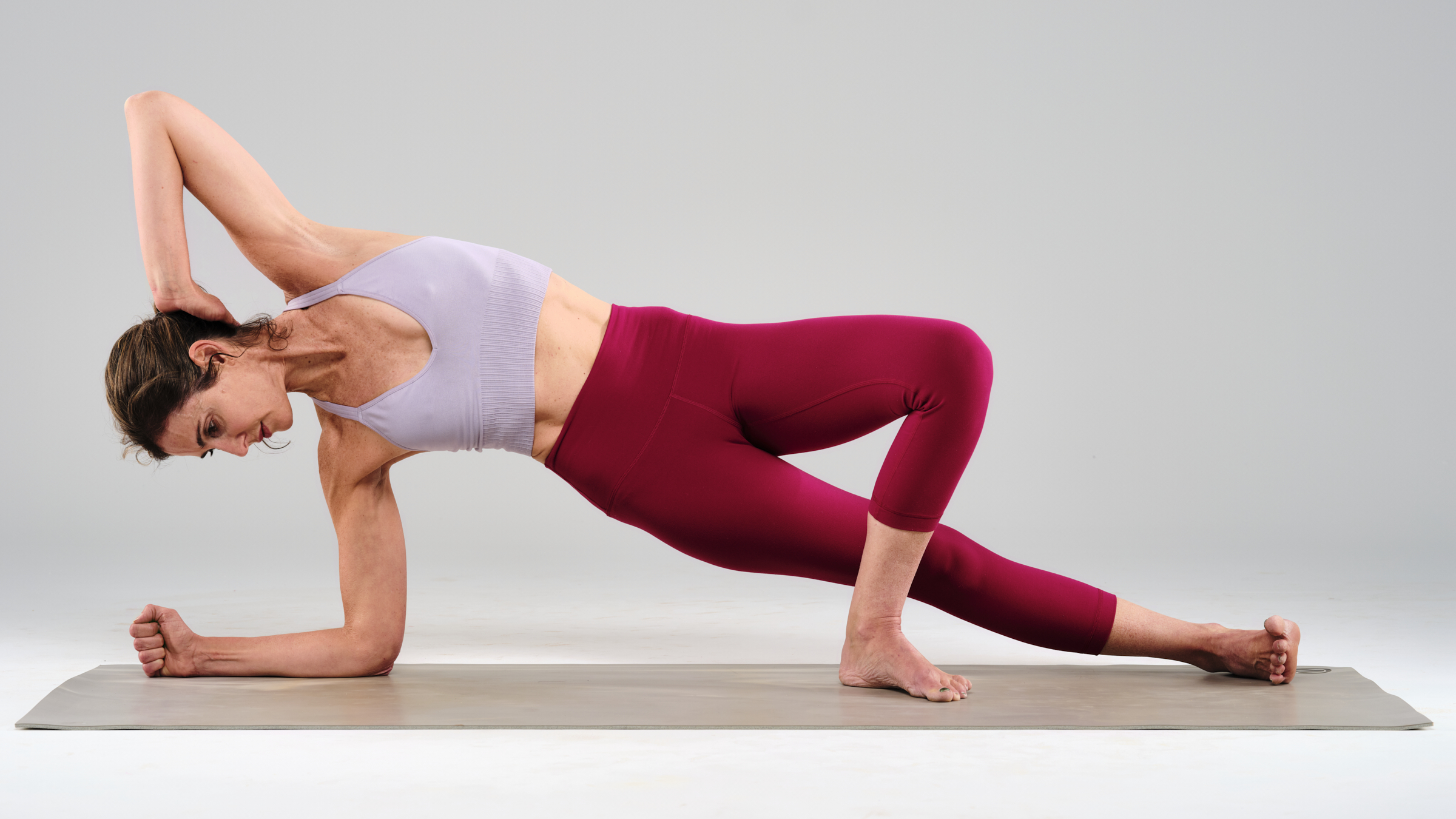
    Many traditional poses sink into the hips passively rather than moving with strength and intention. For example, a traditional Standing Split or Three-legged Down Dog tilts the pelvis to one side and sinks into the standing hip. In LYT Yoga we level the pelvis, allowing for more active hip engagement and a longer lumbar spine. This makes the exercise safe and sustainable. 

    A traditional yoga Forward Fold flexes at the low back, tipping forward in the pelvis. Neither of these movements is conducive to a healthy lumbar spine over time. Sitting back and flexing the hips and knees keeps the spine long and puts the demand on the larger gluteal muscles instead of the low back muscles.

    Finally, strengthening the core is paramount to practicing yoga, especially yoga that is safe for low back pain. In LYT Yoga, we begin every class with The Reset. We want to establish a neutral pelvis, but we also want to awaken the core, which includes the deep abdominals plus the shoulder and hip girdles. These areas are weak in many people who suffer from low back pain. 

    The Reset warms us up from the inside out. It lets the brain know that the core will be a major player throughout the rest of our practice. Just the act of maintaining a neutral pelvis and scapula during your practice is enough to strengthen your core against future back injuries. Moving from the core container to lift out of the pelvis decreases compression in the low back and alleviates unnecessary weight from the vertebral discs. This is why one of our mantras is “More Core”!

    I have yet to come across a patient suffering from low back pain who wouldn’t benefit from a neutral pelvis, better hip mobility/stability, and increased core strength. I can’t think of a better way to do it than with LYT Yoga. Through our online yoga classes, we strive to educate you on the mat so you can be a better and stronger version of yourself off the mat. 

    The type of yoga matters. The way we move matters. And yes, posture matters. Until next time, I’ll see you on the mat!

    Title tag: Safe Online Yoga Classes for Back Pain

    Meta Description: Online yoga classes are a great way to stay in shape, but they can be dangerous. Learn how to safely do yoga poses to reduce injury and back pain.