Category: Podcasts

  • 597. Learning to Become Connected with Dr. Seema Desai

    597. Learning to Become Connected with Dr. Seema Desai


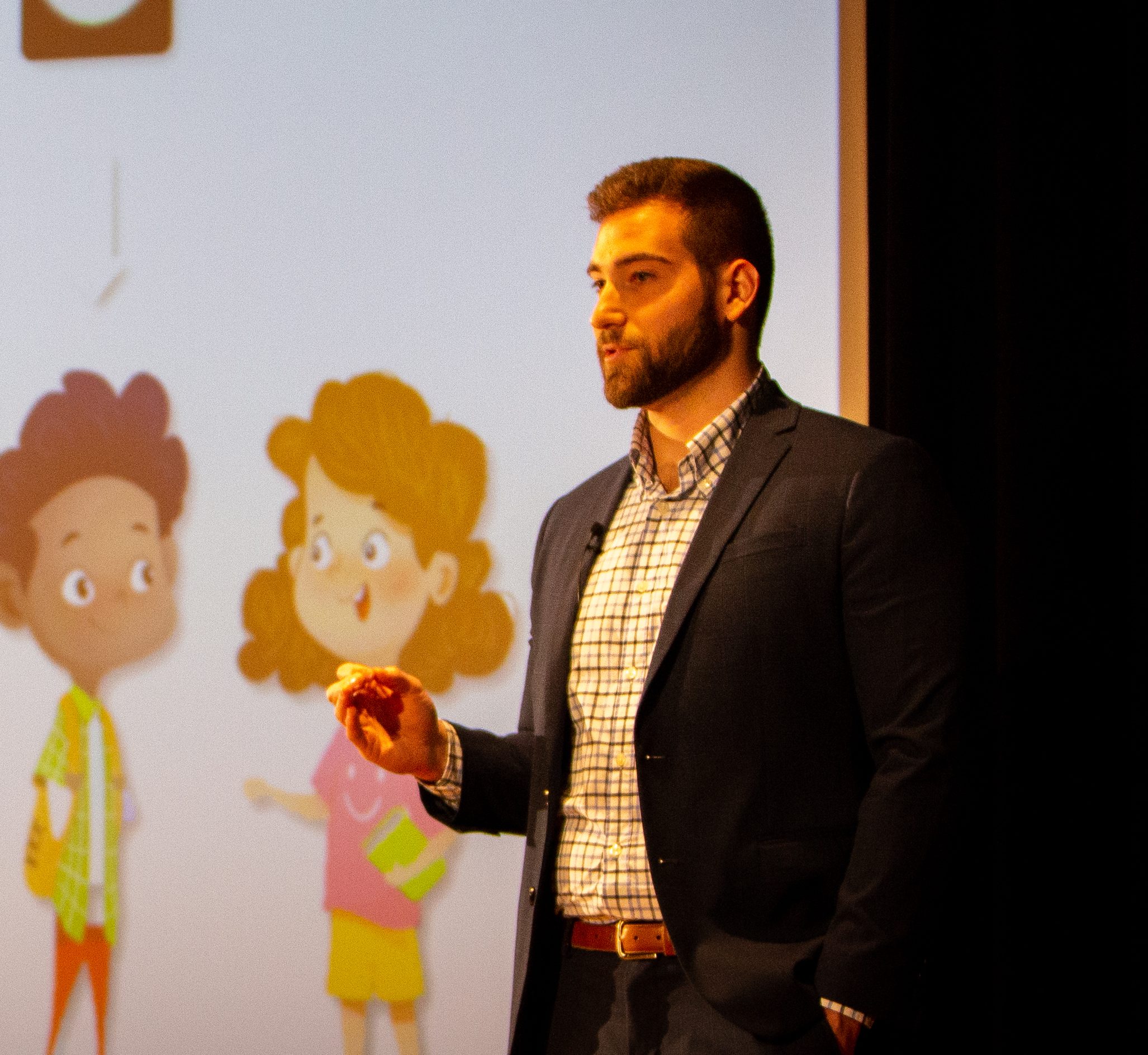
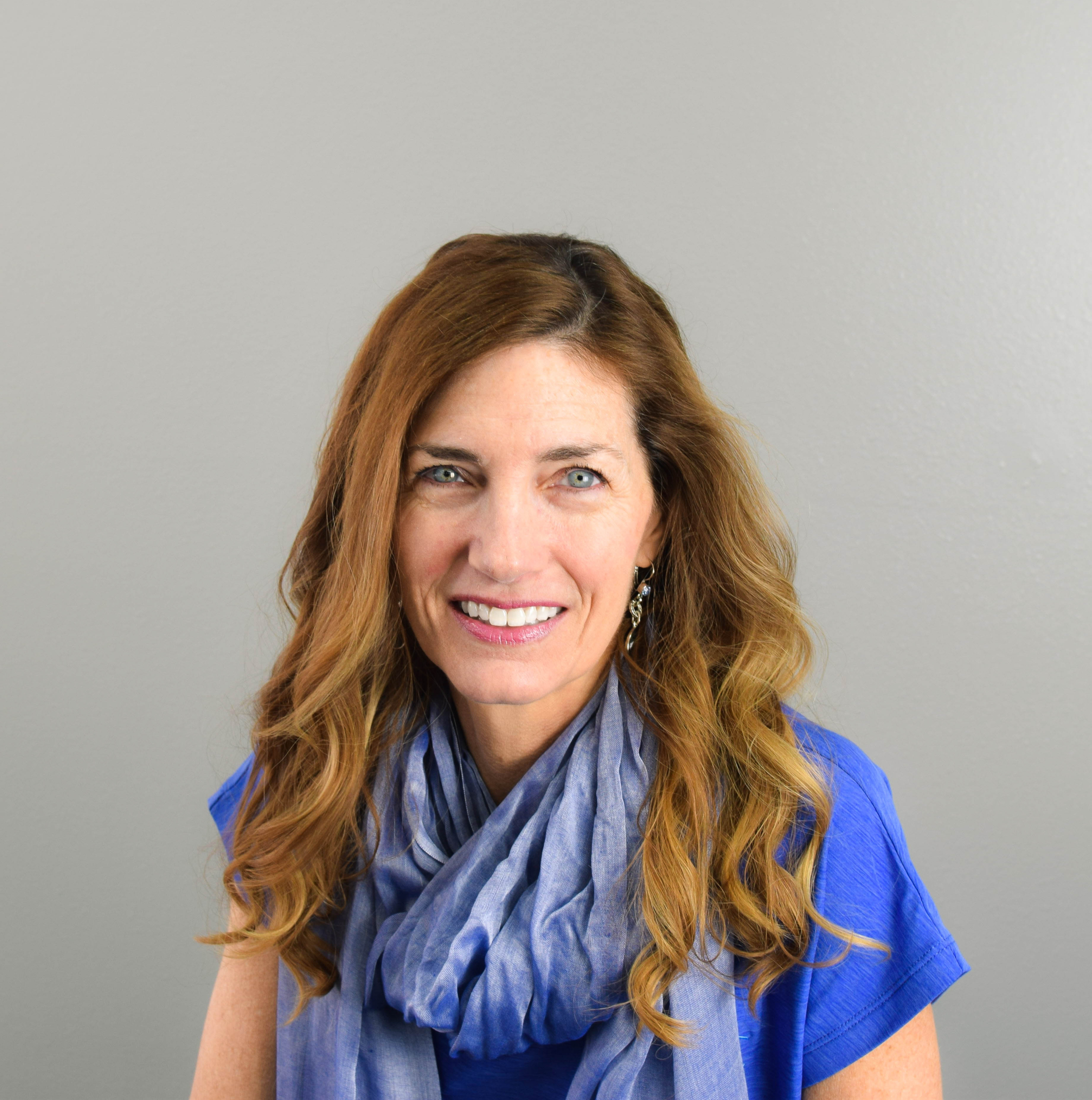
    Dr. Seema Desai, DDS, CPC is a wife and mom of two young children, a dentist, certified professional coach, speaker, and author of the newly-released children’s book Connected: Discovering Your Inner Guides


    Join Lara for a conversation with Dr. Desai about her journey to getting in touch with herself and becoming more clear about what fuels her versus what was really draining her. Having grown up in an Indian household, Seema grew up to live exactly the life you’re “supposed” to in order to be happy and successful. Except, she found that she wasn’t either of those things. 


    In this episode you’ll learn:

    • how living a life defined by social expectations isn’t always the answer
    • how yoga was a saving grace that opened her up to exploring how to live a life she truly loves
    • how to straddle motherhood and professional life while incorporating self-care inspired by yoga and its traditions
    • about teaching kids and their families how to navigate their emotions in her book Connected


    To learn more, and for the complete show notes, visit: lytyoga.com/blog/category/podcasts/


    Resources:


    Sponsor:

  • 596. Wednesday Q&A: Weight Training, Pain in Yin Yoga Poses, & the Importance of Controlling Your Pelvis

    596. Wednesday Q&A: Weight Training, Pain in Yin Yoga Poses, & the Importance of Controlling Your Pelvis


    Welcome to Wednesday Q&A, where you ask questions and we answer them!


    In this Wednesday Q&A, we answer your questions about weight training, pain in back bending, yin yoga poses, and the importance of controlling your pelvis. 


    Your questions:

    • You talked about weight training a couple of weeks ago on the podcast. You mentioned it was beneficial to incorporate it, especially as we age. Could you define a little bit more about what you mean when you talk about weight training? I don’t like lifting heavier traditional weights in general. It just feels off in my body most of the time. And I prefer resistance bands, wrist and ankle weights, sandbags, and an exercise ball. Would you classify those kinds of props as weight training? Is there a certain weight range that’s recommended to build up? And secondly, you mentioned that it was particularly necessary for women, for our bone health as we go through menopause. Does this mean it’s less essential for men? 
    • When I practice yin yoga there are two poses that irritate me: Sphinx and Bridge with the block underneath my coccyx with the legs out straight, extended. I have no problem doing bridge pose, wheel pose, and upward-facing dogs in yang styles, which would be vinyasa styles. But these two static poses caused me problems in my lower back on the right side at the SI joint. I assume it comes from compression of tissue, but I’m surprised I feel absolutely nothing in yang styles or when doing long-distance runs, cross-country skiing, or salsa dancing. I’m a great forward binder. I like arm balances. My right hand is the strong hand and I have rather loose ligaments. I try to focus on strength. My weaknesses are hip flexion despite the loose ligaments, maybe because I am a long-distance runner, and backbends. I call it weakness, not because it bothers me, but just compared to what it looks like on average. Now and then I try these poses again and see whether something changed. The problem has persisted for around two years now. What would you recommend? Massages? Working on strengthening my glutes? Hip flexion and back bends did not really improve the situation or only very slightly. 
    • I love LYT so much and it has helped me counteract years of dance. I still practice ballet and wonder how do I better educate people who want to just bend their spines and lock out their knees? In other words, why is it so important to control the pelvis?


    To learn more, and for the complete show notes, visit: lytyoga.com/blog/category/podcasts/


    Do you have a question?


    Sponsor:

  • 595. The Complexity of the Brain with Dr. Benjamin Rein

    595. The Complexity of the Brain with Dr. Benjamin Rein

    With 86 Billion (that’s with a B) brain cells communicating with each other at any given moment, the human brain is a genius computer and scientists are uncovering new, fascinating things about it every day. Neuroscientist Dr. Benjamin Rein has made it his life’s work to not only try to understand various aspects of the brain but also share the science he learns with the greater public through his ultra-popular TikTok channel.


    In this episode, Lara speaks with Dr. Rein about how the brain works, his study of social behavior and empathy, and the educational science videos he shares on his TikTok channel. Listen in to hear about how yoga affects the brain as a destresser, how to improve your synaptic plasticity, and all about placebos and pain.


    In this episode, you’ll learn:

    • How the brain communicates with its various sections and between the two hemispheres
    • What happens in the brain during stress
    • The complicated understanding of ADHD and ADD


    Resources Mentioned:


    Connect with the Guest:


    Follow the podcast:


    Connect with LYT Daily and Lara Heimann:


    Sponsor:

  • 594. Wednesday Q&A: Bruised Toes From Downhill Hiking, Monthly Cycles, Energy Dips, Soreness, & Massage, & Is LYT Enough Movement

    594. Wednesday Q&A: Bruised Toes From Downhill Hiking, Monthly Cycles, Energy Dips, Soreness, & Massage, & Is LYT Enough Movement


    Welcome to Wednesday Q&A, where you ask questions and we answer them!


    In this Wednesday Q&A, we answer your questions about avoiding bruised toes from hiking downhill, monthly cycle as relates to energy levels and delayed onset muscle soreness, muscle soreness from yoga and massage, and is LYT yoga enough movement?


    Your questions:

    • How to avoid bruised toes while hiking downhill. 
    • I have a question about post-workout pain and levels of energy. I have noticed that at certain times of the month I have longer-lasting DOMS (Delayed Onset Muscle Soreness) and lower energy and try to choose a gentler practice. 
    • After a particularly strong class, I was sore in parts that I’m not used to working as much like my arms and calves. It lasted like five days. A week after that, I had a massage and she worked a lot on my shoulders. They were not sore at the start, but by the end it was painful. She told me that I had lactic acid buildup, which I did not think was possible. Even though my muscles got worked and tired. I had not done any exercises to the point of being able to having to stop and catch my breath in a week and just a consistent LYT yoga practice, my shoulders were not even the sore part after the fire class. So I’m wondering what was she feeling digging about in there? 
    • Do you think that LYT is enough movement or do you do other things? 


    To learn more, and for the complete show notes, visit: lytyoga.com/blog/category/podcasts/


    Do you have a question?


    Sponsor:


  • 593. Simple Acts of Kindness with Natalie Silverstein

    593. Simple Acts of Kindness with Natalie Silverstein


    Join Lara for a conversation with Natalie Silverstein. Natalie is a real changemaker in the world as an author, speaker, consultant, and passionate advocate for family and youth community service. She formed the New York branch of the Minneapolis-based non-profit Doing Good Together with the mission of helping parents raise kids who help and contribute. Natalie has written two books Simple Acts: The Busy Family’s Guide to Giving Back (2019) and Simple Acts: The Busy Teen’s Guide to Making a Difference (2022). 


    In this episode, you’ll learn about…

    • ways to be of service to homeless people.
    • how to constructively learn about social problems and source the solutions so we can help.
    • how to get more involved in your community.
    • Natalie’s latest book Simple Acts: The Busy Teen’s Guide to Making a Difference.


    To learn more, and for the complete show notes, visit: lytyoga.com/blog/category/podcasts/


    Resources:

  • 592. Wednesday Q&A: Flexibility & Yoga, Thoracic Outlet Syndrome, & Depression

    592. Wednesday Q&A: Flexibility & Yoga, Thoracic Outlet Syndrome, & Depression


    Welcome to Wednesday Q&A, where you ask questions and we answer them!


    In this Wednesday Q&A, we answer your questions about why men think they aren’t flexible enough to do yoga, advice for dealing with thoracic outlet syndrome, and working through depression. 


    Your questions:

    • Why is it that so many people believe that they aren’t flexible enough to do yoga, especially men? It is somehow in their mind that they have to be able to touch the floor in a standing forward fold with their legs straight?
    • Could you talk about what you recommend for dealing with thoracic outlet syndrome and how to mobilize the first rib as well as what movements are helpful or to avoid to keep it from flaring up again?
    • How to get rid out of depression and feeling down.


    To learn more, and for the complete show notes, visit: lytyoga.com/blog/category/podcasts/


    Do you have a question?


    Sponsor:


  • 591. Hypermobility Spectrum Disorders with Dr. Linda Bluestein

    591. Hypermobility Spectrum Disorders with Dr. Linda Bluestein

    “Being bendy” often starts as a party trick where you impress your friends with how flexible you are and they applaud your ability to put your foot behind your head. But hypermobility and the conditions associated are not only poorly understood within the standard healthcare system, they are also potentially very dangerous to those who live with them.


    In this episode, Dr. Linda Bluestein of Hypermobility MD speaks with Lara about the full hypermobility spectrum disorders including Marfan Syndrome, Loeys-Dietz syndrome and the most common, the Ehlers-Danlos syndromes, or EDS. Listen in to hear all about Dr. Bluestein’s journey with EDS, her thoughts on surgeries, and her approach to movement within the world of hypermobility.


    In this episode, you’ll learn:

    • How to spot hypermobility and potential serious conditions related
    • The phases of hypermobility
    • How you should adjust your workouts and activities for safer movement with these types of connective tissue disorders


    Resources Mentioned:


    Connect with the Guest:


    Follow the podcast:


    Connect with LYT Daily and Lara Heimann:


    Sponsor:

  • 590. Wednesday Q&A: Knee Pain, Carrying Angles, & the Obturator Internus Muscle

    590. Wednesday Q&A: Knee Pain, Carrying Angles, & the Obturator Internus Muscle


    Welcome to Wednesday Q&A, where you ask questions and we answer them!


    In this Wednesday Q&A, we answer your questions about knee pain, carrying angles, and the obturator internus muscle.


    Your questions:

    • I’ve been having intense knee pain that keeps me up for part of the night. I feel it a bit during the day, but it really kicks in when I lie down to sleep. I suspect osteoarthritis, but I feel I’m so young for that. I have a doc appointment soon. It’s in my family though. That being said, I’m super active daily. I walk a lot, practice LYT, and do some high-impact movement including jumping because I love it. I use a pillow under my knees or between depending on the position of sleep. I’m just discouraged and it feels like chronic pain right now that I have a hard time shaking off. Would you recommend any specific movement or discourage other movements? I love hiking and just the idea of not being able to move freely scares me and makes me borderline depressed. 
    • I know you have recently talked about carrying angles on your podcast, but I have a question about a student. (Attached are pics of her in down dog and standing.) She feels like her arms are straight in down dog. I’ve queued to lift up in the hip crease, lift abdominals and ribs and this is how her down dog looks like. Would her carrying angle have something to do with this? Would this cause issues and injuries down the track at all? Any tips/adjustments required would be appreciated. 
    • Wondering if you have any thoughts/insight about the obturator internus. Mine is aggravated. I think it’s referring to my glute, hip, and hamstring. I thought it was proximal hamstring tendinopathy, but after a very invasive manual check, they think it’s the obturator internus. When it’s aggravated, forehead folds, even with bent knees, are uncomfortable, maybe even more so than straight legs. Do you have any suggestions for different movement patterns?


    To learn more, and for the complete show notes, visit: lytyoga.com/blog/category/podcasts/


    Do you have a question?


    Sponsors:

    • Visit almondcow.co/shop and use code LARA for a discount off your purchase!
    • Shop my favorite 100% Science-Backed Amino Acid Supplements. Enter code “LYT” to save 30%. aminoco.com/LYT