Category: Podcasts

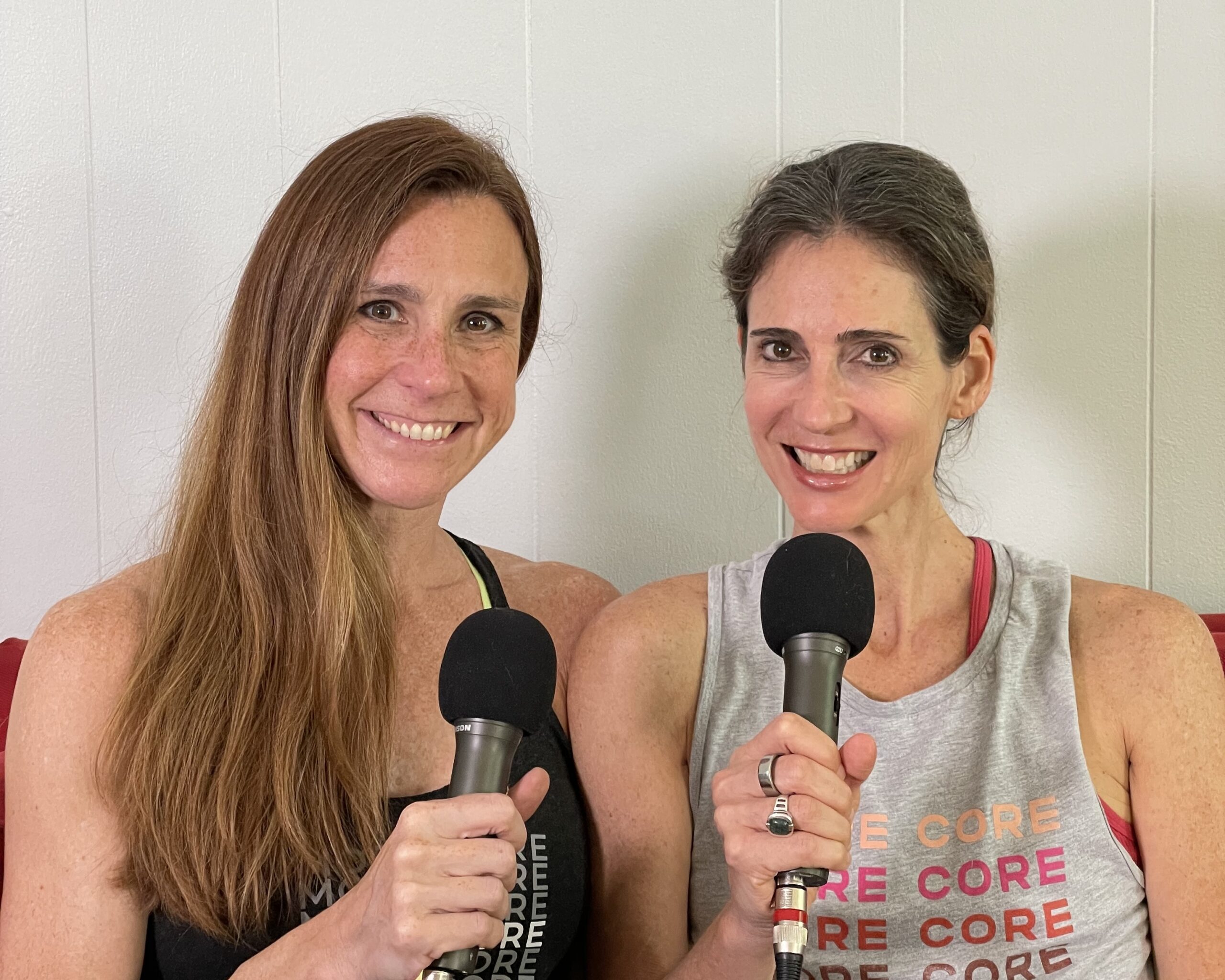
  • 659. Wednesday Q&A: Motivating Movement, Training for Equestrians, Pain During In-Person Classes, & PNF

    659. Wednesday Q&A: Motivating Movement, Training for Equestrians, Pain During In-Person Classes, & PNF


    Welcome to Wednesday Q&A, where you ask questions and we answer them!


    In this Wednesday Q&A, we answer your questions about how to motivate people to move, training for equestrians, why pain is coming back during in-person classes, & PNF. 


    Your questions:

    • I feel like I’m surrounded by inert people – my husband, my family, my coworkers… I’m not a teacher but want to ask how to encourage others in your life to get off their bums and move. Signed, frustrated and concerned for humanity.
    • Our pony injured himself. He’s okay and he’ll be fine. But his recovery will take months and all that we can do regarding exercise and movement in this time will be walking on flat, solid ground. There will, of course, be lots of cuddling for him and carrots, gentle stretching, mobilization, fascial release, silly tricks, etc. I got him. But what about me? I need to substitute our regular movement, which is riding, walking, running together on varied ground for me. I want to be ready when he comes back from his injury, I estimate that we’ll slowly start back mid-June again. I want to use this time to explore and improve across the movement spectrum. His injury frees up two of my resources, time and energy. No planning for his training, taking care of him, etc. etc. So what do I do? Both specific suggestions and general advice are welcome and have fun with it. I have lots of ideas, but I know that you’ll have excellent advice and I’m looking forward to your perspective.
    • I feel so much better after ten months of LYT. My chronic neck and back pain is gone. My question is that I notice when I go to in-person classes, whether it’s yoga, pilates, strength training, I tend to get a little bit of the pain again afterwards. So is this in my head or how do I deal with this? Up my LYT to four times a week? I’m currently doing 2 to 3 times a week. I will do whatever, would be fine with more LYT but was just thinking I needed to add more different classes in my routine, but maybe not? Second guessing it.
    • Thoughts on PNF? I’m very familiar with this technique, however, strongly depends on who. I’m asking this since my colleague who’s a yoga/pilates instructor, not physio, offers this as a private for 60 to 90 minutes. It’s popular and clients seem to like it. But my physio brain doesn’t. Doesn’t seem safe to do it for so long nor necessary for the whole body and for virtually anyone. Thoughts? Clients are just average people and not athletes.


    To learn more, and for the complete show notes, visit: lytyoga.com/blog/category/podcasts/


    Do you have a question?


    Sponsors:


    Follow the podcast
    Listen in Apple Podcasts
    Listen in Google Podcasts
    Listen in Spotify
  • 659. Wednesday Q&A: Motivating Movement, Training for Equestrians, Pain During In-Person Classes, & PNF

    659. Wednesday Q&A: Motivating Movement, Training for Equestrians, Pain During In-Person Classes, & PNF


    Welcome to Wednesday Q&A, where you ask questions and we answer them!


    In this Wednesday Q&A, we answer your questions about how to motivate people to move, training for equestrians, why pain is coming back during in-person classes, & PNF. 


    Your questions:

    • I feel like I’m surrounded by inert people – my husband, my family, my coworkers… I’m not a teacher but want to ask how to encourage others in your life to get off their bums and move. Signed, frustrated and concerned for humanity.
    • Our pony injured himself. He’s okay and he’ll be fine. But his recovery will take months and all that we can do regarding exercise and movement in this time will be walking on flat, solid ground. There will, of course, be lots of cuddling for him and carrots, gentle stretching, mobilization, fascial release, silly tricks, etc. I got him. But what about me? I need to substitute our regular movement, which is riding, walking, running together on varied ground for me. I want to be ready when he comes back from his injury, I estimate that we’ll slowly start back mid-June again. I want to use this time to explore and improve across the movement spectrum. His injury frees up two of my resources, time and energy. No planning for his training, taking care of him, etc. etc. So what do I do? Both specific suggestions and general advice are welcome and have fun with it. I have lots of ideas, but I know that you’ll have excellent advice and I’m looking forward to your perspective.
    • I feel so much better after ten months of LYT. My chronic neck and back pain is gone. My question is that I notice when I go to in-person classes, whether it’s yoga, pilates, strength training, I tend to get a little bit of the pain again afterwards. So is this in my head or how do I deal with this? Up my LYT to four times a week? I’m currently doing 2 to 3 times a week. I will do whatever, would be fine with more LYT but was just thinking I needed to add more different classes in my routine, but maybe not? Second guessing it.
    • Thoughts on PNF? I’m very familiar with this technique, however, strongly depends on who. I’m asking this since my colleague who’s a yoga/pilates instructor, not physio, offers this as a private for 60 to 90 minutes. It’s popular and clients seem to like it. But my physio brain doesn’t. Doesn’t seem safe to do it for so long nor necessary for the whole body and for virtually anyone. Thoughts? Clients are just average people and not athletes.


    To learn more, and for the complete show notes, visit: lytyoga.com/blog/category/podcasts/


    Do you have a question?


    Sponsors:


    Follow the podcast

  • 658. Becoming Aware Of The Energy You’re Giving Out with Founder of The Asher House, Lee Asher

    658. Becoming Aware Of The Energy You’re Giving Out with Founder of The Asher House, Lee Asher


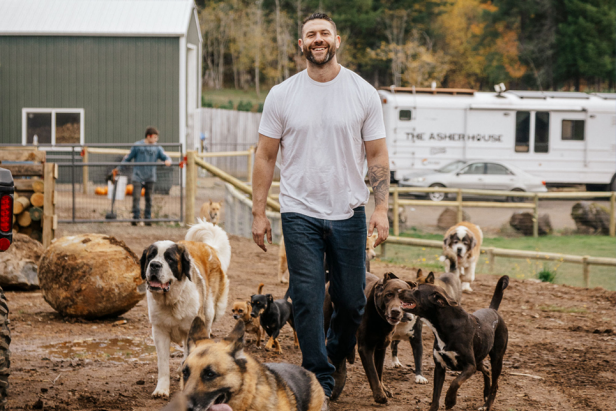
    Lee Asher isn’t your average animal-lover. In 2018, he quit his job to follow his dreams and decided to travel across 49 states to promote dog adoption and spotlight various shelters and rescues. After his Pitbull Stella passed away, Lee was determined to fulfill his lifelong dream of creating a sanctuary, where animals could feel treasured, protected and free. In late 2020, Lee discovered a large parcel of property which was the perfect setting to turn his vision into a reality. He created The Asher House, a registered non-profit sanctuary in Estacada, Oregon, that rescues animals that have been discarded or unwanted, providing them with a life of comfort, love and adventure.


    In this episode, Lee talks with Lara about his job and what it entails, the power of your mindset and the way you speak to yourself, becoming a better you, developing strong relationships with your pets and more.


    In this episode, you will learn the following:

    1. Success starts with investing in yourself: You have to do things that are good for you. Sometimes these things aren’t easy, but they’re vital to life!
    2. Be better than you were yesterday: This is the only thing you should worry about. Forget about who’s more successful than you, this isn’t a competition! Evolving into a better you should be your goal.
    3. Talk to yourself like you’re an animal: It’s exhausting to be cruel to yourself. We should be talking to ourselves like we are an animal. Why don’t we employ that with ourselves? Your body does so much for you, be kind to it.


    Resources:


    Connect with the Guest:


    Follow the podcast:


    Connect with Lara Heimann, The Redefining Yoga Podcast, and LYT Daily:


    Today’s podcast sponsor:

  • 657. Wednesday Q&A: Knee Pain, Spinal Rotation, Protective Tension in the Body, & Neutral Pelvis/Triple S While Running/Walking

    657. Wednesday Q&A: Knee Pain, Spinal Rotation, Protective Tension in the Body, & Neutral Pelvis/Triple S While Running/Walking


    Welcome to Wednesday Q&A, where you ask questions and we answer them!


    In this Wednesday Q&A, we answer your questions about knee pain, the risks of spinal rotation, holding tension in the body from previous injuries, and how to move around holding neutral pelvis and spine.


    Your questions:

    • My question is about my partner who recently developed pain in the front inside of his knee. He has just started training for a half marathon and after just a couple of runs he noticed the pain while he was running. He cycles, plays squash and football. And I think quite importantly as a photographer, which means he often finds himself in awkward positions trying to get the shot. For example, he often has to lower his body into a kind of low lunge with the bottom knee hovering and then stays there for a while while he shoots. He has an inkling that some of these awkward positions might have something to do with the knee pain. I think it’s also important to note that in early 2021, he fell playing football and the fatty tissue of his knee was swollen for five months. I thought it would be a good idea to ask, number one where you think the supposed pain might be coming from. And number two, any ideas for him to continue training for the half marathon without encouraging more pain or at worst, creating further injury?
    • In all LYT classes we do spinal (I mean, all segments of the spine) rotation, whether it’s in the reset, in supine, or in sequences. Over the last year, I have heard from a few students that they’re osteopath or physio or even integrative doctors are telling them to practice these rotational movements sparingly as they lead to build up sometimes more tension in the body than the benefit we usually credit them, not in LYT by the way. Have you heard of any similar recommendations or client feedback? 
    • In some classes, yoga, meditation, etc. there’s an invitation to observe where we feel that our body might hold tension. One of my students, 56, had rotator cuff surgery a few years back, and I notice that I keep reminding her a couple of times to relax her right shoulder. She said that she feels like her shoulder got stuck in a sort of defensive position that translates in this tensed-up way of holding as it was before the surgery. And also since then, she was inwardly thinking, “Oh, I don’t want to hurt my shoulder,” “I should be careful of my shoulder,” etc. I feel like there might be something to it as it seems really unconscious. But I was also wondering if it’s also related to suboptimal posture, habits, and brain wiring. 
    • Can you talk about neutral pelvis and Triple S while walking, running, etc.? How does it work when one has to look down to avoid tripping on things or falling on uneven ground?


    To learn more, and for the complete show notes, visit: lytyoga.com/blog/category/podcasts/


    Do you have a question?


    Sponsors:


    Follow the podcast
    Listen in Apple Podcasts
    Listen in Google Podcasts
    Listen in Spotify
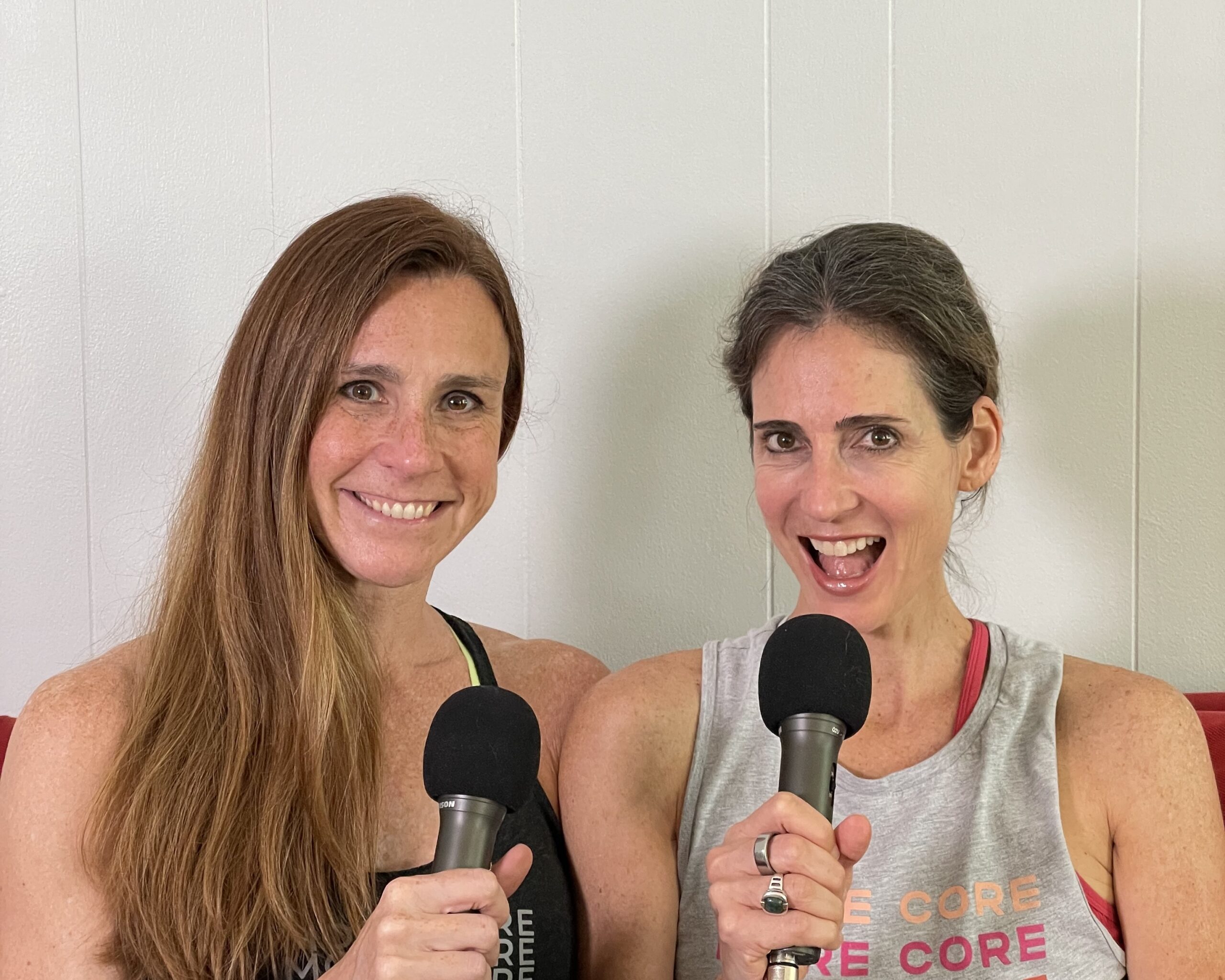
  • 657. Wednesday Q&A: Knee Pain, Spinal Rotation, Protective Tension in the Body, & Neutral Pelvis/Triple S While Running/Walking

    657. Wednesday Q&A: Knee Pain, Spinal Rotation, Protective Tension in the Body, & Neutral Pelvis/Triple S While Running/Walking


    Welcome to Wednesday Q&A, where you ask questions and we answer them!


    In this Wednesday Q&A, we answer your questions about knee pain, the risks of spinal rotation, holding tension in the body from previous injuries, and how to move around holding neutral pelvis and spine.


    Your questions:

    • My question is about my partner who recently developed pain in the front inside of his knee. He has just started training for a half marathon and after just a couple of runs he noticed the pain while he was running. He cycles, plays squash and football. And I think quite importantly as a photographer, which means he often finds himself in awkward positions trying to get the shot. For example, he often has to lower his body into a kind of low lunge with the bottom knee hovering and then stays there for a while while he shoots. He has an inkling that some of these awkward positions might have something to do with the knee pain. I think it’s also important to note that in early 2021, he fell playing football and the fatty tissue of his knee was swollen for five months. I thought it would be a good idea to ask, number one where you think the supposed pain might be coming from. And number two, any ideas for him to continue training for the half marathon without encouraging more pain or at worst, creating further injury?
    • In all LYT classes we do spinal (I mean, all segments of the spine) rotation, whether it’s in the reset, in supine, or in sequences. Over the last year, I have heard from a few students that they’re osteopath or physio or even integrative doctors are telling them to practice these rotational movements sparingly as they lead to build up sometimes more tension in the body than the benefit we usually credit them, not in LYT by the way. Have you heard of any similar recommendations or client feedback? 
    • In some classes, yoga, meditation, etc. there’s an invitation to observe where we feel that our body might hold tension. One of my students, 56, had rotator cuff surgery a few years back, and I notice that I keep reminding her a couple of times to relax her right shoulder. She said that she feels like her shoulder got stuck in a sort of defensive position that translates in this tensed-up way of holding as it was before the surgery. And also since then, she was inwardly thinking, “Oh, I don’t want to hurt my shoulder,” “I should be careful of my shoulder,” etc. I feel like there might be something to it as it seems really unconscious. But I was also wondering if it’s also related to suboptimal posture, habits, and brain wiring. 
    • Can you talk about neutral pelvis and Triple S while walking, running, etc.? How does it work when one has to look down to avoid tripping on things or falling on uneven ground?


    To learn more, and for the complete show notes, visit: lytyoga.com/blog/category/podcasts/


    Do you have a question?


    Sponsors:


    Follow the podcast
    Listen in Apple Podcasts
    Listen in Google Podcasts
    Listen in Spotify

  • 656. Resolve Your Pain with Physical Therapist Rick Olderman

    656. Resolve Your Pain with Physical Therapist Rick Olderman


    Physical therapist Rick Olderman is back on the podcast to talk with Lara about his new book Solving the Pain Puzzle and share with listeners his systems approach to pain management. Listen in for tips about how to solve your pain by looking at your body in a holistic way. 


    Rick is a sports and orthopedic physical therapist with more than 25 years experience that specializes in helping people with chronic pain experience a pain-free life. He has written the popular Fixing You® series of books to help people with chronic pain or injuries. Rick has created downloadable video home programs to help people solve pain from head to toe. Rick’s latest book is a compilation of case studies where he demonstrates his approach of holistic, but evidence-based, treatment to help people get out of pain. 


    In this episode, you’ll learn about:

    • the limitations of a component-based approach in medical research and treatment, particularly in the case of chronic pain.
    • why a systems approach, which takes into account the interconnectedness of different parts of the body and factors that contribute to pain, is necessary to effectively address chronic pain.
    • common mistakes people make with their posture and how to fix them.


    To learn more, and for the complete show notes, visit: lytyoga.com/blog/category/podcasts/


    Guest Resources


    Connect with Lara Heimann, The Redefining Yoga Podcast, and LYT Yoga


    Sponsor


    Follow the podcast
    Listen in Apple Podcasts
    Listen in Google Podcasts
    Listen in Spotify
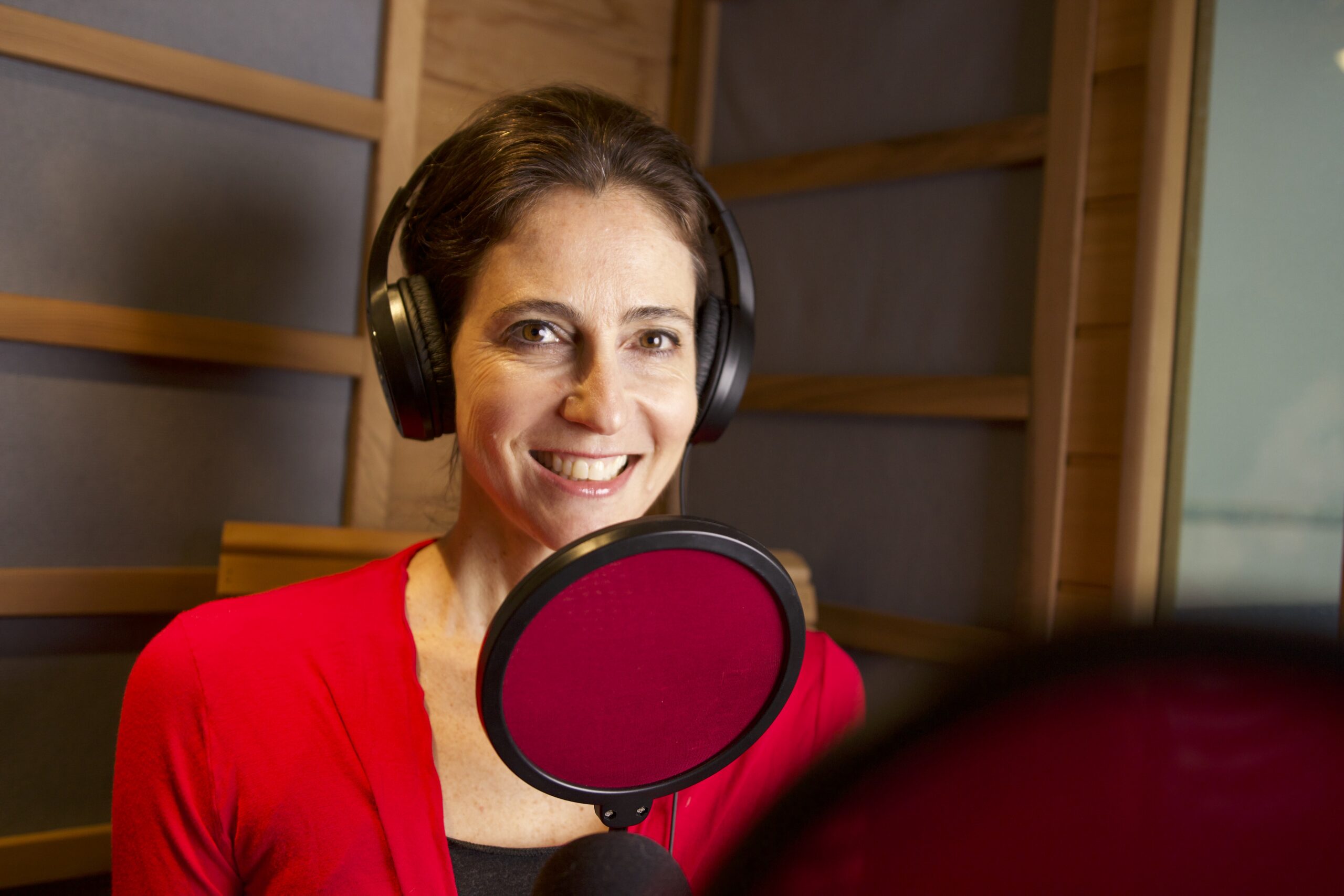
  • 655. Wednesday Q&A: The Posture Episode!

    655. Wednesday Q&A: The Posture Episode!


    Welcome to Wednesday Q&A, where you ask questions and we answer them!


    In this Wednesday Q&A, we answer your questions about if it’s possible to improve your posture, how your feet impact your posture and vice versa, feeling tension while holding “Triple S”, regaining good posture after being compacted, and how Lara and Kristin’s posture has improved through practicing LYT. 


    Your questions:

    • I know I have really terrible posture and it makes me feel sad, but I don’t even know where to start. Is it possible to improve my posture? Or am I a hopeless case?
    • How do I distribute weight uniformly on both feet? My worn-out footwear tells me that my weight is falling to the big toe side.
    • Will the tension in “Triple S” lessen the more I put my body in that position? Will my muscles loosen and adjust to Triple S eventually? Will it become more my normal stance? Because right now I’m feeling tension in Triple S directly where I hold my stress.
    • If I’m in a car for a long period of time, in a compacted state, and I get out, if I improve my posture over time, will I be able to get back up and out of that contracted state a little bit faster?
    • How has your posture changed with LYT?


    To learn more, and for the complete show notes, visit: lytyoga.com/blog/category/podcasts/


    Do you have a question?


    Sponsors

  • 654. Monthly Motivation: How Your Body Communicates With You & Why You Should Listen

    654. Monthly Motivation: How Your Body Communicates With You & Why You Should Listen


    Join Lara this month for a conversation about how your body communicates with you and why it’s important to listen to it. Our bodies have an innate capacity to provide us with information about our needs, such as hunger or early signs of injury. However, in today’s fast-paced society, we often ignore these signals and rely on quick fixes like medications. Learning to listen to our bodies can help prevent health conditions and injuries. Remind yourself to LISTEN to the signals with this helpful acronym: 


    L – learn about ourselves


    I – interoception


    S – stress less


    T – time out and touch


    E – exercise


    N – nourish


    To learn more, and for the complete show notes, visit: lytyoga.com/blog/category/podcasts/


    Connect with Lara Heimann, The Redefining Yoga Podcast, and LYT Yoga


    Sponsors: